Secret HistoryS


Archaeology

Researcher blows lid on discovery which could PROVE Noah's Ark was real

noah's ark
© NOAH'S ARK SCANSThe ancient rocks, first discovered in 1959, lie around 6,500 feet above sea level and resemble a boat
A leading researcher has blown the lid on his work which could prove Noah's Ark was real. Andrew Jones, of Noah's Ark Scans, has been studying a rock formation on Turkey's Mount Ararat for years.

The ancient rocks, first discovered in 1959, lie around 6,500 feet above sea level and resemble a boat. They measure 515 feet long - matching the dimensions described in Genesis chapter six, using Egyptian cubits.

But "exciting" new findings, Mr Jones says, could prove the biblical accounts to be true.

After carrying out new ground-penetrating radar (GPR) scans and taking soil samples from the site, researchers have uncovered a series of "corridors" below the earth which could add further weight to the mythical boat.

Archaeology

Archaeologists make 'remarkable' discovery from bloodiest battle in Scottish history after nearly 280 years

painting battle of culloden
© Getty ImagesThe Battle of Culloden was fought on April 16, 1746, when a Jacobite force led by Charles Edward Stuart — known as Bonnie Prince Charlie — clashed with troops loyal to King George II.
Archaeologists found the unexploded 5.5-inch shell, announced the find on battle's 280th anniversary

Archaeologists have uncovered a mortar shell from the bloodiest battle in Scotland's history — a shell that never detonated.

The National Trust for Scotland (NTS) announced in mid-April that its archaeologists had found a mortar shell at Culloden Battlefield, just outside Inverness in the Scottish Highlands.

The Battle of Culloden was fought on April 16, 1746, when a Jacobite force led by Charles Edward Stuart — known as Bonnie Prince Charlie — clashed with troops loyal to King George II.

In under an hour, the Jacobites were crushed, ending any serious bid to restore the Stuart monarchy. Culloden remains the last large-scale pitched battle fought on British soil.

Archaeology

1,000-year-old lost city of Toru-Aygyr discovered in Kyrgyzstan lake

lost city lake underwater diver
© Viktor Lyagushkin - Getty ImagesA diver explores a portion of a lost city believed to have been sunk by a 15th century earthquake in Lake Issyk-Kul, Kyrgyzstan
Underwater archaeologists diving in one of the world's deepest lakes think they've found something remarkable. They believe Lake Issyk-Kul has hidden the secrets of a prominent medieval Silk Road trading city since a massive earthquake in the 15th century.

The lake, located in modern-day Kyrgyzstan, likely overtook the ancient Toru-Aygyr city after an earthquake changed the local landscape. In 2025, an international team of divers found several traces of the city, which indicate links to both a Turkic dynasty and Islamic rule.

Diving down to a maximum of 13 feet deep into the lake, the team discovered buildings made of brick, the remains of a stone millstone likely used for grinding grain into flour, and a Muslim burial ground, as well as remains of additional wooden structures and plenty of ceramic artifacts.

Info

Scientists discover who created Kenya's 9,000-year-old rock paintings

Kenya Rock Art
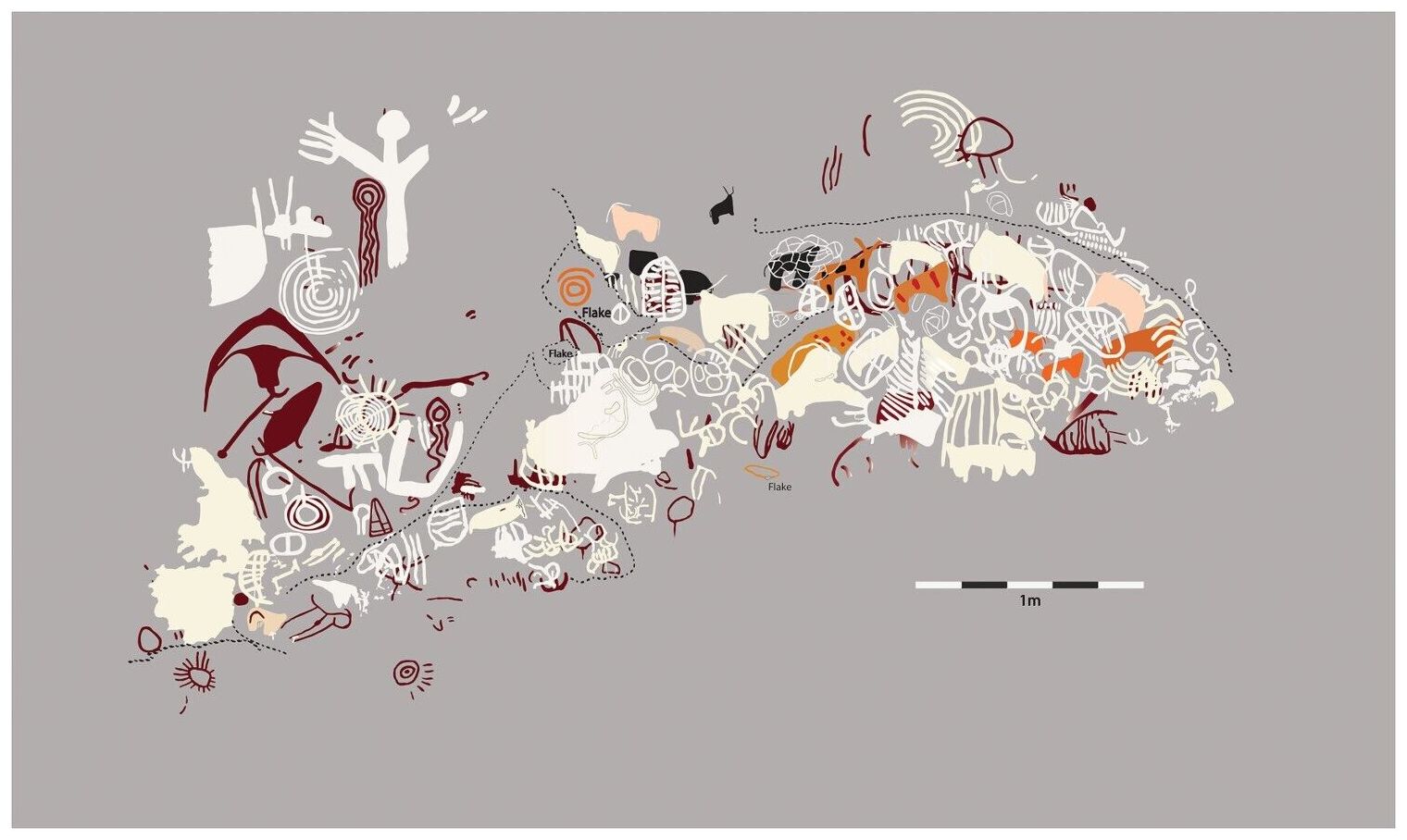
© Azania: Archaeological Research in AfricaKakapel: redrawing of the complete area of Odak’s Panels 2 and 3 (traced by Catherine Namono and Benjamin Smith in, 2011 redrawn by Wendy Voorveld in 2012 and coloured for publication by Kgolagano Vena).
A major breakthrough in African archaeology has revealed who created one of East Africa's most enigmatic rock art sites. At Kakapel Rockshelter in western Kenya, researchers have reconstructed a nearly 9,000-year-long visual record — linking ancient paintings to specific human communities for the first time.

The discovery, published in Azania: Archaeological Research in Africa, combines high-precision rock art recording, archaeological excavation, and ancient DNA analysis to unlock a question that has long challenged researchers: who made these paintings, and when?

A Rare Case Where Rock Art Meets Genetics

Rock art is notoriously difficult to date. Even more challenging is identifying the people behind it. At Kakapel, however, scientists had a rare advantage. They could directly compare painted layers on rock surfaces with excavated human remains and genetic data from the same site.

The result is one of the clearest chronological frameworks ever established for African rock art.

Researchers produced the first millimeter-accurate tracing of the main rock panel, capturing hundreds of previously undocumented figures. By analyzing overlapping images, they identified four distinct painting phases, each corresponding to different cultural groups that occupied the shelter over thousands of years.

Book

42 lost pages of the new testament manuscript discovered

Codex H
© University of Glasgow
An international team of academics led by Professor Garrick Allen at the University of Glasgow has successfully recovered 42 lost pages from one of the world's most important early New Testament manuscripts: Codex H.

The manuscript, a 6th-century copy of the Letters of St Paul, was lost to history when it was disassembled at the Great Lavra Monastery on Mount Athos, Greece, in the 13th century. Its pages were re-inked and reused as binding material and flyleaves for multiple other manuscripts. Today, the surviving fragments are scattered across libraries in Italy, Greece, Russia, Ukraine, and France.

Professor Garrick Allen explains the process that led to the discovery:"The breakthrough came from an important starting point: we knew that at one point, the manuscript was re-inked. The chemicals in the new ink caused 'offset' damage to facing pages, essentially creating a mirror image of the text on the opposite leaf - sometimes leaving traces several pages deep, barely visible to the naked eye but very clear with latest imaging techniques.

"In partnership with the Early Manuscripts Electronic Library (EMEL), researchers used multispectral imaging to process images of the extant pages, in order to recover 'ghost' text that no longer physically exists, effectively retrieving multiple pages of information from every single physical page. To ensure historical accuracy, the team also collaborated with experts in Paris to perform radiocarbon dating, confirming the parchment's 6th-century origin."

Cross

The sinister convergence of Klaus Schwab's "Great Reset" with the Vatican and "Liberation Theology"

Camara
© anuvdpArchbishop Dom Helder Camara of Brazil
Amid the 2020 global covid lockdowns and economic dislocations it has caused, Klaus Schwab, a previously low-profile founder of a Swiss-based business forum, emerged on the world stage calling for what he called a Great Reset of the entire world economy, using the pandemic as driver.

He even published a book in July 2020 outlining his blueprint. It has been rightly called a technocratic society with global top-down central planning. Schwab uses global warming fears and the plight of the world's poor to justify what is in effect a plan for global totalitarianism where, as the Davos website puts it, nobody will own anything.

What is not well-known is the fact that the inspiration for Schwab's dystopian plans comes from a Catholic bishop whom he met in Brazil in the 1970's. That bishop links Schwab's vast globalist network with the powerful political influence of the present Pope Francis.

Far from a traditional Catholic priest, this bishop was known as the "Red Bishop" and endorsed Castro's Cuba model, as well as the Mao Cultural Revolution in which millions of Chinese were killed or destroyed in a purge of the enemies of Mao. His name was Archbishop Dom Helder Camara of Brazil, the leading early figure spreading the Church movement known as "Liberation Theology" during the 1960s and 1970s.

Pyramid

Archaeologists find Iliad 'Catalog of Ships' papyrus inside Egyptian mummy

Mummy Papyrus
© Egypt’s Ministry of Tourism and Antiquities via Facebook
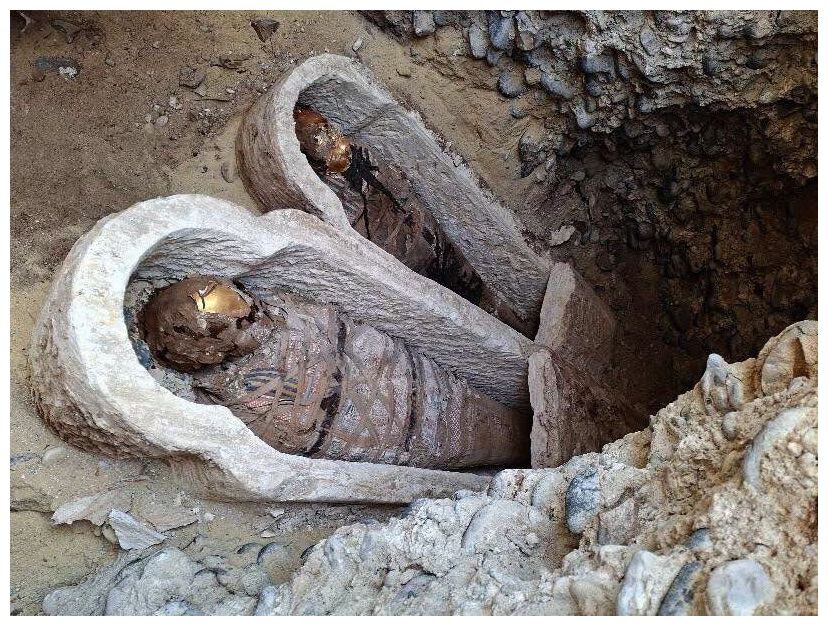
Archaeologists working at the ancient site of Oxyrhynchus in Egypt's Minya Governorate have uncovered a Roman-era burial that combines rare funerary objects with an unexpected literary find: a papyrus fragment from Homer's Iliad concealed inside a mummy.

A Spanish-Egyptian excavation team working at the ancient site of Oxyrhynchus (modern-day El-Bahnasa) has uncovered a Roman-era necropolis containing mummies adorned with golden tongue amulets.

The discovery was announced by Egypt's Ministry of Tourism and Antiquities, highlighting it as one of the most significant recent finds in Middle Egypt. The excavation was led by researchers from the University of Barcelona and the Institute of the Ancient Near East, under the direction of Dr. Maite Mascort and Dr. Esther Pons Mellado.

A Rare Blend of Egyptian and Greek Traditions

The newly uncovered tomb complex dates to the Roman period and lies east of a previously identified Ptolemaic tomb known as Tomb 67. Archaeologists opened a trench revealing three limestone burial chambers, now largely deteriorated due to age and ancient looting.

Inside these chambers, researchers found unusual burial practices. Large ceramic vessels contained cremated human remains — an uncommon feature in Egyptian archaeology — alongside bones of infants and even feline skulls, all wrapped carefully in textiles. This suggests a ritual blending cremation with traditional burial customs, offering new insights into evolving funerary practices during the transition from the Ptolemaic to Roman eras.

Nearby, the team also discovered terracotta and bronze figurines, including representations of the god Harpocrates depicted as a rider and a small statue of Cupid. These artifacts reinforce the presence of Greco-Roman religious influences in the region, pointing to a culturally diverse society where Egyptian, Greek, and Roman beliefs coexisted.

Info

4,000-year-old clay tablets inscribed with magical spells... and beer tabs

For over 100 years, the National Museum has housed a large collection of inscribed tablets from the earliest civilisations of the Middle East - many over 4,000 years old and written in languages that are now extinct. The tablets have led a quiet existence, but now researchers have deciphered them and discovered fascinating texts about magic, kings and good old-fashioned bureaucracy.
Cuneiform tablets
© Troels Pank ArbøllThis is what happens when a 5,000-year-old technology meets the digital age. Researchers from the National Museum of Denmark and the University of Copenhagen have analysed, identified and digitised a large collection of cuneiform tablets.
Around 5,200 years ago, people from ancient cultures in Iraq and Syria began carving characters onto clay tablets. This new system of communication gradually made it possible to develop advanced urban societies with complex administrative systems.

Over the course of 100 years, the National Museum has built up a large collection of these early historical sources, written in cuneiform script in languages long since extinct. The collection has not been studied in recent times, but now researchers from the museum and the University of Copenhagen have, for the first time, analysed, identified and digitised all the ancient texts in the project 'Hidden Treasures: The National Museum's Cuneiform Collection'.

Info

4,000-year-old water channel network discovered in central China

Water Network
© Henan Provincial Institute of Cultural Heritage and Archaeology/Handout via XinhuaThis undated diagram shows a channel linking to individual buildings or kilns at the Wangchenggang site in Dengfeng, central China's Henan Province.
An artificial water channel system dating back some 4,000 years has been unearthed in central China's Henan Province, providing important evidence of the state-level organizational capacity and urban layout of the Xia Dynasty (2070 BC-1600 BC), China's earliest known dynasty, authorities said on Thursday.

The discovery at the Wangchenggang site in Dengfeng, Henan, was revealed at a forum showcasing the province's latest archaeological findings.

Two new artificial ditches from the early Xia Dynasty have been identified at the site, each about three meters wide with a confirmed length of over 120 meters. Running north-south, the ditches were connected to a roughly 10-meter-wide moat, forming a complete water supply, drainage and spatial zoning system, according to Ma Long, a local archaeologist leading the on-site excavation.

Pyramid

New research reveals secrets of a child's mummy

An Egyptian mummy of a boy is an object of scientific research. It is known how old the boy was and where he came from. The cause of death remains a mystery. The research team includes prof. Agata Kubala from the Institute of Art History.
Aswan
© Dr. Wojciech EjsmondView of Aswan, photo by Dr. Wojciech Ejsmond.
Ancient Egyptian mummies are relics of a past that have always sparked the interest of researchers. New technologies provide scientists with more tools to help them uncover even more secrets of embalmed remains.

In 2023, upon the request of the Metropolitan Archbishop of Wrocław, Józef Kupny, scientists began examining the mummy. This was its first known radiological examination. Previously, the remains had never been systematically examined.

The mummy was brought to Wrocław in 1914 as a part of an antique collection belonging to Cardinal Adolf Bertram, who was appointed Bishop of Wrocław that same year. He donated his collection to the local museum (today the Archdiocesan Museum).

The research includes, among other things, the history of the embalmed person and their origin. Thanks to non-invasive radiological examination, it was possible to estimate the sex and age and to detect pathological changes and signs of disease.

The preserved soft tissues and dental development made it possible to accurately determine the sex and age. It is now known that the mummy belonged to a boy who died at around the age of eight.

The radiological analyses have confirmed that the brain had been removed through the nasal cavity. Most of the internal organs have also been removed.