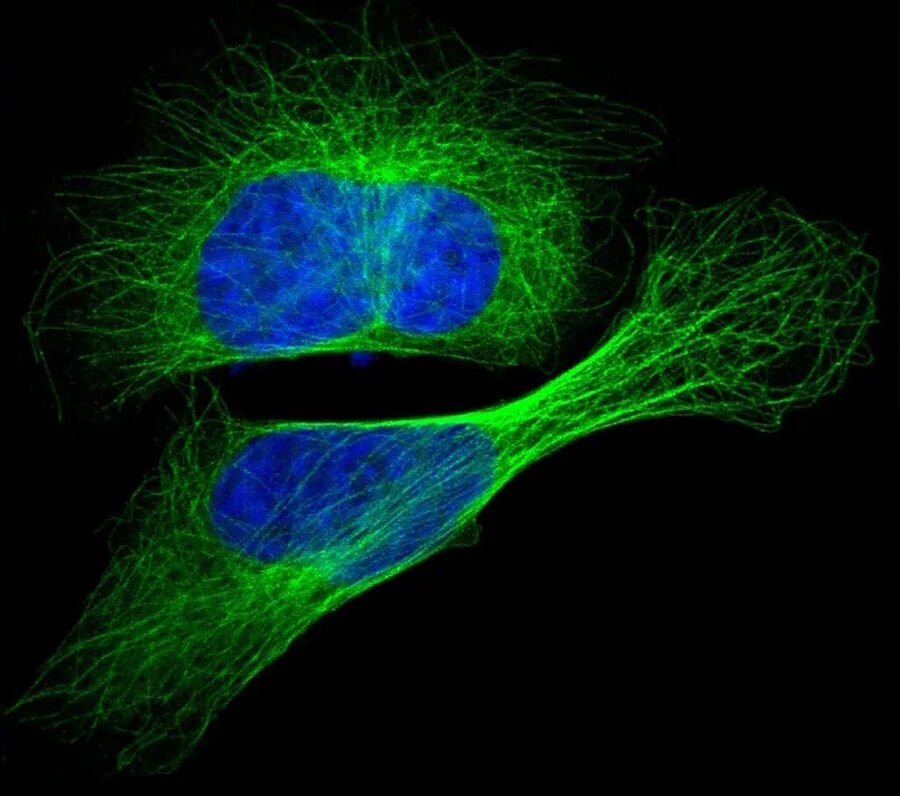
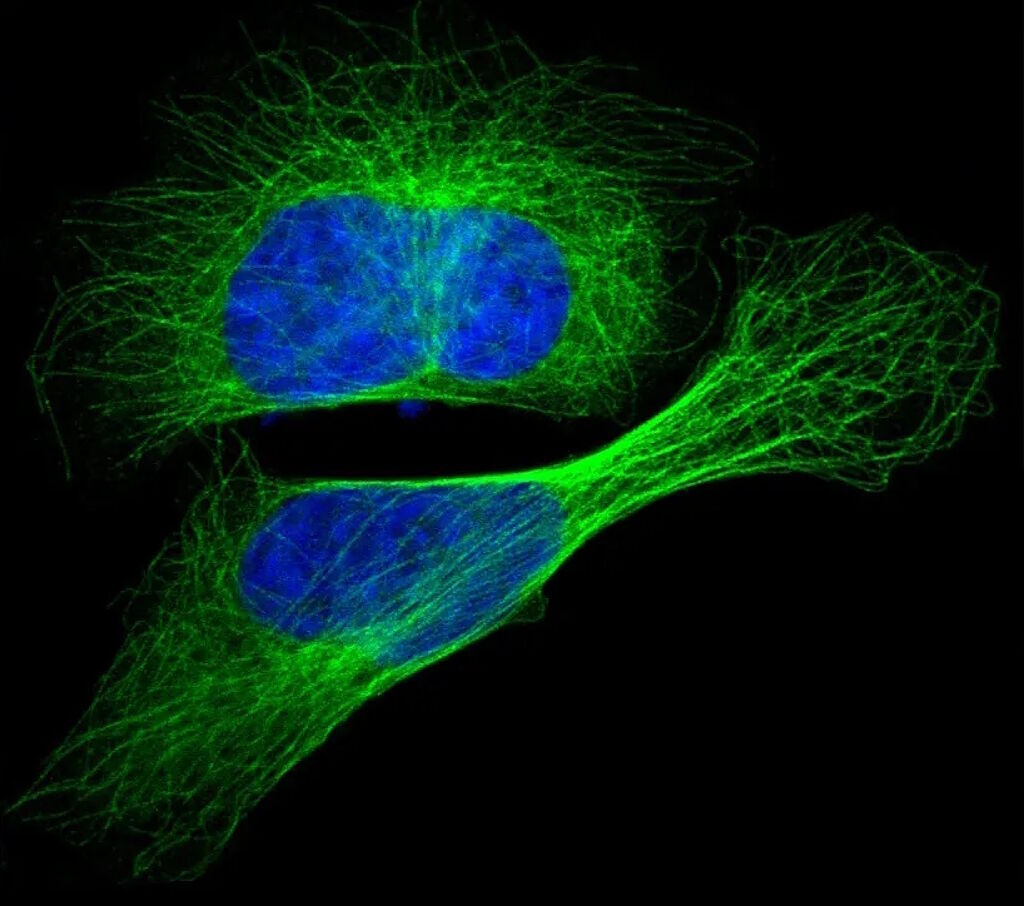
Microtubules (Green): These are structural components of the cell's cytoskeleton, functioning as a rail network for transporting cargo like vesicles and organelles.
Nucleus (Blue): The large, blue circular structures contain the cell's genetic material.
The reason for such cooperation comes down to a cellular form of intelligence, says evolutionary biologist and physician William B. Miller, Ph.D. He's co-author of the book,
The Sentient Cell: The Cellular Foundations of Consciousness, published in January 2024, which proposes a radical new way of thinking about some of life's tiniest components.
Miller is among a small but growing group of scientists who believe we should no longer think of cells as passive robots that automatically follow a code of instructions, carrying out orders from our genome like mindless drones. Instead, they say, the roughly 37 trillion cells that make up our own bodies are conscious — and that life and consciousness began at the same time.
It's a revolutionary idea, Miller tells
Popular Mechanics, but assuming cells have a form of consciousness can give us a better understanding of complex processes. These include cellular communication and decision-making, and even the motivation behind an embryonic cell specializing into a specific organ. While it's not widely accepted among scientists, this concept of "existential consciousness" will profoundly transform the way we approach cellular bioengineering problems like tissue regeneration, provide a different perspective on finding cures for diseases like cancer, and even help us survive on Mars, Miller says.


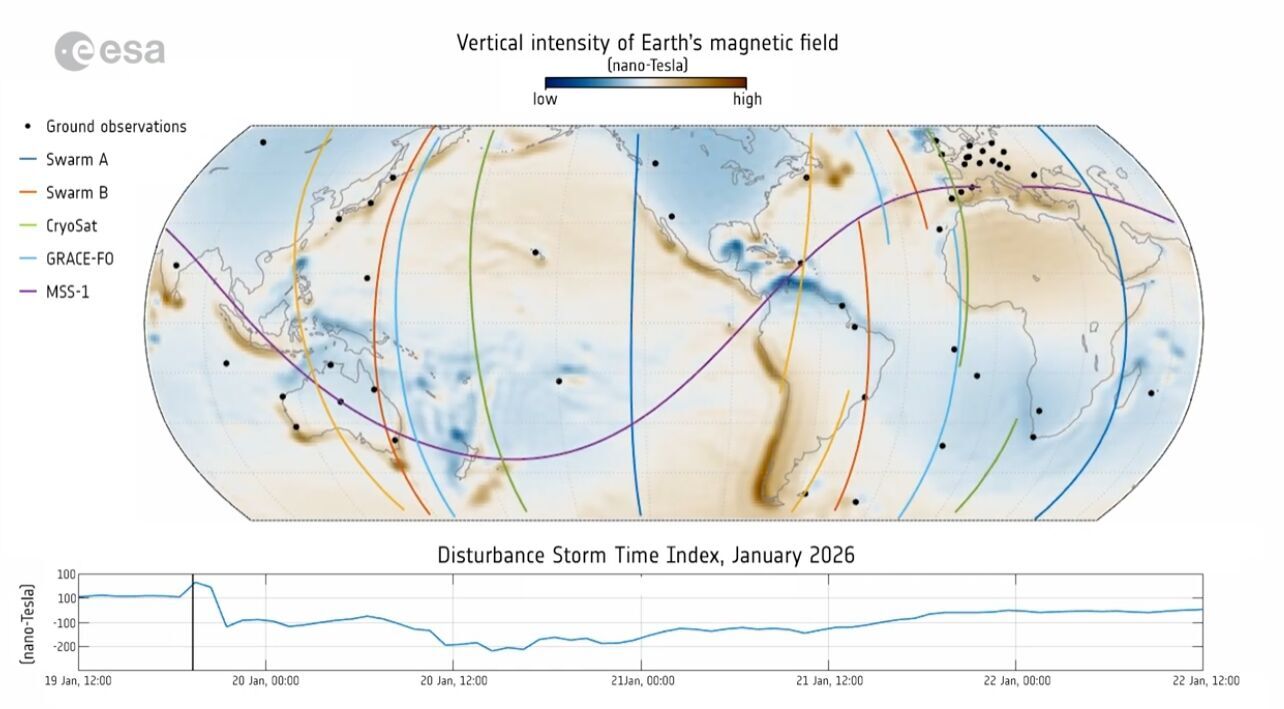



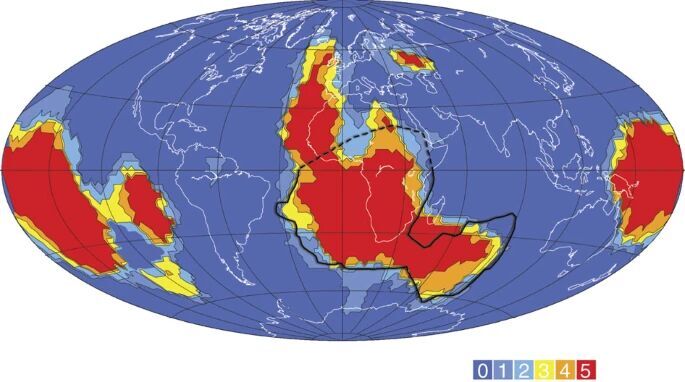













Comment: Signs of a weaker magnetic field... From the Laboratory of Solar Astronomy (xras.ru ), 22 January 2026: