Science & TechnologyS


Info

Could ionospheric disturbances influence earthquakes?

Earthquake
© Unsplash/CC0 Public Domain
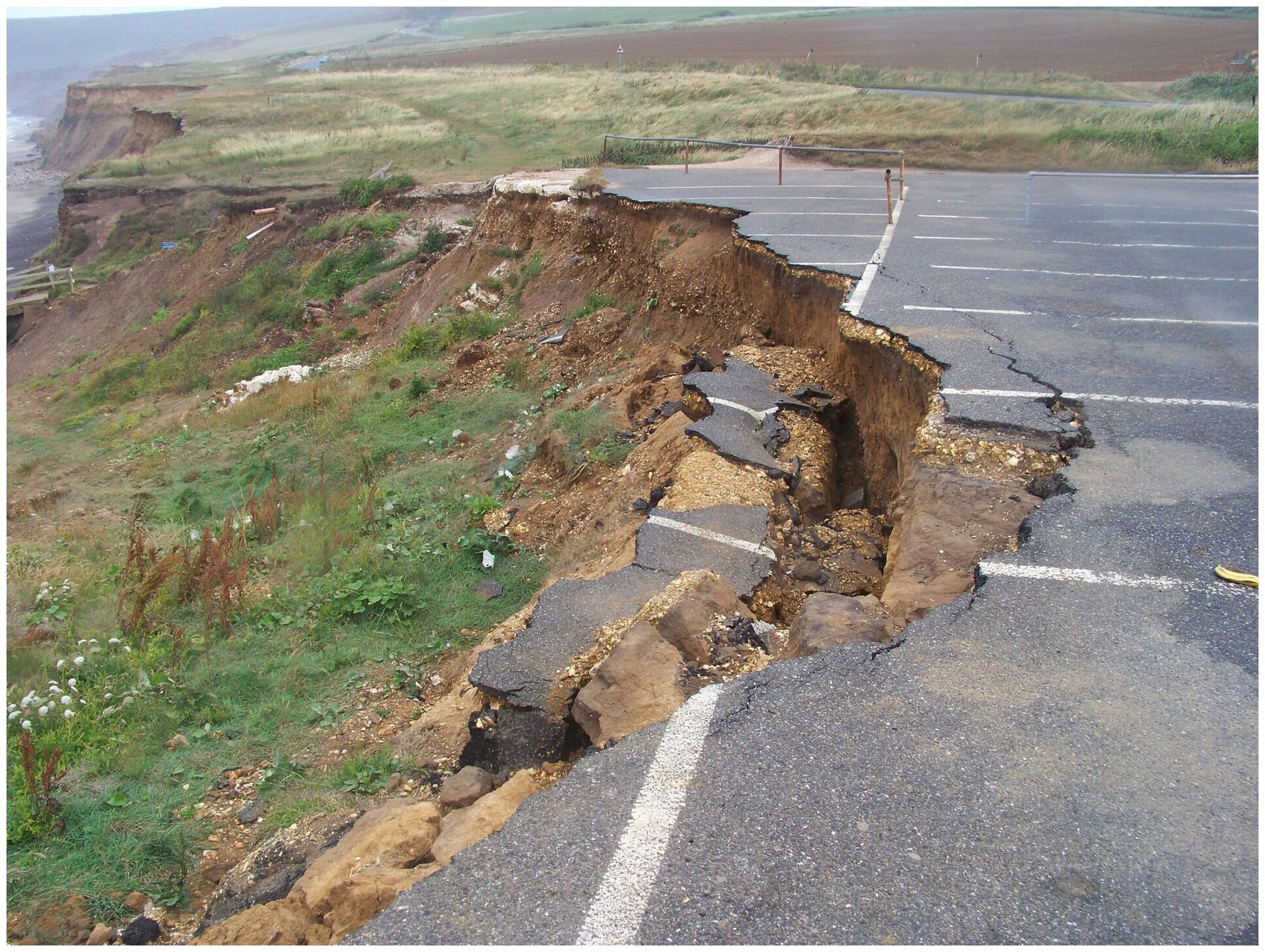
Kyoto, Japan -- Researchers at Kyoto University have proposed a new physical model that explores how disturbances in the ionosphere may exert electrostatic forces within the Earth's crust and potentially contribute to the initiation of large earthquakes under specific conditions.

The study does not aim to predict earthquakes but rather presents a theoretical mechanism describing how ionospheric charge variations -- caused by intense solar activity such as solar flares -- could interact with pre-existing fragile structures in the Earth's crust and influence fracture processes.

In the proposed model, fractured zones within the Earth's crust are assumed to contain high-temperature, high-pressure water, potentially in a supercritical state. These zones behave electrically like capacitors and are capacitively coupled with both the ground surface and the lower ionosphere, forming a large-scale electrostatic system.

When strong solar activity increases electron density in the ionosphere, a negatively charged layer can form in the lower ionosphere. Through capacitive coupling, this space charge may induce strong electric fields inside nanometer-scale voids within fractured crustal regions. The resulting electrostatic pressure could reach magnitudes comparable to tidal or gravitational stresses known to affect fault stability.

Quantitative estimates in the study suggest that ionospheric disturbances associated with large solar flares -- corresponding to increases in total electron content of several tens of TEC units -- could generate electrostatic pressures on the order of several megapascals within crustal voids.

Bizarro Earth

Earth is 'missing' lighter elements. They may be hiding in its solid inner core

earth layers to core
© CHRISTOPH BURGSTEDT/SCIENCE PHOTO LIBRARY/Getty ImagesThe iron of the inner core of our planetary home may exist in an unusual state known as an electride.
These chemical oddities may explain why Earth seems to be deficient in certain elements — and could prove useful in catalysts and more.

For close to a century, geoscientists have pondered a mystery: Where did Earth's lighter elements go? Compared to amounts in the Sun and in some meteorites, Earth has less hydrogen, carbon, nitrogen and sulfur, as well as noble gases like helium — in some cases, more than 99 percent less.

Some of the disparity is explained by losses to the solar system as our planet formed. But researchers have long suspected that something else was going on too.

Recently, a team of scientists reported a possible explanation — that the elements are hiding deep in the solid inner core of Earth. At its super-high pressure — 360 gigapascals, 3.6 million times atmospheric pressurethe iron there behaves strangely, becoming an electride: a little-known form of the metal that can suck up lighter elements.

Comment: The research discusses ammonium crystal as an essential component in Earth's inner core.


Blue Planet

See a rare, bus-sized giant phantom jelly wade through ocean waters off the coast of Argentina

giant phantom jelly
© ROV SuBastian / Schmidt Ocean InstituteA giant phantom jelly documented by a recent deep-sea expedition.
During an expedition off the coast of Argentina, scientists saw something unexpected. In December, they spied a rare jellyfish roughly the length of a school bus, known as the giant phantom jelly, wading through Atlantic waters at about 820 feet below the surface.

"There was a mixture of excitement and disbelief," says María Emilia Bravo, a marine biologist at the University of Buenos Aires in Argentina and the expedition's chief scientist, to Alexa Robles-Gil at the New York Times. "Its ethereal and delicate presence in such an extreme environment was deeply surprising."

The researchers stumbled upon the massive jellyfish while using a remotely operated vehicle (ROV) called SuBastian on an expedition spanning Argentina's entire coast. Unlike some jellyfish, giant phantom jellies lack stinging tentacles. Instead, they use ribbon-like arms to grab prey, typically plankton or small fish, and pull them into their mouths.

Robot

China's robotics industry pivots from 'body' to 'brain' as commercial race heats up

Dobot Atom AI robot
Dobot claims its self-developed vision-language-action model lets humanoid robots react to the real world rather than just perform preprogrammed tasks

Chinese humanoid robotics companies are doubling down on developing intelligent models, as investors eye advances in robot "brains" as the next step towards real-world commercial use.

Shenzhen-based Dobot said on Wednesday that it delivered its third batch of mass produced, full-size humanoid Atom robots, marking a shift from laboratory concept to an industrialised product.

Dobot, listed in Hong Kong, said its self-developed Dobot-VLA, a vision-language-action model, enabled Atom to react to uncertainties in the real world rather than just perform preprogrammed tasks.

Star

Star-killing black hole is one of the most energetic objects in the universe — and it's getting brighter

black hole shedding
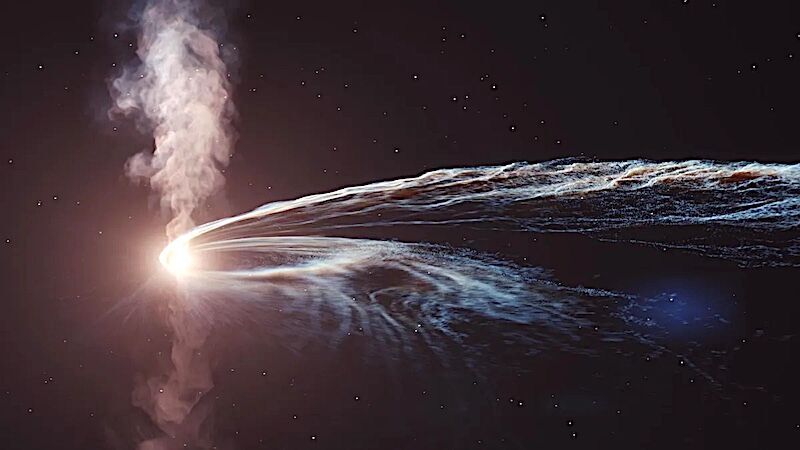
© DESY, Science Communication LabIllustration of a black hole shredding a star and releasing an energy jet.
The powerful 'Jetty McJetface' feature was discovered in one such system.
Scientists say a jet from a previously studied supermassive black hole has grown brighter, becoming one of the most energetic events in the universe.

The jet — nicknamed "Jetty McJetface" — is emanating from a black hole that was previously studied in 2022, after it picked up a star and began shredding it to pieces, releasing the jet in the process. Now, some four years later, that bout of "cosmic indigestion" is still going strong, researchers said.

"This is really unusual," Yvette Cendes, an astrophysicist at the University of Oregon who led the study published Feb. 5 in the Astrophysical Journal, said in a statement. "I'd be hard-pressed to think of anything rising like this over such a long period of time."

Many such star-shredding events have been spotted before, when a star gets too close to the gravitational field to a black hole and is violently torn apart in a process called "spaghettification." But such energy from spaghettification has never been seen before, Cendes said.

Mars

Martian meteorite that fell to Earth is full of ancient water, new scans reveal

meteorite
© NASANWA 7034, a.k.a. "Black Beauty," is a roughly 11-ounce (320 grams) and exceptionally dark meteorite that originated on Mars
A new study has revealed that the iconic Black Beauty meteorite contains much more hidden water than previously suspected. The rock, which fell to Earth from Mars, could reveal clues about the Red Planet's watery past.

Many tiny specks of ancient water are locked within one of the oldest and most famous Martian meteorites ever to fall to Earth, a new study finds. The surprising discovery, achieved using a new form of "neutron scanning," reveals more clues about the Red Planet's watery past, which may have set the stage for extraterrestrial life to flourish.

Meteorite NWA 7034, more commonly known as Black Beauty, is a roughly 11-ounce (320 grams) chunk of Mars that was ejected when another space rock slammed into the Red Planet. It was discovered in 2011 by nomads in the Moroccan region of the Sahara Desert, although it is unclear when it fell to Earth. The meteorite has since become famous for its dark hue, which has been further accentuated by heavy polishing on one of its faces.

Comet 2

A new comet was just discovered. Will it be visible in broad daylight?

The Great Comet of 1680 over Rotterdam.
© Lieve Verschuier/Rotterdam MuseumThe Great Comet of 1680 over Rotterdam.
A newly discovered comet has astronomers excited, with the potential to be a spectacular sight in early April.

C/2026 A1 (MAPS) was spotted by a team of four amateur astronomers with a remotely operated telescope in the Atacama desert on January 13.

It quickly became apparent the newly discovered object was a member of a group called the Kreutz sungrazing comets. These include many of the brightest and most spectacular comets ever seen.

Comet MAPS is moving on an extreme, highly elongated orbit around the Sun, and is diving towards a fiery date with our star. In early April the comet will pass within just 120,000km of the Sun's surface.

If the comet survives, it could become a spectacular sight in the evening sky in early April. It may even become visible in broad daylight as it swings closest to the Sun - unless it falls apart before then.

So what makes these sungrazers so exciting, and what can we expect?

Info

Bezos' Blue Origin Pauses Space Tourism To Focus On The Moon

Blue Origin New Shepard lift off
Blue Origin decided to shift its focus from the edge of space to the Moon.

The company announced on Jan. 30 that it was pausing all of its suborbital commercial flights on its reusable New Shepard rocket for no less than two years in order to focus more resources on delivering a crewed lunar lander to NASA in time to meet Congress's set deadline to establish a permanent human presence on or around the moon by 2030.

"The decision reflects Blue Origin's commitment to the nation's goal of returning to the Moon and establishing a permanent, sustained lunar presence," the company said in a statement.

NPC

Next-generation AI 'swarms' will invade social media by mimicking human behavior and harassing real users, researchers warn

AI chat boxes graphic
© Andriy Onufriyenko via Getty ImagesSocial media users could find themselves swept up in a movement of AI's making.
Swarms of artificial intelligence (AI) agents could soon invade social media platforms en masse to spread false narratives, harass users and undermine democracy, researchers warn.

These "AI swarms" will form part of a new frontier in information warfare, capable of mimicking human behavior to avoid detection while creating the illusion of an authentic online movement, based on a commentary published Jan. 22 in the journal Science.

Imagine finding that the views of your favourite online community are hardening around a position that was previously up for debate. Human instinct is often to follow the "wisdom" of the herd. But in this case, the herd could be secretly shepherded by an AI swarm operating on behalf of an unknown individual, group, political party, company or state actor.

Evil Rays

The world's first telecommunications device was invented in ancient Greece: The hydraulic telegraph

ancient greece telecommunication hydraulic telegraph
A relief of the ancient Greek hydraulic telegraph of Aeneas, artist/period unknown.
The hydraulic telegraph, invented by the ancient Greeks, had the capacity to send long-distance messages as early as the fourth century BC.

The ingenious apparatus is dubbed as the world's first telecommunications device. It was designed for military purposes by Aeneas Tacticus with the purpose of more efficiently sending pre-arranged messages across the vast empire of Alexander the Great.

Operation of the hydraulic telegraph is described in detail in Aeneas' work on sieges, Poliorcetika, which was retrieved by Polybius. The messages sent were along the lines of: "Enemy on sight," "Cavalry attack," "We need wheat," "Infantry in action," "Cyclical movement," and so on.