

So why all the secrecy?
What are they trying to hide from all the rest of us?

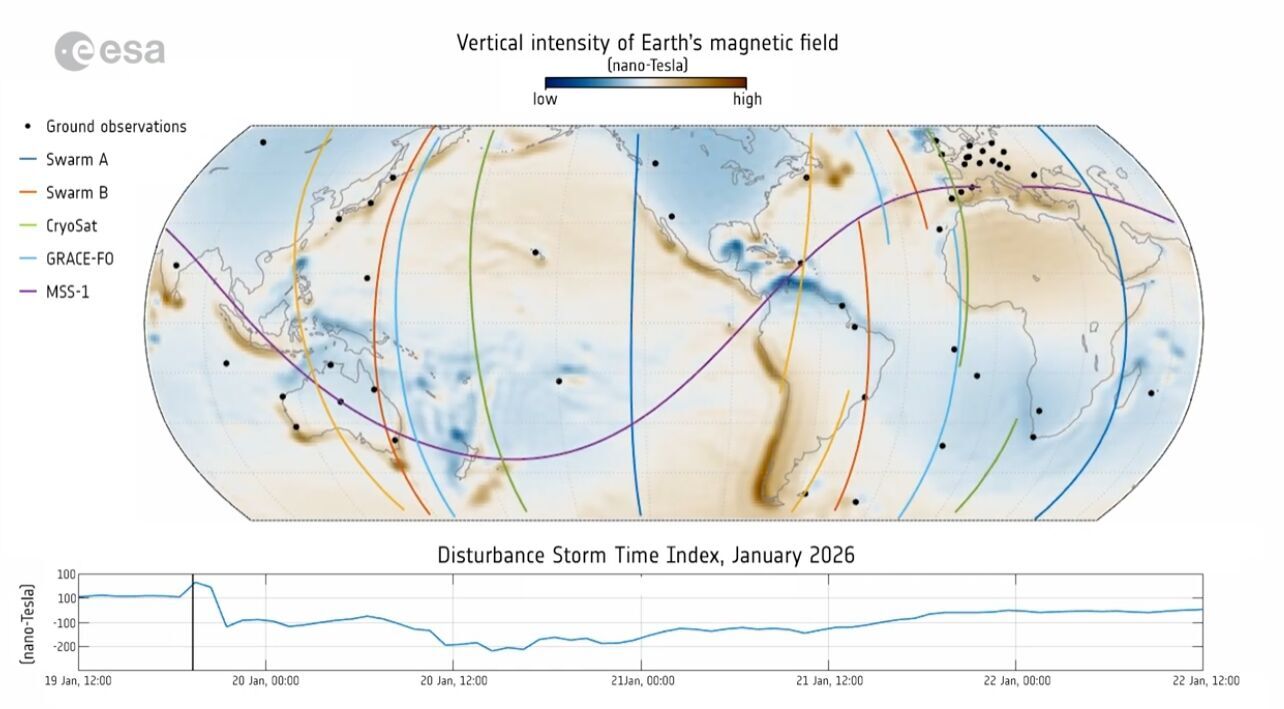

Published this month in Physics of the Earth and Planetary Interiors, the latest results from the Swarm mission reveal that while the South Atlantic Anomaly expanded steadily between 2014 and 2025, a region of the Atlantic Ocean southwest of Africa has experienced an even faster weakening of Earth's magnetic field since 2020.
"The South Atlantic Anomaly is not just a single block," says lead author Chris Finlay, Professor of Geomagnetism at the Technical University of Denmark. "It's changing differently towards Africa than it is near South America. There's something special happening in this region that is causing the field to weaken in a more intense way."
This behaviour is linked to strange patterns in the magnetic field at the boundary between Earth's liquid outer core and its rocky mantle, known as reverse flux patches.
Prof. Finlay explains, "Normally we'd expect to see magnetic field lines coming out of the core in the southern hemisphere. But beneath the South Atlantic Anomaly we see unexpected areas where the magnetic field, instead of coming out of the core, goes back into the core. Thanks to the Swarm data we can see one of these areas moving westward over Africa, which contributes to the weakening of the South Atlantic Anomaly in this region."



Rising carbon dioxide levels now detected in human blood
— Phys Org
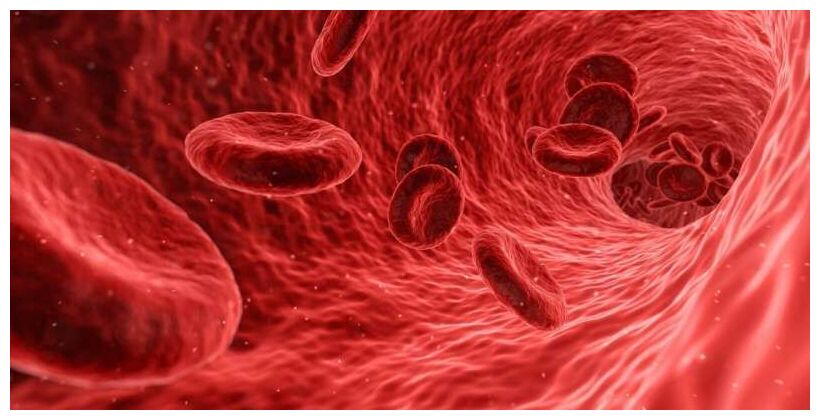
Rising carbon dioxide levels are being detected within the human body, with new research warning a key blood marker for the gas could near its healthy limit within decades if current trends continue. The findings are especially relevant for children and adolescents, whose developing bodies will experience the longest cumulative exposure to rising atmospheric CO₂.
Using data from the U.S. National Health and Nutrition Examination Survey (NHANES), the team examined blood results from around 7,000 people every two years between 1999 and 2020.
Average levels of serum bicarbonate — a marker closely linked to carbon dioxide in the body — have risen by approximately 7% since 1999. Over the same period, average calcium and phosphorus levels have declined.




Comment: Signs of a weaker magnetic field... From the Laboratory of Solar Astronomy (xras.ru ), 22 January 2026: