Health & WellnessS


Health

Neurologist speak out

Vaccines, Amen
© Injecting Freedom
My new podcast, Informed with Aaron Siri, is officially live.

On the first episode of Informed with Aaron Siri, Dr. Russell Surasky — one of the rare physicians in the U.S. double board-certified in neurology and preventive medicine — breaks his silence.

Specializing in complex neurological pain, headaches, spinal disorders, and challenging diagnostic cases, he shares firsthand experiences with acute vaccine adverse events — cases that are quietly acknowledged but rarely reported.

Dr. Surasky speaks out on what needs to be exposed: the profound cognitive dissonance within medicine. He reveals a rare look behind the closed doors of the medical establishment and how it treats cases of serious vaccine harm.

I'll be posting new episodes on YouTube and Spotify — tune in, share, and subscribe!

Bacon n Eggs

Study finds explanation of how ketogenic diets prevent seizures

ketogenic diet foods graphic
© Sara Moser/WashU MedicineKetogenic diets, which are high in fat and very low in carbohydrates, have long been known to reduce epileptic seizures in some patients, but it hasn't been clear why. A new study by WashU Medicine researchers shows in mice that the diet causes changes in the brain that dampen signaling between cells, opening a potential pathway to targeted therapies.
New findings in mice shed light on brain's response to the keto diet, long known to help treat some patients with epilepsy

A ketogenic diet — one that is high in fat and extremely low in carbohydrates — has been known for decades to reduce seizures in some epilepsy patients. But how the highly restrictive diet achieves these effects has not previously been understood.

Researchers at Washington University School of Medicine in St. Louis have now shown in mice that the diet causes physical changes in brain cells affecting how they send information to one another, dampening the strength of the signals between them. This quieter neural landscape might explain how the diet calms the overactive electrical signaling that characterizes an epileptic seizure.

The study appears this month in Cell Reports.

Brain

SuperAgers found to make at least twice as many new neurons as their peers

human brain reflection table super agers more neurons
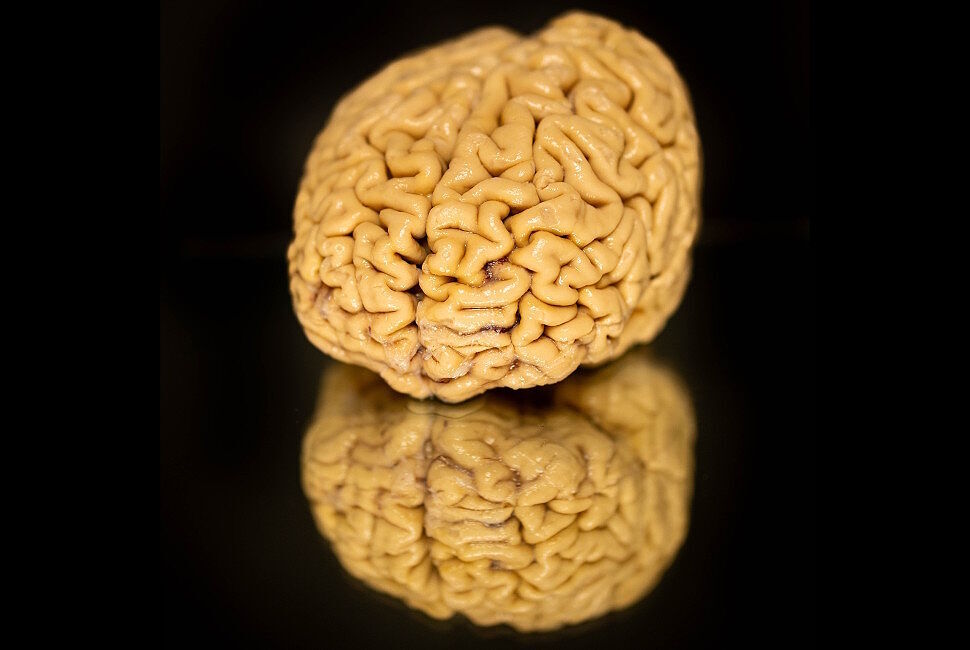
© Shane CollinsA new study finds that SuperAgers produce between two and two and a half times more new neurons than their healthy peers and peers with Alzheimer’s disease, respectively, which may help explain why their memory stays strong with age.
SuperAgers' hippocampi have a unique environment that supports the birth, survival of new neurons

A new study finds that SuperAgers produce between two and two and a half times more new neurons than their healthy peers and peers with Alzheimer's disease, respectively, which may help explain why their memory stays strong with age. Photo by Shane C...

SuperAgers don't just preserve their memory abilities well into their 80s and beyond — their brains continue to generate new neurons in the hippocampus at levels far higher than typical older adults, and even much younger individuals.

That is the groundbreaking finding from a new study led by scientists at University of Illinois Chicago (UIC), who examined, in part, donated brains from the Northwestern University SuperAger Program. SuperAgers are a unique group of adults over age 80 whose performance on tests of episodic memory was equal to or better than that of people in their 50s.

Comment: A pity the researcher did not seem to include dietary habits as part of their research. It might be very instructive.


MAGA

The Glyphosate E.O

farmer
The Executive Order signed this week regarding glyphosate has stirred deep concern among Americans who had rallied behind Trump's plan to "drain the swamp." The Administration seemed to be moving the country toward restored health. The MAHA Movement, in particular, assumed the health of our nation would include an immediate separation from the chemical soup that is unfortunately found in our food.

But then, this EO appeared out of nowhere, tying glyphosate to national defense?

For those who have spent years dealing with a chronic illness from an environmental exposure, this question feels unavoidable: Why would an Administration that was beginning to recognize, on a large scale, the biological consequences of environmental toxins, take steps to secure the continued supply of one of the most widely used, poisonous herbicides in history?

Comment: RFK posted his response on X explaining the devastation that could occur if glyphosate is discontinued immediately:
I will always tell the American people the truth. Pesticides and herbicides are toxic by design, engineered to kill living organisms. When we apply them across millions of acres and allow them into our food system, we put Americans at risk. Chemical manufacturers have paid tens of billions of dollars to settle cancer claims linked to their products, and many agricultural communities report elevated cancer rates and chronic disease.

Unfortunately, our agricultural system depends heavily on these chemicals. The U.S. represents 4% of the world's population, yet we use roughly 25% of its pesticides. If these inputs disappeared overnight, crop yields would fall, food prices would surge, and America would experience a massive loss of farms even beyond what we are witnessing today. The consequences would be disastrous.

I support President Trump's Executive Order to bring agricultural chemical production back to the United States and end our near-total reliance on adversarial nations. His EO protects two pillars of national strength: our defense readiness and our food supply. When hostile actors control critical inputs, they directly threaten the security of the American people. The Trump administration will secure these supply chains to eliminate that vulnerability.

President Trump did not build our current system — he inherited it. For decades, Washington designed modern agriculture. Policymakers wrote farm policy, directed research dollars, structured subsidies and crop insurance, and shaped commodity markets to reward monocultures and maximum yield. Those deliberate choices locked farmers into chemical dependence and prioritized short-term output over long-term soil vitality and human health.

We are now changing course — without destabilizing the food supply.

Alongside @USDA @SecRollins, we are accelerating the transition to regenerative agriculture by expanding farming systems that rebuild soil, increase biodiversity, improve water retention, and reduce reliance on synthetic chemicals, including pre-harvest desiccation.

We are also driving the rapid adoption of next-generation technologies, including laser-guided weed control, electrothermal and electrical systems, robotics, precision mechanical cultivation, and biological controls that replace blanket spraying with precision intervention.

These solutions are not theoretical. Farmers are already putting them to work. Markets are scaling them. Now the federal government will act with urgency to expand their reach and accelerate adoption nationwide.

I have met with hundreds of farmers and agricultural leaders across the country. They understand the pressures firsthand. Chemical inputs cut into margins. Chemical-resistant pests are spreading. Soil health is declining. Foreign markets are shutting out American produce. Farmers want workable alternatives, and they want policies that support transition without threatening their livelihoods.

At HHS, I am leading a coordinated effort grounded in gold standard science. I am working with Secretary Rollins and @EPALeeZeldin to expedite a better future where a thriving agricultural system is less dependent on harmful chemicals. We are sharing data, coordinating strategy, and supporting farmers through a practical transition.

The Make America Healthy Again agenda forces us to challenge long-standing assumptions about how we grow food, structure markets, and measure success in this country. Reform at this scale will test entrenched interests, and it will not move in a straight line. President Trump has opened the door to this debate and backed meaningful change — not only in policy, but in the national conversation about health and agriculture.

American farmers stand at the center of this movement. They deserve policies rooted in rigorous science and economic reality. Our children deserve a food system that protects and strengthens their health.

With President Trump's leadership, we are securing critical supply chains, confronting the health risks embedded in our current system, and deploying every available tool to build a stronger,safer, more resilient American food supply.


Biohazard

Trump Directs USDA to Prioritize Domestic Glyphosate, Phosphorus Production

USDA research facility Maryland
The U.S. Department of Agriculture's research center in Beltsville, Maryland.
Invoking the Defense Production Act, President Donald Trump on Wednesday designated glyphosate-based herbicides and elemental phosphorus as critical to national defense and ordered Agriculture Secretary Brooke Rollins to prioritize and secure domestic supplies.

The order also grants legal immunity to domestic producers that comply with federal directives and gives USDA authority to direct production and control distribution if necessary.

Citing the Defense Production Act, Trump declared phosphorus and glyphosate products are essential not only for agriculture but also for military readiness. The threat of scarcity for either phosphorus or glyphosate would leave the U.S. vulnerable.

The designation also allows the president to direct the production of both products and control the distribution of them.

Comment: Try to avoid eating GMO foods and foods treated with glyphosate-based herbicides.

Glyphosate: A trajectory of human misery


Sherlock

The Atlantic Busted Fabricating Dead Kid Measles Story

Atlantic measles fraud story
Last Thursday, The Atlantic published a heart-wrenching story about an 11-month-old child who died of measles. Written in the second person from the perspective of a mother whose two unvaccinated children fell ill with the disease, the story is rich with personal detail;

"You plant her on the couch with a blanket and put Bluey on the TV while she drifts in and out of sleep..."

"While the kids are napping, you tap a list of your daughter's symptoms into Google and find a slew of diseases that more or less match up..."

"Her cough wracks her whole body, rounding her delicate bird shoulders. She does not sleep well. And as you lift up her pajama top to check her rash one morning, you see that her breathing is labored, shadows pooling between her ribs when she sucks in air."

Turns out, NONE OF THAT HAPPENED. The Atlantic's Elizabeth Bruenig simply made it up, leading to mass confusion.
Elizabeth Bruenig
Elizabeth Bruenig, who fabricated measles scare piece without a disclaimer.
As Laura Hazard Owen of NiemanLab - who initially busted Bruenig - writes:

Comment: The Atlantic is also known for warmongering and having difficulty discerning fiction from reality.


Syringe

MMR and MMRV Vaccines Linked to 2,657% More U.S. Deaths Than Measles Infection Since 1995

measles vaccine mortality
For decades, Americans have been told that measles represents a grave and ongoing threat — and that MMR vaccination is one of the safest and most effective interventions in modern medicine. Pharma-captured mass media and public health agencies have centered almost exclusively on the minimal dangers of measles infection and ignored grieving parents whose children were injured or even killed by the shots. No proper attention has been paid to signals emerging within the federal government's own vaccine safety database.

Now, our new McCullough Foundation study titled "Deaths Following MMR and MMRV Vaccination in the United States," authored by Kirstin Cosgrove, Breanne Craven, Claire Rogers, John A. Catanzaro, Albert Benevides, M. Nathaniel Mead, Mila Radetich, Peter A. McCullough, and Nicolas Hulscher (myself), takes a comprehensive look at reported fatal outcomes following MMR and MMRV vaccination in the United States, doing the work that our public health agencies should have done many years ago.

After analyzing VAERS data through August 29, 2025, we identified a serious mortality safety signal following MMR/MMRV vaccination in the United States. What we observed was not a diffuse or randomly scattered pattern across age groups and time intervals. Instead, we found an alarming number of deaths among infants and toddlers within days of receiving MMR/MMRV vaccines, sharply clustered in the routine first-dose window.

Comment: In addition to the above, measles outbreaks in fully vaccinated populations are well documented. See also:

Texas gave 15,000 more MMR shots this year — Now it has more measles cases than the entire U.S. had in 2024

789 Cases, Zero Genotypes: The Unasked Questions in South Carolina's Measles Outbreak


Coffee

Coffee tied to lower dementia risk, Harvard-MIT study finds

smoker/coffee cup
© UnknownBean there • Done that
New research published in JAMA reveals a strong reason to feel even better about being three to four espressos deep before the cash market opens in New York.

Here's the short version of the findings:
  • Caffeinated coffee was linked to lower dementia risk. Comparing the highest vs lowest consumption groups, the study reported a hazard ratio of 0.82 (95% CI, 0.76 to 0.89), which means higher caffeinated coffee intake was associated with lower risk.
  • People also reported less subjective cognitive decline. The higher-intake group had 7.8% prevalence vs 9.5% in the lower-intake group (prevalence ratio 0.85).
  • The "sweet spot" looked moderate. The most pronounced differences showed up around 2 to 3 cups per day of caffeinated coffee.
  • Decaf did not show a significant association with dementia risk.
The long-running study, led by researchers from Mass General Brigham, Harvard T.H. Chan School of Public Health, and the Broad Institute of MIT, tracked 131,821 U.S. adults for four decades and documented 11,033 dementia cases. One major finding was a very clear pattern: adults who drank about three cups of coffee per day, or one to two cups of tea, had a much lower risk of dementia and more favorable cognitive outcomes over their lifetimes. Decaf, however, did not show the same relationship.

Bullseye

Human "biology was never intended to handle" ultra-processed foods, former FDA head David Kessler warns

rfk ban dyes
Today, an increasing number of Americans across the political spectrum - from Make America Healthy Again activists to everyday shoppers - are voicing concern about the health impact of ultraprocessed foods - those boxed and wrapped in plastic, ready-to-eat items lining grocery store shelves.

Leading the charge are two men who disagree on pretty much everything else about public health - Health and Human Services Secretary Robert F. Kennedy Jr. and Dr. David Kessler, the former commissioner of the U.S. Food and Drug Administration.

The two men have found common ground over a common culprit: a 67-year-old government classification for substances in our food. It's called GRAS, or generally recognized as safe. Kennedy and Kessler say it has allowed big food companies to use ingredients without a full government safety review and flood the market with ultraprocessed foods that now make up 50% of our calories and 60% of our children's diets.

Brain

Is the Definition of Alzheimer's Being Changed to Sell Drugs?

maladie alzheimer
© Crédit: Getty
Alzheimer's is a specific disease that causes shrinkage in the central region of the brain called the Medial Temporal Lobe. It accounts for two thirds of dementia diagnoses.

While a 'dementia' diagnosis can be made from a Cognitive Function Test alone - showing poor function - diagnosing 'Alzheimer's dementia' requires a brain scan of this central area of the brain.

This is sometimes referred to as shrinkage of the hippocampus, which is a central part of the brain that is critical for memory. This shrinkage is not a normal part of ageing. It is a disease. So Alzheimer's is diagnosed on the basis of both a loss of cognitive function and physical evidence of significant brain shrinkage.

Comment: See also: The health program for Alzheimer's disease that mainstream treatment fails to surpass