Science of the SpiritS


Info

Can we really trust our feelings?

Feelings
© Shrew Views
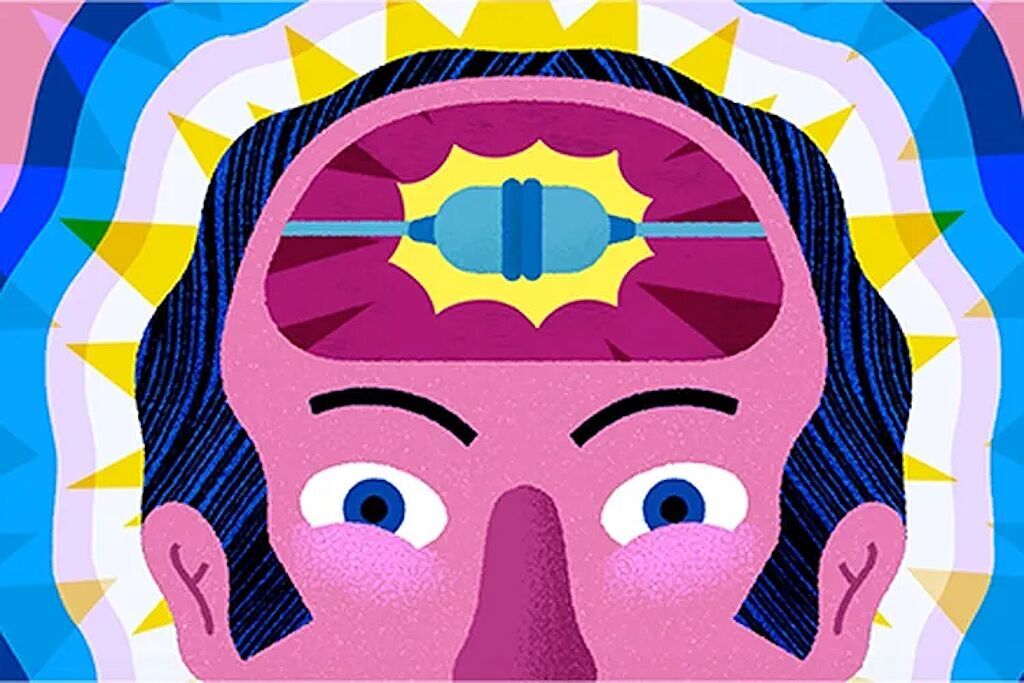
Sure, as long as we are conscious of their true origins. And even if not, sometimes we can trust, other times no. Feelings are odd things. They can come out of nowhere, or they can be highly circumstantial — like the rush of extreme fear when a bear jumps aggressively from behind a tree. They can also be mysterious "gut feelings." Usually, we have some awareness of their unconscious underpinnings. We sense whether a feeling is a solid "gut" instinct, something "creepy," or simply "good" — as in, "I just liked that guy; there was something about him that made me feel comfortable and trusting."

But . . . and it's a big "but," we know we have to be careful. The guy or gal who sweeps us off our feet on a first date needs further scrutiny. We have all fallen into that pit, haven't we? It is a deep, dark chasm, and usually very difficult to climb out of. Did you ever wonder why, back in the day, marriage engagements often lasted what seemed an eternity? There were many social and cultural underpinnings, but one major reason was simply to get past the "swept off your feet" syndrome — to make what was largely unconscious, conscious.

So, what's the big deal? If our impressions of things and people rely too heavily on feelings — especially when we are not conscious of their origins — we can end up in serious trouble. Most of the time, it doesn't really matter what our feelings are about other people. We see an actor we like or meet someone in the grocery store we immediately dislike. Actors don't matter much in our daily lives; their entire craft is built on creating impressions based on unsubstantiated feelings.

Most strangers we encounter don't matter much either. But people like our lawyer, our doctor, or our lover, do. With the exception of the latter, we usually have some objective basis for our assessments — what are their credentials? What is their reputation? Has the state licensed them? (As I clear my throat on that one.) We may still have a gut feeling, which remains important given their role in our lives, but we temper the emotional response with at least some objective evaluation.

Life Preserver

Euthanasia is now 6% of all deaths in the Netherlands; experts urge caution against youths choosing to die

contemplation
© Getty ImagesWhen death becomes a choice
Dutch experts have warned that those under the age of 25 in particular do not have the decision-making abilities to properly consider ending their own life.

Euthanasia is now responsible for 6 percent of all deaths in the Netherlands, and this figure is increasing every year.

According to a report by the regional euthanasia review committee (RTE), cited by the news portal Hirado, 10,341 people died by euthanasia in 2025, and while three-quarters of the applicants were over 70 years old, one case involved someone between the age of 12 and 18.

The number of those choosing to die by euthanasia due to mental illnesses decreased by almost a fifth (174 cases), but more than 85 percent suffered from physical diseases such as cancer, nervous system disorders, and lung or cardiovascular diseases.

There were 499 cases of euthanasia performed on patients with dementia, and the RTE investigated 11 cases where the patient was no longer competent. In addition, 475 cases involved the co-existence of multiple age-related illnesses, and 278 cases involved "other reasons."

Comment: Life is choice...on all levels, at all times, in all circumstances.


Warning

Fear, time preference, and the distortion of human action

Man/fear monster
© Adobe StockFear!
Periods of crisis reveal something unsettling about human behavior. Faced with uncertainty, individuals and institutions alike tend to accept measures that would otherwise be unthinkable. Restrictions on movement, suspension of rights, and centralized decision-making often emerge not gradually, but almost effortlessly, as if they were the natural response to danger.

This pattern is frequently interpreted as a political or institutional failure. But such an explanation remains incomplete. Crises do not merely alter policies, they alter the very structure of human action. Fear — when intensified and socially amplified — does not simply influence decisions, it reshapes the way individuals perceive options, evaluate trade-offs, and act over time.

At its deepest level, fear is not just an emotion. As Martin Heidegger suggested, it reflects a fundamental condition of human existence, an awareness of vulnerability and finitude. Under ordinary circumstances, this condition remains in the background, allowing individuals to act within a relatively stable horizon of expectations. But in moments of acute uncertainty, fear moves to the foreground and begins to reorganize perception itself.

Brain

Managing the hypercurious mind

adhd hyper curiousity
© Drafter123 / iStock
ADHD isn't merely a dysfunction. It's best understood as an impulsive motivational drive for novel information

It's Monday morning at the lab and I have a team presentation due in two hours. I open my laptop intending to tweak a figure, then notice a paper I'd bookmarked. That paper cites another, which leads me to one of the authors' new preprints. Soon I find myself with 27 tabs open, three half-formed ideas scribbled in my notebook, and a new app downloaded to prototype something that has nothing to do with my presentation.

I know I should stop and I can feel the time pressure building, but the pull to wander is too strong - almost physical. Just five more minutes, I promise to myself, and I'll return my attention to the 'real' work. Only when my anxiety becomes impossible to ignore do I force myself to come back to the slides.

This little dance isn't unusual for me and the millions of other people who can spend hours in deep, almost joyful focus when a question grabs our attention, but who can also derail ourselves completely when we hear about a shiny new idea. For a long time, I thought this was a personal failure of discipline, a quirk I needed to manage better. It's only when I started working at the ADHD Research Lab at King's College London that I came to believe it might be something else entirely.

Question

Should society help you to die? The EU now has a case to answer

Noelia Castillo
© Antena 3Noelia Castillo
What the euthanasia of Noelia Castillo reveals about the future of European society.

Today in Spain, a 25-year-old woman named Noelia Castillo is scheduled to undergo euthanasia. Born into a dysfunctional family in Barcelona, Noelia spent her childhood in shelters and fell victim to gang rape in 2022. This trauma resulted in severe clinical depression, and she attempted suicide twice. Her second suicide attempt left her paralyzed and confined to a hospital bed. Since 2024, Noelia has been paralyzed. She requested permission for euthanasia, and psychiatrists determined that her case met the necessary criteria for the procedure: the young woman lives in constant pain and has an irreversible medical condition that does not allow her to have a normal life. However, Noelia's father intervened.

He vehemently opposed the decision, arguing that his daughter needed assistance, not assisted suicide. Despite their complicated relationship and past parental rights issues, he said that her death would cause him great suffering. He sought help from the Abogados Cristianos (Christian Lawyers) organization. The legal battles lasted two years. Throughout this time, Noelia, who was denied the right to end her life, repeated, "My everyday life is awful and tormenting." Ultimately, her father lost the case. Both the Constitutional Court and the European Court of Human Rights affirmed Noelia's right to euthanasia. She is set to die this evening.

Arrow Up

Believe Anything; Believe Nothing

Confirmation Bias
© Shrew Views
What compels us to believe something is true? In an age where photographs can be fabricated, film can be manipulated, and speeches are crafted to deceive, our traditional markers of truth have lost their footing. So, the question becomes: what do you look to as your measure of what is real?

I recently came across a post claiming that the newly released Epstein files prove Donald Trump is a pedophile. It presented what appeared to be a detailed set of documents, emails, perhaps, describing an encounter between Trump and a thirteen-year-old girl allegedly brought to his hotel by Jeffrey Epstein himself. I'll admit I only skimmed it. Reading anything on Facebook demands serious vetting, at least for me. But as I scrolled through, I couldn't help thinking of the Trump haters who would devour it without a second thought, because when it comes to belief, bias often does the heavy lifting.

And I'm not exempt from that. I catch myself gravitating toward reports that frame certain Trump decisions as sound or even shrewd — not necessarily out of admiration for the man, but out of something more like desperate optimism. Call it hopium, if you must. I simply want something, anything, to be going right out there. So, when a report suggests that a particular move was intelligent or calculated, I feel a wave of relief, and I tend to believe it. Though not always. I do make a habit of looking for corroborating sources before I fully buy in.

What can we actually believe? Am I dismissing the pedophile story simply because believing it would force me to despise Trump? And am I accepting the more flattering accounts of his decision-making for reasons that are purely emotional, dressed up as logic? Or is it genuine common sense telling me one story is implausible and the other more grounded? The trouble is, I'm fairly certain the people who believe the pedophile story, the Trump haters, are equally convinced they're applying common sense. So, whose common sense is more reliable, and by what measure? Nobody can answer that clearly.

And this is where we find ourselves in an AI-infested world: our old tools for sorting truth from fiction have been quietly retired. There was a time when the information we encountered came from sources that had earned at least a baseline of trust. Journalism once operated by a strict code, no story ran without multiple corroborating sources, on-record confirmation, editorial oversight, and a clear chain of verification. Photographs were considered credible. Film was considered ironclad, nearly impossible to fabricate in any convincing way. Those days are gone.

People 2

The modern workplace wasn't designed for humans - and it shows

stress workplace office modern technology
© pexels/shvetsa, CC BY-SAWork designed for maximum output often treats people like expendable resources—and burnout is the predictable result.
Input. Output. Targets met. Value created. Performance delivered. Strip work down to its essentials and for many people, this is what remains: a machine-like focus on producing, performing and optimising.

The system keeps moving - often with little concern for the human energy, attention and resilience required to keep it running. Over time, this can lead to stress, ill-health, disengagement and burnout. Almost half of employees worldwide say they're currently burned out and nearly three-quarters of US workers report that workplace stress affects their mental health.

But exhaustion isn't a personal failing - it's built into the system. Indeed, this way of organising work is not accidental. It has deep roots in how modern workplaces were designed.

Comment: Further reading:


Sheeple

Forewarned: Understanding the psychology of advertising

city center advertising
© Songquan Deng/Shutterstock.comTimes Square, a venue saturated in advertisements competing for attention
Great advertisers understand exactly how their audience thinks and what they respond to. Learn how businesses apply psychology to create effective ads.

Psychology is not only a tool to better understand those around you — it can also lead to increased influence. And while these persuasion skills are typically put toward research or counseling, they can also be useful in fields outside of the direct psychology world, such as marketing and advertising.

Although the methods used in advertising and marketing have changed progressively over the years — from merchants in ancient times screaming in marketplaces to digital marketers buying ads on social media sites — the underlying psychology in marketing and advertising has remained the same.

No matter how complex it may seem, psychology truly is an everyday principle. We use it in our relationships, our communication, and we can learn to use it to improve sales in business.

Comment: Though framed as a basic how-to for aspiring marketers, the article is also a way to arm yourself against manipulative sales tactics.

Further reading:


Brain

How your brain creates 'aha' moments and why they stick

inspiration aha moment genius graphic
© Irene Pérez for Quanta Magazine
A sudden flash of insight is a product of your brain. Neuroscientists track the neural activity underlying an "aha" and how it might boost memory.

Introduction

Here are three words: pine, crab, sauce. There's a fourth word that combines with each of the others to create another common word. What is it?

When the answer finally comes to you, it'll likely feel instantaneous. You might even say "Aha!" This kind of sudden realization is known as insight, and a research team recently uncovered how the brain produces it, which suggests why insightful ideas tend to stick in our memory.

Maxi Becker, a cognitive neuroscientist at Duke University, first got interested in insight after reading the landmark 1962 book The Structure of Scientific Revolutions) by the historian and philosopher of science Thomas Kuhn. "He describes how some ideas are so powerful that they can completely shift the way an entire field thinks," she said. "That got me wondering: How does the brain come up with those kinds of ideas? How can a single thought change how we see the world?"

Wine

Imagine All the People: Food, freedom and what it means to be human

John Lennon
© Inspiredpencil.com/KJNImagine
Fifty-four years ago, John Lennon asked us to imagine a world with no borders.

But he did not foresee a world where the only thing left to colonise would be our own humanity.

Today, the 'dream' has become a civilisation crisis, a cage of standardisation, designed to strip us of our culture and our biological autonomy (the corporate and geopolitical forces behind this are set out in "Corporate Power, Imperial Capitalism and the Struggle for Food Sovereignty").

Most critiques of the global agrifood system, even those that describe themselves as radical, remain confined within the system's own language.

They argue over efficiency versus sustainability and yields versus biodiversity. These debates often assume that the underlying framework of industrial development is given and that the task is to optimise outcomes within it.

But what if you refuse this paradigm? What if you expose what is usually kept beyond the bounds of policy debate? What if you argue that the crisis of food and agriculture is not primarily technical, environmental or economic but strikes at the heart of what it means to be human? And what if we ask: what kind of humans are prevailing societal structures producing?

Comment: Where there's a way, there's a will.