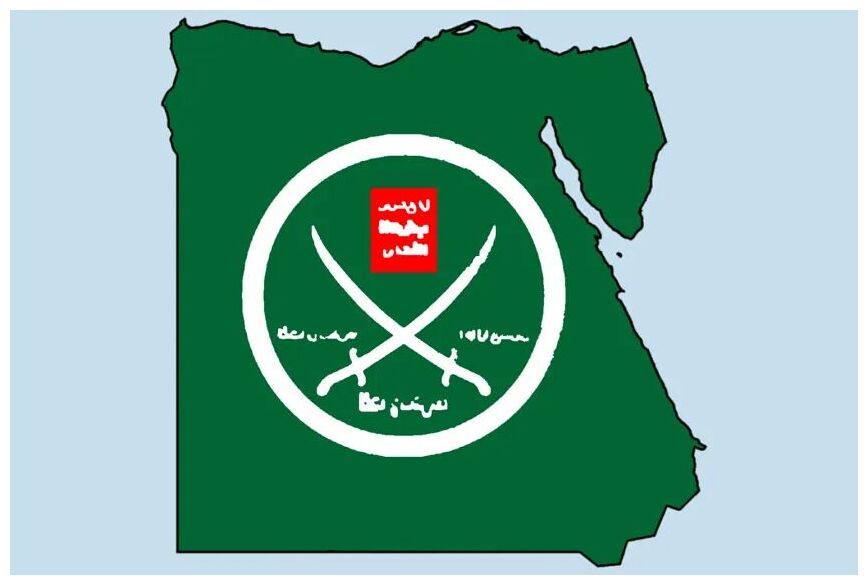
The Muslim Brotherhood began as a moral movement morphed into a political machine — then, through the writings of Qutb, into an ideological precursor to jihadist extremism.

© Kevork’s Newsletter
In 1928, in the colonial garrison town of Ismailia, Egypt, a modest schoolteacher named Hassan al-Banna planted the seed of a movement that would shape the future of political Islam across the Arab world. The
Muslim Brotherhood began as a religious and charitable society, preaching moral reform and Islamic revival. But it quickly evolved into something far more ambitious: a political project with transnational reach and ideological rigidity.
Al-Banna's vision was clear from the beginning. Islam, he declared, was not just a religion but a "faith, a worship, a nation, and a nationality; a religion and a state." That fusion of mosque and state — recasting Islam as the complete and exclusive foundation for political and legal life — was the cornerstone of the Brotherhood's ideology. It was framed as a righteous alternative to what al-Banna saw as the corrosive Western influence infecting Egypt: secularism, materialism, and cultural decay.
But here's where the story gets more complicated and politically useful for its critics.
There's a lingering, controversial claim that the
Suez Canal Company, then dominated by British and French colonial interests, provided financial support to al-Banna in the Brotherhood's formative years. Whether it was a small grant, a local endorsement, or a tacit nod from colonial administrators, the implication is serious: that the Brotherhood may have emerged not solely as an indigenous resistance to empire, but as a
British-tolerated — if not British-facilitated — movement, designed to fragment the nationalist opposition and weaken secular or leftist currents like the Wafd Party.
There is no definitive proof to resolve this allegation. But the Brotherhood's early growth in a British-controlled company town, coupled with its initially non-threatening posture, gave enough rhetorical ammunition to its later enemies — chief among them:
Gamal Abdel Nasser.
After the
1952 Free Officers coup, the Brotherhood initially found common cause with Nasser's military regime. Both wanted to eliminate the monarchy, both wanted to expel the British. But this alliance was doomed from the start. The Brotherhood pushed for an Islamic state; Nasser envisioned a secular, Arab nationalist republic. The Brotherhood's wide grassroots support unnerved the new regime, and by 1954, the movement was banned, its members imprisoned or executed, and its leadership driven underground.
This is when the
British-funding allegation re-emerged — not just as gossip, but as a
Nasserist narrative.







Comment: Substitute "Russians" in Ukraine, or "Palestinians" in Israel, the language of psychopathic, genocidal groups is horrifyingly identical. The template justifying mass murder is always the same.