Secret HistoryS


Pi

Why are algorithms called algorithms?

al-Khwārizmī persia mathematician middle ages algebra
© Wikimedia CommonsThere are no images of what Muhammad ibn Mūsā al-Khwārizmī looked like, but in 1983 the Soviet Union issued a stamp in honour of his 1,200th birthday.
A brief history of the Persian polymath you've likely never heard of

Algorithms have become integral to our lives. From social media apps to Netflix, algorithms learn your preferences and prioritise the content you are shown. Google Maps and artificial intelligence are nothing without algorithms.

So, we've all heard of them, but where does the word "algorithm" even come from?

Over 1,000 years before the internet and smartphone apps, Persian scientist and polymath Muhammad ibn Mūsā al-Khwārizmī invented the concept of algorithms.

In fact, the word itself comes from the Latinised version of his name, "algorithmi". And, as you might suspect, it's also related to algebra.

X

Condemnation of the Cebrowski doctrine changes nothing

Baker-Hamilton Commission
© voltairenet.orgThe Baker-Hamilton Commission takes stock of the Rumsfeld/Cebrowski strategy in Iraq.
For a year, Washington debated the Rumsfeld/Cebrowski doctrine of state destruction, concluding that it had led to disaster in Iraq. But nothing changed. Vice President Dick Cheney pursued his plan to annihilate Iran, leading to skirmishes in Lebanon and Georgia. To turn the sordid page on George W. Bush's presidency and the widespread use of torture, the deep state engineered the election of Barack Obama. From now on, the focus is on the president's skin color, not his policies.

The Baker/Hamilton Commission

In Iraq, things are going from bad to worse. The Provisional Government that succeeded the Provisional Authority is failing to stabilize the country. Once the "shock and amazement" of the Allied bombings has dissipated, the population is waking up and becoming aware of the looting and destruction carried out by the Provisional Authority. From the very beginning, the United States burned the archives and the national library. They first looted those national museums whose treasures had not been hidden in time. They methodically privatized the country's socialist economy for their own benefit, with the help of "their" specialists like former Bulgarian President Petar Stoyanov and former Russian Prime Minister Yegor Gaidar.

Comment: FYI:
The "Rumsfeld Doctrine", named after former United States Secretary of Defense Donald Rumsfeld, is a phrase coined by journalists concerned with the perceived transformation of the U.S. military. It would be considered Rumsfeld's own take on RMA (revolution in military affairs). It seeks to increase force readiness and decrease the amount of supply required to maintain forces, by reducing the number in a theater. This is done mainly by using LAVs (Light Armored Vehicles) to scout for enemies who are then destroyed via airstrikes. The basic tenets of this military strategy are:
  • High-technology combat systems;
  • Reliance on air forces;
  • Small, nimble ground forces.
The early phases of the wars in Afghanistan and Iraq are considered the two closest implementations of this doctrine.


Helm

The forces of centralization and the struggle for freedom

breaking chains
© AdobeStruggle for Freedom
The concept of centralization is generally seen as a consequence of certain political decisions or as the cause of certain societal structures. But centralization and its opposite — decentralization — can also be interpreted as opposing historical processes that should be taken into account in the long struggle for liberty.

Forces of Centralization

Centralization is a historical process that is "centripetal" in nature; it is the totality of forces in society that move economic wealth and political power towards one or a few centers. This process should be thought of, not only in the geographical, but also organizational sense. Indeed, as means of communication improve, centralization may even conceivably be mainly institutional.

There is a natural tendency for human society to centralize. People are more efficient and more protected in large communities, rather than spread out as isolated individuals or small groups. The obvious interests in sharing information and trading goods give a natural incentive for people to gather on the proverbial "marketplace." Groups of people allow the division of labor that is fundamental for social and economic development. These incentives in turn drive the improvement of communications and the harmonization of standards and laws.

Russian Flag

Meet the Frenchman who became Russian nobility - and the Russian exile who charmed de Gaulle

Alexander I
Emperor of All the Russias, Grand Duke of Finland, King of Poland, of the House of Holstein-Gottorp-Romanov; eldest legitimate son of Paul I and elder brother of Nicholas I, grandson of Catherine II.
What if the real story of France and Russia is told not by treaties - but by two men who crossed the mirror?

"My life - what a novel!" Napoleon is said to have exclaimed. Two lesser-known men might have echoed that sentiment: a French-born Russian named Traversay, and a Russian-born Frenchman named Peshkov. Opposite in origin, parallel in destiny - their lives form a curious symmetry.

The marquis who became a Russian

All but forgotten by modern reference books, Jean-Baptiste de Traversay - known in Russia as Ivan Ivanovich - was among the most capable naval commanders of his era. The Russian version of his name isn't a footnote, but a clue: his story was anything but typical.

Info

Prehistoric star map carved in stone discovered in Bulgaria

A prehistoric star map
© Photos courtesy of Georgi Georgiev.A prehistoric star map carved in stone near Skobelevo village is believed to be one of the oldest known depictions of the night sky.
A recently uncovered archaeological site in the Rhodope Mountains of southern Bulgaria is now entering the scientific spotlight. In a statement shared directly with us by researcher Georgi Georgiev, one of the site's discoverers, the carved rock near the village of Skobelevo is believed to represent a prehistoric star map — possibly one of the earliest known attempts to depict the night sky in stone. The find promises to redefine our understanding of ancient astronomy and the spiritual life of early civilizations in the Balkans.

This unique find not only adds a significant piece to the puzzle of human history but also opens new avenues in the field of archaeoastronomy.

An Accidental Discovery with Historic Significance

The star-studded rock was discovered on May 20, 2013, by researchers Georgi Georgiev and Ivelina Georgieva during a field expedition near an ancient Thracian necropolis. Measuring approximately 2×3 meters, the rock lies deep in the forest, oriented along an east-west axis and embedded with a natural marble vein. This luminous vein is thought to symbolize the Milky Way, further supporting its interpretation as a celestial map.

The stone's surface features 56 meticulously carved conical holes of various diameters — 24 in the northern half and 32 in the southern — representing stars of different magnitudes. Several constellations are clearly outlined, including Ursa Major (the Great Bear) and Leo, with additional alignments suggesting Cassiopeia, Cygnus, Lyra, and the Pleiades star cluster.

Bizarro Earth

What international order?

Thierry Messan
© UnknownThierry Messan delivers a speech in Magdeburg Germany • November 4, 2023
We reproduce the text of Thierry Meyssan's speech in Magdeburg (Germany), during the conference organized by the magazine Compact , "Friendship with Russia", on November 4, 2023. He explains what constitutes, according to him, the fundamental difference between the two conceptions of the world order that clash today from Donbass to Gaza: that of the Western bloc and that to which the rest of the world refers. It is not a question of knowing whether this order should be dominated by a power (unipolar) or by a group of powers (multipolar), but whether it should be, or not, respectful of the sovereignty of each. The author draws on the history of international law, as Tsar Nicholas II and Nobel Peace Prize winner Léon Bourgeois conceived it.

Thierry Meyssan:

"We have seen NATO's crimes, but why affirm our friendship with Russia? Isn't there a risk that Russia will behave tomorrow like NATO does today? Are we not going to substitute one form of slavery for another? To answer this question, I would draw on my experience as an advisor to five successive heads of state. Everywhere, Russian diplomats told me: "You're on the wrong track: you're committing yourself to putting out a fire here, when another has started elsewhere. The problem is deeper and broader."

So I would like to describe to you the difference between a world order based on rules and one based on international law. This is not a linear story, but a struggle between two worldviews; a struggle that it is up to us to continue.

Eye 2

Best of the Web: CIA officer George Joannides monitored Oswald before and after JFK assassination, new records reveal

Lee Harvey Oswald
© Corbis via Getty Images/National ArchivesLee Harvey Oswald distributes "Hands Off Cuba" flyers in New Orleans. This photograph was used in the Kennedy assassination investigation. A newly released CIA document indicates an agent ran an operation that came into contact with Oswald before he was accused of assassinating President Kennedy in 1963.
For the first time since President Kennedy's assassination nearly 62 years ago, the CIA has tacitly admitted that an officer specializing in psychological warfare ran an operation that came into contact with Lee Harvey Oswald before the Dallas killing.

Why it matters: The disclosure Thursday — nestled in a batch of 40 documents concerning officer George Joannides — indicates the CIA lied for decades about his role in the Kennedy case before and after the assassination, according to experts on JFK's slaying.
  • The linchpin document: A Jan. 17, 1963, CIA memo showing Joannides was directed to have an alias and fake driver's license bearing the name "Howard Gebler."
  • Until Thursday, the agency had denied that Joannides was known as "Howard," the case officer name for the CIA contact who worked with activists from an anti-communist group opposed to Cuban dictator Fidel Castro called the Cuban Student Directorate.
  • For decades, the agency also falsely said it had nothing to do with the student group, which was instrumental in having Oswald's pro-Castro stances published soon after the shooting.

Comment: Well, it only took 62 years.

See also:


Red Flag

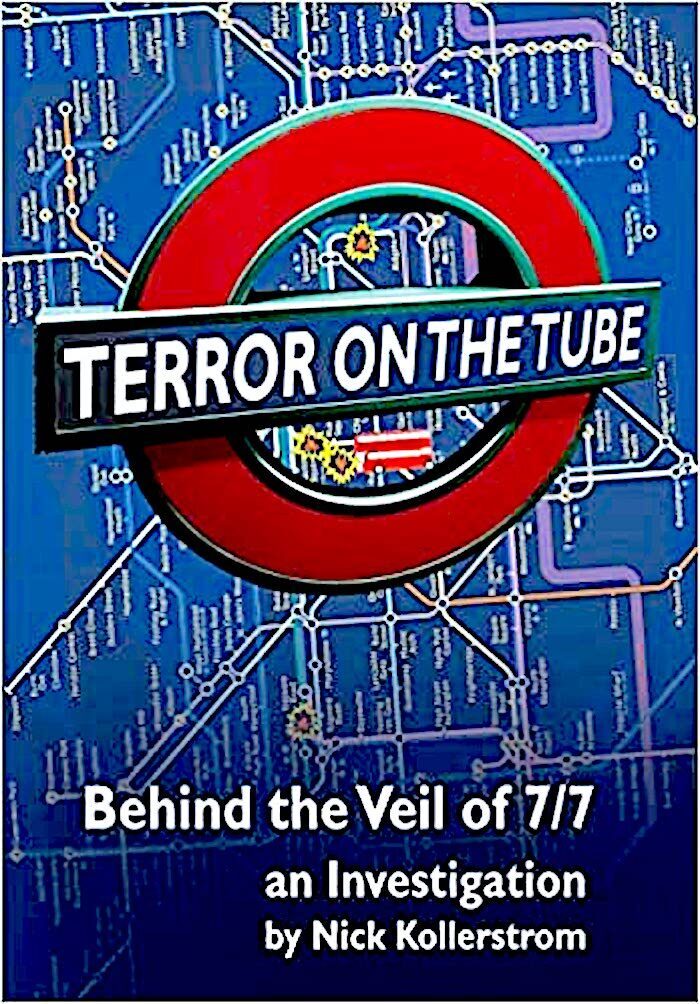
Flashback Best of the Web: 'Terror on the Tube: Behind the veil of 7/7'

To some it may seem that the author has taken slight leave of his senses; that in obsessive pursuance of now obscure events of mere historical relevance he evidences a strange and incurable critical distemper. Certainly, judging by the mass amnesia - even amongst so-called 'progressives' - for these events, such a diagnosis appears well-nigh unassailable. But for those who (to quote 'V') 'see what I see' then the entire slew of major terrorist attacks starting with 9/11 and continuing on through with those in Bali in 2002, Istanbul in 2003, Madrid in 2004,
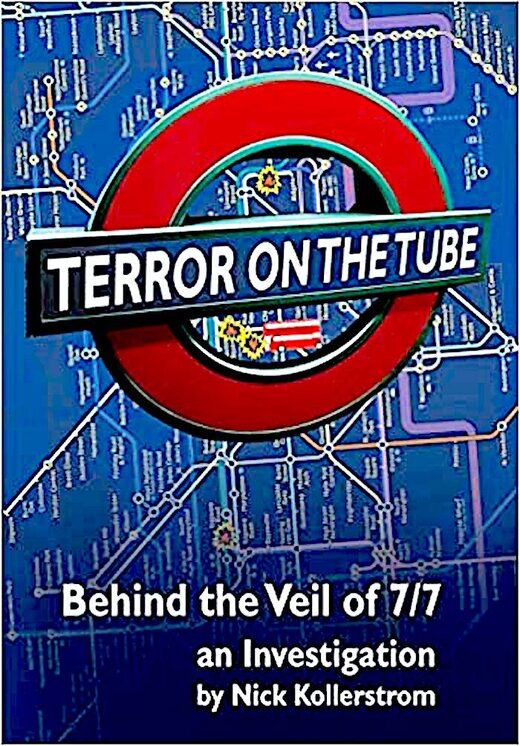
Book terror on the tube
© Nick Kollerstrom
London in 2005 and Mumbai in 2006...and beyond, can be, indeed must be, viewed in the light of 'false flag' terrorism. By which we mean, of course, state terrorism in the service of supporting both US / NATO imperialism abroad, and oligarchic social control and para-fascism at home.

The thesis, then, (and to make it explicit) animating these extended forays into the obscure bowels of mere history, is that false-flag terrorism, far from being some fevered figment of the paranoid political imagination (as so tendentiously characterized by the establishment), or even just an isolated, irrelevant tactical ploy that simply distracts from more 'substantive', more strategic, political happenings (as portrayed by many leading progressive pundits), is, in truth, systemic in nature. As such, it is a highly effective pillar of elite policy that is deployed with depressing regularity and with depressingly predictable consequences. It is a time honoured, well-honed tool solidly situated in the political kitbag of every imperial and fascist state. What's more, as Kevin Barrett forthrightly opines in his introduction to Terror On The Tube:
'In the end, the reader of this book will understand that the post-Cold War West is being terrorized not by Muslims, but by the Western state apparatus itself. This is hardly surprising, since we know that it was NATO (under command by the Pentagon) that was carrying out the worst "terrorist attacks" against Europeans during the Cold War, which we now remember as 'Gladio'.'

Archaeology

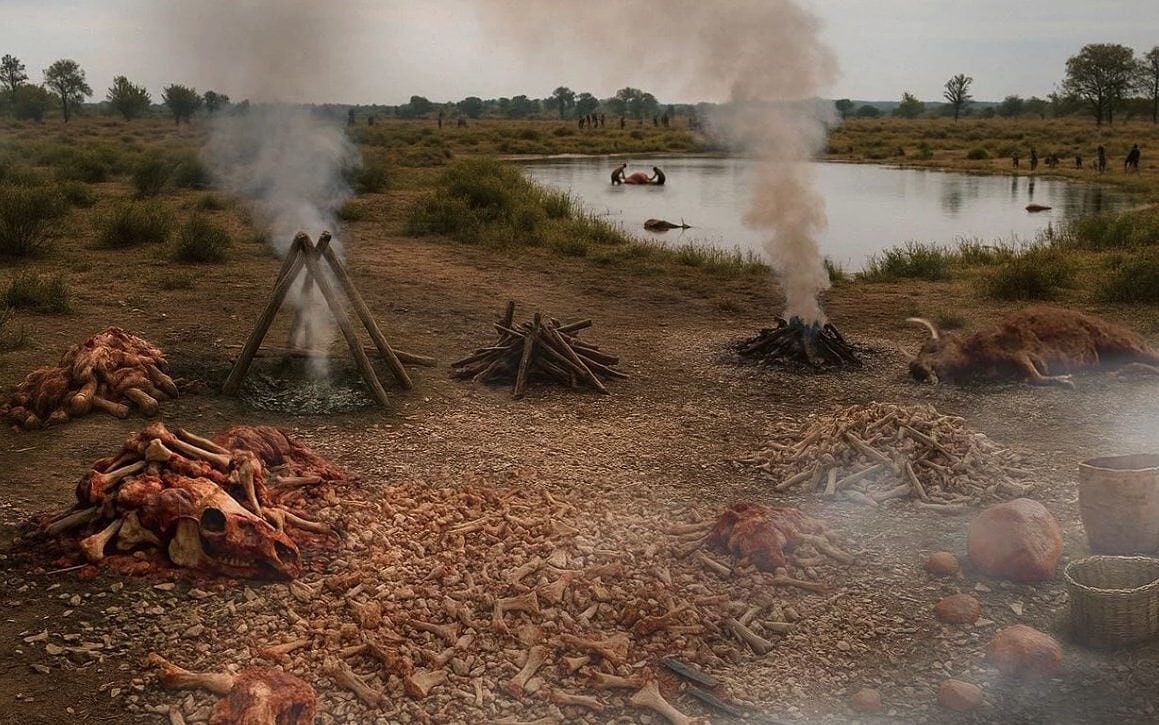
Neanderthals had animal fat 'factories' up and running 125,000 years ago

‘fat factory’ Neanderthals
© Scherjon, Leiza-MonreposAn artist’s impression of the ‘fat factory’ run by Neanderthals in Germany Credit:
Archaeological research finds marrow-rich bones in clusters, suggesting extinct species of human rendered fat in intelligent way

Neanderthals living 125,000 years ago may have mass-produced grease from animal bones in "factories", a study has found.

They may have been rendering fat from crushed animal bones in the Neumark-Nord region in central Germany, according to archaeological research, published in Science Advances.

While many bones that contained less marrow were spread out across the archaeological site, researchers observed that many of the marrow-rich bones were located in clusters - sites they call "fat factories".

Comment: Live Science adds:
The research, published Wednesday (July 2) in the journal Science, reveals that these archaic human relatives had a process for extracting grease from animal bones — and it may have saved them from a lethal condition.

The condition, known as protein poisoning or rabbit starvation, happens when humans eat too much protein and don't get enough fat or carbohydrates. Neanderthals would have likely been at high risk of protein poisoning, as they largely ate meat.
And from PhysOrg:
While the scientists found no preserved containers or direct evidence that the bone fragments were boiled, they note that high concentrations of the heated bone fragments were found near charcoal and a water source. They also mention the possibility that organic perishable containers, made out of deer skin or birch bark, might have been used to process food.

It is still unclear how long the site was used, or whether bones had been saved in advance for later processing, but the evidence found at this site still provides some eye-opening insights into the sophistication of Neanderthal adaptability and survival methods. More evidence is needed to determine when these "fat factories" became common or whether this was a more isolated event.


Info

World's earliest steel acupuncture needles found in 2,000-year-old Chinese tomb

Acupuncture Needles
© Courtesy of Yang JunNeedle fragments found in the broken jade tube section unerathed from the famed tomb of the Marquis of Haihun in East China's Jiangxi Province.
Needle-like artifacts unearthed from the famed tomb of the Marquis of Haihun in East China's Jiangxi Province have been confirmed to be the world's earliest known steel acupuncture needles, marking a pivotal moment in the history of traditional Chinese medicine, according to a document from the provincial cultural relics and archaeological institute sent to the Global Times on Thursday.

Discovered within a jade tube inside a gilded lacquer box placed near the occupant of the tomb - Liu He, a deposed Western Han Dynasty (206BC-AD25) emperor later known as the Marquis of Haihun - the needles were found fragmented and heavily corroded.

"At least five needle fragments were visible within the broken jade tube section. Only one could be fully extracted; the others remained embedded inside, with traces of decayed textile attached," Yang Jun, head of the tomb's excavation team, told the Global Times on Thursday.

Researchers, prioritizing artifact preservation, carefully analyzed only fragments that had naturally detached.