Secret HistoryS


Info

Scientists discover who created Kenya's 9,000-year-old rock paintings

Kenya Rock Art
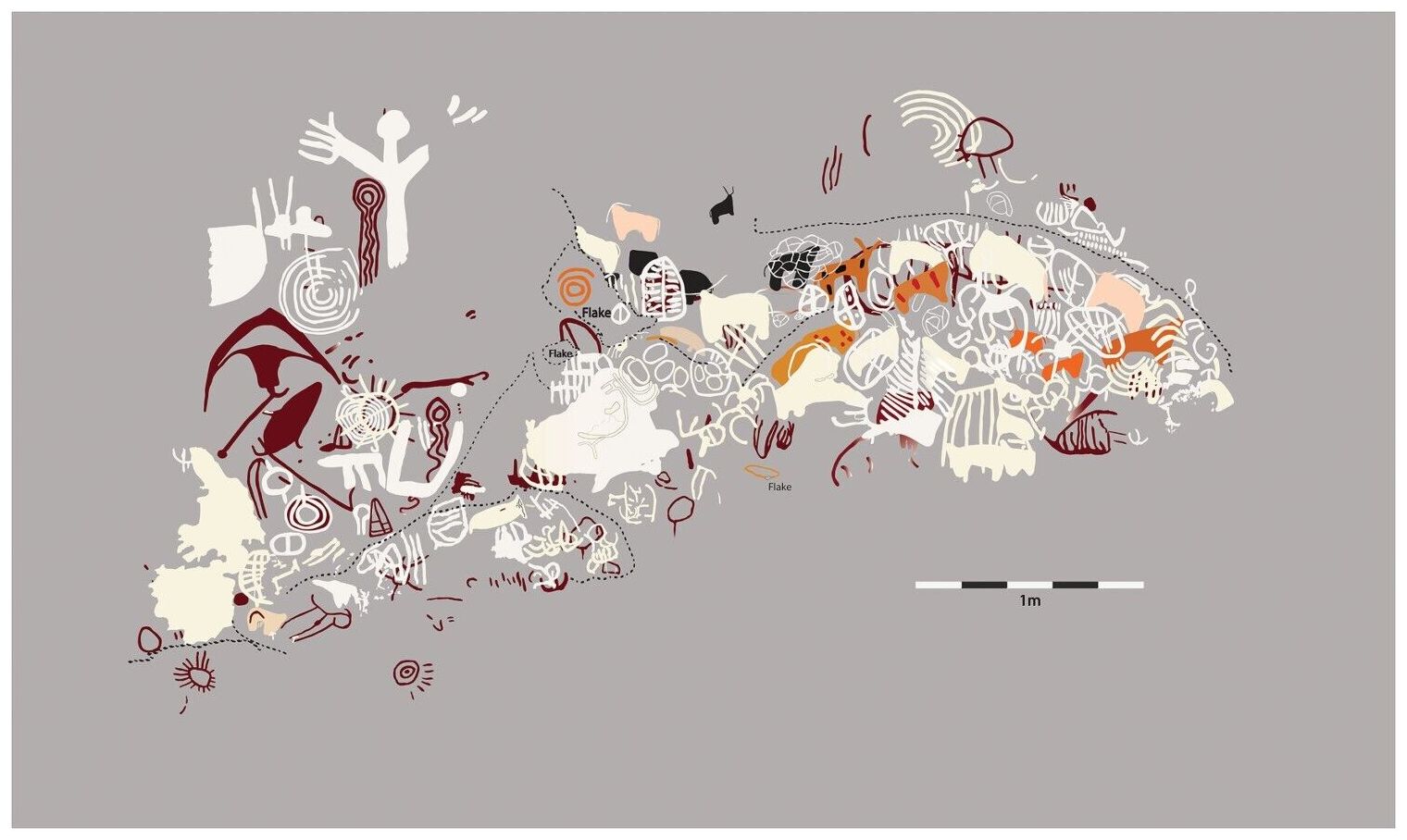
© Azania: Archaeological Research in AfricaKakapel: redrawing of the complete area of Odak’s Panels 2 and 3 (traced by Catherine Namono and Benjamin Smith in, 2011 redrawn by Wendy Voorveld in 2012 and coloured for publication by Kgolagano Vena).
A major breakthrough in African archaeology has revealed who created one of East Africa's most enigmatic rock art sites. At Kakapel Rockshelter in western Kenya, researchers have reconstructed a nearly 9,000-year-long visual record — linking ancient paintings to specific human communities for the first time.

The discovery, published in Azania: Archaeological Research in Africa, combines high-precision rock art recording, archaeological excavation, and ancient DNA analysis to unlock a question that has long challenged researchers: who made these paintings, and when?

A Rare Case Where Rock Art Meets Genetics

Rock art is notoriously difficult to date. Even more challenging is identifying the people behind it. At Kakapel, however, scientists had a rare advantage. They could directly compare painted layers on rock surfaces with excavated human remains and genetic data from the same site.

The result is one of the clearest chronological frameworks ever established for African rock art.

Researchers produced the first millimeter-accurate tracing of the main rock panel, capturing hundreds of previously undocumented figures. By analyzing overlapping images, they identified four distinct painting phases, each corresponding to different cultural groups that occupied the shelter over thousands of years.

Book

42 lost pages of the new testament manuscript discovered

Codex H
© University of Glasgow
An international team of academics led by Professor Garrick Allen at the University of Glasgow has successfully recovered 42 lost pages from one of the world's most important early New Testament manuscripts: Codex H.

The manuscript, a 6th-century copy of the Letters of St Paul, was lost to history when it was disassembled at the Great Lavra Monastery on Mount Athos, Greece, in the 13th century. Its pages were re-inked and reused as binding material and flyleaves for multiple other manuscripts. Today, the surviving fragments are scattered across libraries in Italy, Greece, Russia, Ukraine, and France.

Professor Garrick Allen explains the process that led to the discovery:"The breakthrough came from an important starting point: we knew that at one point, the manuscript was re-inked. The chemicals in the new ink caused 'offset' damage to facing pages, essentially creating a mirror image of the text on the opposite leaf - sometimes leaving traces several pages deep, barely visible to the naked eye but very clear with latest imaging techniques.

"In partnership with the Early Manuscripts Electronic Library (EMEL), researchers used multispectral imaging to process images of the extant pages, in order to recover 'ghost' text that no longer physically exists, effectively retrieving multiple pages of information from every single physical page. To ensure historical accuracy, the team also collaborated with experts in Paris to perform radiocarbon dating, confirming the parchment's 6th-century origin."

Cross

The sinister convergence of Klaus Schwab's "Great Reset" with the Vatican and "Liberation Theology"

Camara
© anuvdpArchbishop Dom Helder Camara of Brazil
Amid the 2020 global covid lockdowns and economic dislocations it has caused, Klaus Schwab, a previously low-profile founder of a Swiss-based business forum, emerged on the world stage calling for what he called a Great Reset of the entire world economy, using the pandemic as driver.

He even published a book in July 2020 outlining his blueprint. It has been rightly called a technocratic society with global top-down central planning. Schwab uses global warming fears and the plight of the world's poor to justify what is in effect a plan for global totalitarianism where, as the Davos website puts it, nobody will own anything.

What is not well-known is the fact that the inspiration for Schwab's dystopian plans comes from a Catholic bishop whom he met in Brazil in the 1970's. That bishop links Schwab's vast globalist network with the powerful political influence of the present Pope Francis.

Far from a traditional Catholic priest, this bishop was known as the "Red Bishop" and endorsed Castro's Cuba model, as well as the Mao Cultural Revolution in which millions of Chinese were killed or destroyed in a purge of the enemies of Mao. His name was Archbishop Dom Helder Camara of Brazil, the leading early figure spreading the Church movement known as "Liberation Theology" during the 1960s and 1970s.

Pyramid

Archaeologists find Iliad 'Catalog of Ships' papyrus inside Egyptian mummy

Mummy Papyrus
© Egypt’s Ministry of Tourism and Antiquities via Facebook
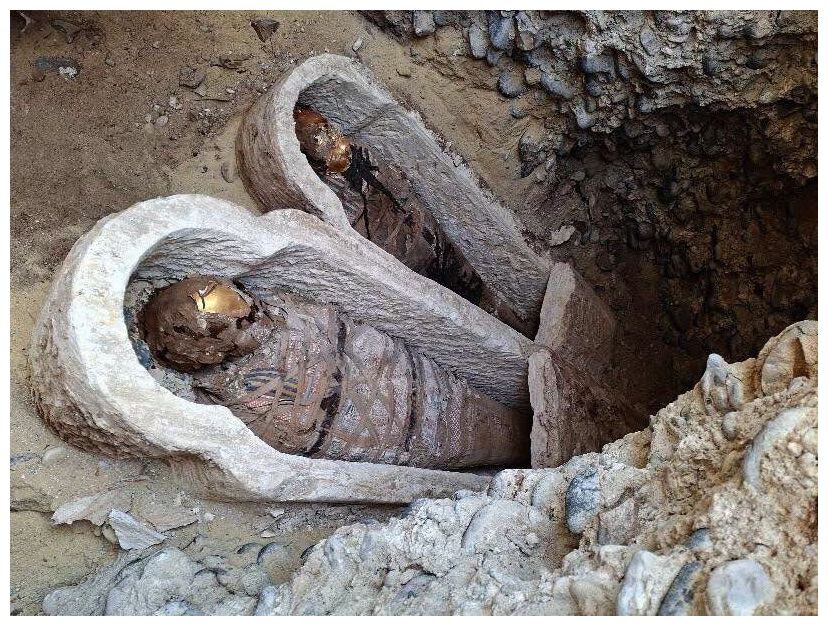
Archaeologists working at the ancient site of Oxyrhynchus in Egypt's Minya Governorate have uncovered a Roman-era burial that combines rare funerary objects with an unexpected literary find: a papyrus fragment from Homer's Iliad concealed inside a mummy.

A Spanish-Egyptian excavation team working at the ancient site of Oxyrhynchus (modern-day El-Bahnasa) has uncovered a Roman-era necropolis containing mummies adorned with golden tongue amulets.

The discovery was announced by Egypt's Ministry of Tourism and Antiquities, highlighting it as one of the most significant recent finds in Middle Egypt. The excavation was led by researchers from the University of Barcelona and the Institute of the Ancient Near East, under the direction of Dr. Maite Mascort and Dr. Esther Pons Mellado.

A Rare Blend of Egyptian and Greek Traditions

The newly uncovered tomb complex dates to the Roman period and lies east of a previously identified Ptolemaic tomb known as Tomb 67. Archaeologists opened a trench revealing three limestone burial chambers, now largely deteriorated due to age and ancient looting.

Inside these chambers, researchers found unusual burial practices. Large ceramic vessels contained cremated human remains — an uncommon feature in Egyptian archaeology — alongside bones of infants and even feline skulls, all wrapped carefully in textiles. This suggests a ritual blending cremation with traditional burial customs, offering new insights into evolving funerary practices during the transition from the Ptolemaic to Roman eras.

Nearby, the team also discovered terracotta and bronze figurines, including representations of the god Harpocrates depicted as a rider and a small statue of Cupid. These artifacts reinforce the presence of Greco-Roman religious influences in the region, pointing to a culturally diverse society where Egyptian, Greek, and Roman beliefs coexisted.

Info

4,000-year-old clay tablets inscribed with magical spells... and beer tabs

For over 100 years, the National Museum has housed a large collection of inscribed tablets from the earliest civilisations of the Middle East - many over 4,000 years old and written in languages that are now extinct. The tablets have led a quiet existence, but now researchers have deciphered them and discovered fascinating texts about magic, kings and good old-fashioned bureaucracy.
Cuneiform tablets
© Troels Pank ArbøllThis is what happens when a 5,000-year-old technology meets the digital age. Researchers from the National Museum of Denmark and the University of Copenhagen have analysed, identified and digitised a large collection of cuneiform tablets.
Around 5,200 years ago, people from ancient cultures in Iraq and Syria began carving characters onto clay tablets. This new system of communication gradually made it possible to develop advanced urban societies with complex administrative systems.

Over the course of 100 years, the National Museum has built up a large collection of these early historical sources, written in cuneiform script in languages long since extinct. The collection has not been studied in recent times, but now researchers from the museum and the University of Copenhagen have, for the first time, analysed, identified and digitised all the ancient texts in the project 'Hidden Treasures: The National Museum's Cuneiform Collection'.

Info

4,000-year-old water channel network discovered in central China

Water Network
© Henan Provincial Institute of Cultural Heritage and Archaeology/Handout via XinhuaThis undated diagram shows a channel linking to individual buildings or kilns at the Wangchenggang site in Dengfeng, central China's Henan Province.
An artificial water channel system dating back some 4,000 years has been unearthed in central China's Henan Province, providing important evidence of the state-level organizational capacity and urban layout of the Xia Dynasty (2070 BC-1600 BC), China's earliest known dynasty, authorities said on Thursday.

The discovery at the Wangchenggang site in Dengfeng, Henan, was revealed at a forum showcasing the province's latest archaeological findings.

Two new artificial ditches from the early Xia Dynasty have been identified at the site, each about three meters wide with a confirmed length of over 120 meters. Running north-south, the ditches were connected to a roughly 10-meter-wide moat, forming a complete water supply, drainage and spatial zoning system, according to Ma Long, a local archaeologist leading the on-site excavation.

Pyramid

New research reveals secrets of a child's mummy

An Egyptian mummy of a boy is an object of scientific research. It is known how old the boy was and where he came from. The cause of death remains a mystery. The research team includes prof. Agata Kubala from the Institute of Art History.
Aswan
© Dr. Wojciech EjsmondView of Aswan, photo by Dr. Wojciech Ejsmond.
Ancient Egyptian mummies are relics of a past that have always sparked the interest of researchers. New technologies provide scientists with more tools to help them uncover even more secrets of embalmed remains.

In 2023, upon the request of the Metropolitan Archbishop of Wrocław, Józef Kupny, scientists began examining the mummy. This was its first known radiological examination. Previously, the remains had never been systematically examined.

The mummy was brought to Wrocław in 1914 as a part of an antique collection belonging to Cardinal Adolf Bertram, who was appointed Bishop of Wrocław that same year. He donated his collection to the local museum (today the Archdiocesan Museum).

The research includes, among other things, the history of the embalmed person and their origin. Thanks to non-invasive radiological examination, it was possible to estimate the sex and age and to detect pathological changes and signs of disease.

The preserved soft tissues and dental development made it possible to accurately determine the sex and age. It is now known that the mummy belonged to a boy who died at around the age of eight.

The radiological analyses have confirmed that the brain had been removed through the nasal cavity. Most of the internal organs have also been removed.

Gavel

Trial prosecuting murderous Freemason criminal network begins in France

Franc-Maconnerie cover
French polemicist Leo Taxil alleged Freemasonry has rooted in Satanism
Freemasonry has long been seen as the invisible hand guiding the course of human history. While that history is replete with examples of Freemasons configuring the architecture of society, the inner machinations of its influence have largely been shrouded in secrecy. Although Freemasonry and other secret societies have remained adept at shielding the public from having a perspective on the immense influence they wield, seminal moments throughout history have been able to cast some light through the shadows they hide behind. From the publication of John Robison's monumental 1797 anti-Masonic polemic Proofs of a Conspiracy to the Morgan Affair, which saw the Anti-Masonic Party become the first third party to be elected to U.S. Congress, to the Taxil "Hoax," which revealed the perverse occult philosophies at the root of Freemasonry, to iconoclastic American journalist Alex Jones sneaking into Bohemian Grove and capturing its Cremation of Care ritual on video, the thread that has sewn the veil of secrecy those esoteric orders hide behind has incrementally unraveled more and more with each subsequent revelation.

The latest episode revealing the extent of the power and influence that secret societies still hold has begun to unfold in France, following the start of a trial exposing a network operating out of a Freemason lodge just outside of Paris that served as the epicenter of a vast criminal conspiracy reaching some of the highest echelons of the French government, from its police forces to its intelligence agencies.

Info

Ancient Korean society practiced human sacrifice and high inbreeding, researchers find

A genomic analysis of dozens of ancient Korean skeletons revealed a special "sacrificial caste" of people.
Joyeong burial complex in Gyeongsan, South Korea
© Gyeongsan CityExcavation of tombs in the Joyeong burial complex in Gyeongsan, South Korea.
About 1,500 years ago, entire families were sacrificed to honor local royalty in what is now South Korea, a new genetic study finds. The analysis also reveals a dense kinship system focused on women and their descendants.

In a study published Wednesday (April 8) in the journal Science Advances, an international team of researchers investigated 78 skeletons from the Imdang-Joyeong burial complex in Gyeongsan, located in the southeast region of the Korean Peninsula. The tombs in this cemetery were constructed between the fourth and sixth centuries, during the Three Kingdoms period (circa 57 B.C. to A.D. 668). Historical records suggest that, in the Silla kingdom, people practiced "sunjang," a form of human sacrifice in which servants, or "retainers," were killed and buried with the local elite, and that the society favored "consanguineous" marriage between related individuals.

By analyzing the DNA of 78 skeletons found in the Imdang-Joyeong burial complex, the researchers discovered 11 pairs of people who were first-degree relatives (such as parent and offspring, or siblings) and 23 pairs of people who were second-degree relatives (such as grandparent and grandchild or aunt and niece), suggesting that the Silla society preferred to bury closely related people together.

But the researchers also found five individuals — both royal and nonroyal — whose parents were closely related, including one first-cousin pairing, proving that both the Silla royal elites and the Silla people who were sacrificed to them practiced consanguineous marriage.

Info

Seal tooth pendant reveals ancient human culture and long-distance trading

Seal Tooth
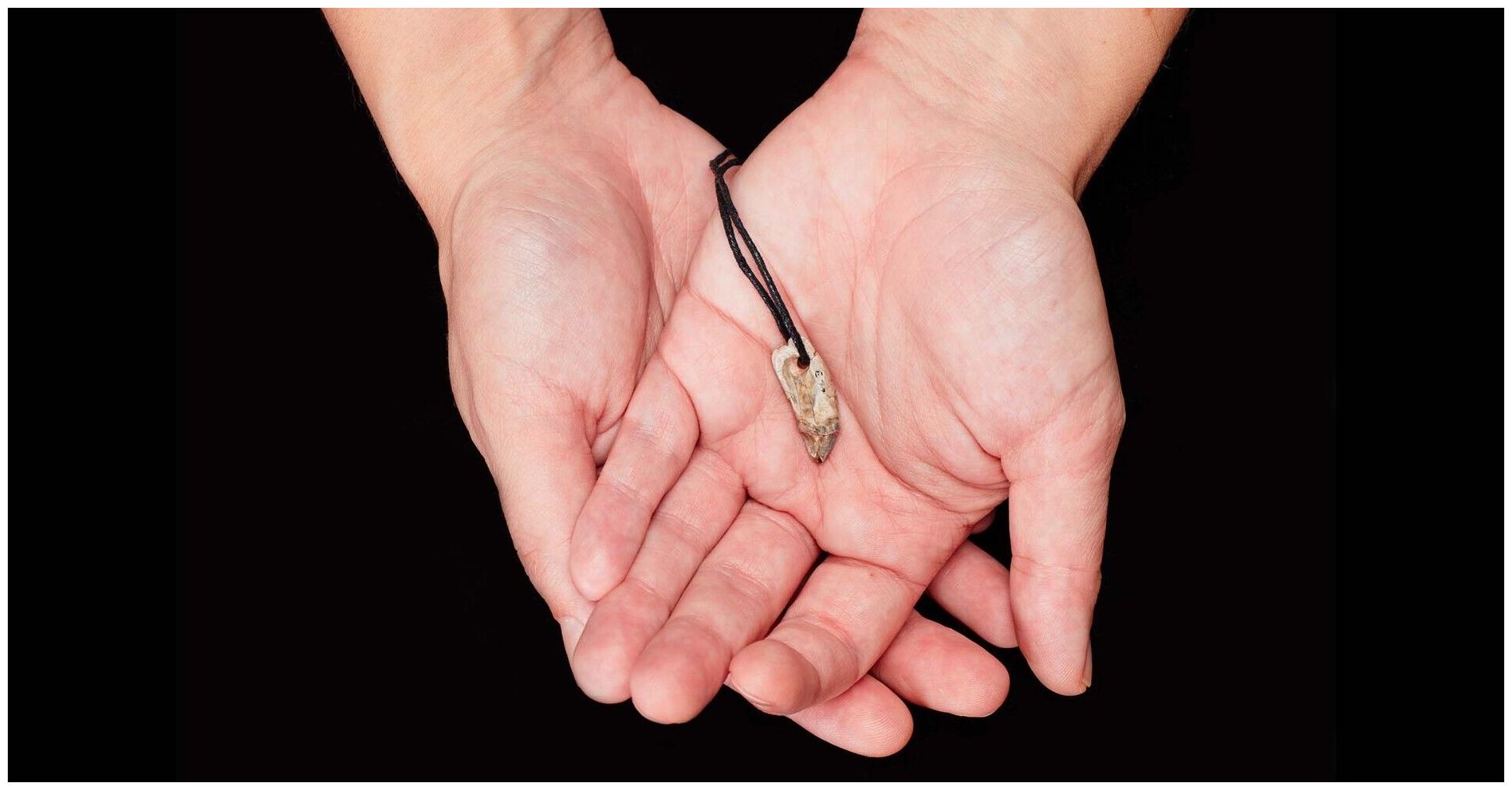
© The Trustees of the Natural History MuseumMore than a century after its discovery, it’s been revealed the pendant was made from a seal tooth .
The identity of a mysterious artefact found in Devon almost 160 years ago has finally been revealed.

New research has identified it as a pendant made from the tooth of a grey seal, which would have been worn by an ancient human more than 15,000 years ago.

An "exceptionally rare" seal tooth pendant has been unearthed among the finds of a famed Victorian dig.

William Pengelly's excavations at Kents Cavern in Torquay, UK, between 1865 and 1880 set the standard for how archaeology should be carried out. His team were among the first to keep careful notes of where artefacts were found and the layers of sediment they were in, meaning that their discoveries are still scientifically useful more than a century later.

Renewed interest in the finds made in Kents Cavern has uncovered a tooth artefact that had previously been overlooked. Initially thought to come from a badger, a wolf or a beaver, a new study has found that the tooth actually came from a seal.

As the cave was over 100 kilometres from the coast when the pendant was made 15,000 years ago, it suggests that ancient humans were travelling long distances, perhaps as they followed migrating animals. They also seem to have been trading widely across Britain and possibly to wider European societies as well.

Dr Silvia Bello, one of our human evolution experts who co-authored the study, says that the "unique" pendant gives us an insight into the creativity of Britain's ancient inhabitants.

"This pendant dates to a time when there was a flourishing of engraving and other artistic behaviour in Europe," Silvia says. "Upper Palaeolithic humans seem to be creating objects not just for practical purposes, but aesthetic ones as well."

"It's just speculation, but I think this seal tooth pendant might have had some formal purpose - perhaps to show the social identity of the pendant's owner. It could be an indication that the person, or group they were part of, was familiar with the sea and maybe used to live near the coast."

"We'll never know for sure, but it provides a fascinating glimpse into the past."

The findings of the study were published in the journal Quaternary Science Reviews.