Secret HistoryS


Books

How the crossword conquered America and reigns even to this day

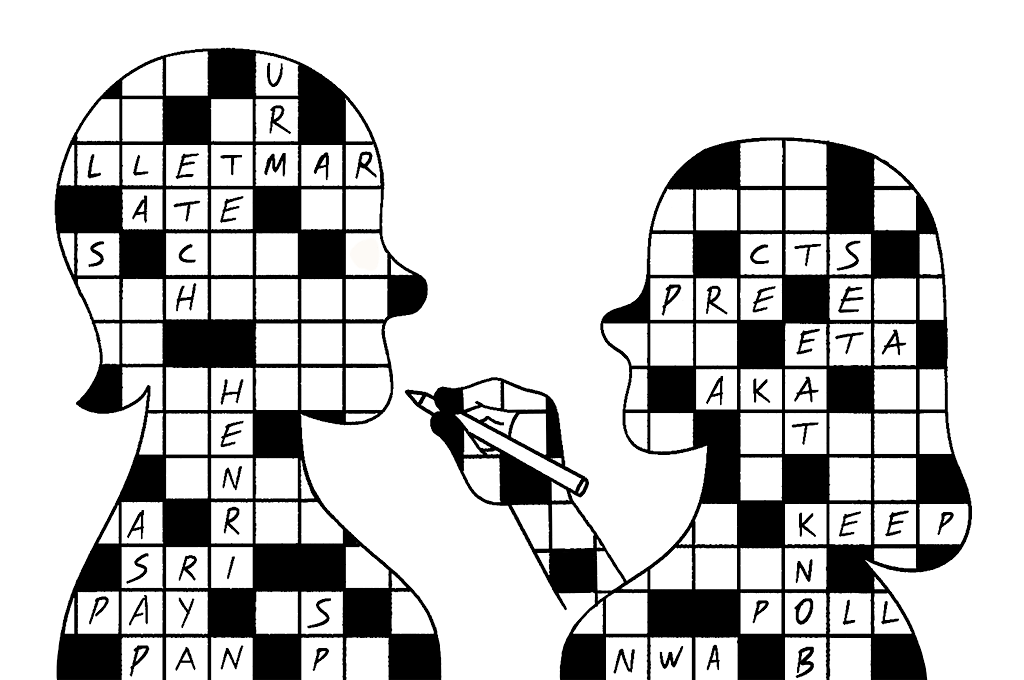
crossword puzzle graphic
© Tolga Akdoğan
They're old fashioned. They were never supposed to be this popular. I saw why they're only getting bigger.

Even in a boom time for games, the decidedly old-fashioned puzzles are more popular than ever. I went to the best place on Earth to understand why.

What are puzzles for? They boom at times of trouble. During the 1930s, the New York Times dithered about whether to make its crossword puzzle a regular, serious feature of the paper. Then came the attack on Pearl Harbor. Margaret Farrar became the paper's first crossword puzzle editor after writing to the Times' publisher in the aftermath of the attack. "I don't think I have to sell you on the increased demand for this type of pastime in an increasingly worried world," she wrote. "You can't think of your troubles while solving a crossword."

The first crossword had been written a few decades earlier, by a Liverpool-born man called Arthur Wynne, and published in the New York World newspaper in 1913. Wynne thought he ought to patent his invention, but the paper demurred, because the patent would have cost almost $100, a decision that probably kept some executives awake every night of the 1920s, when crosswords became a full-blown worldwide fad. Newly free of the burdens of the First World War, the leisure classes latched on to crosswords, which were published widely thanks to a rapid increase in newspaper circulation at the time. Musicals were written about them, a new class of people called "celebrities" gushed over them, and one library in England even had to remove dictionaries from its reading room because they were getting worn to shreds by crossword nutters. By the end of World War II, most newspapers included their own crosswords or syndicates.


USA

The American Revolution and the danger of standing armies

American Revolution soldier
© AdobeStockAmerican Revolutionary
Among the key men involved in the American Revolution and the following periods, we find an oft-repeated concern that may seem foreign to us today — the threat of standing armies. This was a heritage of British legal thought and history, and it became an underappreciated part of American political thought and experience.

Why were peacetime standing armies viewed as such a threat?

To many Americans of this period, peacetime standing armies posed a threat not only because they could be used by the state to overthrow liberty, but because they tended to reshape society and government itself. A permanent military establishment could develop interests distinct from those of the people, become an instrument for enforcing unpopular or unconstitutional policies, and concentrate power in the hands of central authorities.

Standing armies also required permanent taxation, debt, and bureaucracy, fostering what later historians would call a fiscal-military state. This process also creates vested interests. Once careers, contracts, pensions, and bureaucracies depend upon military expenditures, peace may no longer seem desirable by many.

Archaeology

Enormous 2,000-year-old luxurious Roman bathhouse uncovered in the Netherlands

roman bathhouse netherlands
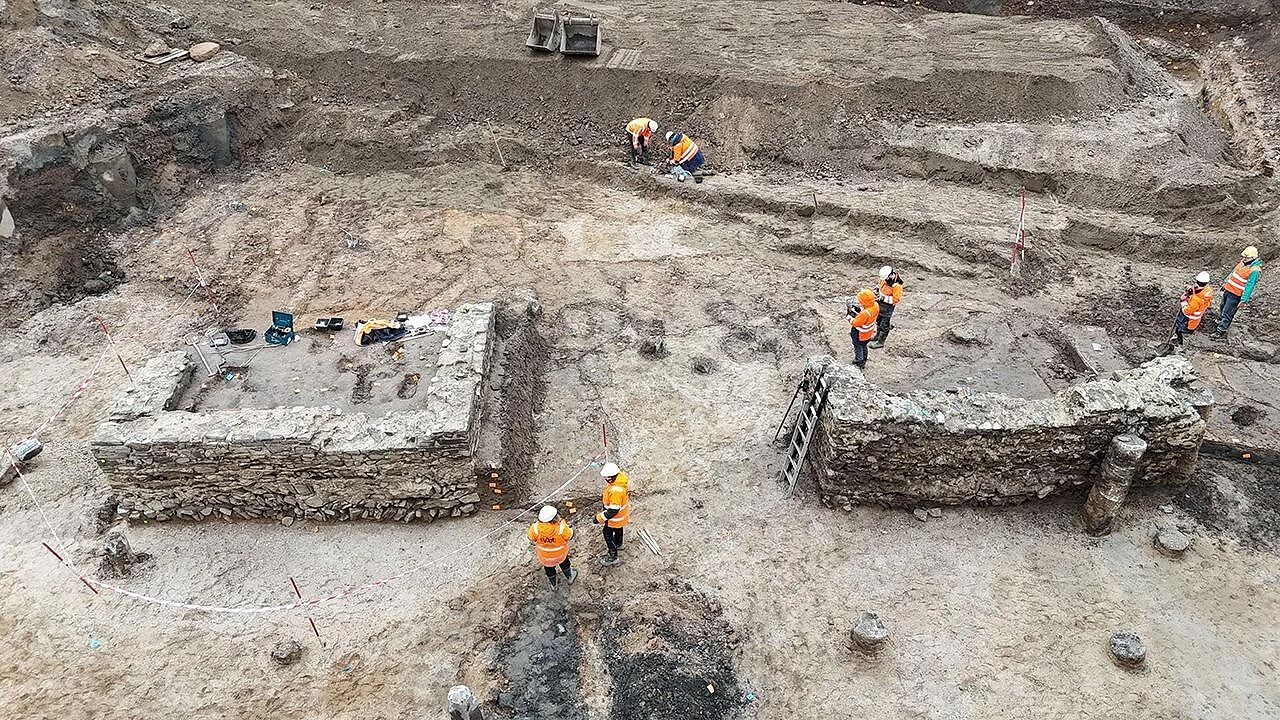
© Municipality of Nijmegen / BAAC / RAAPExcavation of the Roman bathhouse in Nijmegen
Archaeologists working in the Dutch city of Nijmegen have uncovered the largest Roman bathhouse complex ever found in the Netherlands. The structure stood in Ulpia Noviomagus, a Roman city along the River Waal, and covered at least 4,900 square meters. The size of the complex points to the importance of Nijmegen during the Roman period.

Teams from RAAP and BAAC began excavations in September at a redevelopment site in the Waalfront district, an area once occupied by industrial buildings. Their work exposed far more than a bathhouse. Researchers identified streets, residential blocks, large houses, and a tower, allowing them to reconstruct part of a prosperous urban neighborhood from the second and third centuries CE.

The bath complex was much larger than similar public bathhouses known elsewhere in the Netherlands. The bathhouse at Forum Hadriani, near modern Voorburg, covered about 2,200 square meters. The one at Coriovallum, in present-day Heerlen, measured around 2,500 square meters. The Nijmegen complex was more than twice the size of the former and nearly double the latter.

Bizarro Earth

The world government that wasn't

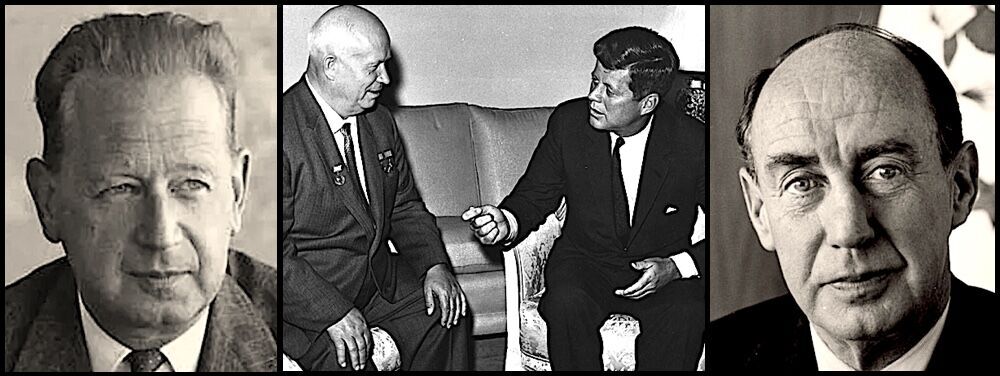
Hammarskjöld.Kennedy.Kruschev.Adlai Stevenson
© White House Historical Society/Archives/KJNDag Hammarskjöld • John F. Kennedy and Nikita Kruschev • Adlai Stevenson
In 1961 Washington and Moscow agreed to abolish war. Then the men who meant it died.

There are certain episodes in Cold War history that modern conservatives are expected to treat as either sinister fantasy or liberal delusion. The McCloy-Zorin Accords of 1961 occupy a curious place. Explain the concept today and half of the audience assumes you are describing a proto-globalist fever dream hatched in Manhattan conference rooms full of Scandinavian furniture and earnest men in rimless spectacles.

Yet for a brief moment — and this is the part that ought to unsettle both the utopians and the cynics — the United States and the Soviet Union formally agreed that the ultimate goal of international politics should be the abolition of war itself.

Not metaphorically. Literally.
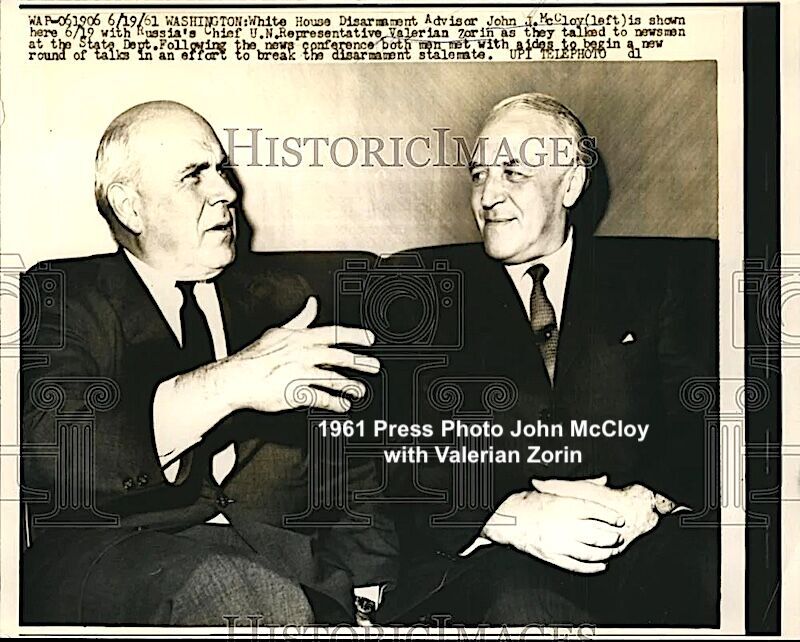
McCloy/Zorin historical image
The "Joint Statement of Agreed Principles for Disarmament Negotiations," better known as the McCloy-Zorin Accords, was negotiated between American statesman John J. McCloy and Soviet diplomat Valerian Zorin in September 1961 and endorsed unanimously by the United Nations General Assembly in December 1961. It envisioned phased and verified general disarmament under international control, including the eventual elimination of national military establishments and the creation of a United Nations peace force.

Comment: Once in the lifetime of the world...there was this idea. We will never know its full value nor the outcomes history would record.


Dominoes

The Middle Ages, "enlightenment," and propaganda

Middle ages fighting
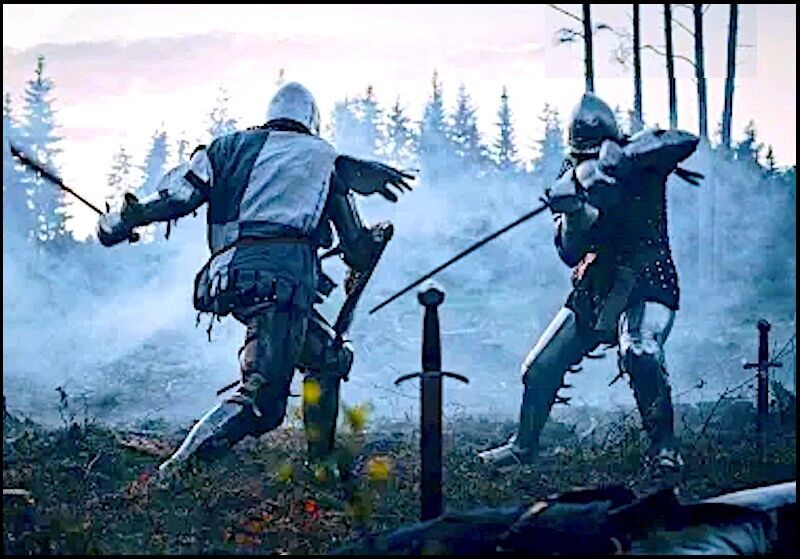
© AdobeStockSettling the score in the Middle Ages
It's often seemingly hopeless to try to convince people that the Middle Ages was anything other than the caricature often found in popular culture and eighteenth-century commentary. As historian Ralph Raico has noted, other than the Industrial Revolution, there is probably no historical topic in which the general public is more propagandized and more generally wrong than the topic of the Middle Ages. Raico has described how no matter how often he told his students that medieval princes and kings were subject to the law, and constrained in their powers by a variety of religious and political institutions, his students overwhelmingly stated in exams that medieval lords ruled as autocrats.

Although the general public still thinks of the Middle Ages in terms of images from popular culture, actual historians have long since moved on. This is partly why historians virtually never use the term "the Dark Ages" anymore. And if the term is used, it refers only to the early Middle Ages, due to the fact that there is a dearth of documentary and textual evidence from that time period. The High Middle Ages — the time of the great cathedrals and urbanization in Europe — was hardly a Dark Age, of course, and the idea that the Middle Ages was a time of unchanging stagnation was jettisoned long ago.

Info

Stonehenge's solar alignment may be older than we thought

Radiocarbon dated to around 5,000 years ago, the discovery reveals evidence for the earliest known alignment with the solstice in the Stonehenge landscape.
Stonehenge
© Public Domain
As thousands flock to Stonehenge ahead of summer solstice celebrations on June 21, a team from Wessex Archaeology led by Phil Harding has announced the discovery of an ancient structure that may have served as an early 'prototype' for the alignment with the solstice at Stonehenge.

Radiocarbon dated to around 5,000 years ago, the discovery reveals evidence for the earliest known alignment with the solstice in the Stonehenge landscape, showing that ancient people were using this feat of astronomical engineering to celebrate the solstice here at least 500 years before the alignment of the stones at Stonehenge.

Located 5km from Stonehenge in Bulford, Wiltshire, the site is contemporary with the earliest phase of Stonehenge when the first earthworks were built. Excavated as part of the Ministry of Defence's Army Basing Programme, the site was likely a focus for major religious gatherings, with extensive evidence of feasting and large-scale gatherings as people came together to celebrate the solstices much as they still do today at Stonehenge.

The structure at the heart of the discovery would have consisted of two wooden poles 120 metres apart, which ancient builders positioned to form a line pointing directly at the rising sun during the summer solstice and at the setting sun during winter solstice.
Timeline
© Wessex ArchaeologyTimeline and reconstruction of summer solstice celebrations as they might have appeared at Bulford 5000 years ago.
Little is now left of the structure except the pits in which the poles once stood, which are not accessible to the public, but their alignment with the solstice was confirmed in analysis conducted for Wessex Archaeology by leading skyscape archaeologist, Dr Fabio Silva, who used reconstructions of the ancient sky, landscape, and horizon to show how the structure would have aligned with the solstices to within an accuracy of one degree.

This relatively simple construction would have served as a place for ancient peoples to celebrate the solstices before more permanent, complex monuments could be built. The team suggests that a similar structure may have been present during the earliest phase of Stonehenge, although any traces would have been erased by later work.

Info

New study links Göbekli Tepe's vulture stone to Europe's Trypillia culture

Pillar 43, Enclosure D: the “Vulture Stone”
© Sue Fleckney – Public DomainPillar 43, Enclosure D: the “Vulture Stone”.
A new study compares the carved symbolism of Göbekli Tepe's Vulture Stone with ritual imagery from the Trypillia culture, suggesting that early farming societies in Anatolia and Eastern Europe may have shared cosmological ideas about time, death, sacred space and the movement of the heavens.

At Göbekli Tepe, the famous Vulture Stone has never been easy to read. Its carved birds, snakes, scorpion, abstract signs and headless human figure have inspired competing interpretations for decades. Was it a scene of death ritual, an astronomical code, a mythic narrative, or something more complex? A new study argues that the answer may not lie in choosing one explanation over another, but in seeing the pillar as part of a wider symbolic system linking architecture, timekeeping and cosmology across early farming societies.

A new reading of one of Göbekli Tepe's most debated pillars

The study, published in the International Journal of Culture and History by Oleksandr Zavalii, focuses on the cosmological aspects of Göbekli Tepe's T-shaped stelae and compares them with religious symbolism from the Trypillia culture of Ukraine. Its central claim is cautious but ambitious: the carvings at Göbekli Tepe may preserve not isolated symbols, but a structured sacred language involving solar cycles, lunar rhythms, animal imagery, geometry and sacred space.

Göbekli Tepe, dated to the Pre-Pottery Neolithic period, roughly 9600 to 8200 BCE, already occupies a special place in archaeology as one of the earliest known monumental ritual landscapes. Zavalii's paper revisits several pillars, especially Stele 43, known as the Vulture Stone, along with Steles 33, 18, 20 and 1. Rather than treating the carvings as decoration, the study reads them as components of a broader visual grammar.

On Stele 43, the upper register includes bird figures, three arch-like forms, a central circle, rectangular elements and H-shaped signs. The lower register contains animals more closely associated with the earth or underworld, including a scorpion, snake, boar, waterfowl and a headless human figure. Zavalii suggests that this division may reflect a two-level cosmos, with celestial imagery above and chthonic or mortal imagery below.

Archaeology

Archaeologists excavating a Spanish monastery have identified the remains of a 14th-century queen

spanish queen Elisenda of Montcada
© Culture Institute of BarcelonaElisenda of Montcada founded the Royal Monastery of St. Mary of Pedralbes in 1327. She was buried there after her death in 1364.
The tomb of Elisenda of Montcada has long fascinated experts. But the team was surprised to learn that burials supposedly belonging to a medieval knight and abbess held entirely different individuals

The tomb of Elisenda of Montcada has long fascinated experts. But the team was surprised to learn that burials supposedly belonging to a medieval knight and abbess held entirely different individuals

Elisenda of Montcada founded the Royal Monastery of St. Mary of Pedralbes in 1327. She was buried there after her death in 1364. Culture Institute of Barcelona

When Elisenda of Montcada, the onetime queen of the Kingdom of Aragon, died in 1364, she was buried in a marble sepulcher in what is now Barcelona, Spain. One side of the tomb pays tribute to her royal status, while the other alludes to her later years as a devout widow living in a monastic community.

Comment: Other interesting notes on Elisandra's sepulchure:
  • In a 2012 essay, art historian Eileen McKiernan González argued that Elisenda deliberately positioned the two sides of her tomb to appeal to different audiences.
  • Unlike the public-facing effigy of Elisenda as queen, the sculpture showing her as a penitent widow was visible mainly to the nuns of the monastery. This distinction created a "regal persona for a combined audience and a private, more personal self for her spiritual and temporal sisters.".


Info

Study details epic transportation of Stonehenge stone across ancient Britain

Dr Anthony Clarke at Stonehenge
© Curtin UniversityDr Anthony Clarke at Stonehenge.
New research by Curtin University has revealed how one of Stonehenge's most mysterious stones was likely transported hundreds of kilometres across Britain through challenging terrain, highlighting the remarkable capabilities of ancient communities.

Stonehenge's central Altar Stone is a six-tonne sandstone megalith now believed to have originated in northeast Scotland, around 700km from Salisbury Plain, underscoring the extraordinary scale of its journey.

The new study builds on earlier findings that ruled out glaciers as the sole mechanism for moving the stones, strengthening the conclusion people were responsible for transporting them across difficult terrain rather than relying on natural Ice Age processes.

Researchers have now focused on what that journey may have looked like, combining mineral grain dating with ice-sheet modelling to pinpoint the stone's origin and test whether glaciers could have carried it south.

Co-lead author Dr Anthony Clarke, from the Timescales of Minerals Systems Group within Curtin's School of Earth and Planetary Sciences, said the findings suggest the journey was far from simple and likely required careful planning across multiple stages.

"Rather than being carried naturally by ice, the evidence points to a deliberate, carefully planned movement across a challenging and varied landscape," Dr Clarke said.

Info

Ancient mega-structure discovered in Romania

Mega Structure Romania
© C. Mischka
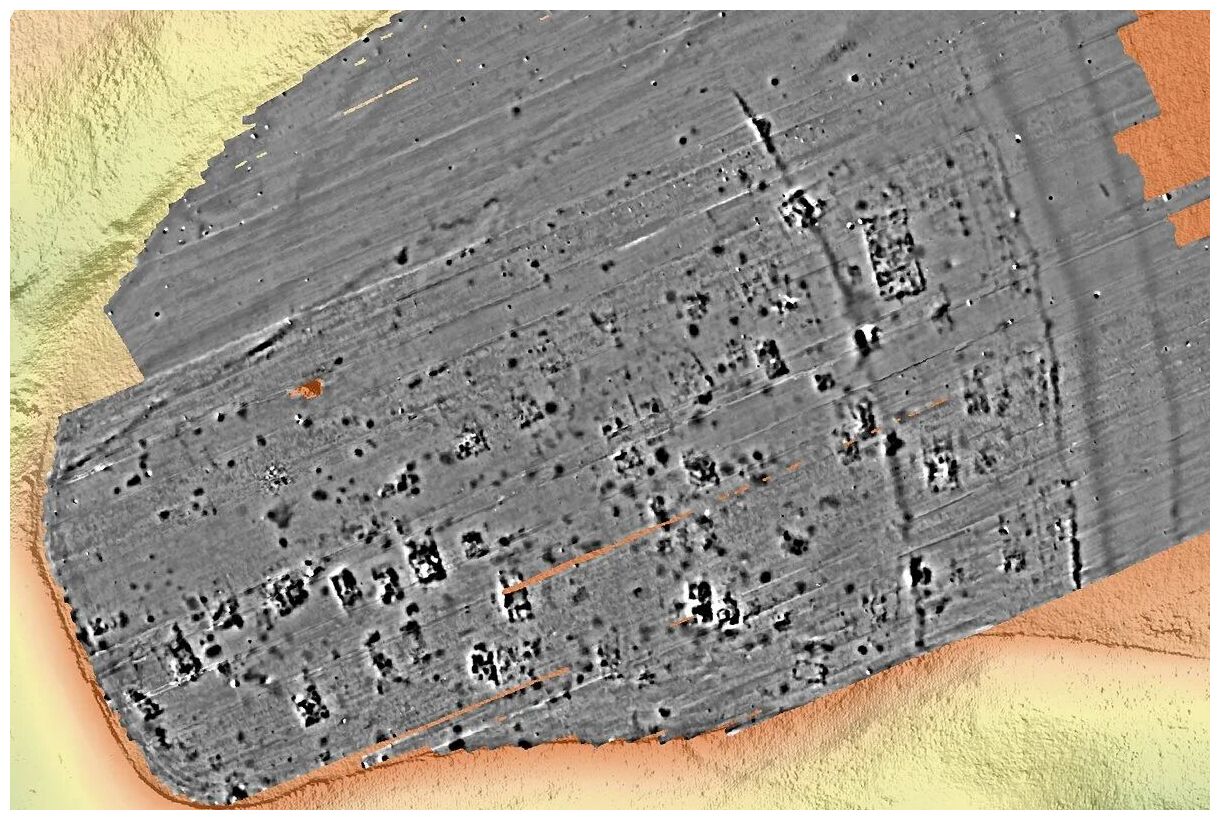
Archaeologists investigating a prehistoric settlement in northeastern Romania have uncovered evidence from a massive communal building that could transform our understanding of how some of Europe's earliest large communities were organised more than 6,000 years ago.

The structure, discovered at the Cucuteni settlement of Stăuceni-Holm in Botoșani County, has been identified as a rare "mega-structure" - a type of oversized building believed to have played a central role in the social, political, or ritual life of prehistoric communities. Researchers argue that the discovery may also force a reassessment of the chronology of the Cucuteni culture, one of Europe's most sophisticated prehistoric societies.

The findings were published in PLOS One by a team led by Doris Mischka, Carsten Mischka, Adela Kovács, Constantin Aparaschivei and Elena Marinova.

From 2021 to 2024, archaeologists conducted geophysical surveys and field investigations at the site and found around 45 houses surrounded by a series of ditches and palisades. One structure in particular, amongst the similarly sized buildings, was immediately apparent. It was about 350 square metres in size, many times larger than the average houses of the settlement and stood at the centre of what looks like the main entrance.

Such buildings are called mega-structures and have long fascinated archaeologists looking at the Cucuteni-Trypillia cultural complex, which flourished between roughly 5000 and 3000 BC in modern-day Romania, Moldova and Ukraine. These settlements are of such immense size, some so-called "mega-sites" containing thousands of houses and populations numbering in the tens of thousands. Yet for all their size, there has not been any evidence for rulers or palaces or clear social hierarchies.