Society's ChildS


Question

Is private enterprise best?

Western free market ideology says, yes; but empirical evidence and real life experience says, no. Private enterprise often destroys value rather than create it.
Private Enterprise
© Alex Krainer's Substack
One of the axioms of Western free market system is that privately owned enterprises are superior to state owned enterprises in just about every way. However, this axiom is largely based on ideology, not evidence: it is assumed that the nature of ownership is the key factor determining an enterprise's performance, and that private ownership aligns owners' interests with those of the company's customers. As a rule, the magic of free market capitalism ensures that the customers get better service, better quality and variety of products, and bien-sur, lower costs. To boot, the owners make profits and everyone lives happily ever after.

However, empirical evidence simply doesn't support this. At the very least, real-life experience suggests that not all private enterprises are superior, nor are all state-run enterprises inferior. In the past, I shared the experience with the trash collection services in Croatia. During the socialist era, trash collection was run by state companies, and our towns and cities were clean and orderly. I remember that many foreign visitors would remark how our cities were remarkably clean, and they really were.

But then, in the early 2000s, the service was privatized and the magic of private, free market capitalism took effect. Today, trash collection is much more expensive than before, private owners reduced the number of collection points, forcing everybody to carry their trash farther (effectively working for trash collectors for free), and the cherry on top is that our cities are no longer clean and orderly. Here's what my home city of Rijeka often looks like:

Trash in Rijeka
© Alex Krainer's SubstackNot a great look, especially if your No. 1 industry is tourism.
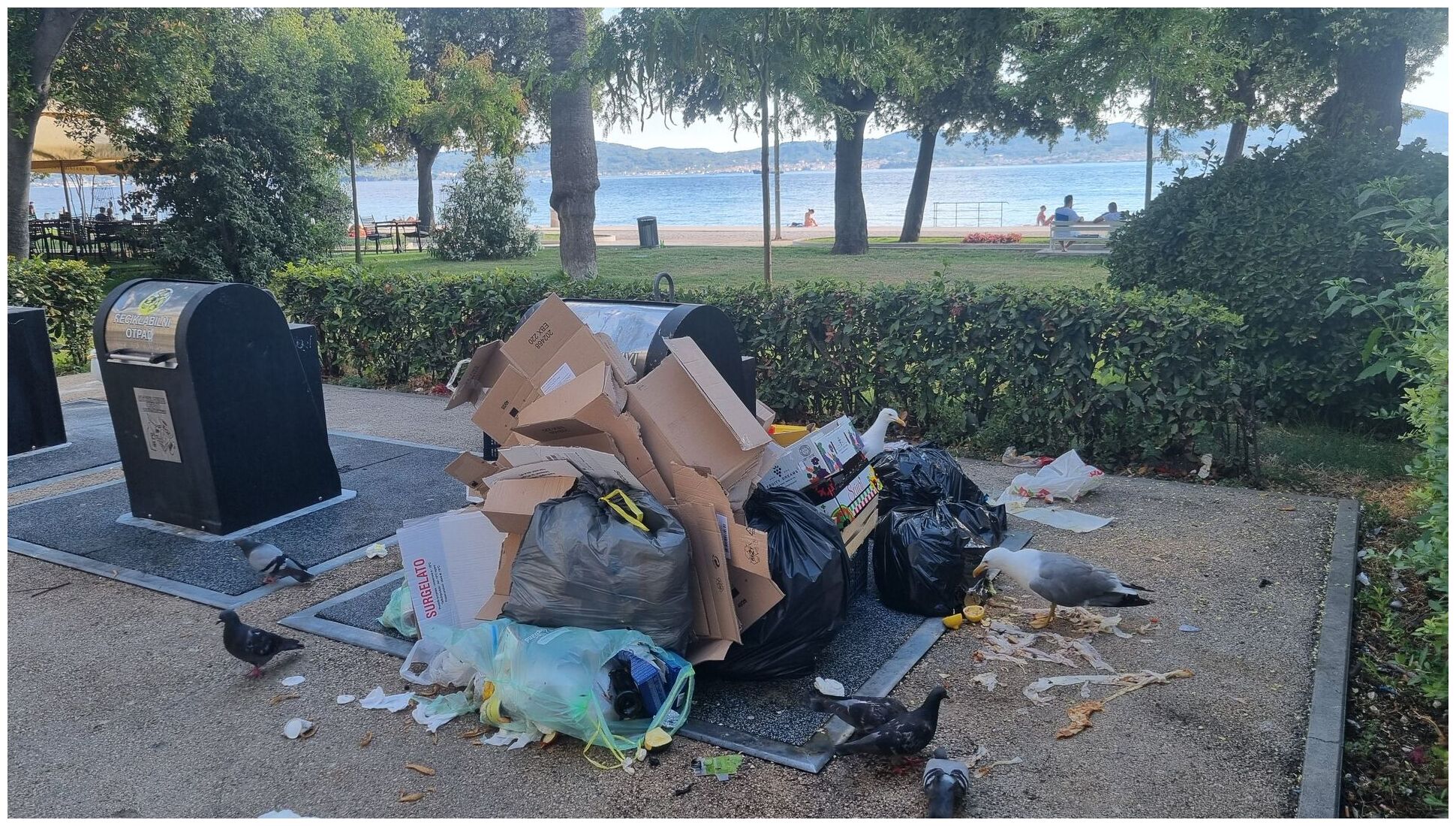
What the images above can't convey is that this doesn't smell like roses either. Here's a recent photo from Zadar, a beautiful medieval town on the Adriatic coast, one of Croatia's top tourist destinations:
Trash collection
© Alex Krainer's SubstackTrash collection is a profitable business today, and the seagulls are great fans.

Key

The lockdown disaster must not be forgiven

globe in chains
© Shutterstock
We're now rapidly approaching the six-year anniversary of "15 Days to Slow the Spread."

That policy has to have been one of the most disastrous in world history, created by "experts" who took all established pre-pandemic planning documents and tossed them out the window at the first opportunity.

It was a policy based on inaccurate reports out of China, which claimed that their lockdowns effectively stamped out transmission of Covid-19 within a matter of days.

It was a policy that ignored solid research - from established epidemiologists like Dr. Jay Bhattacharya - which found that the coronavirus had already spread much more widely than previously realized.

It must be noted forever that lockdowns and the associated mask mandates, vaccine passports, and school closures continued in some places for several years. The ramifications of those wretched policies will be quite literally endless. It's not an exaggeration to say that lockdowns, our policies, and responses have quite literally changed the course of world history.

One would think that there would definitely be a concerted effort to understand whether such policies were effective or not. Whether approaching respiratory viruses with authoritarian crackdowns on businesses and schools was necessary to save lives.

Yet six years later, there's unfortunately very little interest in examining those questions. And when you understand the data from Sweden, you will see exactly why.

Footprints

Britons urged to take 'small steps' to prepare for potential national crises

Supplies!
© Hugh Hastings/Getty ImagesMinisters were warned in May that Britainโ€™s vital supply chains were unprepared for the prospect of a major shock
Government to launch campaign to help people cope with events such as weather emergencies or cyber-attacks.

The British public should begin taking "small but important steps" to secure and protect water, power supplies and basic phone signal in case of further severe weather emergencies, national crises or cyber-attacks, Downing Street has said.

Darren Jones, the chief secretary to the prime minister, told MPs "the risks we face from climate change cannot be underestimated", and warned of the "significant and prolonged disruption to essential services" extreme weather events could cause.

Jones also said the combination of increasingly sophisticated artificial intelligence, and the conflict in the Middle East and Russia's war in Ukraine could enable criminals to carry out "hostile cyber-attacks against businesses and critical infrastructure".

As a result the UK's national risk register has been updated with seven new crises, including:
- The threat of foreign interference in UK democracy,
- The risk of cyber-attacks on data infrastructure,
- Water infrastructure and police systems, and
- A "digital resilience failure" scenario (based on global technology outage by CrowdStrike disruption, 2024).

Comment: It takes 'brainwork' to avoid 'mindset'. So little of it going on these days!


Attention

How the American Republic became a Managerial State

The United States Constitution was revolutionary. "A republic," Benjamin Franklin is reported to have said, "if you can keep it." They couldn't.
founding fathers declaration of independence
© John TrumbullPresentation of the Declaration of Independence
Commissioned 1817; purchased 1819; placed 1826 in the Capitol Rotunda
It wasn't supposed to be this way. The United States was the land of the free. Limited government. Checks and balances. Separation of powers. The Bill of Rights. But America has instead become a managed society. Its government dominates the lives of its people. How did it go wrong? Lots of bad steps helped to transform the American republic into a managerial state. Here are eleven of the moments that sent the ship off course.

Arrow Down

The Digital Euro: Control and the end of financial privacy

digital euro
© Ivan Marc/Shutterstock.comThe Digital Euro
European Union lawmakers in Strasbourg have now agreed on their position regarding the digital euro, approving it in a vote on the 8th of July 2026. With this position, the European Parliament can start talks with national governments on the details of the design and functioning of the digital euro.

The European Central Bank (ECB) argues that the digital euro is required to preserve the benefits of cash in a digital age and protect Europe's monetary sovereignty, while offering a fast, secure, widely accepted public means of payment. However, it is not a neutral or purely technological upgrade to Europe's payments infrastructure. It is a political and technological project that may embed surveillance, monetary control, and fiscal dominance into the very structure of the currency.


EU lawmakers are now debating the regulation that will define the legal status, privacy framework, and holding limits of the digital euro, with the ECB openly lobbying for strong legislation to support what it calls a collective step forward for Europe. This means the most significant features, including programmability, limits, data access, and the role of commercial banks, will be decided in Brussels and Strasbourg rather than by markets or citizen demand.

Camcorder

While the Political Circus Distracts Us, Flock Builds the Digital Police State

Picture of human with camera head
"You had to live โ€” did live, from habit that became instinct โ€” in the assumption that every sound you made was overheard, and, except in darkness, every movement scrutinized." โ€” George Orwell, 1984
While Americans remain transfixed by the political circus โ€” cheering for their preferred party, jeering at the opposition, obsessing over every manufactured outrage and waiting for the next spectacle โ€” the Surveillance State continues its steady march forward.

The government is watching.

It watches where you go, whom you meet, where you worship, what medical offices you visit, what political rallies you attend, what protests you join, what books you read, what websites you visit and what causes you support.

It watches through your phone, your car, your doorbell, your appliances, your purchases, your social media accounts and the cameras positioned along the roads you travel every day.

Comment: It is only going to get worse with new technologies being added to the existing surveillance infrastructure. One such technology is called ELSAG SignalTrace.


The People vs. Flock (+ Redpill Real Talk)


People 2

CrossTalk: Generational Rejection

mmmmm
There is a sense of change in the air.

The belief in long held social and political pieties are questioned and even rejected.

Boomers - in power for well more than a half century - are being rejected by younger generations.

The world they are inheriting is broken and with few prospects.

CrossTalking with Jason Zaharis, Zarefah Baroud, and Ethan Levins.


Bad Guys

Widow of Butler rally victim: Trump assassination attempt was "an inside job"

Helen-Comperatore
Two years after a gunman opened fire at a campaign rally in Butler, Pennsylvania, killing one attendee and wounding President Donald Trump, the widow of the man who was slain has expressed deep skepticism about the circumstances of the attack. Helen Comperatore, whose husband Corey, a 50-year-old volunteer firefighter and father of two, was fatally shot while shielding his family, told NewsNation that she believes the July 13, 2024, assassination attempt was "an inside job."

In the explosive interview, Helen Comperatore stopped short of alleging a second shooter but claimed that Thomas Matthew Crooks, the 20-year-old identified as the gunman, did not act alone.

Camcorder

The People vs. Flock (+ Redpill Real Talk)

FLOCK camera
Does it get more quintessentially American than illegally knocking off Flock cameras that enable the government to conduct illegal mass surveillance of the "citizens" whom it doesn't actually view as citizens at all but rather as cattle?

Via WUSA9:
"A growing number of Flock surveillance cameras are being intentionally vandalized across the country, including in Virginia, as critics raise concerns about privacy and how the data collected by the cameras could be shared among law enforcement agencies.

Arlington County police confirmed to WUSA9 that two Flock cameras were spray-painted on May 31. No suspect description has been released.

Flock cameras are automated license plate readers that use artificial intelligence to record when and where a vehicle is seen, along with its license plate, make and model. The cameras can also identify distinguishing characteristics, such as roof racks, bumper stickers and other visible features...

"I think the police need these tools," said Sean Kennedy with Virginians for Safe Families*. "These tools aren't new, and the hysteria around Flock cameras and some of these surveillance tools is overblown."

Kennedy also noted that courts have consistently held that there is no reasonable expectation of privacy on public roadways, making the recording of vehicles traveling on public streets constitutional.

"This vandalism or any type of vigilante action against these license plate readers is unwarranted," Kennedy said. "You have every right to change the law and change the allowances, but you have no right to destroy public property.""

Comment:


Can it get worse? Of course it can:


If you thought Flock cameras were concerning, meet what comes next.

A company called Leonardo has developed a system called ELSAG SignalTrace. It broke into public awareness just days ago and is already being marketed to law enforcement agencies across the country. It makes Flock Safety look modest by comparison.

Here is what SignalTrace does:

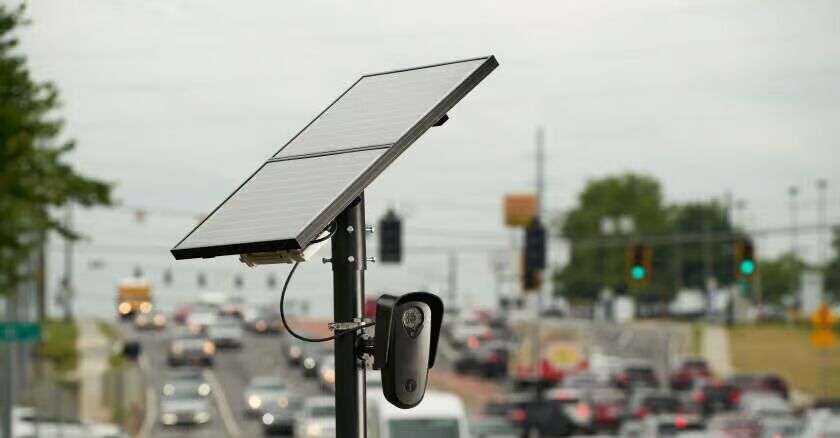
It clips sensors directly onto existing license plate reader cameras โ€” the same poles, the same hardware already installed in your community. No new infrastructure required. A software and sensor upgrade is all it takes.

Every time you drive past one of these upgraded cameras, the sensor sweeps up the unique electronic identifiers of every device in your vehicle. Your cell phone. Your smartwatch. Your wireless headphones. Your fitness tracker. Your laptop. Your tablet. Your car's own infotainment system. Your tire pressure sensors. Your vehicle's Bluetooth hotspot.

And your pet's microchip.

Every one of those devices emits a signal. SignalTrace captures those signals, timestamps them, ties them to your license plate, and stores them in a searchable database for future investigative use. The result is what Leonardo calls an electronic fingerprint โ€” a unique profile built not from your face or your name, but from the constellation of devices you carry with you every day.

Leonardo announced the ELSAG EOC Plus patent as early as May 2024, describing it as an electronic detection system for identifying people of interest through electronic device signatures. SignalTrace is the commercial product built on that foundation. The patent came first. The marketing came after. The sales calls are happening now.

Here is where it gets worse.

SignalTrace is explicitly designed to track vehicles even when the license plate cannot be read. If your plate is obscured, dirty, or misread โ€” it does not matter. The system identifies your vehicle by the electronic fingerprint of the devices inside it instead. The plate reader becomes optional. The surveillance does not.

The strategic advantage for police agencies is adoption friction. SignalTrace can be pitched as an extension of an existing ALPR ecosystem rather than a wholly separate surveillance buildout. That is exactly what happened with Flock. License plate readers went in first. Video came later through a software update. Nobody voted on the expansion. Nobody was told. SignalTrace follows the same playbook โ€” attach to existing infrastructure and expand what it captures without requiring a new procurement process, a new vote, or a new public conversation.

Who is Leonardo and why does their background matter?

Leonardo US Cyber and Security Solutions is not a Silicon Valley startup. It is the American subsidiary of Leonardo S.p.A. โ€” one of the largest aerospace, defense, and security conglomerates in the world, headquartered in Rome, Italy. Recent public market estimates place Leonardo S.p.A.'s market capitalization at approximately โ‚ฌ29.76 billion โ€” roughly $32 billion USD. For context that is nearly four times Flock Safety's valuation.

Leonardo's US operations trace back to a joint venture with Remington Arms in 2004, became a wholly owned subsidiary in 2008, and in 2024 rebranded from Selex ES Inc. to Leonardo US Cyber and Security Solutions โ€” a change the company said better reflects the synergy between its brand and the cutting-edge products it offers. Leonardo US has manufacturing facilities in Greensboro, North Carolina and software engineering in Brewster, New York. Its US arm holds contracts with US Special Operations Command and the General Services Administration. This is a major international defense contractor with a direct pipeline from special operations military applications to local American law enforcement.

The Italian government holds a significant ownership stake in Leonardo S.p.A. That means a foreign government โ€” through a defense contractor โ€” is selling surveillance technology to American law enforcement. If the Flock Safety story involves a CIA-seeded venture capital network, the Leonardo story involves a partially state-owned Italian defense conglomerate with US Special Operations Command contracts. Neither of these companies is what most Americans picture when their city council votes to upgrade the cameras on a street pole.

What is ELSAG โ€” and why SignalTrace is more dangerous than it sounds.

ELSAG is Leonardo's license plate recognition product line โ€” the company's core law enforcement technology that has been deployed across American communities for over two decades. ELSAG cameras are what you think of when you picture a standard license plate reader. Fixed cameras on poles. Mobile units mounted on patrol vehicles. Solar powered. Cellular connected. Reading plates and logging vehicle data.

ELSAG is already deployed in all fifty states. Virginia State Police is a documented customer. Leonardo holds statewide procurement contracts in New York, Maryland, New Mexico, Ohio, and Pennsylvania among others, and is listed on the federal GSA schedule available to agencies nationwide. Their cameras are already on street poles and patrol vehicles across the country โ€” quietly, routinely, and largely without public awareness.

SignalTrace is not a new camera. It is not a new company. It is an upgrade โ€” a sensor that clips directly onto ELSAG cameras already in the field and adds a new layer of data collection on top of the license plate reading that was already happening. The same pole. The same hardware. A new sensor attached to it that now also sweeps up every electronic device signal in every passing vehicle.

That is precisely what makes it so significant. The deployment barrier is almost zero. Any law enforcement agency that already has Leonardo ELSAG cameras can add SignalTrace capability without purchasing new infrastructure, without a new procurement process, and โ€” depending on how their existing contract is written โ€” potentially without returning to their city council for approval. Sound familiar? It should. It is the exact same function creep mechanism that allowed Flock Safety to add video streaming, vehicle fingerprinting, and AI people search to cameras that were originally sold as simple plate readers.

The infrastructure goes in first. The capabilities expand later. The public finds out last โ€” if at all.

Leonardo's defense of the system sounds very familiar.

They say SignalTrace captures device signals but does not read the contents of communications. They say it stores data until a specific investigative request is made of the system by an investigator. They say it was designed to ensure it does not infringe on the rights of individuals.

That is the exact same argument Flock Safety makes about license plate readers. It captures plate numbers but not driver information. It stores data until law enforcement queries it. It was designed with privacy in mind.

Courts are still debating whether Flock's version of that argument is constitutionally sound after eight years of deployment and 80 plus cities canceling contracts. SignalTrace captures exponentially more data about exponentially more people โ€” not just the vehicle but every person inside it and every device they carry. If the argument barely holds for plate readers, it almost certainly does not hold for a system that vacuums up every electronic signal emitted by every device in every vehicle passing a sensor.

The data retention problem.

With Flock we at least know the default data retention period is 30 days โ€” though the contract language grants Flock a perpetual license to use that data regardless. With SignalTrace the situation is more opaque. Leonardo's product materials state that all data collected may be uploaded to the EOC server and archived for future queries and analysis โ€” with no published retention limit. How long does Leonardo store your electronic fingerprint? Who has access to it? Can it be shared with other agencies or federal entities? Can it be purchased by data brokers? Leonardo's materials do not answer these questions. That silence is itself an answer.

The retail and private deployment problem.

Leonardo is actively marketing SignalTrace to shopping malls, retail centers, and private businesses โ€” not just law enforcement. Their materials describe deploying SignalTrace in parking lots and inside shopping centers to track individuals involved in organized retail crime. By identifying and correlating electronic devices carried by suspects, retailers can gain critical insights into criminal patterns.

That means SignalTrace sensors could be on private property you visit every day โ€” your grocery store parking lot, your shopping mall, your workplace โ€” operated by a private company with no law enforcement oversight, no warrant requirement, no public accountability, and no notification to you. Your electronic fingerprint captured every time you park your car. Stored indefinitely. Shared with whoever the private operator decides to share it with.

The no-plate-needed problem โ€” and what it means for pedestrians.

The implication of being able to track a vehicle by its electronic fingerprint without reading the plate goes further than most people realize. Deliberately obscuring your plate โ€” which some people do to avoid surveillance โ€” provides zero protection against SignalTrace. The sensor does not need the plate. It reads your phone.

More critically โ€” the sensor does not know or care whether the device it is reading is inside a vehicle or in the pocket of a pedestrian walking past the pole. A person walking down the sidewalk past a SignalTrace-equipped camera is emitting the same Bluetooth and Wi-Fi signals as a person driving past in a car. The system's sensors capture signals from whatever passes within range. Whether that includes pedestrian device capture is not addressed in Leonardo's public materials. The fact that it is not addressed is worth noting.

Does Flock plan to integrate or copy this technology?

No confirmed partnership between Flock and Leonardo has been announced. But four things are worth noting.

Flock already expanded into audio detection in October 2025 โ€” their Raven devices now listen for human distress and alert officers when they detect screaming. Device signal detection is the next logical step in exactly the same direction. Flock's product roadmap has consistently expanded from vehicle data toward person data. Vehicle fingerprinting. FreeForm people search by physical description. Audio detection of human behavior. Electronic device fingerprinting would complete that progression.

Flock's Wing platform is specifically designed to pull third-party camera infrastructure into its ecosystem. If Leonardo's SignalTrace cameras are deployed in a city that also uses Flock, the data from both systems could flow into the same FlockOS platform without any formal partnership between the two companies.

Flock's Nova platform already combines license plate data with court records, jail records, CAD records, and commercially available personal data. Adding device signal intelligence to that profile would be consistent with what Nova is already designed to do.

And Flock's entire business model is built on continuous software-defined capability expansion through over-the-air updates. No new hardware. No public vote. Whether Flock is currently developing device signal detection capability is something we do not know. Whether the competitive pressure from Leonardo creates a powerful financial incentive for them to do so is not in question.

The constitutional problem is worse than anything we have discussed before.

The Fourth Amendment arguments against Flock center on the aggregation of license plate reads into a comprehensive record of your vehicle's movements. Courts are divided on whether that crosses the constitutional line.

SignalTrace does not aggregate your vehicle's movements. It aggregates your personal electronic identity โ€” every device you carry, every signal you emit โ€” and ties it permanently to a location, a timestamp, and a plate number. It does not track your car. It tracks you. Personally. Individually. Every time you pass a sensor, whether you are suspected of anything or not.

The legal issue is that public policy often treats each input separately โ€” a plate image, a device signal, a timestamp, a location record. SignalTrace's purpose is to combine recurring signals into a searchable investigative profile. The Mosaic Theory argument we have made against Flock says that aggregated location data eventually reveals the whole of a person's life. SignalTrace is designed from the ground up to reveal exactly that โ€” not as a byproduct but as the product.

The Supreme Court has not ruled on whether device signal collection at this scale requires a warrant. The courts have not yet caught up to Flock. They are further still from catching up to what Leonardo is now selling to law enforcement agencies in all fifty states.

Why this matters right now.

We are currently waiting on the City of Texarkana to respond to our public records requests about Flock Safety cameras already operating on our streets. We do not yet know how many cameras exist here, which features are active, or what data sharing agreements are in place.

What we do know is that the surveillance infrastructure being built across America โ€” of which Flock Safety is the most visible example โ€” is expanding faster than public awareness, faster than legislation, and faster than the courts can rule on it.

The cameras in our area are one node. SignalTrace shows you what the next node looks like. And the one after that. Each addition is sold as a modest upgrade to existing infrastructure. Each addition captures something your government previously could not capture without a warrant. Each addition happens without a public vote.

Sources:

1. Leonardo US โ€” ELSAG SignalTrace Product Page

2. Leonardo US โ€” SignalTrace Product Sheet

3. Leonardo US โ€” Procurement Contracts

4. CarBuzz โ€” "Don't Like Car License Plate Readers Invading Your Privacy? It's About To Get A Lot Worse" (June 2026)

5. The Deep Dive โ€” "Leonardo's SignalTrace Could Let Police Plate Readers Track Your Devices" (June 2026)

6. Security Industry Association โ€” Leonardo/ELSAG Member Profile

7. DHS โ€” Automated License Plate Readers Market Survey Report (June 2025 pdf)

8. Senator Ron Wyden / Congressman Raja Krishnamoorthi โ€” Letter to FTC regarding Flock Safety cybersecurity (November 2025 pdf)

๐ŸŽฉ Deflocking Texarkana


Stock Down

New York is hemorrhaging millionaires: Exodus costing billions in lost revenue

New York City Mayor Zohran Mamdani (D)
Mayor Zohran Mamdani stood outside Ken Griffin's $238 million Manhattan penthouse in April and declared victory. "When I ran for mayor, I said I was going to tax the rich. Well, today we're taxing the rich," he said in a social media video marking the debut of New York City's first pied-ร -terre tax, an annual fee on luxury properties worth more than $5 million whose owners do not live in the city full time. He promised the tax would raise "at least $500 million directly for the city," money he said would fund free child care, cleaner streets, and safer neighborhoods. "This is a fundamentally unfair system that hurts working New Yorkers," Mamdani said. "Now it's coming to an end."

Three months later, a new study suggests the mayor picked an odd moment to celebrate.

The Citizen Budget Commission published an analysis Monday, finding that New York's shrinking share of the nation's millionaires cost the state an estimated $10.7 billion in lost personal income tax revenue in 2022 alone. New York's share of the country's millionaires fell from 12.7 percent in 2010 to 8.7 percent in 2022, the steepest decline of any state over that period. Had New York simply held its 2010 share, the Commission concluded, the state would have collected roughly $10.7 billion more in personal income tax that year.

Comment: Still true . . . .