Science & TechnologyS


Toys

Pointless? CERN lays out plans for even bigger €21-billion super-collider

CERN
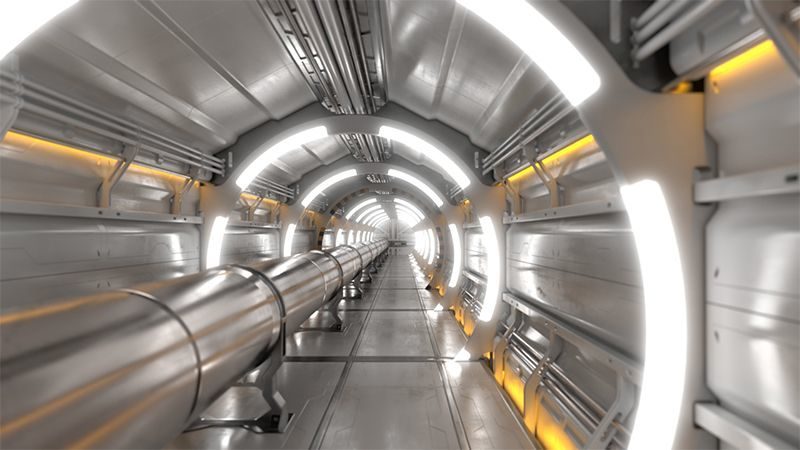
© CERNThe proposed facility would become the most powerful collider ever built. Davide Castelvecchi Artistic impression of the Future Circular Collider.
CERN has unveiled its bold dream to build a new accelerator nearly four times as long as its 27-kilometer Large Hadron Collider - currently the world's largest - and up to six times more powerful.

The European particle physics laboratory, outside Geneva, Switzerland, outlined the plan in a technical report on 15 January.

The document offers several preliminary designs for a Future Circular Collider (FCC) - which would be the most powerful particle-smasher ever built - with different types of colliders ranging in cost from around €9 billion (US$10.2 billion) to €21 billion. It is the lab's opening bid in a priority-setting process over the next two years, called the European Strategy Update for Particle Physics, and it will affect the field's future well into the second half of the century.

"It's a huge leap, like planning a trip not to Mars, but to Uranus," says Gian Francesco Giudice, who heads CERN's theory department and represents CERN in the Physics Preparatory Group of the strategy exercise.

Comment: Just who funds these projects that cost billions?
CERN's 21 Member States each pay a contribution to the CERN budget (which totalled 1 240 million Swiss francs in 2013). In addition, special contributions are made to specific projects by the Host States and by non-Member States wishing to be involved in particular areas of research.
So it's the taxpayer. Perhaps taxpayers should be given a say into whether or not they want to go on funding another CERN project? Considering the current climate in Europe, what with deteriorating living standards, bubbling dissatisfaction with the establishment, the relatively few jobs that this would create and the absence of any constructive results CERN has produced, public backing would likely be vanishingly small:


Comet 2

Something only EU can explain: Asteroid 6478 Gault 'suddenly sprouts a comet-like tail'

Asteroid 6478 Gault
© Video capture of astronomer Damia PeachAsteroid 6478 Gault
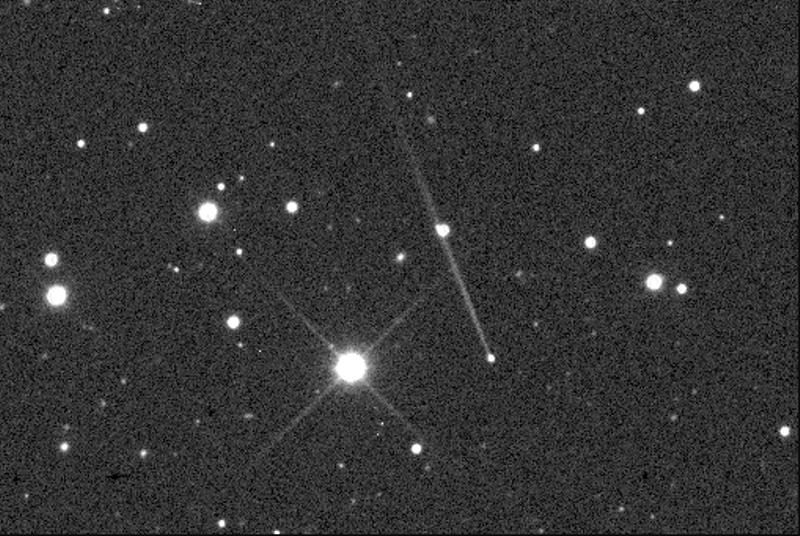
An asteroid discovered decades ago may have become a comet in recent months, according to telescope observations that spotted a tail accompanying the space rock.

The newly intriguing object is named Asteroid (6478) Gault, and observations from December and early January show it has developed a tail.

A notice sent to astronomers by the International Astronomical Union said that data from the observations is "consistent with the ejection of material or commencement of activity in early Nov. 2018."

British astronomer Alan Fitzsimmons noted on Twitter that the tail of dust extends over 400,000 km (249,000 miles).


Comment: It IS a 'comet' because the only difference between an asteroid and a comet is that the latter is glowing from electrical discharge. See also:


Galaxy

Scientists spot a strange quadruple star system 146 light years away

gas ring
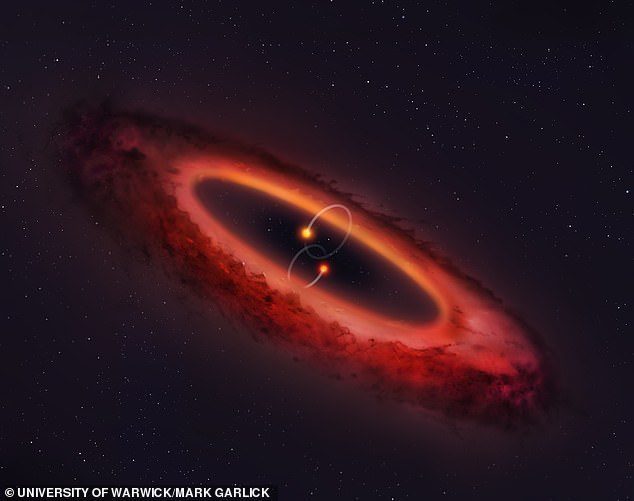
Scientists with the ALMA telescope have spotted an unusual formation of gas and dust in a double star system 146 light-years away. (Artist's impression)
Scientists with the ALMA telescope have spotted an unusual formation of gas and dust in a double star system 146 light-years away.

The system isn't unique in that it contains two binary pairs, but in how its surrounding planet-forming disk is oriented.

Astronomers say the disk of the quadruple star system has been flipped in a way that's previously only existed in theory.

'Discs rich in gas and dust are seen around nearly all young stars, and we know that at least a third of the ones orbiting single stars form planets,' said Dr Grant M. Kennedy of the University of Warwick.

'Some of these planets end up being misaligned with the spin of the star, so we've been wondering whether a similar thing might be possible for circumbinary planets.

Fire

The world is running out of phosphorus

match fire
© Petro GuliaievOld flame.
It's time to buy a lot of candles. And if we light them with matches, it will only be possible because of the anniversary in question. It's happy 350th birthday to the discovery of phosphorus, an element that is essential for life as we know it.

The story of how the 15th element on the periodic table was discovered stands as one of the great accidents of human endeavour - the chemist's equivalent, perhaps, of Columbus setting out for India only to find the Americas by mistake. In the case of phosphorus, the explorer was Hennig Brand, a 17th-century alchemist and merchant from Hamburg, Germany.

Brand had been trying to achieve one of the great goals of alchemy, to make the philosopher's stone. Alchemists thought this was the elixir of life, capable of transforming lead into gold. But where to find this legendary substance?

Brand was convinced that the answer was human urine, for two good reasons. First, gold and urine were a similar colour. Second, urine came from the human body, which was regarded by alchemists as a work of perfection.

Comment: A lot can happen in 40 years so it's possible a solution will be found, whether civilization as we know it will make it that far is another consideration. But the idea of recycling human waste, as long as it really is beneficial and optimal just makes sense, and some cities have been exploring ideas from fertilization to power. It would also be helpful to the cause if the West and it's lackeys stopped using white phosphorous to commit war crimes: US coalition strikes Syrian town using banned white phosphorus (again)


Nebula

Large, rotating black holes could be used as portals for hyperspace travel

Astronaut
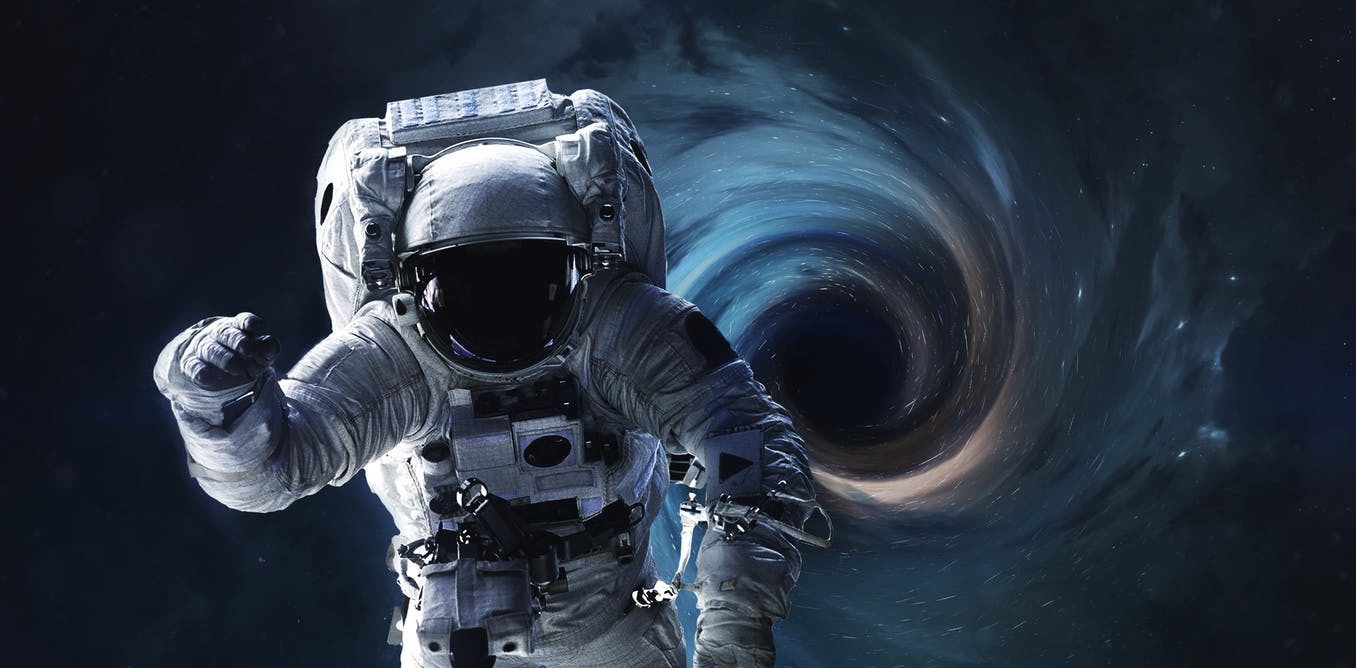
© Sadovski/ShutterstockFeel like traveling to another dimension? Better choose your black hole wisely. Vadim
One of the most cherished science fiction scenarios is using a black hole as a portal to another dimension or time or universe. That fantasy may be closer to reality than previously imagined.

Black holes are perhaps the most mysterious objects in the universe. They are the consequence of gravity crushing a dying star without limit, leading to the formation of a true singularity - which happens when an entire star gets compressed down to a single point yielding an object with infinite density. This dense and hot singularity punches a hole in the fabric of spacetime itself, possibly opening up an opportunity for hyperspace travel. That is, a short cut through spacetime allowing for travel over cosmic scale distances in a short period.

Researchers previously thought that any spacecraft attempting to use a black hole as a portal of this type would have to reckon with nature at its worst. The hot and dense singularity would cause the spacecraft to endure a sequence of increasingly uncomfortable tidal stretching and squeezing before being completely vaporized.

Comment: Interesting idea, but maybe the first step would be to confirm their existence by direct observation since no astronomer has ever seen a black hole.


Info

Machine breaks normal rules of light

Light
© CC0 Public Domain
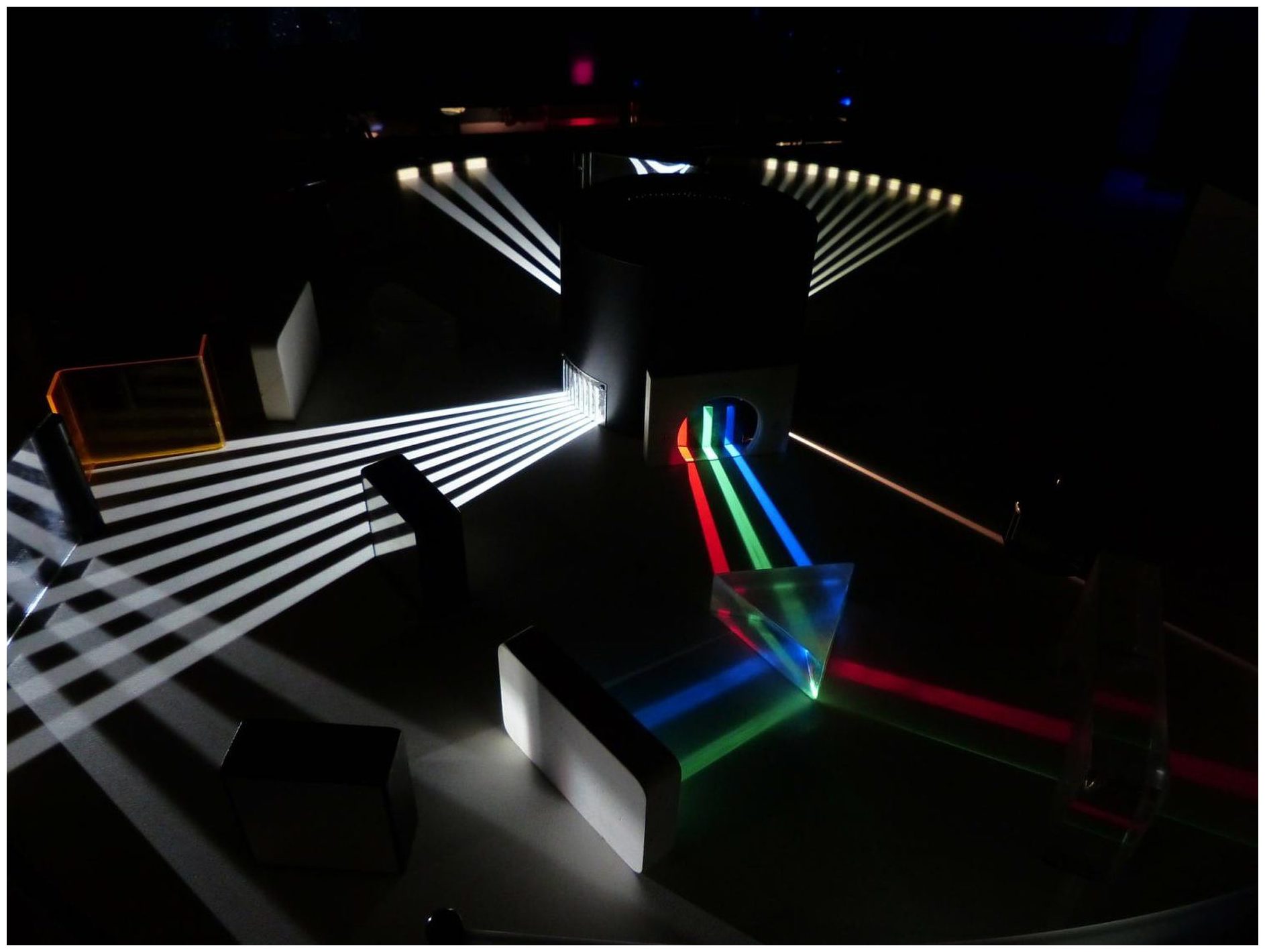
Physicists have built a ring in which pulses of light whip circles around each other and the normal rules that govern light's behavior no longer apply.

Under normal circumstances, light displays certain kids of physical symmetry. First, if you were to play a tape of light's behavior forward and then backward, you would see it behave in the same way moving in both directions in time. This is called time-reversal symmetry. And second, light, which can move through the world as a wave, has what is called polarization: how it oscillates relative to the motion of the wave. That polarization usually stays the same, providing another type of symmetry.

But inside this ring-shaped device, light both loses its time-reversal symmetry and changes its polarization. Inside the ring, light waves turn circles and resonate with one another, producing effects that don't normally exist in the outside world.

Fish

200 million yr old dolphin-like 'sea monster' skull revealed in 3D

ichthyosaur skull
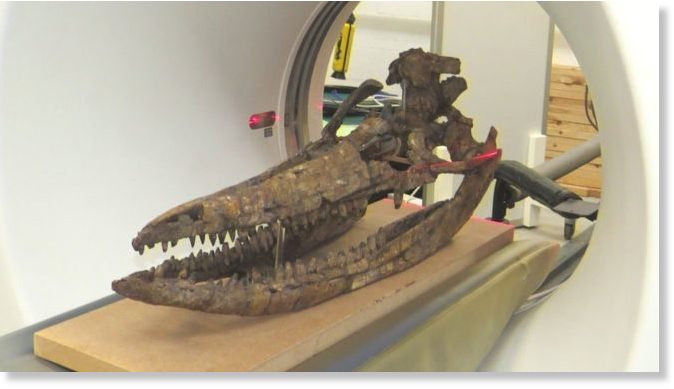
© Nigel LarkinThe skull is nearly a metre long
Some 200 million years ago in what is now Warwickshire, a dolphin-like reptile died and sank to the bottom of the sea.

The creature's burial preserved its skull in stunning detail - enabling scientists to digitally reconstruct it.

The fossil, unveiled in the journal PeerJ, gives a unique insight into the life of an ichthyosaur.

The ferocious creature would have fed upon fish, squid and likely others of its kind.

Its bones were found in a farmer's field more than 60 years ago, but their significance has only just come to light.

Microscope 2

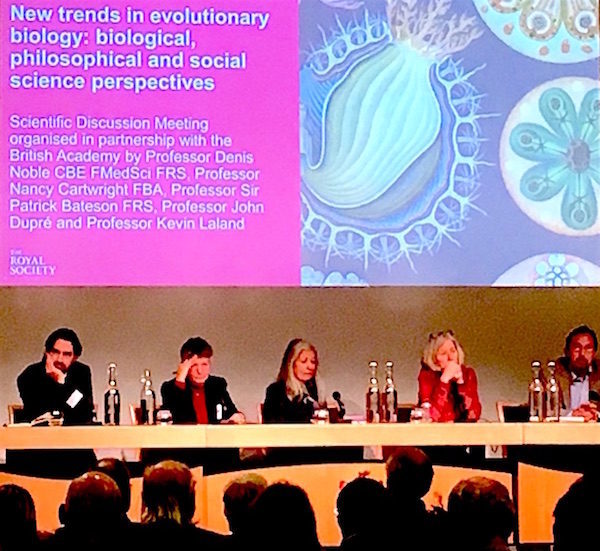
Royal Society's "New Trends in Biological Evolution" - A bloodless revolution

royal society panel
"Evolution is too important to leave to evolutionary biologists." -Ray Noble MD

"I don't consider my ideas controversial. I consider them right." -Lynn Margulis

In London from 7-9 November 2016 I witnessed a groundbreaking summit at the British Royal Society. 300 scientists from around the world gathered to evaluate a sea change in evolutionary theory.

When recalled at the end of the 21st century, this gathering may prove as pivotal as the US election that occurred at the same time.

No one can say for sure until December 31, 2099 whether this meeting was that influential. But in a few minutes I'll explain why I predict it was.

Comment: The stranglehold Neo-Darwinism has held over science for the last centuries seems to be finally losing its grip. The weight of the evidence, as well as the sheer number of instances for which the theory cannot account, are making bigger and bigger cracks in the foundation. Hopefully, true scientists will continue to ask the difficult questions and not ignore the evidence staring them in the face, and humanity will be able to progress with a more fully formed picture of how life actually works.

See also:


Comet 2

Newly discovered asteroid 2019 AS5 just had a close flyby with Earth

Asteroid 2019 AS5
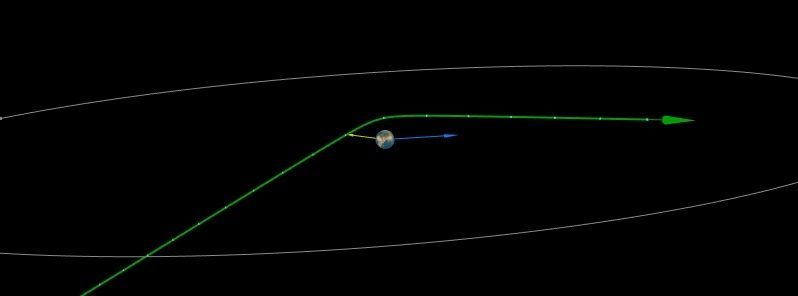
A newly discovered asteroid designated 2019 AS5 flew past Earth at a very close distance of 0.04 LD / 0.00010 AU (14 959 km / 9 295 miles) on January 8, 2019. This is the 1st known asteroid to flyby Earth within 1 lunar distance this year and the closest since February 24, 2018.

This is a small asteroid, first observed at Mt. Lemmon Survey 9 hours after it flew past us.

It belongs to the Apollo group of asteroids and has an estimated diameter between 0.94 and 2.1 m (3.1 - 6.8 feet).

The asteroid flew past Earth at a speed (relative to the Earth) of 12.52 km/s at 00:37 UTC on January 8.

Crusader

Scientists find links between brain damage and religious fundamentalism

religious fundamentalism
A study published in the journal Neuropsychologia has shown that religious fundamentalism is, in part, the result of a functional impairment in a brain region known as the prefrontal cortex. The findings suggest that damage to particular areas of the prefrontal cortex indirectly promotes religious fundamentalism by diminishing cognitive flexibility and openness - a psychology term that describes a personality trait which involves dimensions like curiosity, creativity, and open-mindedness.

Religious beliefs can be thought of as socially transmitted mental representations that consist of supernatural events and entities assumed to be real. Religious beliefs differ from empirical beliefs, which are based on how the world appears to be and are updated as new evidence accumulates or when new theories with better predictive power emerge. On the other hand, religious beliefs are not usually updated in response to new evidence or scientific explanations, and are therefore strongly associated with conservatism. They are fixed and rigid, which helps promote predictability and coherence to the rules of society among individuals within the group.

Comment: Though there seem to be several variables involved, and this research still appears to be in its infancy, the data suggesting that rigid thinking on religious and cultural values is reflected (or shaped by) the physical state of the brain is compelling and makes a certain amount of sense. Whether because inculcated fundamentalist beliefs form a healthy brain - or vice versa, or the two states are reinforcing of one another - we can conclude that some amount of open-mindedness and ability to question religious dogma is one hallmark of a relatively healthier mind.

Note: by 'religious fundamentalism', we presume the authors have in mind something akin to literalist interpretations of holy books. Considerate, analytical, and comparative study of religious texts in the light of textual criticism proving that they are not be taken as literal histories and literal 'words of God' can surely only broaden a mind.

See also: Religious fundamentalism could soon be treated as mental illness