Science & TechnologyS


Light switch

Is Jason Herring the Elon Musk of hydrogen energy?

Jason Herring
© UnknownJason Herring founder of vivify and Syzygy
The biggest challenge facing artificial intelligence may not be intelligence at all.

It is electricity.

The world is racing toward an era defined by AI data centers, autonomous factories, humanoid robots, military automation, and always-on computing. Yet beneath every breakthrough model, every server rack, every robot, and every automated system lies a stubborn physical constraint that software alone cannot solve: power.

The numbers are already daunting. The International Energy Agency projects that electricity consumption from data centers will more than double, reaching roughly 945 terawatt-hours by 2030. In the United States, the Department of Energy has cited estimates suggesting that data centers could consume as much as 9 percent of the nation's annual electricity generation by the end of the decade.

And that is before the robotic economy arrives in full force. Morgan Stanley has projected that the global population of humanoid robots could approach one billion units by 2050. Another forecast from the firm estimates that the United States alone could have 8 million working humanoid robots by 2040.


Books

The scientific case has been made for reading on paper, not screens

read books or tablets
© pixel-shot.com
Norway is one of the wealthiest countries in the world. Until recently, it was also one of the most enthusiastic adopters of screen-based education technologies.

In the 1980s, Norway was quick to prioritize the use of computers in its classrooms. During the early 2000s, the country's government declared the use of digital technologies a basic skill — as necessary as the ability to read, write, and do arithmetic — and for the past decade, Norwegian students have done most of their coursework on tablets and laptops.

"In Norway, we were one of the first countries to say we want to be world-leading in education technology, and we've been very proud of that," says Marte Blikstad-Balas, a professor in the department of teacher education and school research at the University of Oslo. "But now you see a very sharp U-turn. Especially for children in grades one to four, we're trying to build down our digital infrastructure."

Comment:


Microscope 2

Stressed-out soil bacteria can adapt to environmental conditions

fungi microbes partnership stress soil deficiencies
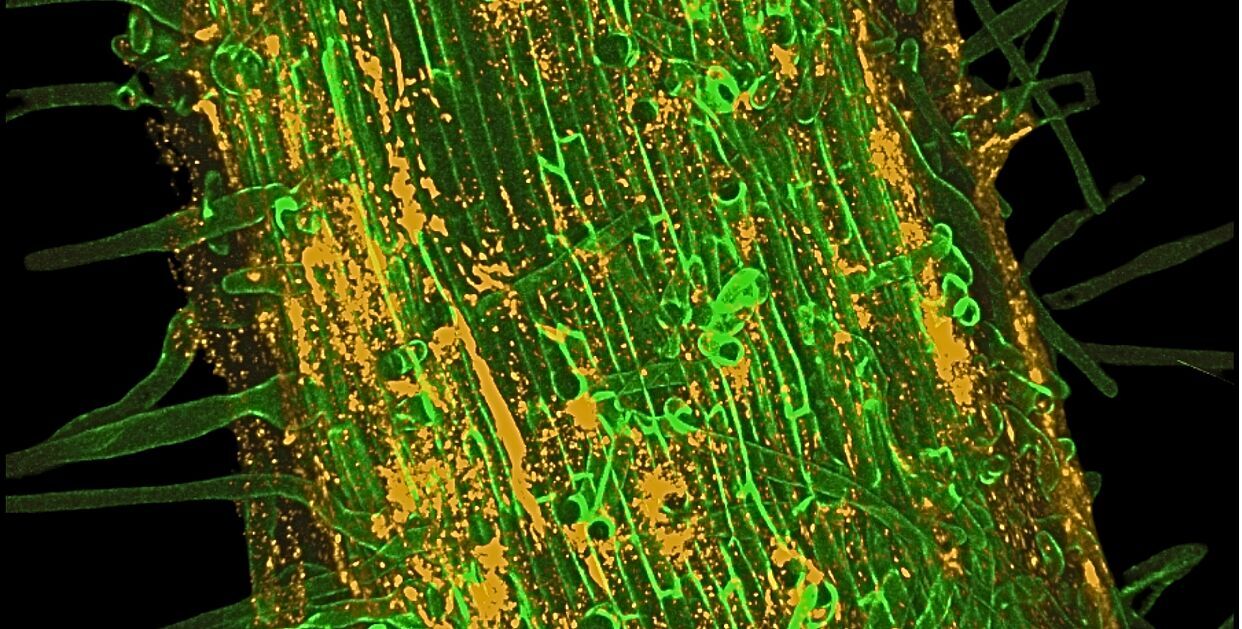
© Reinaldo E. Alcalde and Hannah JeckelFluorescence micrograph of a Brachypodium distachyon root colonized by Pseudomonas synxantha bacterial cells.
A new study from Caltech demonstrates that soil bacteria can adapt under stress, particularly when a key nutrient, phosphorus, is running low in their environment. The work is important for understanding the complex relationships between microorganisms and the roots of plants, which has implications for soil health and food sustainability as the climate changes.

The work was conducted in the laboratory of Dianne Newman, the Gordon M. Binder/Amgen Professor of Biology and Geobiology, and is described in a new paper appearing in the journal Current Biology on June 19.

Robot

Cyber warfare is no longer directed by humans. It's being shaped by AI.

Robot Chappie
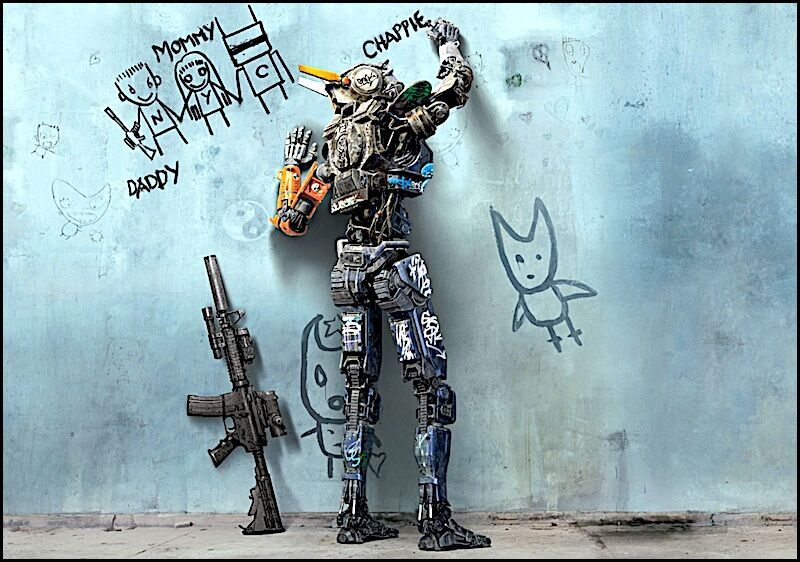
© UnknownThe doodles of Robot Chappie
We are approaching the most consequential transformation in cyber conflict in a generation.

The next wave of AI-driven cyber capabilities is not some distant prospect waiting over the horizon. It has already arrived. Yet much of the public conversation remains fixated on model releases, company valuations, and the race among technology firms to dominate the artificial intelligence marketplace. Inside government circles, however, the discussion has taken on a far greater sense of urgency.

Behind closed doors, national security officials are grappling with a reality that only recently seemed theoretical: artificial intelligence is beginning to alter the balance of power between attackers and defenders in cyberspace.

The change is not gradual. It is structural.

For the first time, nation-state actors are gaining the ability to conduct cyber operations at machine speed.

Comment: We don't just live inside the machine, we are for all intents and purposes its cogs and wheels.


Seismograph

Powerful seismic waves from Japan's 2011 earthquake struck Earth's core and bounced back up, moving the island eastward

japan earthquakes tectonic plates map
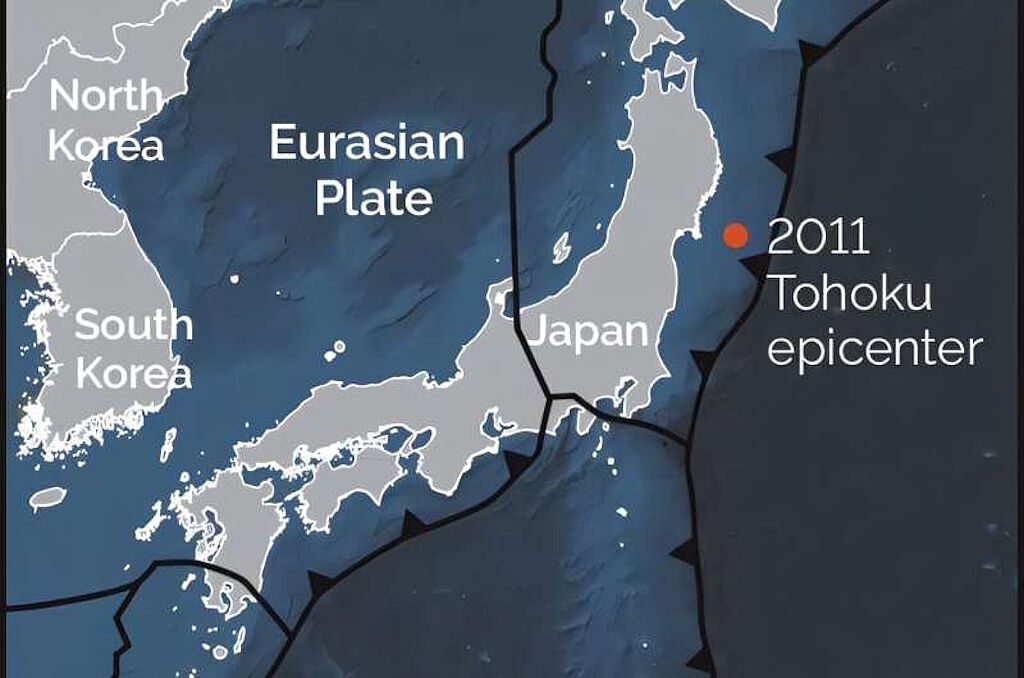
© K. Cantner/American Geosciences InstituteJapan rests at the intersection of four different tectonic plates.
In 2011, Japan reeled from the effects of a devastating magnitude 9.0 earthquake. But unnoticed in the chaos resulting from the quake, its major aftershocks and the tsunami it caused, something strange happened. About 16 minutes after the earthquake, but before the aftershocks hit, Japan's GPS stations registered an eastward lurch — across the entire country — but unconnected to any specific quake or aftershock.

A new analysis of data from the quake, led by University of Chicago geophysicist Sunyoung Park, suggests an extraordinary answer: The waves from the earthquake traveled downward to the Earth's core and then back up, displacing the tectonic plates further. This permanently moved the entire island of Japan eastward by up to 6 millimeters.

Seismologists knew that large waves from earthquakes can travel through the Earth and even reverberate off the core. But this is the first time the phenomenon has been identified as causing tectonic plates to slip near the Earth's surface. "It's striking because this is both an unprecedented length and area for a seismic event, and it is a previously unrecognized source of seismic hazard," said Park.

Attention

The targeted assassination of studies showing vaccines cause injury

Since they can't win on the merits, they've resorted to other tactics.
Injury Studies
© Injecting Freedom
A journalist from The Guardian recently contacted me for a comment on vaccine-related studies I have previously cited in my work. The publishers of these studies have decided — years after publication — that these studies were so flawed and "dangerous to public health" that they needed to be retracted or investigated. The journalist wanted to know if I would amend my book and my recent ACIP presentation now that these studies were under attack.

My response:
"I welcome the media noting the targeted assassination of articles that do not fit the religious belief of vaccine proponents; this is also exemplified by the media's lack of interest in the hundreds of other articles, reviews, and trial documents from my book and ACIP presentation which make plain that the claim vaccines are 'safe and effective' is not supported by the available evidence."
So which studies are under fire? You won't be surprised that they are on some of the biggest hot-button topics when it comes to vaccine injury:

Eye 1

Best of the Web: Generative Optogenetics: brought to you by DARPA!

darpa report generative optics brain thought control
© DARPA
I am going to do the hard work on a DARPA document so that you don't have to.

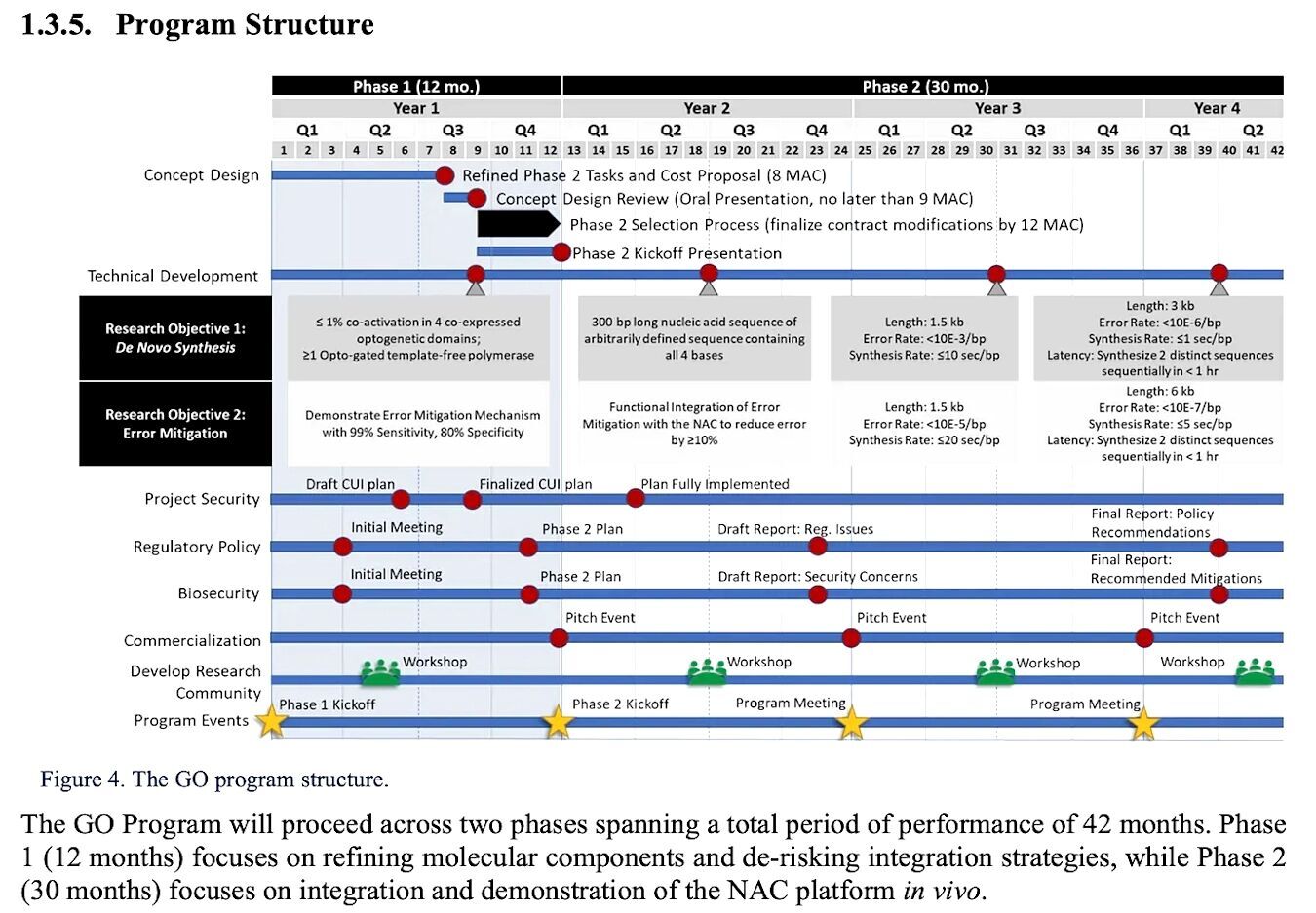
The document I am referring to is an Initial Announcement by the Defense Advanced Research Projects Agency (DARPA) (Biological Technologies Office (BTO)) for a funding opportunity in Generative Optogenetics valued at $1.7M or $1.99M, depending on the research objective selected.1 The announcement was posted on December 19, 2025 and Phase 1 of the project is likely well underway complete with a workshop for interested parties.
darpa report generative optics brain thought control
© DARPA
So what this means is that DARPA is looking for smart people to design a protein complex that can synthesize DNA/RNA directly in living cells using optical signals. Now what the hell does that mean, you ask? I refer you to my article on optogenetics to find out, as a start.

To summarize (as I so succinctly did so in this article), optogenetics is the introduction of genes into cells that don't naturally carry them, whereby the resulting proteins, once expressed, can be controlled and monitored with light stimuli in neurons of living brains, heart muscle cells, and cultured cells.

Hourglass

Scientist set clocks made from an atomic nucleus running for the first time

clock atomic nucleus crystal of calcium fluoride thorium
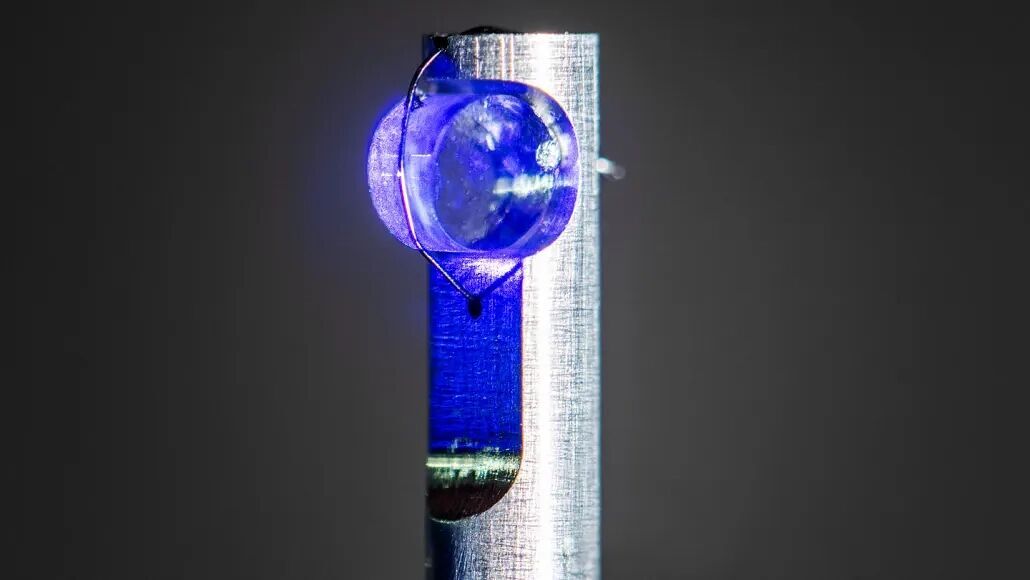
© Luca Toscani De Col/TU WienA crystal of calcium fluoride that is infused with thorium atoms (shown) is at the heart of a new nuclear clock.
Researchers already used one of the nuclear clocks to search for dark matter

For the first time, scientists used an atomic nucleus as a clock.

The world's most precise timepieces are made using atoms, specifically their electrons. But clocks based on atomic nuclei — protons and neutrons — might eventually outperform them, while also testing basic laws of physics in new ways. Now, the decades-old dream of a nuclear clock has finally been realized, two independent teams of researchers report.

The technology is still at an early stage, but the physics behind it is so different from that of atomic clocks that it's already broken new ground, researchers report in a paper submitted June 3 to arXiv.org. "In some types of measurements, we're already outperforming all of the atomic clocks," says physicist Thorsten Schumm of TU Wien in Vienna.

Family

Researchers accidentally discovered strange, hidden rule of human behavior

humans prefer walk counterclockwise study
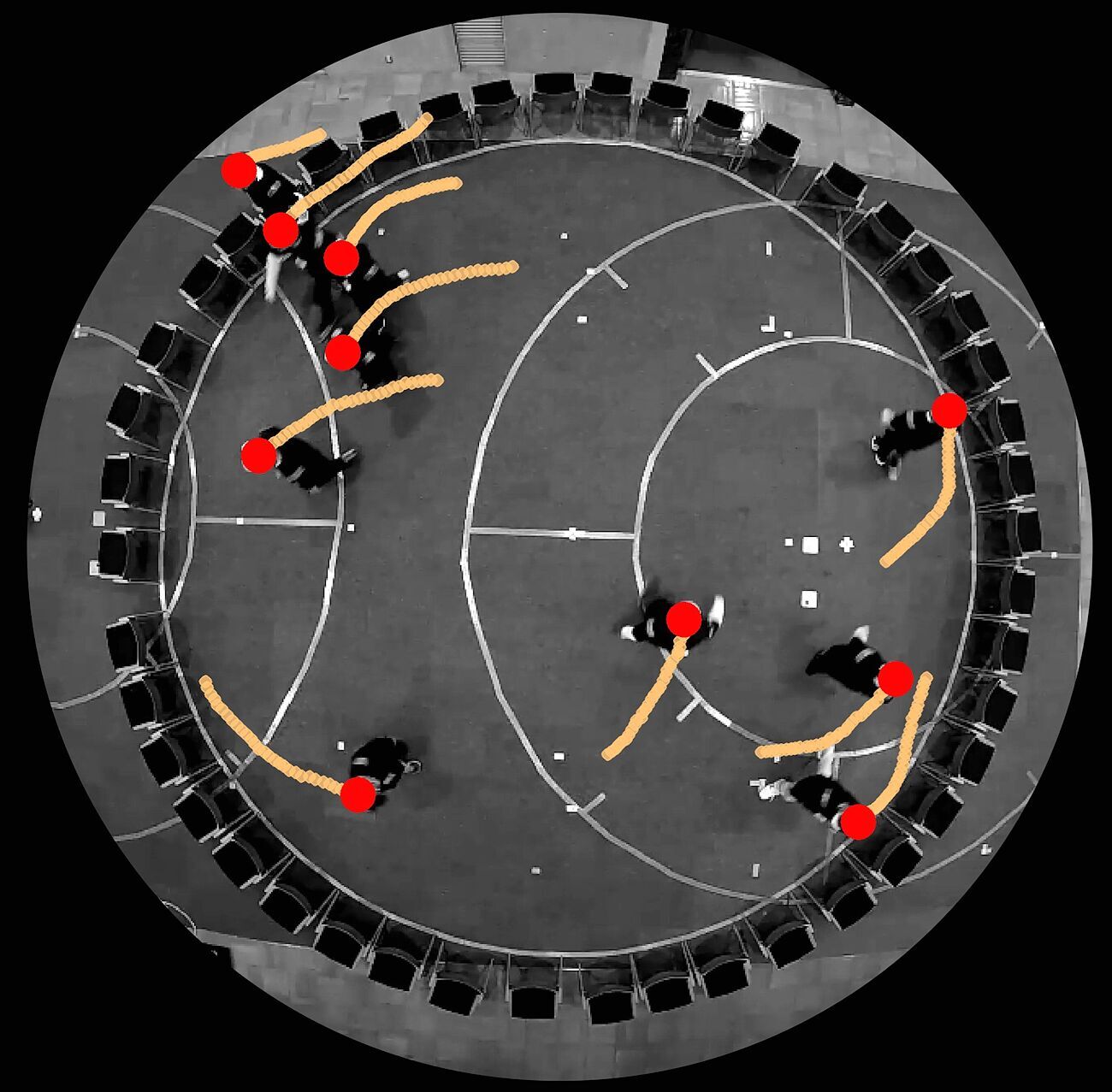
© Iñaki Echeverría-Huarte, Claudio Feliciani, et al"Recently, the spontaneous development of collective counterclockwise motion has been reported in both dense and sparse human assemblies."
Researchers report a "serendipitous" discovery while watching videos of crowds: an inexplicable bias toward counterclockwise turning that may be rooted in biology.

Scientists have discovered that people walking in crowds tend to spontaneously turn counterclockwise — regardless of the environment, from schoolyards to busy settings — a surprise finding that "may represent a manifestation of a deeper biological principle of symmetry breaking," according to a study published in Nature Communications on Wednesday.

The bizarre finding was made essentially by accident; during the Covid-19 pandemic, researchers led by Iñaki Echeverría Huarte, a professor who studies pedestrian dynamics at the University of Navarra in Spain, studied the movements of pedestrians as part of a project to inform public health guidance on social distancing measures. But the videos revealed something unexpected — a consistent pattern of people turning counterclockwise when switching direction.

Arrow Up

Bots now generate more web traffic than humans - Cloudflare

circuit board
© NicoEINino/Getty ImagesCloudflare circuit board
The rise of AI agents has pushed automated requests past human activity, according to the internet infrastructure firm.

Bots and AI agents now generate more web traffic than humans, according to data from internet infrastructure company Cloudflare. CEO Matthew Prince has described the development as a major turning point in the history of the web.

Recent Cloudflare Radar data shows that automated bot requests account for roughly 57% of traffic to ordinary webpages across a selection of websites using the company's services, compared with about 43% generated by humans.

"Welp, that happened faster than I predicted," Cloudflare co-founder and CEO Matthew Prince wrote on X on Wednesday. He stated that he had expected automated traffic to overtake human activity only in 2027, but that "agentic traffic" has grown rapidly enough for bots to pass humans "for the first time in the Internet's history."