Science & TechnologyS


People 2

Genetic data on half a million Brits reveal ongoing evolution and Neanderthal legacy

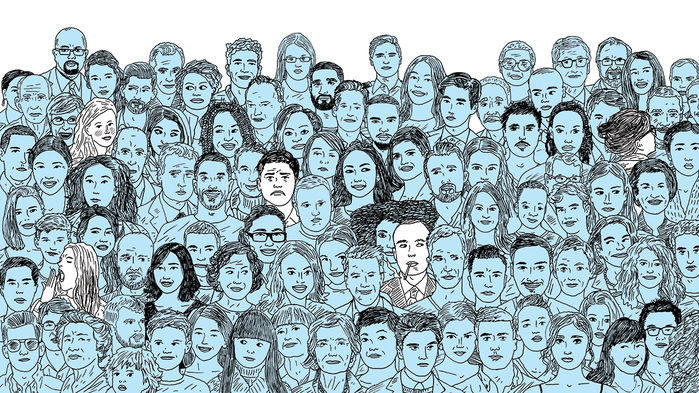
people drawing
© Peter AnkleAmong participants in the UK Biobank are people whose Neanderthal DNA predisposes them to traits such as propensity to sunburn, staying up late, depression, smoking, and feeling lonely.
Among participants in the UK Biobank are people whose Neanderthal DNA predisposes them to traits such as propensity to sunburn, staying up late, depression, smoking, and feeling lonely.

Neanderthals are still among us, Janet Kelso realized 8 years ago. She had helped make the momentous discovery that Neanderthals repeatedly mated with the ancestors of modern humans-a finding that implies people outside of Africa still carry Neanderthal DNA today. Ever since then, Kelso has wondered exactly what modern humans got from those prehistoric liaisons-beyond babies. How do traces of the Neanderthal within shape the appearance, health, or personalities of living people?

For years, evolutionary biologists couldn't get their rubber-gloved hands on enough people's genomes to detect the relatively rare bits of Neanderthal DNA, much less to see whether or how our extinct cousins' genetic legacy might influence disease or physical traits.

But a few years ago, Kelso and her colleagues at the Max Planck Institute for Evolutionary Anthropology in Leipzig, Germany, turned to a new tool-the UK Biobank (UKB), a large database that holds genetic and health records for half a million British volunteers. The researchers analyzed data from 112,338 of those Britons-enough that "we could actually look and say: 'We see a Neanderthal version of the gene and we can measure its effect on phenotype in many people-how often they get sunburned, what color their hair is, and what color their eyes are,'" Kelso says. They found Neanderthal variants that boost the odds that a person smokes, is an evening person rather than a morning person, and is prone to sunburn and depression.

Comment: The scientists involved in this research were obviously unaware of the scientific data that shows evolution is determined by a variety of other complex processes long before natural selection even comes into play, nor how genes alone do not necessarily determine our lives. However, it is fascinating to learn about the myriad of factors involved in where we came from and those that contribute in to making us who we are.

See also: And check out SOTT's radio shows on the matter:


Bulb

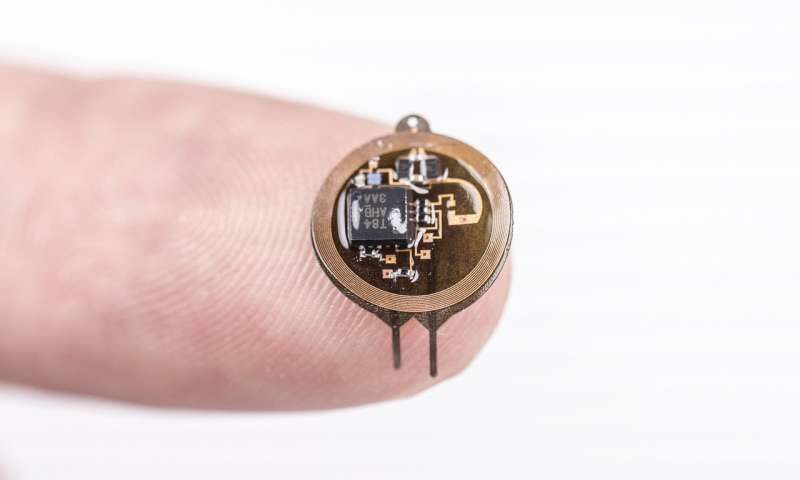
Wireless implants can now control neurons with light

Wireless implant control brain
© Philipp GutrufWireless and battery-free implant with advanced control over targeted neuron groups.
University of Arizona biomedical engineering professor Philipp Gutruf is first author on the paper Fully implantable, optoelectronic systems for battery-free, multimodal operation in neuroscience research, published in Nature Electronics.

Optogenetics is a biological technique that uses light to turn specific neuron groups in the brain on or off. For example, researchers might use optogenetic stimulation to restore movement in case of paralysis or, in the future, to turn off the areas of the brain or spine that cause pain, eliminating the need for-and the increasing dependence on-opioids and other painkillers.

"We're making these tools to understand how different parts of the brain work," Gutruf said. "The advantage with optogenetics is that you have cell specificity: You can target specific groups of neurons and investigate their function and relation in the context of the whole brain."

In optogenetics, researchers load specific neurons with proteins called opsins, which convert light to electrical potentials that make up the function of a neuron. When a researcher shines light on an area of the brain, it activates only the opsin-loaded neurons.

The first iterations of optogenetics involved sending light to the brain through optical fibers, which meant that test subjects were physically tethered to a control station. Researchers went on to develop a battery-free technique using wireless electronics, which meant subjects could move freely.

Comment: No doubt DARPA is finding a myriad of uses for such devices which are initially portrayed as useful for medical and scientific purposes to gain widespread acceptance.


Galaxy

Milky Way headed towards catastrophic collision with Large Magellanic Cloud

galaxy
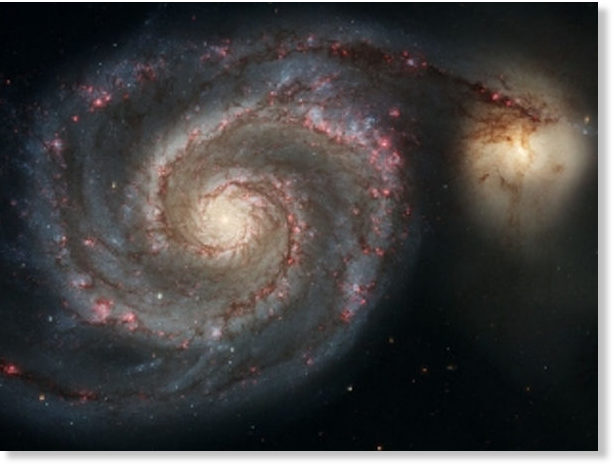
Hubble Space Telescope image representing a merger between two galaxies (M51a and M51b) similar in mass to the Milky Way and the Large Magellanic Cloud. Credit: NASA, ESA, S. Beckwith (STScI), and The Hubble Heritage Team (STScI/AURA)
The Milky Way is on a collision course with a neighbouring galaxy that could fling our Solar System into space.

The Large Magellanic Cloud could hit our galaxy in two billion years' time

This galactic collision would happen much sooner than the predicted impact between the Milky Way and another neighbour, Andromeda, which scientists say will hit our galaxy in eight billion years.

Active black hole

The coming together with the Large Magellanic Cloud could wake up our galaxy's dormant black hole, which would begin devouring surrounding gas and increase in size by up to ten times.

Comment: See also: Magnetic field detected between magellanic clouds


Moon

Space exploration first: China's probe 'lands on dark side of the moon'

China Rocket lunar probe
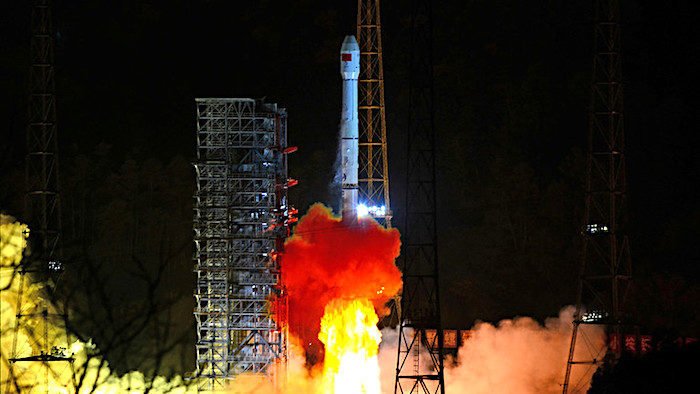
© ReutersRocket carrying Chinese lunar probe Chang'e 4 blasts off
The Chinese robotic probe Chang'e 4 has landed on the dark side of the moon, becoming the first manmade craft to alight on the unexplored surface, according to reports from Chinese state media.

The probe reportedly landed in the South Pole-Aitken basin, the oldest, largest, and deepest crater on the moon's surface. The moon's dark side remains largely unexplored because its position shields it from radio frequencies, preventing direct contact with the Earth. To solve that problem, China launched the relay satellite Queqiao earlier this year to transmit signals from the dark side.

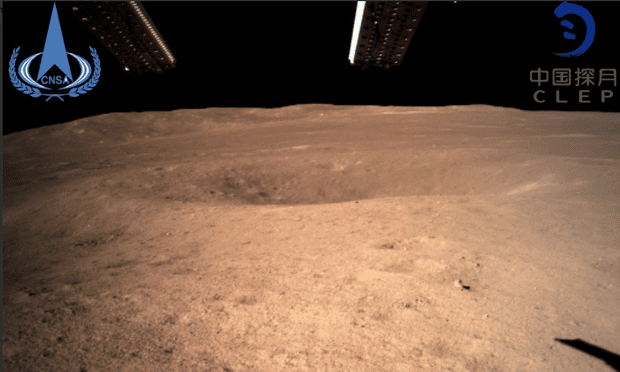
The first photo relayed back to Earth by the probe shows a relatively flat, rocky surface pockmarked by a large crater.


Chang'e 4 will perform several experiments while on the moon, including testing whether plants will grow in the low gravity environment, exploring the poles to find water or other resources, observing the interaction between solar winds and the lunar surface, and conducting the first lunar low-frequency radio astronomy experiment.

"Since the far side of the Moon is shielded from electromagnetic interference from the Earth, it's an ideal place to research the space environment and solar bursts, and the probe can 'listen' to the deeper reaches of the cosmos," said Tongjie Liu, deputy director of the Lunar Exploration and Space Program Center at China's National Space Administration.

Comment: See also:


Jupiter

NASA's Juno mission spots dramatic volcano eruption on Jupiter moon Io

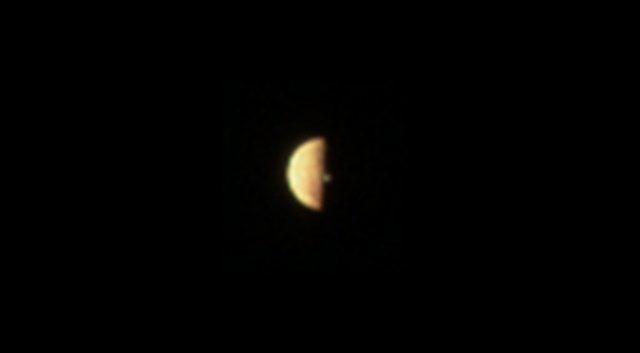
NASA's Juno team shared this look at Io and its volcanic plume.
© NASA/SwRI/MSSSNASA's Juno team shared this look at Io and its volcanic plume.
Mars might not be erupting, but it looks like Jupiter's moon Io sure is.

NASA's Juno spacecraft saw evidence of an eruption on what the space agency calls the "most volcanically active spot in the solar system" during a flyby in December.

NASA released an image on Monday showing Io half in shadow with a noticeable bright spot near its center.

The Juno team pointed four cameras at Io on Dec. 21. "No one expected we would get so lucky as to see an active volcanic plume shooting material off the moon's surface," Juno principal investigator Scott Bolton, who's with the Southwest Research Institute, said in a statement.

While Io is small compared with gigantic Jupiter, it's slightly bigger than Earth's moon in size.

NASA released another image from Juno's star camera. A closer look at Io inside the circle shows the glowing activity of several volcanoes. The smaller circle highlights a plume.

The images aren't hyper-detailed since Juno was about 190,000 miles (300,000 kilometers) from Io at the time.

The plume stands out thanks to its size.

Moon

China probe makes historic touchdown on 'dark side of the moon'

China’s Chang’e 4 lunar explorer after it landed on the far side of the moon.
© CNSAScreenshot of an image take by China’s Chang’e 4 lunar explorer after it landed on the far side of the moon.

Lander sends back first close-up shot of previously unexplored side of the moon


A Chinese spacecraft has become the first ever to land on the far side of the moon, according to state-run media, in a giant leap for human space exploration.

The China National Space Administration (CNSA) landed the robotic probe Chang'e 4 in the unexplored South Pole-Aitken basin, the largest, oldest, deepest, crater on the moon's surface.

Early reports of a successful landing sparked confusion after state-run media China Daily and CGTN deleted tweets celebrating the mission. China Daily's tweet said: '"China's Chang'e 4 landed on the moon's far side, inaugurating a new chapter in mankind's lunar exploration history."

Official confirmation of the landing came two hours later via state broadcaster CCTV, which said the lunar explorer had touched down at 10.26am (2.26am GMT). The Communist party-owned Global Times also said the probe had "successfully made the first-ever soft landing" on the far side of the moon.

Robot

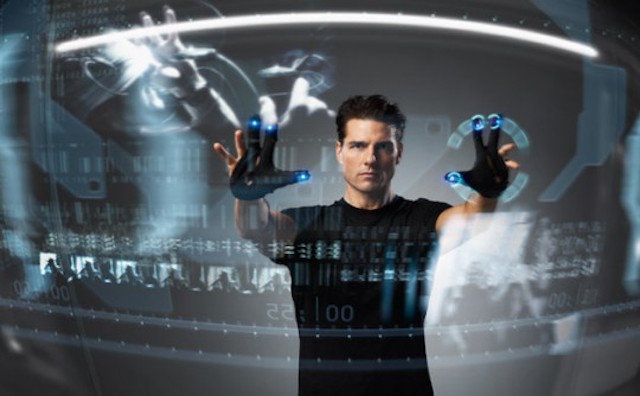
Google wins U.S. approval for new radar-based motion sensor Project Soli

Minority Report
© Amblin Entertainment
Alphabet Inc's Google unit won approval from U.S. regulators to deploy a radar-based motion sensing device known as Project Soli.

The Federal Communications Commission (FCC) said in an order late on Monday that it would grant Google a waiver to operate the Soli sensors at higher power levels than currently allowed. The FCC said the sensors can also be operated aboard aircraft.

The FCC said the decision "will serve the public interest by providing for innovative device control features using touchless hand gesture technology."

A Google spokeswoman did not immediately comment on Wednesday.

Comment: Great. Google just added to the general electromagnetic pollution surrounding humanity.


Comet 2

Groundbreaking flyby image of Ultima Thule by New Horizons on edge of our solar system

Ultima thule
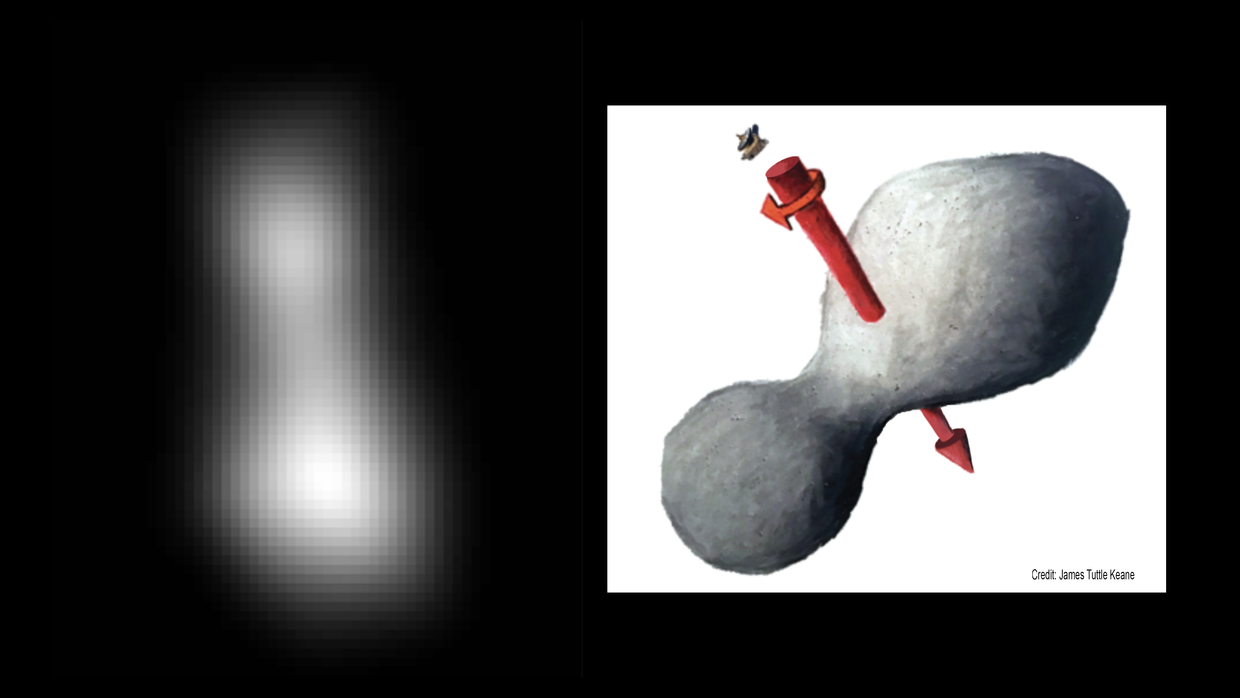
© NASA / James Tuttle KeaneLeft is a composite of two images taken by New Horizons. An artist's impression at right illustrates the direction of Ultima's spin axis.
In an incredible world-first, NASA has released an image from a historic flyby of Ultima Thule, a bowling pin-shaped celestial object at the edge of our solar system some 6 billion kilometers (4 billion miles) away.

The New Horizons spacecraft flew past Ultima from the Kuiper Belt in the early hours of New Year's Day, making it the "farthest exploration of any world in history - 4 billion miles from the Sun," said the project's principal investigator Alan Stern, of the Southwest Research Institute in Boulder, Colorado.

"The data we have look fantastic and we're already learning about Ultima from up close. From here out the data will just get better and better," Stern added.

Comment: This is just the latest in a number of recent revelations from NASA's New Horizons mission:


Brain

WAND: New 'brain pacemaker' offers help for epilepsy, Parkinsons

head/brain
© Thinkstock
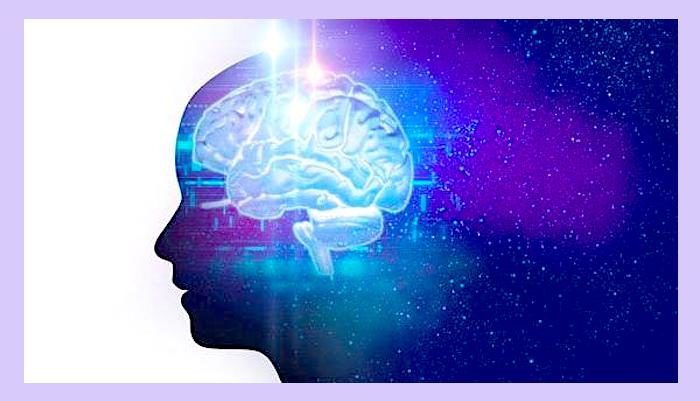
The neurostimulator, named the WAND, works like a "pacemaker for the brain," monitoring the brain's electrical activity and delivering electrical stimulation if it detects something amiss.

Scientists have developed a wireless device that can stimulate the brain with electric current, potentially delivering fine-tuned treatments to patients with diseases like epilepsy and Parkinson's. The neurostimulator, named the WAND, works like a "pacemaker for the brain," monitoring the brain's electrical activity and delivering electrical stimulation if it detects something amiss, said researchers at the University of California, Berkeley in the US.

These devices can be extremely effective at preventing debilitating tremors or seizures in patients with a variety of neurological conditions, according to the study published in the journal Nature Biomedical Engineering.

Comment: See also: 'Pacemaker for the brain' being studied


Meteor

Why is Earth missing a huge part of its crust?

Antarctic Peninsula
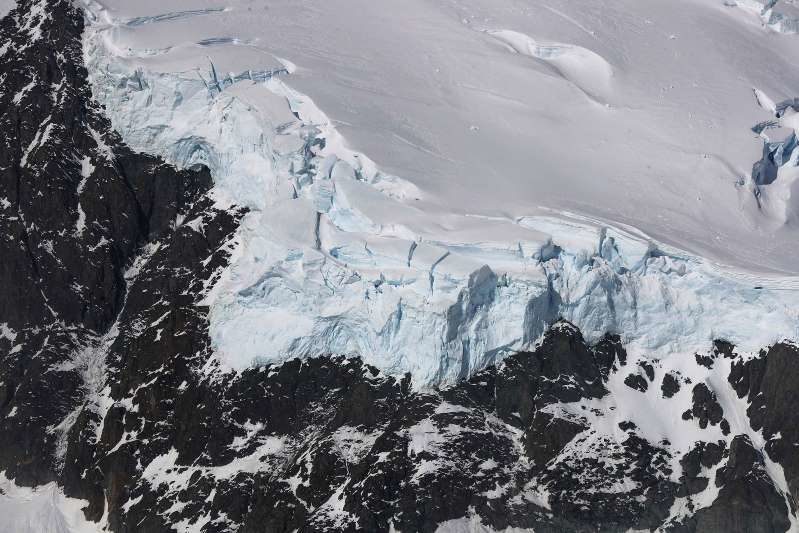
© Mario Tama, GettyIce meets rock in the Antarctic Peninsula, in a picture taken by NASA's Operation IceBridge in October 2017. Millions of years ago, the entire planet may have resembled this polar scene during a phase called Snowball Earth.
The Grand Canyon is a gigantic geological library, with rocky layers that tell much of the story of Earth's history. Curiously though, a sizeable layer representing anywhere from 250 million years to 1.2 billion years is missing.

Known as the Great Unconformity, this massive temporal gap can be found not just in this famous crevasse, but in places all over the world. In one layer, you have the Cambrian period, which started roughly 540 million years ago and left behind sedimentary rocks packed with the fossils of complex, multicellular life. Directly below, you have fossil-free crystalline basement rock, which formed about a billion or more years ago.

So where did all the rock that belongs in between these time periods go? Using multiple lines of evidence, an international team of geoscientists reckons that the thief was Snowball Earth, a hypothesized time when much, if not all, of the planet, was covered in ice.

Comment: See also: Also check out SOTT radio's: Behind the Headlines: Earth changes in an electric universe: Is climate change really man-made?