
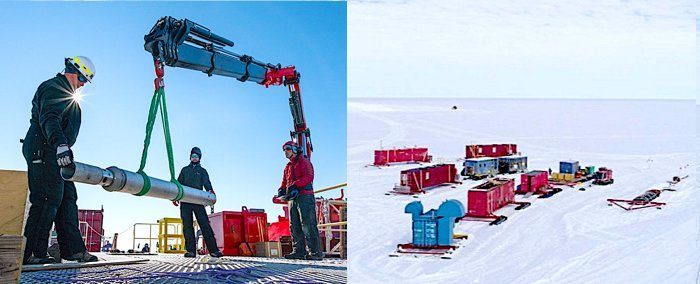
© SALSA Antarctica/FacebookThe SALSA Drill Team uses McMurdo Station to prepare for its work drilling into Mercer Subglacial Lake.
To explore the 50-foot-deep subglacial lake, researchers from a project called SALSA (Subglacial Antarctic Lakes Scientific Access) had to bore a tiny hole nearly 1 kilometer into the ice. They did this using a drill with a pencil-sized nozzle that sprays heated water. Once the hole was made, they then used a corer tool to pull samples back to the surface.
The team anticipated finding microbial lifeforms in those samples - and they did - but they were surprised by what else was lurking in the mud.
The samples also contained carcasses of tiny crustaceans (creatures smaller than a poppy seed) and the body of a tardigrade, a type of eight-legged invertebrate known for its ability to withstand the very harshest conditions.
A surprise in the mud
The SALSA team wound up extracting a 5.5-foot-long core (the longest ever from a subglacial lake) along with "six out of six 'perfect' sediment cores."















Comment: See also: