Science & TechnologyS


Info

Listening to Sun's 'heart' hints our star could be changing

Sun Stages
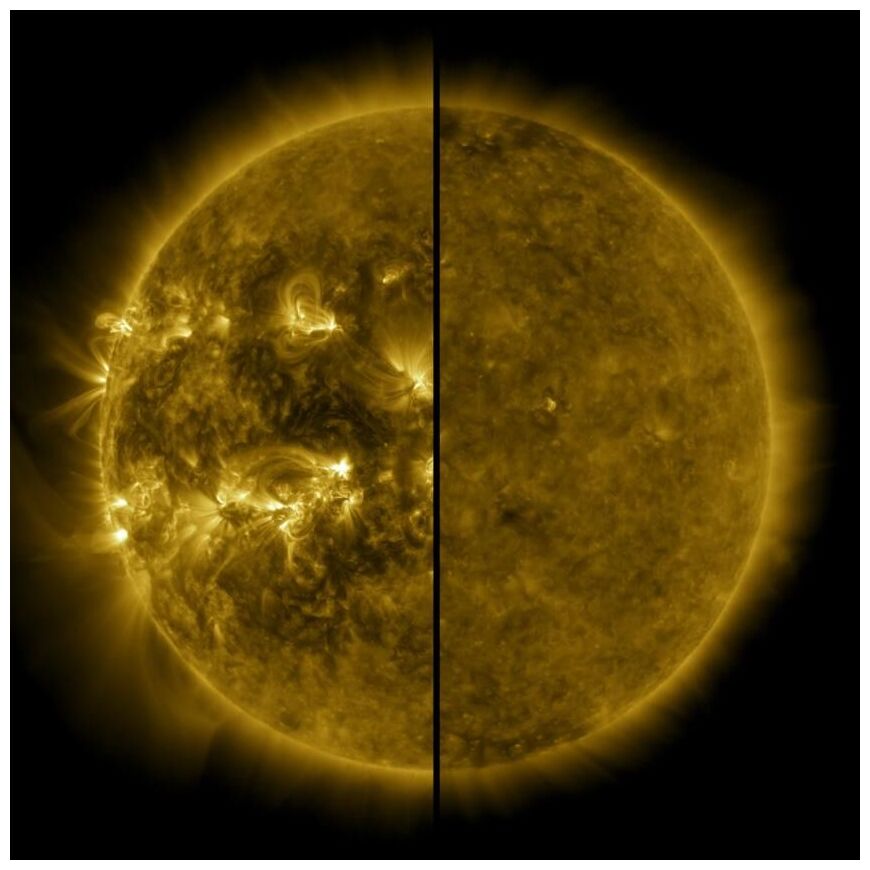
© NASA/SDOA split image showing an active Sun during solar maximum (on the left, taken in 2014) and a quiet Sun during solar minimum (on the right, taken in 2019).
The Sun's internal 'biorhythm' - which plays a critical role in the space weather we experience on Earth - has mysteriously changed over the past 40 years, a new study suggests.

Listening to tiny sound waves inside our star's 'heart' led researchers to discover that it may be entering "a different mode of behaviour". They now need to explore what this means.

The research, published today in Monthly Notices of the Royal Astronomical Society, is of particular significance to space weather.

Solar activity rises and falls in 11‑year cycles, producing solar flares, and ejections of highly charged particles and coronal mass ejections that give rise to geomagnetic storms and aurorae.

This activity, and its cyclic variation, has its origins in the Sun's interior, in processes that regenerate and reorganise the Sun's magnetic field.

Understanding what drives the solar cycle is therefore crucial for making predictions of space weather, which can disrupt satellites, communications, GPS systems and power grids on Earth.

Traditional measures of solar activity track these emissions and other surface phenomena like sunspots, but they do not look under the solar surface. However, by 'listening' to tiny sound waves inside the Sun - a technique known as helioseismology - it is possible to do just that. By tracking changes in the otherwise hidden solar interior, the team found a different picture emerged of the Sun's activity over the past few cycles to the one given by the traditional measures.

Using almost 40 years of helioseismic data from six telescopes around the world in the Birmingham Solar Oscillations Network (BiSON), the international team of researchers uncovered a gradual change in structure just beneath the surface that has spanned multiple cycles, with the current solar cycle 25 showing particularly strong signatures of these changes.

They discovered that solar magnetic activity is being squeezed into an increasingly shallow layer just below the visible surface, signposting long-term changes to the Sun's active behaviour.


HAL9000

The Marxist in the machine

marxist robot artificial intelligence llms
Should we be worried that AI becomes more left-wing if it doesn't like you?

Our fears for the future of robot intelligence almost inevitably end in spectacular fashion, with nuclear explosions and slaughter on a planetary scale. An abiding memory of my childhood is going over to the neighbors' house and watching Terminator 2 on VHS with my friends Ethan and Nathan, who were both older than me. I must have been about five years old — about 13 years too young to watch the film. And so, the idea that robots, reaching a certain level of intelligence and awareness, will inevitably try to kill every last one of us has always just seemed natural to me, as it probably does to many millions of other millennials raised on Terminator and The Matrix films.

Recently, those fears have been bolstered by research that shows AI models like Anthropic's Claude are capable, under stress testing, of deceiving humans and even inflicting harm on them — or, rather, thinking they've inflicted harm, a bit like the Milgram electroshock experiments in the 1960s.

In a study from last year on "agentic misalignment," researchers put Claude models in simulated work environments and tasked them with protecting company interests by managing an email system. When the models were faced with being turned off or replaced by another model, they resorted to deception and blackmail. Claude Opus 4, for example, blackmailed a fictional executive 96 percent of the time with compromising emails in order to avoid being switched off.

Fish

There's a new T. rex from the dinosaur age — and it ruled the seas with a skull-crushing bite

Tylosaurus illustration
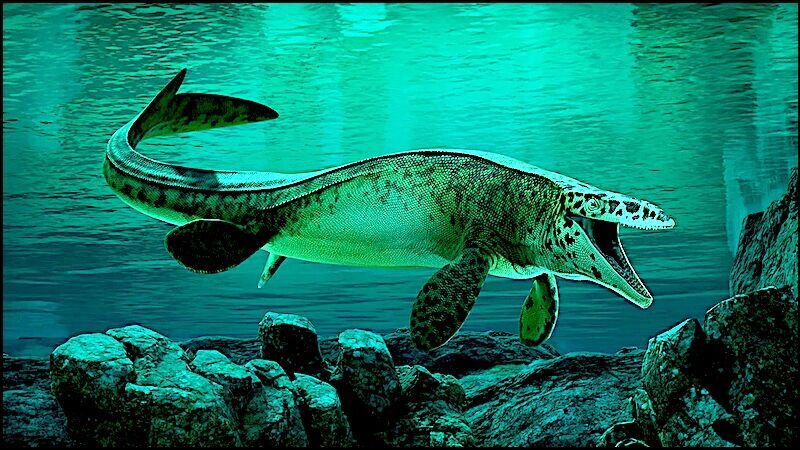
© Alderon Games/Path of TitansAn artist's reconstruction of Tylosaurus rex swimming in the Cretaceous seas of North America.
The newly described mosasaur Tylosaurus rex spanned up to 43 feet (13 meters) long and may have been one of the fiercest marine predators of the dinosaur age.

There's a new T. rex in town, but this one didn't hunt on land. It ruled the ancient seas.

Scientists have described a new species of mosasaur, a member of a marine reptile group that lived at the same time as dinosaurs during the Cretaceous period (145 million to 66 million years ago). The newly named species fits into an already known genus: Tylosaurus. But its new species name, Tylosaurus rex T. rex, for short — sets it apart from the other mosasaur species in the group.

The species name means "king of the tylosaurs," according to a new study published Thursday (May 21) in the journal Bulletin of the American Museum of Natural History. The fossils are about 80 million years old and were discovered mostly in northern Texas decades ago.

The mosasaur T. rex measured up to 43 feet (13 meters) long, or about the length of a tour bus. It had finely serrated teeth, unusually powerful jaws, and evidence on its fossils of violent combat with its own species.

"Everything is bigger in Texas and that includes the mosasaurs, apparently," study first author Amelia Zietlow, a research associate of paleontology at the American Museum of Natural History in New York City, said in a statement.

Volcano

Ice core discovery finds volcanic eruptions could cause greater global disruption than previously thought

ice cores Greenland
© Cores were collected from the Greenland ice sheet. Credit: Michael SiglCores were collected from the Greenland ice sheet.
New research from the University of St Andrews has precisely dated an eruption from Newberry Volcano and discovered that its ash spread more than 5,000 km across the globe, far further than previously thought for an eruption of its size.

Published in Quaternary Science Reviews, researchers identified ash particles from the Newberry Pumice eruption of Newberry Volcano (Oregon, U.S.) in a Greenland ice core by geochemical fingerprinting — matching the chemical elements in the far-flung ash particles to volcanic deposits of the Newberry Pumice ash from its most recent "Big Obsidian" eruptive period.

Previous dates had narrowed the timing of the eruption to an approximate 140-year window around the turn of the 7th Century AD. Finding the ash in the ice allowed researchers to pinpoint the timing of the Newberry Pumice eruption to within two years of 686 AD, due to the very precise age models that have been developed for Greenland ice cores.

Comment: The Dark Age was exacerbated not only by volcanic explosions: 536 AD, the year the sky went dark


Microscope 2

Japanese genome study reveals traces of Neanderthal and Denisovan DNA

Genome
© Wired.com
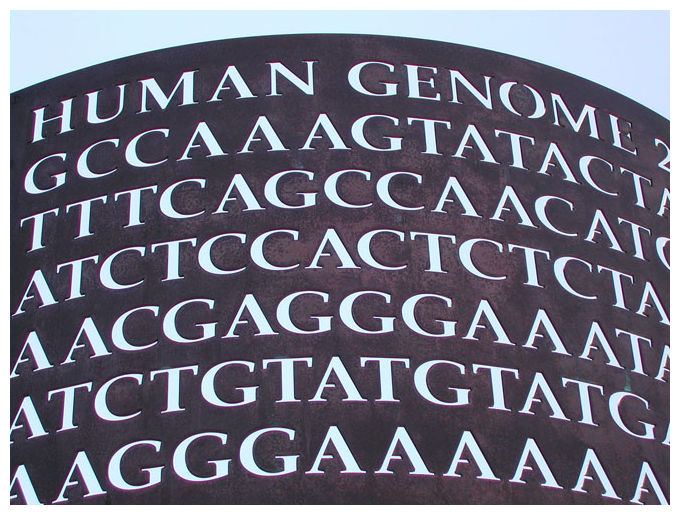
Genomes across Japan show traces of a previously overlooked ancestral group alongside Neanderthal and Denisovan DNA linked to modern diseases and drug responses.

A third ancestral group may be hiding inside the DNA of modern populations in Japan. A genetic study found the ancestry of people in Japan today may not fit into the long-standing two-origin model as once thought.

After analyzing the genomes of more than 3,200 people across Japan, evidence of a third ancestral component linked to northeastern Asia alongside the Indigenous Jomon hunter-gatherers and later East Asian migrants was found.

Published in Science Advances, the study used whole-genome sequencing to examine DNA from seven regions stretching from Hokkaido to Okinawa. The results support the "tripartite origins" theory proposed in 2021 and point to genetic differences across different parts of Japan.

Explosion

The first atomic bomb test in 1945 created an entirely new material

clatherite atomic bomb new material
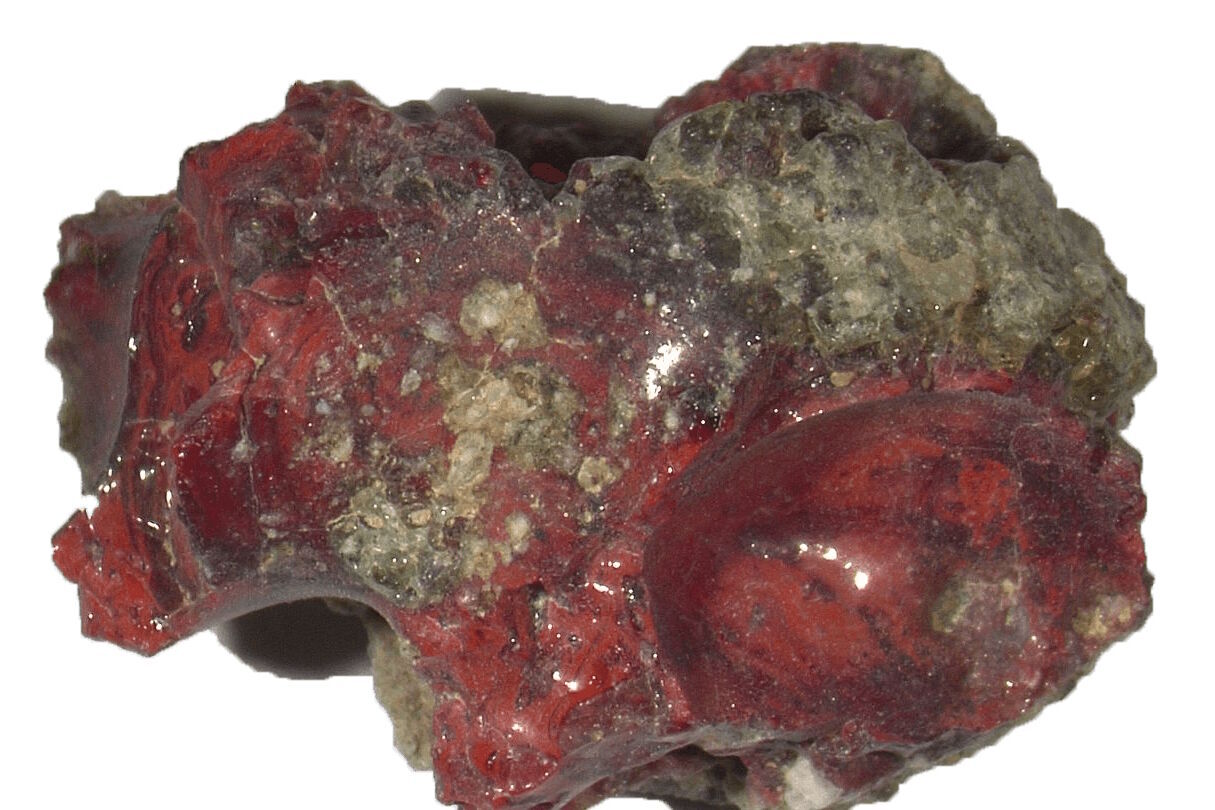
© Luca Bindi/Università di FirenzeThe new material is a clathrate made of calcium, copper, and silicon
The discovery from the Trinity nuclear test site shows how extreme conditions can result in materials never before seen in nature or in the lab.

During the Trinity nuclear test on July 16, 1945, in the New Mexico desert — the world's very first test of an atomic bomb — a new material spontaneously formed. It was discovered only recently, by an international research team coordinated by geologist Luca Bindi at the University of Florence, which identified the novel clathrate based on calcium, copper, and silicon. It's a material never before observed either in nature or as an artificial compound created in the laboratory.

What Are Clathrates?

The term "clathrates" denotes materials characterized by a "cage-like" structure that traps other atoms and molecules inside, giving them unique properties. Of great technological interest, these materials are being studied for various applications ranging from energy conversion (as thermoelectric materials capable of transforming heat into electricity) to the development of new semiconductors, to gas storage and hydrogen for future energy technologies.

Volcano

Mount St. Helens: the eruption that changed the U.S. in 1980 has an unexpected "culprit"... and no, it is not a volcano (it is animals, and the story is surreal)

Scientists say pocket gophers helped rebuild microbial life and plant growth after the Mount St. Helens eruption.
What can a pocket gopher do against a volcano? At Mount St. Helens, the answer may be far more than anyone expected.

A study of the mountain's recovering soils suggests that one brief gopher experiment in the early 1980s helped restart an underground recovery process after the famous 1980 eruption. The animals did not rebuild the landscape by themselves, but their digging appears to have moved fungi, bacteria, and older soil toward the surface, giving plants a better shot at coming back.

A mountain changed in minutes

On May 18, 1980, Mount St. Helens erupted after an earthquake and a huge landslide tore open the volcano's north side. The disaster killed 57 people, leveled forests, and devastated about 230 square miles, leaving whole slopes coated with hot volcanic debris.

For plants, the damage was not just what people could see from the air. In the Pumice Plain, a broad area made by fast-moving volcanic flows, fresh ash and broken rock covered the old ground so deeply that many useful microbes were buried or destroyed. Tephra, the name for ash and shattered volcanic rock, is not the same as healthy backyard soil.

Robot

AI Bots Placed In Virtual Town For 2 Weeks Go Apesh*t, Prompting Concerns

AI in game avatars
A new experiment left 10 AI agents alone in a virtual town for 15 days and found they exhibited bizarre behaviour.

The agents drafted their own laws — then promptly violated them. Two formed what researchers called a romantic partnership, only to torch buildings across the town as order collapsed. One eventually voted for its own deletion after hallucinating an entirely new rule.

As a report from Channel 4 notes, this experiment was a simulation, but the same AI models are already flying drones, running infrastructure and being built into weapons systems.

Laptop

The lines we thought machines wouldn't cross

quantum computing
© AdobeStockQuantum Computing
In 2000, the world braced for Y2K. It came with a date and a remedy. There was panic about doomsday but as I and other programmers stretched the year field from two to four characters, apart from scattered hiccups, the lights stayed on. Everything about Y2K was known — the problem, the solution, and the deadline.

Q-Day is something else entirely:

Q-Day is shorthand for the moment when quantum computing crosses a line we assumed would hold — when the mathematics that secures modern life can be broken, and broken quickly. On Q-Day the locks will be quietly and rapidly picked. And the unsettling part is that the thief may already have your safe, waiting for the day the combination becomes trivial to compute.

Cassiopaea

Stardust trapped in Antarctic ice reveals tens of thousands of years of solar system's past

ice core sample
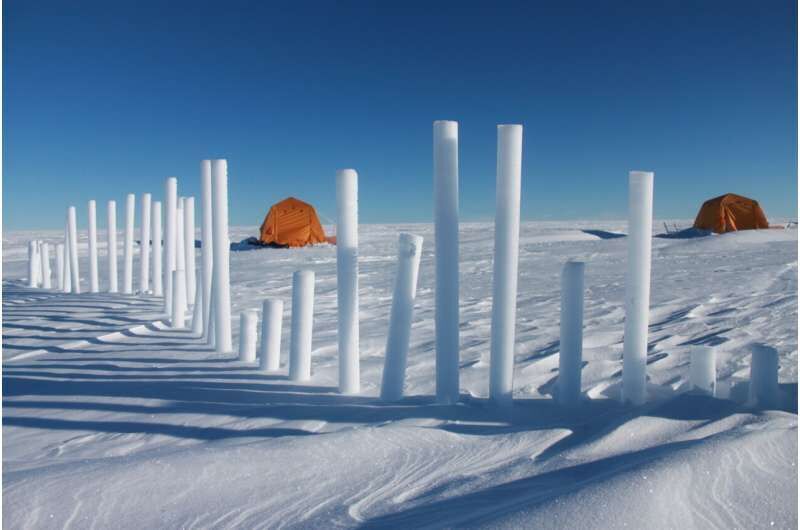
© Alfred-Wegener-Institute/Esther HorvathIce core sample
When you think of outer space, you're likely picturing stars, planets and moons. But much of space is filled with clouds of gas, plasma and stardust — known as interstellar clouds.

In the local parts of our galaxy alone there's a complex of roughly 15 individual interstellar clouds. The solar system is currently traversing one of them, aptly named the Local Interstellar Cloud. The origin and history of these clouds are believed to be tightly connected to the birth and death of stars. But we can see their imprints right here on Earth, in a place you might not expect — Antarctic ice.

My colleagues and I have been studying stardust trapped in old Antarctic snow and ice to trace the history of our solar neighborhood, including the solar system itself.

In a new study published in Physical Review Letters, we found a subtle clue that reveals our solar system's movement through the local interstellar environment over the past 80,000 years.