Find us on:

Health & Wellness


Syringe

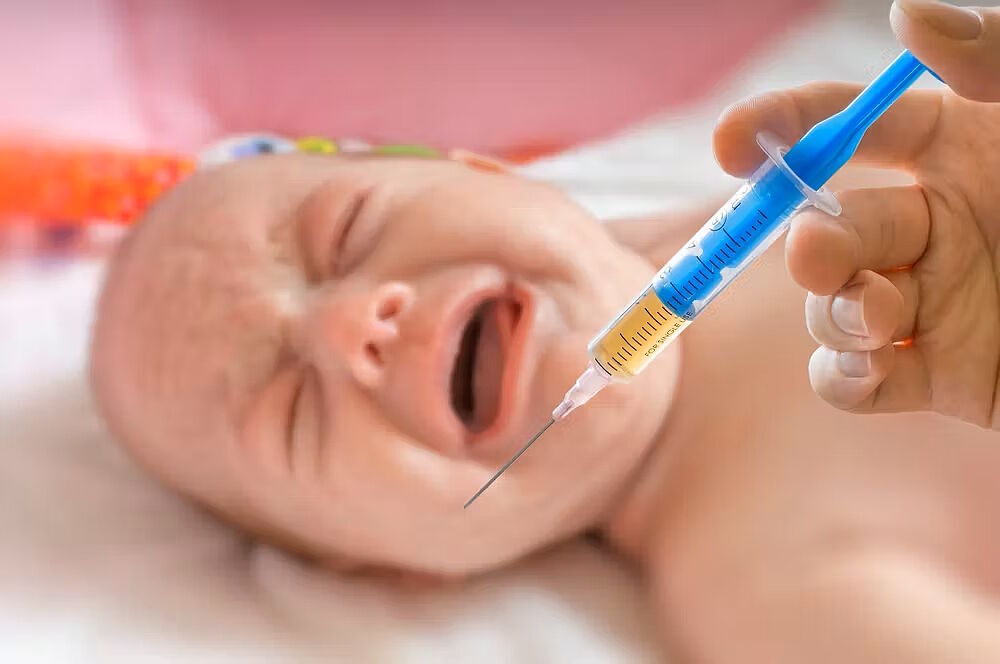
Prevention and treatment of vaccine damages

© uknewsnetwork.blogspot.com
Cruelty toward babies starts at birth. It really starts before birth but that is another tale. Many parents have heard horror stories, and have serious doubts about vaccinating. Even that first injection of vitamin K is not without risk and danger. This article is for parents in the situation where they are forced into a corner for one of many reasons and feel like they have to vaccinate their children.

Often one parent is against and the other for vaccination. In the context of Humane Pediatrics it is strongly advised to avoid vaccines altogether so as to avoid the threatening edifice of medical and health complications that can stem from them. It should be obvious to the humane among us that it is also to avoid a type of suffering we should not wish on our dearest enemies - that of having to deal with a vaccine-damaged child.

This is also for adults who might have to take a vaccination to travel or for healthcare workers in hospitals and others in the military who are given little to no choice. You could find yourself someday with the army at the door and you better roll up your sleeve real quick and try to smile while you are freaking out.
Apple Red

Biotech's latest creation: Franken-apples coming to a store near you

© Kary1974/ Shutterstock.com
We hate to upset the biotech apple cart, but a pesticide-intensive GMO apple, produced through a possibly risky manipulation of RNA, doesn't deserve a place on our grocery shelves.

Thanks to the biotech industry's relentless quest to control our food, McDonald's, Burger King and even school cafeterias will soon be able to serve up apples that won't turn brown when they're sliced or bitten into. A new, almost entirely untested genetic modification technology, called RNA interference, or double strand RNA (dsRNA), is responsible for this new food miracle. Scientists warn that this genetic manipulation poses health risks, as the manipulated RNA gets into our digestive systems and bloodstreams. The biotech industry claims otherwise.
Magnify

How gut bacteria affects your weight, and why factory farmed meats promote antibiotic-resistant disease

© publicaffairs.ubc.ca
Recent studies have repeatedly demonstrated that the makeup of your intestinal flora can have an impact on your weight, and your propensity to gain or lose weight.

Most recently, research1 also suggests that as much as 20 percent of the substantial weight loss achieved from gastric bypass, a popular weight loss surgery, is actually due to shifts in the balance of bacteria in your digestive tract. According to co-author Dr. Lee M. Kaplan:2
"The findings mean that eventually, treatments that adjust the microbe levels, or 'microbiota,' in the gut may be developed to help people lose weight without surgery."

Comment: Learn more about how diet can effect the intricate balance of gut flora composition:

Are Gut Bacteria In Charge?

Opioids and gut issues
A healthy gut is the hidden key to weight loss
Diabetes Alert: Your Gut Microflora May Be Out of Balance
Microbes in Our Gut Regulate Genes That Control Obesity and Inflammation

The best approach to balance gut flora is by dietary changes and nutritional supplements like probiotics. For more information, please visit the diet and health forum.

Attention

Flame retardants in consumer products are linked to health and cognitive problems

Synthetic chemicals added to consumer products to meet federal and state flammability standards are showing up in waterways, wildlife and even human breast milk.

Studies in laboratory animals and humans have linked the most scrutinized flame retardants, called polybrominated diphenyl ethers, or PBDEs, to thyroid disruption, memory and learning problems, delayed mental and physical development, lower IQ, advanced puberty and reduced fertility. Other flame retardants have been linked to cancer. At the same time, recent studies suggest that the chemicals may not effectively reduce the flammability of treated products.

The potential risks of flame retardants have been known for some time. In 1977, brominated tris was banned from use in children's pajamas after researchers showed that it could damage DNA in animals. Two PBDEs, penta and octa, were pulled from the U.S. market in 2004. But another chemical that was removed from pajamas decades ago based on evidence that it could mutate DNA is still being used in furniture and some other baby products.
Chess

Will Monsanto ties influence Nutritionists' stance on GMOs?

© Andrey_Kuzmin/Shutterstock
The GMO seed giant Monsanto recently flexed its muscles in Congress, working with a senator to sneak a friendly rider into an unrelated funding bill. Now it appears to be having its way with the Academy of Nutrition and Dietetics. As the New York Times reports, a dietician who'd been working on crafting the group's GMO policy claims she was pushed aside for pointing out her colleagues' links to Monsanto.

The controversy started during last fall's highly contested battle over a ballot initiative that would have required labeling genetically modified food in California. The prestigious dieticians' group was incorrectly listed by the official state voters' guide as one of the scientific organizations that had "concluded biotech foods are safe." Actually, the AND had taken no position on the issue, but it promised to come out with a position paper on it. (The ballot initiative ultimately failed.)
Alarm Clock

Report on U.S. meat sounds alarm on resistant bacteria

More than half of samples of ground turkey, pork chops and ground beef collected from supermarkets for testing by the federal government contained a bacteria resistant to antibiotics, according to a new report highlighting the findings.

The data, collected in 2011 by the National Antimicrobial Resistance Monitoring System - a joint program of the Food and Drug Administration, the Agriculture Department and the Centers for Disease Control and Prevention - show a sizable increase in the amount of meat contaminated with antibiotic-resistant forms of bacteria, known as superbugs, like salmonella, E. coli and campylobacter.

The government published the findings in February, but they received scant attention until the Environmental Work Group issued its report, "Superbugs Invade American Supermarkets," which was partly underwritten by Applegate, which sells organic and antibiotic-free "natural" meats.
Cow

USDA starts new livestock ID program

© Associated Press Photo/Laurie Lawrence
The federal government has launched a new livestock identification program to help agriculture officials to quickly track livestock in cases of disease.

It is the U.S. Department of Agriculture's second attempt at implementing such a system, which officials say is critical to maintaining the security of the nation's food supply. An earlier, voluntary program failed because of widespread opposition among farmers and ranchers who described it as a costly hassle that didn't help control disease.

There has been talk for years among consumer advocates about establishing a program that would trace food from farm to plate. The livestock identification system doesn't go that far and isn't meant to. Its main goal is to track animals' movements so agriculture and health officials can quickly establish quarantines and take other steps to prevent the spread of disease.
Health

Update: 16 dead from total of 77 cases of H7N9 'bird flu' in China


China steps up monitoring as new bird flu cases confirmed
The number of confirmed H7N9 bird flu cases in the country increased last night after Shanghai reported another six illnesses, five of them "diagnosed retrospectively," the state-run Shanghai Daily said today.

Two fatalities among the group have raised the total number of H7N9 deaths in the country to 16. Yesterday's increase in reported cases by 14 was the biggest single-day increase in the spread of the disease so far. The total number of illnesses to date is 77, including the deaths.

Besides Shanghai, the latest reported cases of the new virus were in eastern China provinces where the disease has been concentrated all along. Three cases were reported in Jiangsu and five in Zhejiang.
People 2

Men and women get sick in different ways

© Think Stock
Recent research in laboratory medicine has revealed crucial differences between men and women with regard to cardiovascular illness, cancer, liver disease, osteoporosis, and in the area of pharmacology.

At the dawn of third millennium medical researchers still know very little about gender-specific differences in illness, particularly when it comes to disease symptoms, influencing social and psychological factors, and the ramifications of these differences for treatment and prevention. Medical research conducted over the past 40 years has focused almost exclusively on male patients.

A new article titled "Gender medicine: a task for the third millennium" presents research on gender-related differences conducted by Giovannella Baggio of Padua University Hospital and her team.

The article, which appears in the Journal Clinical Chemistry and Laboratory Medicine (CCLM), highlights evidence for considerable differences between the sexes in five domains - cardiovascular disease, cancer, liver diseases, osteoporosis, and pharmacology.

Typically perceived as a male illness, cardiovascular disease often displays markedly different symptoms among women. While a constricted chest and pain that radiates through the left arm are standard signs of heart attack in men, in women the usual symptoms are nausea and lower abdominal pain. Although heart attacks in women are more severe and complicated, when complaining of these non-specific symptoms women often do not receive the necessary examination procedures, such as an ECG , enzyme diagnostic tests or coronary angiography.
Mr. Potato

Hoarding, skin picking and temper tantrums now classified as mental disorders in controversial revision of 'psychiatric bible', DSM-5

People who hoard, pick their skin, binge eat or throw temper tantrums will soon be classed as having a serious mental illness.

The fifth edition of the Diagnostic and Statistical Manual of Mental Disorders (DSM-5), to be released on May 22, includes an extended list of psychological behaviors.

But the decision to categorize seemingly benign habits as full-fledged disorders has divided opinion, and many believe it just extends the 'reach of psychiatry further into daily life.'

Temper tantrum
© Unknown
Behavioral patterns: Temper tantrums should be classed as a mental illness, according to the fifth edition of the Diagnostic and Statistical Manual of Mental Disorders