Science & TechnologyS


Cell Phone

Data hog: Surgery performed remotely on pig via 5G some 30 miles away

Surgery
© AFP / NICOLAS ASFOURI
A surgeon in China has successfully conducted the world's first remote operation carried out via a 5G network, paving the way for major advances in the field of telemedicine and providing hope for future disaster response.

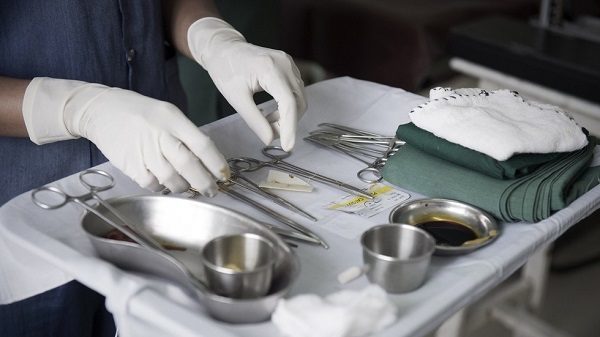
Using two robotic arms, Liu Rong, director of the Department of Hepatobiliary and Pancreatic Oncology of Beijing 301 Hospital, removed sections of a pig's liver in an operating theater about 50km (30 miles) away.

A piece of the pig's hepatic lobule from its liver was successfully removed in the roughly one-hour-long surgical procedure. The wounds were neat and the bleeding minimal, and the pig's condition was described as stable, according to Chinesemediareports.

The incredible op is yet another landmark in the nascent field of telemedicine. The January 8 procedure was not the world's first remote-controlled operation, that honor went to the transatlantic Lindbergh Operation in 2001, but it was the first remote operation carried out over 5G.

Comment: See also: FCC and States clear the way for next-generation wireless networks - despite heath concerns


Blue Planet

CO2 rise shrinks Sahara Desert by whopping 8%! 700,000 sq km of added vegetation

sahara desert greening vegetation
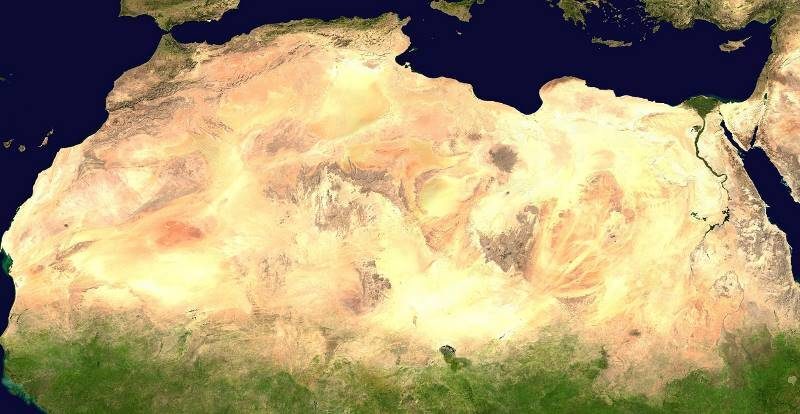
© NASARecent study by Venter et al finds that the Sahara has shrunk by 8% over the past three decades.
Almost daily the CO2 Science site brings reports on the impact of climate change on the living world. Hat-tip: Die kalte Sonne here

Recently, CO2 Science brought up a paper in Nature Communications.

Using satellite images, Venter et al. 2018 found an eight percent increase in woody vegetation in sub-Saharan Africa over the last three decades, underscoring the global "greening trend".

According to Wikipedia, the Sahara covers a vast area of some 9.2 million square kilometers. Eight percent of that translates into more than 700,000 square kilometers. That's an area that's almost as big as Germany and France combined! This is profound.

In other words, it's well over 10,000 Manhattans!

Attention

Earth's shifting magnetic pole may confuse your cell phone

magnetic pole shift
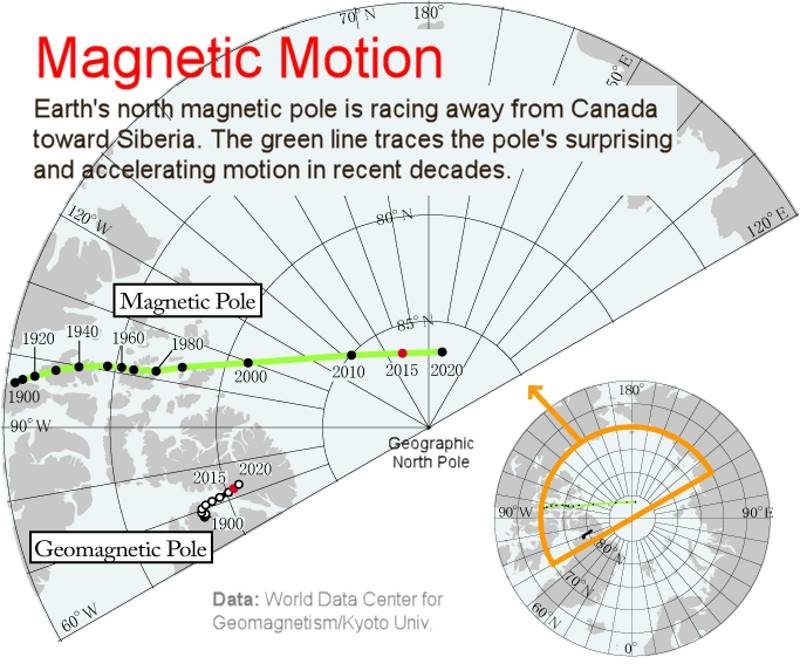
© World Data Center for Geomagnitism/Kyoto UniversityThe movement of the north magnetic pole has increased in speed in the last 20 years.
Pick up your cell phone and look at it. That rectangular marvel of modern technology contains thousands of lines of code. Among them is the World Magnetic Model (WMM)-a program that helps your phone navigate. And it's in a bit of trouble. Researchers have announced that the WMM needs an emergency update because Earth's magnetic field is changing.

Savvy backcountry hikers have long known that compass needles don't really point north. The magnetic north pole is displaced hundreds of miles from the true north pole and, to make matters worse, it wanders unpredictably from year to year. To find true north in the continental USA, you have to correct compass directions by as much as 20 degrees using a special "declination table."

The World Magnetic Model is a computer program that makes this correction for you. It improves the navigation of devices ranging from nuclear submarines to common smartphones.

Beaker

Salt-free drinkable water comes at a cost

desalination plant spain
© Andrés Nieto Porras/ Wikimedia CommonsA desalination plant in Spain.
Around the arid world, some 16,000 desalination plants are now purifying seawater and brackish aquifers, producing 95 million cubic metres of fresh, salt-free drinkable water daily. This is almost half the daily flow over Niagara Falls.

But there is a potentially-polluting price to pay: for every litre of fresh water, the same desalination plants produce around 1.5 litres of toxic brine. That adds up to enough in the course of a year to cover the whole of the US state of Florida to a depth of more than 30 cms.

A new study urges nations to explore better solutions - and new ways to exploit the minerals in the wastewater and support efforts to advance the declared UN sustainable development goal of reliable, safe water on tap for everybody in the world.

Info

Chaos in the body tunes up your immune system

Immune system

Chaos in bodily regulation can optimize our immune system according to a recent discovery made by researchers at the University of Copenhagen's Niels Bohr Institute. The discovery may prove to be of great significance for avoiding serious diseases such as cancer and diabetes.

PhD Mathias Heltberg and Professor Mogens Høgh Jensen
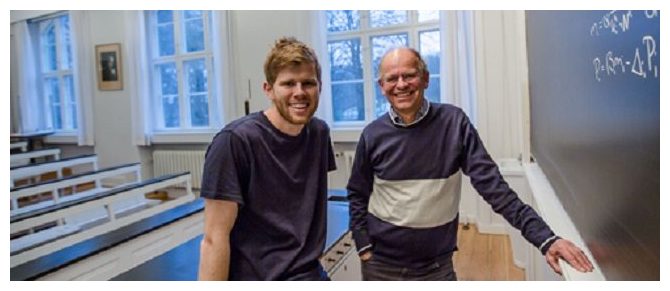
© University of CopenhagenPhD Mathias Heltberg and Professor Mogens Høgh Jensen.
Wide gaps exist in our understanding of how the immune system works and how we might avoid diseases such as cancer and diabetes. Now, two researchers at the University of Copenhagen's Niels Bohr Institute have made a discovery that could prove to be an important piece of the puzzle. PhD Mathias Heltberg and Professor Mogens Høgh Jensen have found an entirely new mechanism in the way that bodily cells regulate themselves - through chaos.

The researchers investigated how a particular protein produced within cells, NF-kB, stimulates genes. Among other things, this particular protein is vital for maintaining the body's immune defense system and thereby, the body's ability to combat disease. The concentration of NF-kB fluctuates over time, and these swings impact the genes and subsequently, the condition of cells.

The researchers demonstrated that chaotic swings in the concentration of the protein - what in mathematics is known as chaotic dynamics - can increase the activation of a number of genes that are otherwise not activated. In other words, when in a chaotic state, the NF-kB protein is most effective at activating genes and optimally "tuning" the immune system.

"The results can have a tremendous impact on our understanding of how the immune system functions and how the incidence of some of the most serious illnesses, including diabetes, cancer and Alzheimer's, might be avoided. For example, we know that cancer is related to a failure of signaling within the body. So, to avoid cancer, it is imperative to have the right dynamic at work in cells," says Mogens Høgh Jensen, a professor in biocomplexity at the University of Copenhagen's Niels Bohr Institute.

Calculator

New scale for electronegativity rewrites the chemistry textbook

Electronegativity  periodic table
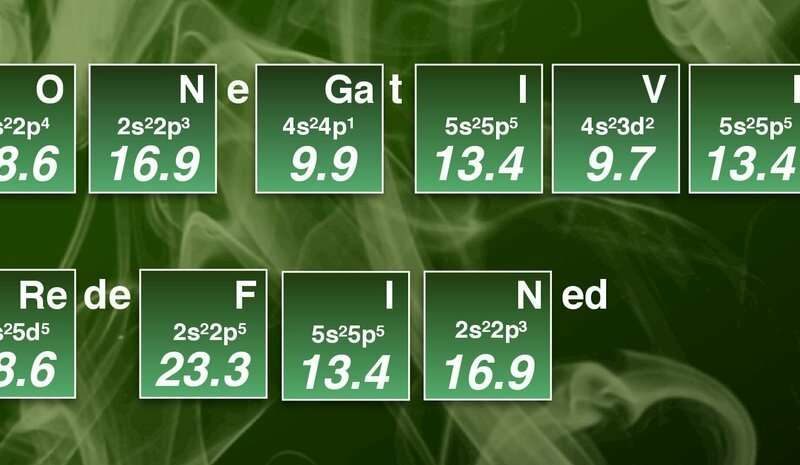
© Martin Rahm/Chalmers University of TechnologyElectronegativity redefined: A new scale for electronegativity covers the first 96 elements, a marked increase on previous versions. Credit:
Electronegativity is one of the most well-known models for explaining why chemical reactions occur. Now, Martin Rahm from Chalmers University of Technology, Sweden, has redefined the concept with a new, more comprehensive scale. His work, undertaken with colleagues including a Nobel Prize-winner, has been published in the Journal of the American Chemical Society.

The theory of electronegativity is used to describe how strongly different atoms attract electrons. By using electronegativity scales, one can predict the approximate charge distribution in different molecules and materials, without needing to resort to complex quantum mechanical calculations or spectroscopic studies. This is vital for understanding all kinds of materials, as well as for designing new ones. Used daily by chemists and materials researchers all over the world, the concept originates from Swedish chemist Jöns Jacob Berzelius' research in the 19th century and is widely taught at high-school level.

Now, Martin Rahm, Assistant Professor in Physical Chemistry at Chalmers University of Technology, has developed a brand-new scale of electronegativity.

Comment: See also:


Star

Electromagnetic stars

magnetstar
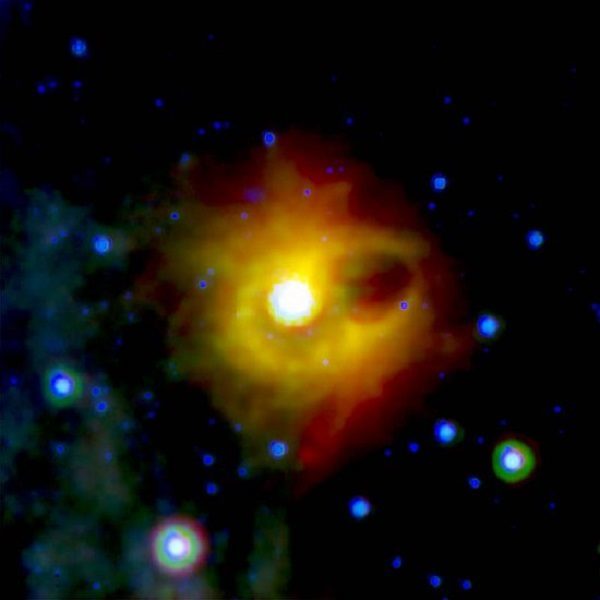
A composite image of SGR 1900+14 from the Spitzer Space Telescope. Blue represents 8-micron infrared light, green is 16-micron light and red is 24-micron light.


What are magnetars?


As conventional understanding suggests, neutron stars are created when massive stars collapse at the end of their life cycles. Gravity in those stars is said to be is so intense that they cannot resist the collapse, so electrons are squeezed into the nuclei that make up their structures. As astrophysicists state, those collapsed stars can become less than 100 kilometers in diameter, but can weigh 10^12 kilograms per milliliter. As they contract, angular momentum increases, resulting in rapid rotation. If a particular star is large enough, it can become a "magnetar".

Magnetars are usually identified as "X-ray pulsars" or "soft gamma repeaters". As conventional theories argue, they can reach magnetic field strengths measuring over 10^15 Gauss. Earth's magnetic field is about one-half Gauss, so these "magnetic pulsars" are surprisingly powerful.

Comment: See also:


Meteor

Russia's Academy of Sciences begins work on countering 'hazards' from outer space

hazards from space
© AFP 2018/ HO/NASA
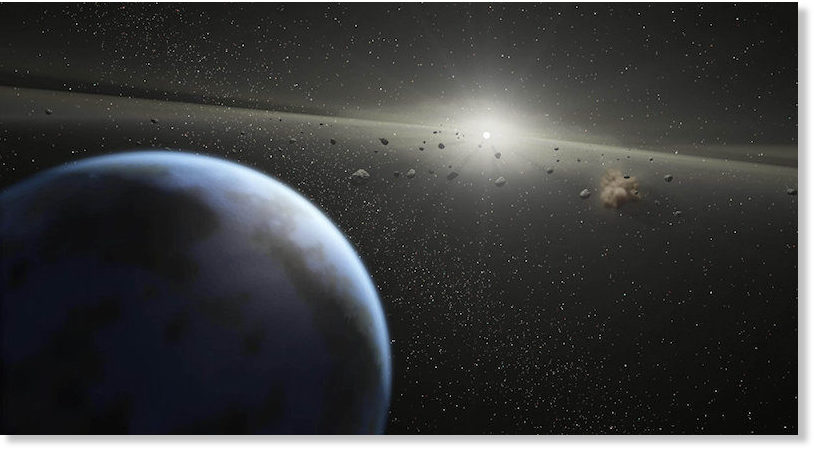
According to the Russian Academy of Sciences (RAS), researchers have so far detected around 18,000 hazardous objects in space, 99 percent of which are asteroids.

The presidium of the Russian Academy of Sciences agreed upon developing a national program to research the issues and methods of countering hazards from space, such as asteroids, comets and space debris, Scientific Director of the Academy's Astronomy Institute, Boris Shustov, told Sputnik on Thursday.

"At present, foreign countries, primarily the United States, have advanced in their development of systems for detection of space hazards. At the recent meeting of the RAS presidium, the academics voted to support the draft statement to begin the work on preparing the modern variant of the national program and a wider range of issues, including the whole range of space threats," Shustov said.

Comment: Russia has, to some extent, already begun the work of building defenses against asteroids and other space objects (however limited they may ultimately prove to be should Earth be struck by a likely barrage of neo's).


Brain

Researchers can now grow perfect blood vessels in a petri dish

artificial blood vessels
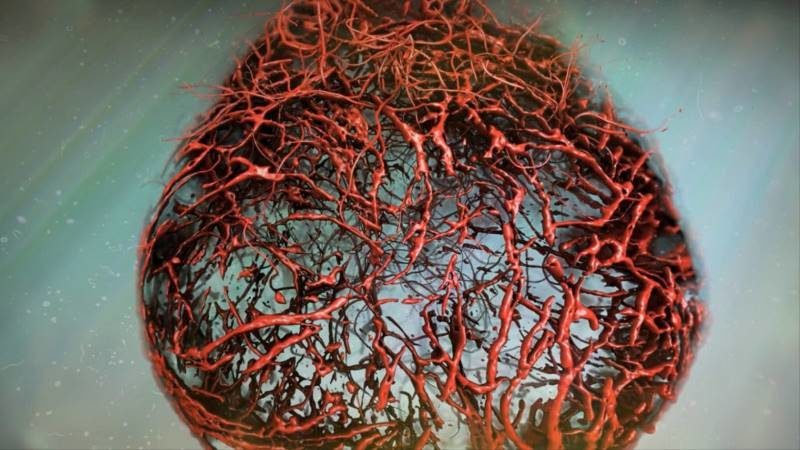
© IMBAAn illustration of vascular organoids, lab-made human blood vessels, based on original data.
The researchers also demonstrated that it is possible to grow functioning human blood vessels in another species.

A team of researchers has managed to grow "perfect" human blood vessels in a Petri dish and a non-human animal for the first time.

As detailed in a study published Tuesday in Nature, organoids - biomasses grown from stem cells that mimic human organs - were grown after researchers identified an important pathway that prevents changes to blood vessels, a major cause of death in diseases such as diabetes and Alzheimer's.

Arrow Up

Genes reveal clues about people's potential life expectancy

Longevity concept
© iQoncept / FotoliaLongevity concept (stock illustration).
Scientists say they can predict whether a person can expect to live longer or die sooner than average, by looking at their DNA.

The team has analysed the combined effect of genetic variations that influence lifespan to produce a scoring system.

People who score in the top ten per cent of the population might expect to live up to five years longer than those who score in the lowest ten per cent, they say.

The findings also revealed fresh insights into diseases and the biological mechanisms involved in ageing, the researchers say.

Experts at the University of Edinburgh's Usher Institute looked at genetic data from more than half a million people alongside records of their parents' lifespan.

Comment: See also: