Find us on:

Science & Technology


Magic Wand

Laser technique could help redefine the kelvin

Physicists in France have made the first direct measurement of the Boltzmann constant by laser spectroscopy. The new technique, which involves observing how light is absorbed by ammonia molecules, is currently much less accurate than existing methods for measuring the constant. However, the researchers are confident that its accuracy could easily be improved and that the technique could help to create a new and improved definition of the kelvin unit of temperature.

The Boltzmann constant, kB, is a fundamental constant of nature that relates the kinetic energy of an ensemble of microscopic particles -- such as gas molecules -- to its temperature. As a result, it provides the crucial link between the microscopic world of atoms and molecules and the macroscopic properties of matter such as pressure. So far, there is only one technique -- measuring the speed of sound in argon gas - that can determine kB to an accuracy of about 2 parts-per-million (ppm). Other techniques for determining kB include measuring noise in a resistor; determining the dielectric constant of a gas; and measuring the radiation emitted from a black body. However, none of these techniques has yet to reach ppm accuracy.

Having a number of independent measurements of kB - those based on techniques that are subject to different systematic errors - at the ppm level is particularly important to the Paris-based International Committee for Weights and Measures (CIPM), which is planning to redefine the kelvin in 2011 using kB.
Clock

Rise of man theory 'out by 400,000 years'

Our earliest ancestors gave up hunter-gathering and took to a settled life up to 400,000 years earlier than previously thought, according to controversial research.

The accepted timescale of Man's evolution is being challenged by a German archaeologist who claims to have found evidence that Homo erectus - mankind's early ancestor, who migrated from Africa to Asia and Europe -began living in settled communities long before the accepted time of 10,000 years ago.

The point at which settlement actually took place is the first critical stage in humanity's cultural development.
Battery

Sugar based fuels could be better than corn based ones

Synthetic fuel made from simple sugar found within fruit, honey, berries, root vegetables, and other materials could be more efficient than corn (ethanol).
Laptop

Psychopathic video game is 'fine art' say creators


The US publishers of a video game banned in the UK and Ireland have described it as a "fine piece of art".

Take Two chairman Strauss Zelnick said Manhunt 2 had his full support and that consumers should decide for themselves.

"The Rockstar team has come up with a game that fits squarely within the horror genre and was intended to do so," Mr Zelnick said in a statement.

The sale of the game is unlikely to go ahead in the US and has not been granted certification in the UK.
Better Earth

Green plastics coming from Brazil

Braskem, a large chemical company in Brazil, has begun to produce a version of polyethylene from sugar cane in sample quantities and plans to start exporting it in industrial quantities in late 2009.
Clock

Ancient Human Behavior Uncovered

A major question in evolutionary studies today is how early did humans begin to think and behave in ways we would see as fundamentally modern" One index of 'behavioural modernity' is in the appearance of objects used purely as decoration or ornaments. Such items are widely regarded as having symbolic rather than practical value. By displaying them on the body as necklaces, pendants or bracelets or attached to clothing this also greatly increased their visual impact. The appearance of ornaments may be linked to a growing sense of self-awareness and identity amongst humans and any symbolic meanings would have been shared by members of the same group.

In Europe, amongst the oldest known symbolic ornaments are perforated animal teeth and shell beads, found in Upper Palaeolithic contexts that date to no more than 40,000 years ago. Such finds are apparently associated with both modern human and late Neanderthal sites. Together with cave paintings and engravings they offer the strongest indications that European societies of those times were capable of thinking in an abstract manner, and symbolising their ideas without relying on obvious links between a meaning and a sign. But, now, a growing body of evidence indicates symbolic material culture consisting of engravings, personal ornaments and systematic use of beads had emerged much earlier in Africa.
Cloud Lightning

Fact or Fiction?: If the Sky Is Green, Run for Cover - A Tornado Is Coming

If the sky turns green during a thunderstorm, gather up your pets and other loved ones and head for the cellar, a twister is on the way. So goes the common wisdom in much of the central U.S. - and other tornado-prone regions in the world, like Australia - when faced with a threatening sky (although some swear green means hail). Scientifically speaking, however, little evidence supports either the tornado or hail claims, though there is some evidence for green thunderstorms.

Over the past 15 years, a small group of scientists have weathered the elements working on green thunderstorms as a pet project, publishing a handful of articles in meteorological journals. All point to the existence of green skies with severe thunderstorms but no direct connection to tornadoes or hail can be made.
Star

Fundamental constant is pretty much constant

The idea that fundamental constants do not actually stay constant over space and time has long played on the mind of physicists. But by looking at how a distant galaxy has absorbed the light from a quasar, researchers in Australia have obtained a new limit on how much one fundamental constant -- the ratio of the electron and proton masses -- is changing with time. Their result, which is 10 times more accurate than previous measurements, gives the thumbs up to our current understanding of physics.
Bulb

Sweet Dreams: Scientist Calls Mars a Terraforming Target for the 21st Century

Mars will be transformed into a shirt-sleeve, habitable world for humanity before century's end, made livable by thawing out the coldish climes of the red planet and altering its now carbon dioxide-rich atmosphere.

How best to carry out a fast-paced, decade by decade planetary facelift of Mars - a technique called "terraforming" - has been outlined by Lowell Wood, a noted physicist and recent retiree of the Lawrence Livermore National Laboratory and a long-time Visiting Fellow of the Hoover Institution.

Lowell presented his eye-opening Mars manifesto at Flight School, held here June 20-22 at the Aspen Institute, laying out a scientific plan to "experiment on a planet we're not living on."
Video

Hubble Photographs Two Huge Asteroids

The Hubble Space Telescope has imaged two of the largest known asteroids, revealing craters and other features that will soon be the targets of close-up observations by NASA's Dawn spacecraft.

Ceres is round, like a planet, and 590 miles (950 kilometers) wide. The rock, about the size of Texas, contains some 30 to 40 percent of all the mass in the asteroid belt between Mars and Jupiter.

Thought to be a planet after its discovery in 1801, Ceres was later reclassified as an asteroid. But under the new and controversial planet definition that demoted Pluto, Ceres is now considered a dwarf planet.

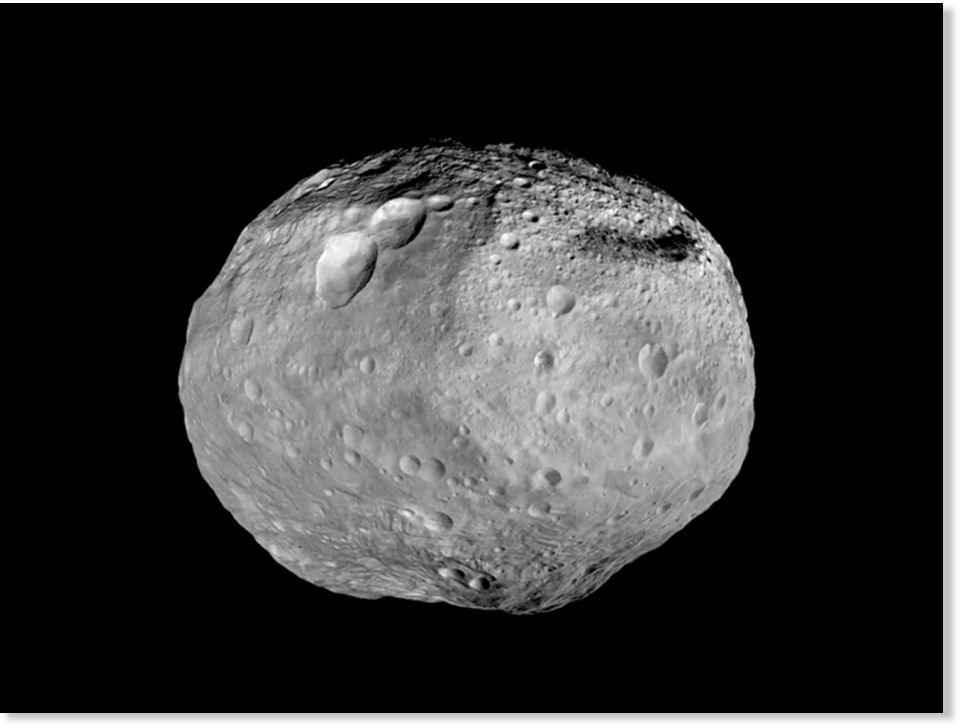
Vesta, the other target, is irregularly shaped and about 330 miles (530 kilometers) wide-about the size of Arizona.