Health & WellnessS


Bacon n Eggs

SOTT Focus: Teaching Kids to Ruin Their Health: America's First All-Vegan School Cafeteria

vegan meal
© MUSE SchoolDoesn't this look like a satisfying meal? Dry lettuce with a couple of veggies and some watermelon - yes please! I feel full just looking at it!
An article at the Huffington Post has gotten the Paleo Tweeters in a bit of a tizzy. It's a bit confusing why it's coming up now, since the original article was published in early 2015. According to the byline, it was updated recently but they seem to have failed to update time sensitive references, including the headline, 'America Is About To Get Its First All-Vegan School Cafeteria For Kids'. The fact is, the restaurant/cafeteria has been vegan for two years now, before that having served one entirely plant-based meal per week for about two years, eventually going up to two days per week, prior to the change-over to full insanity veganism.

Confusion aside, I figured this was a good opportunity to not only rip on my favourite whipping boy - veganism - but to try to set a personal record for the number of supporting links I can embed in one piece (betcha can't read them all!).

Health

Study finds ketamine reduces suicidal thoughts within hours after administration

depression
© makler0008/Shutterstock
Ketamine was significantly more effective than a commonly used sedative in reducing suicidal thoughts in depressed patients, according to researchers at Columbia University Medical Center (CUMC). They also found that ketamine's anti-suicidal effects occurred within hours after its administration.

The findings were published online last week in the American Journal of Psychiatry.

According to the Centers for Disease Control and Prevention, suicide rates in the U.S. increased by 26.5 percent between 1999 and 2015.

"There is a critical window in which depressed patients who are suicidal need rapid relief to prevent self-harm," said Michael Grunebaum, MD, a research psychiatrist at CUMC, who led the study. "Currently available antidepressants can be effective in reducing suicidal thoughts in patients with depression, but they can take weeks to have an effect. Suicidal, depressed patients need treatments that are rapidly effective in reducing suicidal thoughts when they are at highest risk. Currently, there is no such treatment for rapid relief of suicidal thoughts in depressed patients."

Comment: See also:


Beaker

The clinical significance of MTHFR, methylation and histamine in psychiatric conditions

MTHFR gene methyl group
Misconceptions about the clinical significance of the MTHFR mutation

Methylation is a vital foundational biochemical process in the body, involved with the detoxification of heavy metals, regulation of gene expression and protein function, and central to the synthesis of neurotransmitters, the chemical messengers which mediate mental and emotional states. Imbalances in methylation status result from genetic defects in the enzymes which regulate the process of methylation. In the past few years there has been a great deal of interest in genetic testing, and in particular, the role of the MTHFR gene. A genetic defect of the MTHFR gene can result in a malfunctioning MTHFR enzyme, which can affect methylation.

There is a common misconception, however, that the mere presence of an MTHFR mutation is synonymous with a methylation defect. This is by no means necessarily the case, even if an individual is homozygous for the gene. The presence of the defective gene does not necessarily translate into a functional defect. In fact, the recent wide spread indiscriminate prescription of methylfolate to compensate for the genetic mutation is not only misguided, but can actually make low serotonin people who are undermethylated not only feel much worse, but also increase their risk of developing cancer.

Eye 1

Drinking Hot Tea Associated With Reduced Risk of Glaucoma

cup of tea
© N/AOne hot cup of tea per day may help to prevent glaucoma
There have been many claims made to the benefits of tea consumption, including better oral health, lower incidences of dementia and Alzheimer's disease, decreased risk of ovarian cancer and seemingly a mechanism that breaks down your fat (I'll be using that one over this festive period when I've done nothing but eat and sit still).

But a study published in the British Journal of Ophthalmology on Dec 14th shows another possible benefit to your morning cuppa: people who drink hot tea are less likely to suffer from glaucoma.

That's the finding of professor of ophthalmology, Anne Coleman, and colleagues at David Geffen School of Medicine at the University of California, Los Angeles.

Comment: See also:


Syringe

Opioid epidemic causing uptick in HIV among injecting drug users

used syringes
© AFP/Getty ImagesA sharp uptick in new HIV cases among injecting drug users, who often share needles, has raised worries among health officials
The opioid epidemic is threatening to trigger a resurgence of HIV in Massachusetts, potentially undoing decades of work that had made the state a national leader in stopping the spread of the virus.

A sharp uptick in new HIV cases among injecting drug users, who often share needles, has raised worries among health officials. They fear Massachusetts could experience an outbreak like the 2015 calamity in rural Scott County, Indiana, where one person introduced the virus into a network of drug users, and within four months more than 180 had become infected.

"It would be a little early to say we have an epidemic on our hands, but we're primed for it," said Dr. Jenifer L. Jaeger, interim medical director of the Boston Public Health Commission.

Comment: The opioid epidemic is currently ravaging North America, particularly in the US, so it's no surprise that it's also beginning to lead to further disease spread. The HIV-AIDS hypothesis, in and of itself, is controversial and it seems a clear picture of what the disease actually is is still unclear. See also:


Brain

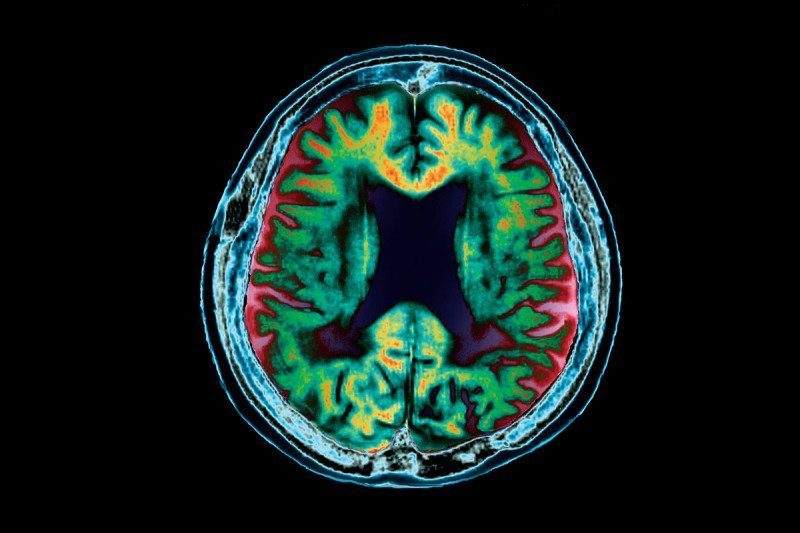
SOTT Focus: The health program for Alzheimer's disease that mainstream treatment fails to surpass

Alzheimer's, dementia
© zephr/ SPL
According to the World Health Organization, the total number of people with dementia worldwide in 2015 is estimated at 47.5 million. The total number of new cases of dementia each year worldwide is nearly 7.7 million, implying 1 new case every 4 seconds. The number of people with dementia is expected to increase to 75.6 million in 2030 and 135.5 million in 2050. These figures are almost twice the rate of projected population growth over that time period.

In the United States, approximately 6 million American adults have Alzheimer's disease or mild cognitive impairment. The estimate forecasts that these numbers will more than double to 15 million by 2060. These estimates include people with biomarkers or other evidence of possible preclinical Alzheimer's disease, but who do not have impairment or Alzheimer's dementia. People with such signs of preclinical disease are at increased risk to develop Alzheimer's dementia.

We are led to believe that Alzheimer's disease (AD) has no cure or there is no possibility of halting the cognitive decline. At best, mainstream treatment just slows down the progression of the disease. As a rule, the person deteriorates beyond recognition throughout the remaining years of their life while hopeless caregivers get burned out. For this reason, I was pleasantly surprised when Mark Sisson wrote recently about a study which was published in Aging (2014) by Dale E. Bredesen. The study revealed incredible results that mainstream media outlets failed to cover.

Cupcake Choco

SOTT Focus: Nutritional Research Has a 'Consensus': Use Bad Science to Damage People's Health

Dietary Guidelines for Americans
Nothing can be more aggravating for me than seeing a headline, about nutrition, or eating, or food in some form or other, that I know from the get-go is wrong, but then watching as it gets traction beyond what it should, given that it's wrong. Although it is fun to tear these things apart from time to time, the fact that researchers, journalists or government institutions can get away with this stuff is frustrating.

That's why it's always fun to see someone in a high-standing position, like an actual scientist, rip on the corrupt state of nutritional science. As luck would have it, just such a scientist - two of them actually - have stepped up to the plate. Get yer popcorn, folks.

Edward Archer, the Chief Science Officer of EvolvingFX and Carl "Chip" J. Lavie, the Medical Director of Cardiac Rehabilitation and Preventive Cardiology at Ochsner Clinical School of the University of Queensland School of Medicine, have penned an open letter to the National Academies of Sciences, Engineering, and Medicine. The letter, published on Real Clear Science's website, is essentially a complaint against the Academies for ignoring the problematic nature of the data collection methods used in their report "Redesigning the Process for Establishing the Dietary Guidelines for Americans".

Those sentences were a mouthful, so let's just say some hardcore science guys are ripping on some 'Ministry of Truth' guys.


Beaker

Dangers of Mercury: A case of 2 drops of dimethylmercury spilled on hand

This is based on the true story of Professor KW.


Comment: This is a horrifying story of what can happen when exposed to large amounts of mercury (only 2 drops, mind you). Despite this being common knowledge scientifically, there is still an amazing refusal to look at the problem of dental amalgams, or mercury fillings, which give off vapors that can be oxidized into smaller doses of this same deadly toxin.

Chris Shade gives a fairly detailed look at the topic here: https://chriskresser.com/dr-chris-shade-on-mercury-toxicity/


Attention

Rates of depression and suicide are rampant in American farmers

Jeffrey Menn
Retired physician Jeffrey Menn
Not long ago, a local farmer here plunged into a depression so intense that he could barely muster the strength to leave his bed.

The 40-something father of eight went dark for weeks, despite the enormous amount of daily work needed to keep his family farm going.

"If you are running a small farm, you still have to get up and milk the cows. You got to go put the crops in. There are demands that nature doesn't let you forget," explained Jeffrey Menn, a farmer and doctor who was familiar with his friend's crisis. "His massive depression immobilized him. He couldn't even get out of bed for two or three weeks. Young guy, but he got himself worked into a hole.

"It's his wife who's taken over the operation, and she has, let me tell you. She's a force of nature. This woman, she gets things done. You know, eight kids, mountain of debt, but she's out there busting her butt to make things happen."

Health

The benefits of fasting and minimizing lectins

Fasting
Dr. Steven Gundry's book, "The Plant Paradox: The Hidden Dangers in 'Healthy' Foods That Cause Disease and Weight Gain," which spent 13 weeks on The New York Times best sellers list, reveals the deleterious effects of lectins on health. I've previously interviewed him on this topic. Here, we continue that conversation, while also delving into a few other complementary strategies, including the importance of vitamin D for autoimmune diseases and the benefits of fasting.
"Certainly, when the book began to get traction, it clearly started to bother a lot of people ... As a general category, a lot of them fall into the low-fat vegan community. The 'grains and beans are the cornerstone of a healthy diet. How dare you question what everybody knows?' ... I'm not against [grains and beans].
In fact, I've got a bean recipe in my book. All I'm saying is that we have to be very cognizant of the lectin content in grains and beans, and that there are ways to destroy lectins. Pressure cooking the beans makes them perfectly safe if you want to eat beans," he says.
Testing Reveals the Impact of Lectins on Health

Gundry isn't guessing when he talks about the health effects of lectins. He's done a tremendous amount of research in his clinic over the past 17 years, and measures the effects of lectins on biochemical pathways using laboratory testing. This way, he's been able to determine, scientifically, what the responses are. Gundry explains:
"When I resigned my position as professor and chairman of cardiothoracic surgery at Loma Linda University 17 years ago ... I decided to make my practice a research project. Everyone who came into play with me, I asked them to let me have a few tubes of blood ... every three months [which are sent] off to labs that I think are doing cutting-edge work."

Comment: How to decrease the lectin content in your food