Science & Technology
By Robert Roy Britt
LiveScience.com
Tue, 07 Feb 2006 12:00 EST
Information about pain is transmitted from its source by two types of nerve fibers, Lawson explained. Larger fibers send electrical signals more rapidly and are thought to communicate sharp, pricking pain.
Fine fibers communicate ongoing, burning pain that can prove depressing over time because it seems to have no identifiable source and is often hard to suppress with traditional painkillers.
By Robert Roy Britt
By Robert Roy Britt
Tue, 07 Feb 2006 12:00 EST
Your brain functions a lot like the Internet or a network of friends, scientists said Tuesday.
Researchers used functional magnetic resonance imaging (fMRI) to study the activity in peoples brains and how different regions connect. They conclude the human brain can be visualized as a complex interacting network that relies on nodes to efficiently convey information from place to place.
Very few jumps are necessary to connect any two nodes, the study found.
"This so-called small world property allows for the most efficient connectivity," said Dante Chialvo, a physiologist at Northwestern University.
Other networks -- social and biochemical -- rely on the same principle.
By Ker Than
Live Science
Tue, 07 Feb 2006 12:00 EST
At an age when Americans are first considered adults, their brains are still maturing, a new study suggests.
Researchers at Dartmouth University scanned the brains of nineteen 18-year-old students who had moved more than 100 miles to attend school.
"During the first year of college, students have many new experiences," said psychologist Abigail Baird, the study's principal investigator. "They are faced with new cognitive, social, and emotional challenges."
A group of 17 older students, ranging in age from 25 to 35, served as a control group for comparison. The results showed that the freshmen students brains underwent significant changes and were very different from that of the older adults.
spaceweather.com
Tue, 07 Feb 2006 12:00 EST
The sunspot number has been zero for nine consecutive days--the longest stretch of blank suns since October 1996. This is a clear sign that solar minimum has arrived. Solar activity should remain low, although surprises are possible.
On Sept. 7th, 2005, a huge sunspot rounded the suns eastern limb. As soon as it appeared, it exploded, producing one of the brightest x-ray solar flares of the Space Age. In the days that followed, the growing spot exploded eight more times. Each powerful "X-flare" caused a shortwave radio blackout on Earth and pumped new energy into a radiation storm around our planet. The blasts hurled magnetic clouds toward Earth, and when they hit, on Sept 10th and 11th, ruby-red auroras were seen as far south as Arizona.
Drake Bennett
Boston Globe
Mon, 30 Jan 2006 12:00 EST
A Tufts philosopher and famed Darwinist wants us to study religion like any other human behavior - as a 'natural phenomenon.' Scientists, meanwhile, may be on the way to explaining how, and why, we got religion.
By Steve Connor, Science Editor
Independent
Mon, 30 Jan 2006 12:00 EST
Scientists may have discovered a possible cause of the "placebo effect", where a sham medical treatment results in a genuine benefit to the patient. A study has found production of a chemical "messenger" in the brain appears to play a critical role.
Spacewar.com
Sat, 28 Jan 2006 12:00 EST
Researchers studying supplies of copper, zinc and other metals have determined that these finite resources, even if recycled, may not meet the needs of the global population forever, according to a study published in the Proceedings of the National Academy of Sciences.
According to the study, even the full extraction of metals from the Earth's crust and extensive recycling programs may not meet future demand if all nations begin to use the same services enjoyed in developed nations.
Comment: Comment: So, if you were a psychopath and in a position of power in the world today, and you read this report, what would be your solution to the problem??
LiveScience.com
Thu, 26 Jan 2006 12:00 EST
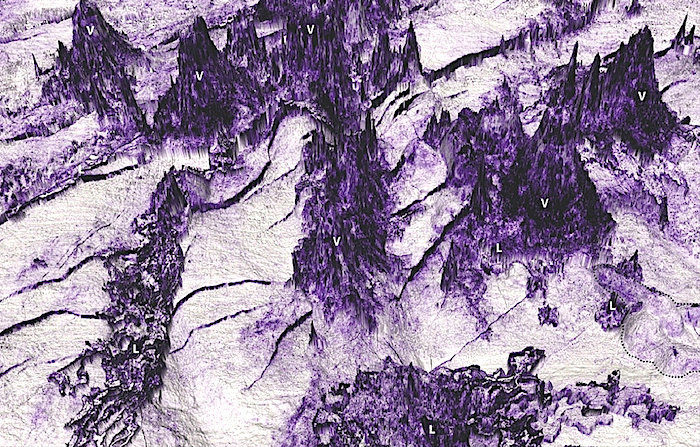
Antarctica has at least 145 small lakes buried under its ice and one large one called Vostok. Now scientists have found the second and third largest known bodies of subsurface liquid water there.
Exotic ecosystems frozen in time may thrive in the lakes, untouched for 35 million years, scientists said.
Ian Sample
Guardian
Thu, 26 Jan 2006 12:00 EST
Twenty thousand light years away, in the constellation of Sagittarius near the centre of the Milky Way, a frigid rock is orbiting a small star. Although the distant world is probably too cold ever to support life, scientists believe it is the most Earth-like planet to be discovered beyond our solar system.
Known to astronomers as OGLE-2005-BLG-390Lb, the planet, described in Nature today, is five times as dense as Earth and orbits its sun at three times the distance Earth is from our own star, leaving surface temperatures at a frosty -220C.
IOL-AFP
Wed, 25 Jan 2006 12:00 EST
Brest, France - French police who spent two years trying to identify a woman who was murdered by a blow to the head were relieved to discover the reason their efforts were failing was that the woman died half a millennium ago.
185,533 people have viewed this page since Fri, 26 Jan 2007
Emails sent to Signs of the Times, Ark, Laura, or Cassiopaea become the property of Quantum Future Group, Inc and may be republished without notice.
Some icons appearing on this site were taken from KDE-look.org, Afterglow, Mayosoft, Everaldo, IconDrawer, VisualPharm, IconFactory, Klukeart, Icons-land, TpdkDesign.net, and IconShock.com.
Remember, we need your help to collect information on what is going on in your part of the world!
Send your article suggestions to:
Original content © 2009 by SOTT.net/Signs of the Times. See: Fair Use Policy