Science & TechnologyS


Robot

The pathology of transhumanist singularity

Image
© unknown
Bear with me, for this may not be an easy read - but we need to crack the code of this much-discussed vainglorious chimera.
Which is not to say it doesn't exist - it does. Yet it exists as a byproduct of minds that operate in a sub human vacuum; that have severed their connection with with the normal diversity of emotions - and more particularly - with spirit and soul. Once this type of divorce is sanctioned there can only be deleterious consequences.

The current Transhumanist ethos is deeply atheistic and, as such, has no need to replace God, since it doesn't believe there is such an entity in the first place. But, ironically, it seemingly does have the need to create an all-powerful god of its own design.

Such a concept, pursued through to its conclusion, can, according to its proponents, provide some sort of final solution to the human dilemma. So we get the Transhumanist notion that the realisation of a computer that can outmaneuver the human brain will somehow produce a liberated society.

Nothing, in reality could be further from the truth. By handing over responsibility for the management of our lives to machines, we usurp our own ability to shape, alter, direct and ultimately rejoice in the art of living. Instead, we individually elect to become slaves to our own inventions.

Comment: Related...
  • Google wants to be your doctor; And its director of engineering wants you to have a brain chip
  • Skynet rising: Google acquires 512-qubit quantum computer; NSA surveillance to be turned over to AI machines


Telescope

'The Godzilla of Earths!' New planet weighing 17 times greater than Earth discovered

Mega earth
© Reuters / David A. AguilarThe newly discovered ''mega-Earth'' Kepler-10c dominates the foreground in this artist's conception released by the Harvard-Smithsonian Center for Astrophysics in Cambridge, Massachusetts on June 2, 2014.
A humungous Earth-like planet found by US astronomers has changed the perception of planet formation. A rocky world found by Kepler space observatory should by rights have become a giant ball of gas, but has remained a planet for billions of years.

The newly discovered Kepler-10c planet has been dubbed 'Mega-Earth' thanks to its diameter of 29,000 kilometers and an estimated weight 17 times greater than Earth, which has a diameter of 12,742 kilometers. This makes Kepler-10c the biggest rocky planet ever discovered.

The new planet is circling a very old Sun-like star, Kepler-10, some 560 light years from Earth. If you look up in the sky this star can be seen in the Draco constellation, which is 300 million light years away.

Cassiopaea

Quark nova spotted in Cassiopeia A?

Cas A
© NASA/JPL-Caltech/CXC/SAOCas A as seen by NuSTAR (blue) and Chandra (red, yellow and green).
Two elements deep within Cassiopeia A, hint the supernova remnant underwent a quark nova - a theoretical second explosion that leaves behind a quark star - just days after the original supernova.

Massive stars are thought to end their lives in cataclysmic explosions, leaving behind neutron stars or black holes as their corpses.

But there are even stranger possibilities.

Cassiopeia A exploded some 300 years ago and is now a beautiful cascade of gases surrounding a neutron star (or so we think). Dozens of ground- and space-based telescopes have collected the remnant's light over the years. And recently, NuSTAR - NASA's latest high-energy X-ray satellite - stared at Cas A for 13.8 days straight, shedding light deep into this remnant.

Now, astronomers from the University of Calgary in Alberta, Canada, have proposed a more exotic scenario: days after the first supernova explosion, the neutron star exploded once more, creating a quark star instead.

"It's hard not to imagine that nature wouldn't make use of this stage between a neutron star and a black hole," says lead author Rachid Ouyed, one of the first scientists to suggest the concept. "A quark nova can be thought as a bridge between these two."

Quarks are the fundamental building blocks of matter. They normally associate in groups of two or three, producing familiar protons and neutrons. But, like any new ideas in theoretical physics, they're enshrouded in controversy and debate.

Sun

IRIS telescope captures high resolution images of solar storm for first time

solar storm
© NASA
NASA's revolutionary solar observatory has captured rare footage of super-hot bubbles on the sun's surface, known as coronal mass ejections.

"The field of view seen here is about five Earths wide and about seven-and-a-half Earths tall," NASA said in a description of the video, which shows the sun emitting flares into space.

While coronal mass ejections (CMEs) are not rare themselves (there can be up to two or three CMEs per week depending on the sunspot cycle), this time is different - because for the first time, the process was caught on camera by NASA's Interface Region Imaging Spectrograph, or IRIS.

The seven-foot ultraviolet telescope was launched into space in June 2013. It is able to peer into the lowest levels of the sun's atmosphere to observe how solar material moves, gathers energy, and heats up. It then documents the details using higher resolution imaging than ever before.

Chalkboard

A meta-law to rule them all: Can information theory lead the way to a real "theory of everything"

david deutsch
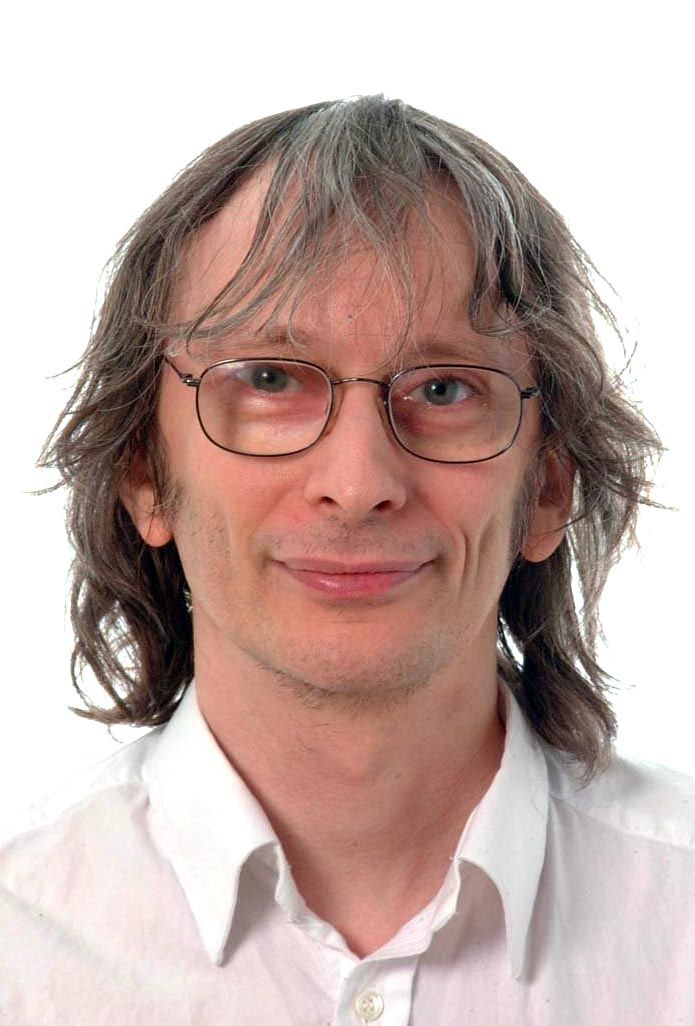
© physics.ox.ac.ukPhysicist David Deutsch, who is developing a potential 'theory of everything' with Chiara Marletto.
"Once you have eliminated the impossible," the fictional detective Sherlock Holmes famously opined, "whatever remains, however improbable, must be the truth." That adage forms the foundational principle of "constructor theory" - a candidate "theory of everything" first sketched out by David Deutsch, a quantum physicist at the University of Oxford, in 2012. His aim was to find a framework that could encompass all physical theories by determining a set of overarching "meta-laws" that describe what can happen in the universe and what is forbidden. In a May 23 paper posted to the physics preprint server, arXiv, constructor theory claims its first success toward that goal by unifying the two separate theories that are currently used to describe information processing in macroscopic, classical systems as well as in subatomic, quantum objects.

Computer scientists currently use a theory developed by the American mathematician and cryptographer Claude Shannon in the 1940s to describe how classical information can be encoded and transmitted across noisy channels efficiently - what, for instance, is the most data that can be streamed, in theory, down a fiber-optic cable without becoming irretrievably corrupted. At the same time, physicists are striving to build quantum computers that could, in principle, exploit peculiar aspects of the subatomic realm to perform certain tasks at a far faster rate than today's classical machines.

But the principles defined by Shannon's theory cannot be applied to information processing by quantum computers. In fact, Deutsch notes, physicists have no clear definition for what "quantum information" even is or how it relates to classical information. "If we want to make progress in finding new algorithms for quantum computers, we need to understand what quantum information actually is!" he says. "So far, the algorithms that have been discovered for quantum computers have been surprises that were discovered by blundering about because we have no underlying theory to guide us."

Comment: For more on information theory and how it may apply to everyday life, see Pierre Lescaudron and Laura Knight-Jadczyk's new book, Earth Changes and the Human-Cosmic Connection.


Fireball 5

Fireballs light up the radio sky, hinting at unexplored physics

Plasma Trail
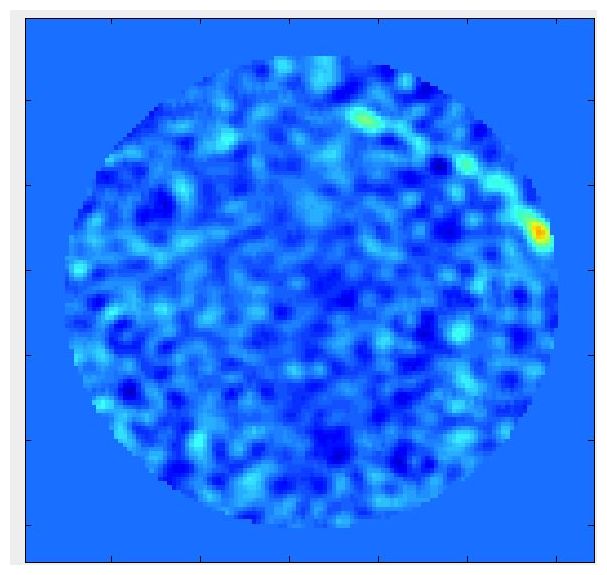
© Gregory Taylor (University of New Mexico)A series of All-Sky (fish eye) images showing the plasma trail left by a fireball, which extends 92 degrees across the northern half of the sky. These images are 5 second snapshots captured at 37.8 MHz with the LWA1 radio telescope. The bright steady sources (Cygnus A, Cassiopeia A, the galactic plane, etc) have been removed using image subtraction. See Animated Image Here
At any given moment, it seems, the sky is sizzling with celestial phenomena waiting to be stumbled upon. New research using the Long Wavelength Array (LWA, a collection of radio dishes in New Mexico, found quite the surprise. Fireballs - those brilliant meteors that leave behind glowing streaks in the night sky - unexpectedly emit a low radio frequency, hinting at new unexplored physics within these meteor streaks.

The LWA keeps its eyes to the sky day and night, probing a poorly explored region of the electromagnetic spectrum. It's one of only a handful of blind searches carried out below 100 MHz.

Over the course of 11,000 hours, graduate student Kenneth Obenberger from the University of New Mexico and colleagues found 49 radio bursts, 10 of which came from fireballs.

Most of the bursts appear as large point sources, limited to four degrees, roughly eight times the size of the full Moon. Some, however, extend several degrees across the sky. On January 21, 2014, a source left a trail covering 92 degrees in less than 10 seconds (see above). The end point continued to glow for another 90 seconds.

Info

Blond hair gene identified

Blond Kids
© wavebreakmedia/Shutterstock.comelection for different hair color could be a byproduct of other, more consequential genetic changes. One idea is that light-skin genes helped ancient humans survive in Northern Europe's low-light conditions, and light hair may have been a byproduct.
A genetic mutation that codes for the blond hair of Northern Europeans has been identified.

The single mutation was found in a long gene sequence called KIT ligand (KITLG) and is present in about one-third of Northern Europeans. People with these genes could have platinum blond, dirty blond or even dark brown hair.

"There's a half dozen different chromosome regions that influence hair color," said study co-author David Kingsley, an evolutionary biologist at the Howard Hughes Medical Institute and Stanford University in California. "This is one, but not the only one. The combination of variants that you have at all those different genes - that sets your final hair color."

Fish colors

Kingsley's team first encountered the gene about seven years ago, when they noticed that stickleback fish color ranged from dark to light depending on the type of water they inhabited. It turned out that a change in one base pair, or letter, in the KITLG gene was responsible.

The gene codes for a protein known as KIT ligand, which binds to receptors throughout the body and affects pigmentation, blood cells, nerve cells in the gut, and sex cells. A broken KITLG gene would be disastrous for an individual, Kingsley told Live Science.

"You'd have white hair and be sterile, because your gonads hadn't developed properly - and actually, you'd be dead, because blood cells didn't do what they're supposed to do in the bone marrow," he said.

Yet the mutation also seemed to be linked to normal variations in hair color. In population studies, blonds in Iceland were much more likely than brunettes to have the genetic variant.

Laptop

Google gets many requests to be 'forgotten'

Image
© AFP
Google received 12,000 requests from people seeking to be "forgotten" by the world's leading search engine on the first day it offered the service, a company spokesman in Germany said Saturday.

The requests, submitted on Friday, came after Google set up an online form to allow Europeans to request the removal of results about them from Internet searches.

The number confirms earlier estimates given by the German daily Der Spiegel and reported in other media.

Earlier in May the European Court of Justice ruled that individuals have the right to have links to information about them deleted from searches in certain circumstances, such as if the data is outdated or inaccurate.

Google said that each request would be examined individually to gauge whether it met the ruling's criteria.

The US-based Internet giant declined to estimate how long it might take for the links to disappear, saying factors such as whether requests are clear-cut will affect how long it takes.

The ruling on the right to be forgotten comes amid growing concern in Europe about individuals' ability to protect their personal data and manage their reputations online.

Satellite

IRIS observes its first coronal mass ejection

Earlier this month, a coronal mass ejection (CME) -- which sounds both gross and dangerous, until you learn it's just a really big solar flare -- leaped from the side of the sun. Luckily, IRIS, NASA's newest solar observatory, was in prime position to capture a detailed profile view of extraordinary ejection. Capturing the impressive CME was a first for Interface Region Imaging Spectrograph, or IRIS, which launched in just last summer.0


Rainbow

Unusual dazzling, electric-blue from volcanoes caused by sulfuric gases

Image
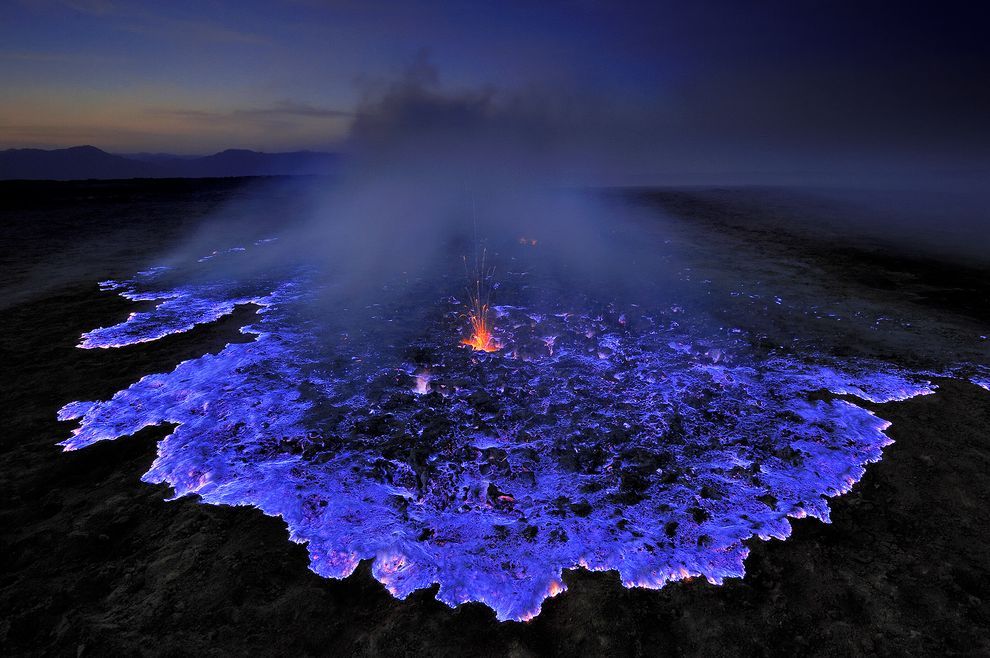
© Olivier Grunewald/National GeographicIn Ethiopia's Danakil Depression, the sulfur dust in the soil of a hydrothermal vent ignites to form blue flames.
For several years Paris-based photographer Olivier Grunewald has been documenting the Kawah Ijen volcano in Indonesia, where dazzling, electric-blue fire can often be seen streaming down the mountain at night."This blue glow - unusual for a volcano - isn't, of course, lava, as unfortunately can be read on many websites," Grunewald told National Geographic in an email about Kawah Ijen, a volcano on the island of Java.The glow is actually the light from the combustion of sulfuric gases, Grunewald explained.

Those gases emerge from cracks in the volcano at high pressure and temperature - up to 1,112°F (600°C). When they come in contact with the air, they ignite, sending flames up to 16 feet (5 meters) high.Some of the gases condense into liquid sulfur, "which continues to burn as it flows down the slopes," said Grunewald, "giving the feeling of lava flowing." Cynthia Werner, a research geologist with the U.S. Geological Survey (USGS) at the Alaska Volcano Observatory, told National Geographic that Grunewald's photos show an unusual phenomenon.

"I've never seen this much sulfur flowing at a volcano," she said.