
|
| ©Unknown |
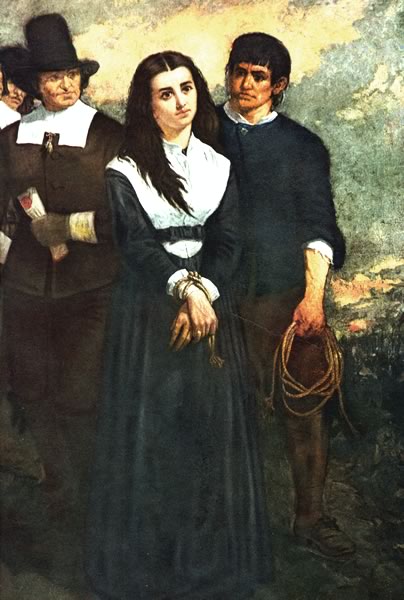
| Noble Martyrs were likely just Uppity Women |
Communicative Behaviors, Witchcraft Accusations, and European Women in Late Medieval and Early Modern Periods
Abstract
This literature review investigates the relationship between a woman's communicative behaviors and the likelihood of her being accused as a witch in various regions of Europe from 1350 to 1650 a.d. This paper uncovers how women were expected to communicate during this period and what sort of deviation from this normative communicative behavior was present in those ultimately accused of witchcraft. The environmental and socioeconomic changes in Europe, as well as religious factors and the history of witchcraft that influenced the communicative behaviors of women in this period are reviewed.
Throughout Europe, between 1350 and 1650 a.d., as many as 500,000 people, primarily women, were executed as witches as part of the inquisitional process, and many more were accused of witchcraft and tortured to elicit confessions (Ben-Yehuda, 1980). Undoubtedly there were reasons why women in general and specific women in particular, were more readily accused of being witches during this period in Western history. While it is certain there were multiple factors involved, this paper will investigate the relationship between communicative behaviors and the likelihood of being accused as a witch in the European witch hunts.
|
| ©Unknown |
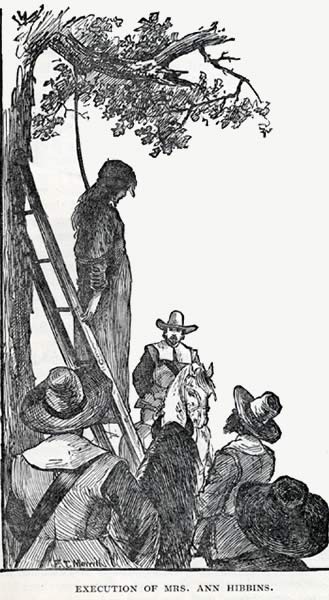
| Getting rid of Uppity Women... |
During the late 1200's, the Catholic Church set up the inquisition as a means to fight heresy. This primary directive expanded in the 1300's after the church met with success in wiping out the Cathars and other groups deemed heretical (Elliott, 2004). According to Elliott, the inquisitors assumed two additional duties; investigating candidates for sainthood, and the discovery and persecution of witches. Witches were originally viewed by the church as mere heretics, but this definition expanded with the Malleus Maleficarium, published in 1487 a.d. in Germany (Ben-Yehuda, 1980; Broedel, 2003).
Communicative behaviors of women from 1350 to 1650 a.d. are not easy to research. Many women were illiterate, and there are few existing literary examples that can provide a window on daily life and communication of and between women during this time. The information available is largely prescriptive in nature, from records of contemporary popular culture, like theatre, and from the Malleus Maleficarium, which was written as a guide to inform others what to look for in identifying a witch (Broedel, 2003). We can also extrapolate communicative behavioral norms from contemporary literature and religious writings.
Study of the European witch hunt has been limited; perhaps because most of the victims were women, basic misogyny was blamed and no further efforts were made until recently to understand the phenomena in more detail (Bever, 2002). Today, witchcraft accusations are still being levied against women in various countries in Africa, and in India (Oster, 2004; Whitney, 1995). Studying our past and seeking an understanding of communicative patterns is relevant to framing contemporary communication issues. Scholars in fields such as Women's Studies and Feminist Philosophy are interested in how power intersects with gender and communication, and the European witch hunts provide a unique historical backdrop in which to study how specific female communication in a patriarchy resulted in persecution.
This literature review investigates the relationship between a woman's communicative behaviors and the likelihood of being accused as a witch in various parts of Europe from 1350 to 1650 a.d. What did a woman communicate that made her more likely to be accused? To learn this, first, the environmental and socioeconomic changes in Europe, as well as religious factors and the history of witchcraft that influenced the communicative behaviors of women in this period are reviewed. Second, how women and witches were perceived by society, and the role church leaders and patriarchy played in this perception are uncovered. Third, these factors are synthesized to speculate about normative female communicative behaviors and determine what sort of deviations from normative communication existed in those who were accused of witchcraft.
Definitions and Background
Communicative behavior in this paper refers to verbal and nonverbal symbolic expression.
The main European witch hunt occurred between 1350 and 1650 a.d., with brief intermissions and periods of intensity.
There are times in this paper where "persecution" and "accusation of witchcraft" are used interchangeably.
The late medieval period shall be taken to span 1300 to 1500 a.d., and the next 200 years through 1700 a.d. are considered the early modern period.
In order to understand this phenomenon, the environmental, socioeconomic, and religious factors in Europe must be reviewed. There was significant change underway during this period of time, and much of the change was not under the control of the common person.
Environmental Weather Changes
The importance of weather may be easy to overlook, but climate change has played a critical role in our history. It is speculated that a sharp drop in temperatures, referred to as the "little ice age" in Europe, contributed to the record number of deaths during the plague because people's immune systems were compromised by lack of nutrition (Oster, 2004). The temperatures in Europe varied significantly between 1520 and 1770 a.d., and particularly cold periods led to serious and widespread crop failure (Oster). Using empirical data to support a correlation between extreme cold and the number and frequency of witchcraft trials between 1520 and 1770 a.d., Oster explains that witches were blamed for magically controlling the weather (Oster). She suggests that a particularly cold period in 1560 a.d. coincided with increased numbers of trials after nearly 70 years of relative inactivity (Oster, p. 218). Oster's view of the witch as scapegoat remains a recurring theme throughout this literature review.
Socioeconomic Factors
Weather was more intrinsically tied to agriculture and the economic system in this pre-industrial era, where crops were the primary means of economic exchange (Oster, 2004). Empirical evidence supports the positive correlation between temperatures and economic growth, where economic growth was negative when temperatures were colder than normal and crops failed (Oster). A new urbanization and reduction in rural population, due in part to the plague, likely contributed to the reduction of crop production in this period of great change (Oster; Ben-Yehuda, 1980).
In the 14th century, families began to move to large cities, where they participated in a cash economy for the first time, and discovered they couldn't readily support ill, unemployed, or unproductive members (Ben-Yehuda, 1980). Due to the black plague and to urbanization trends, 60% of the agricultural land was deserted in Denmark, Sweden, Norway and Germany (Ben-Yehuda). According to Ben-Yehuda, this urbanization meant that at least in the short-term, men couldn't marry (guilds discouraged marriages), and women in the city had to find wage-jobs. Women were either sent to convents, found jobs weaving, or became prostitutes (Ben-Yehuda). Sprenger, one of the authors of the Malleus Maleficarium, came from Cologne, where this urbanization was occurring and where new laws about prostitution became a necessity in the 1400's (Ben-Yehuda), so this changing socioeconomic environment likely influenced Sprenger.
In the 15th and 16th centuries, a new urban prosperity emerged as the monetary economic system was perfected (Ben-Yehuda, 1980). According to Ben-Yehuda, the plague had decimated a large percent of the workforce, and those who survived were in great demand. This new middle class didn't want to jeopardize their new prosperity by having children, so they began to prevent pregnancy (Ben-Yehuda). Infanticide increased sharply, and many children were abandoned at churches in the 15th and 16th century; between 40-60% of all women age 15-44 were unmarried in the 16th century, and women were marrying later in life (Ben-Yehuda). Women were marginalized as commerce expanded in cities, and women became a greater percentage of those living in poverty (King, 1997). These demographics contributed significantly to why those accused of witchcraft were often widows, spinsters, and midwives, as their lifestyles and practices represented a direct threat to the Church, traditional family structure, and the patriarchal status quo (Bever, 2002; Whitney, 1995). Patriarchy was solidified or reinforced with the development of complex economies because they impacted women and men differently (Wood & Eagly, 2002).
Religious Factors
Religion was a much greater part of people's lives in the middle ages, and the church promulgated a dualistic framework that led to either/or extremes of viewing the world (Ben-Yehuda, 1980; Elliott, 2004; Whitney, 1995). The Catholic Church was the most powerful institution in Europe at this time, maintaining hegemony over religious, economic and political matters. The Catholic Church, by way of the 4th Lateran Council in 1215 a.d., introduced the inquisitional procedure and made confession mandatory (Elliott). Later, the Protestant reformation began, with sporadic religious wars breaking out in various regions in Europe. In some countries, witchcraft trials started by Catholics migrated into secular courts as the influence of the Catholic Church waned. The Church and religious factors such as ideals of moral conduct contributed greatly to the accusation of specific women as witches.
Witchcraft
History of Witchcraft
Witchcraft trials stemmed from an odd blend of ancient folklore and a series of challenges to the Catholic Church's hegemony in Europe. Moral boundaries had been static and clearly defined in the early medieval society (Ben-Yehuda, 1980). The rise of urbanization, impending collapse of the Church's hierarchical feudal system, heresies, changing socioeconomic and environmental conditions, religious wars, the plague, and prostitution all converged in a short span of time, and the Church desperately needed a tool to reestablish moral codes of conduct and a means to maintain their sociopolitical control (Ben-Yehuda; Oster). Witches represented the perfect scapegoat (Ben-Yehuda; Oster, 2004; Whitney, 1995). Even though the idea of witchcraft predates the Bible, and is mentioned in the Bible itself, the Catholic Church had historically discounted the concept that witches existed or possessed any power (Oster). Shortly after the formation of the inquisition, witchcraft suddenly was portrayed by the Church as a serious evil, and witches were said to be sexual companions of the devil (Ben-Yehuda; Broedel, 2003). This strategy, if judged by statistics alone, proved to be very successful based on the number of people directly and indirectly impacted.
|
| ©Unknown |
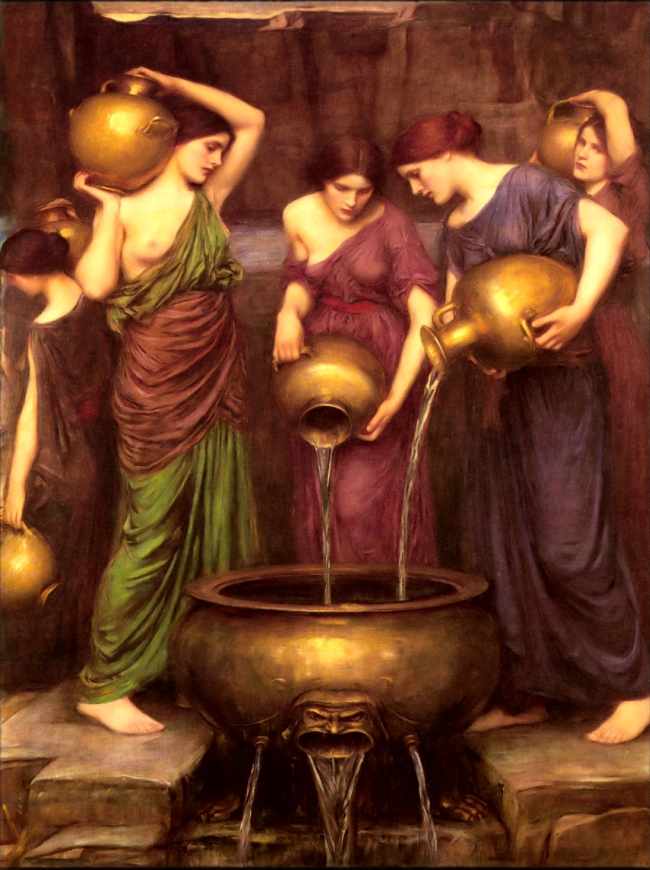
| Punishing Ancient Uppity Women - The Daniades |
Statistics on Those Accused of Witchcraft
Much empirical study has gone into establishing how many people were executed as witches between 1350 and 1650 a.d. Some researchers include only continental Europe, and others include places like Scotland, where witch trials were also prevalent. The total numbers reported still vary widely, from 200,000 and 500,000 people (Ben-Yehuda, 1980), to 1,000,000 (Oster, 2004), who states that in Germany evidence exists that 400 were killed in one day!
There was consensus that the vast majority of witchcraft trial victims were women. There is also speculation on the part of various authors as to why more people were persecuted as witches in Germany, Switzerland, and France. Some claim the greater economic growth in Poland, Flanders, and England made it less necessary to use witches as scapegoats (Ben-Yehuda 1980; Oster, 2004). Others base their argument around the Church and contemporary religious factors that will be discussed next.
Perception of Women, Witches, and Role of the Church
Malleus Maleficarium
Most people in medieval times accepted as normal the subordination of women, and many men viewed women as a possession or as a producing unit in the household; some also viewed women as dangerous, seductive, or as virginal and superior (Ben-Yehuda, 1980). Most modern scholars conclude that people, even without coaching, accused women of witchcraft because of gender bias in their culture, and in texts like the Malleus Maleficarium (Broedel, 2003; Whitney, 1995).
The Malleus Maleficarium, according to Broedel, reflected male clerical misogyny and resistance to the changing social roles of women, starting with its very authorship. Broedel provides a detailed narrative of how and why this book was written.
In 1485 Innsbruck, a woman named Helena Scheuberin was accused of witchcraft. She was the wife of a wealthy local merchant and according to Broedel, "not afraid to speak her mind" (Broedel, 2003, p. 1). Helena spat on the ground when she saw the new inquisitor in town, and didn't go to his sermons. She also discouraged others from attending the inquisitor's sermons and accused the inquisitor himself of being evil and in league with the devil. She was accused of witchcraft and the subsequent questioning focused on her sexuality. Helena hired an attorney who won the case for her on the grounds that no standard definitions existed that uniformly described what a witch was. The inquisitor in this case was a man named Henry Institoris [also known as Kramer], and he coauthored the Malleus Maleficarium along with Sprenger in response to this trial's outcome.
|
| ©Unknown |
| Uppity Women of the Renaissance |
Institoris and Sprenger descriptively portrayed witches as female and focused on the power of a witch's sexuality (Broedel). According to Broedel, by 1505 this book was found throughout German libraries and influenced later laws, books, and even secular courts and procedures on witchcraft.
Sexuality and women's reproductive role
From this narrative about Helena, many patterns begin to emerge. First, sexuality was deemed most important even though Ms. Scheuberin was more obstreperous than sexual based on the information provided. According to Institoris, women were weak minded, and thus predisposed to consorting and sleeping with the devil; they incited men's passion, so a beautiful woman was the most suspicious (Broedel, 2003). Some witches poisoned people, killed infants, drank the blood of children, and worked with herbs (Broedel). From this description, midwives were likely targets of persecution due to their professional association with infants and herbal remedies (Broedel; Oster, 2004).
Haliczer provides insight into how sexuality became so critical in identifying witches. In Spain, daughters were often secluded for the sake of protecting their chastity, which was a key determinant in a family's reputation or face (Haliczer, 2002). Any woman not under the direct and constant control of a man [a husband, father or son] was automatically suspected of sexual excess (Haliczer). Widows were thus more likely to be accused of witchcraft since they were more autonomous and not under the control of a man (Haliczer).
Female spirituality
During this period, men didn't want women to read scripture because women were meant to be perpetually subordinate to their husband (Haliczer). According to Haliczer, a home was a woman's prison, and interestingly, religion itself became a means of freedom for women in Spain. Women were able to express their spirituality through piousness, which not only got them out of the home, but evolved into a strong ascetic movement where women were called on by royalty to act as advisors or intercessors (Haliczer). Ana de Jesus was considered to be prophetic, and became an advisor to archdukes on matters of state under the Hapsburg dynasty (Haliczer).
This is a significant contrast to women in other countries who were prohibited from leaving the home to attend church, even to the point of risking the woman's salvation (Elliott, 2004).
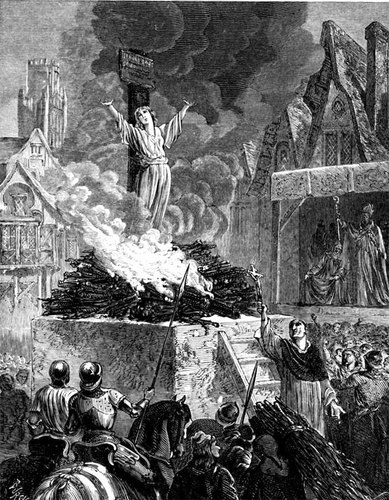
By the start of the early modern period, female spirituality in most of Europe was criminalized (Elliott). As stark as this statement is, Elliott supports it through her narrative about Chancellor John Gerson from the University of Paris. Gerson's mission was to discredit female mystics, and to appropriate mysticism through the discourse of spiritual discernment to the institution of the university itself. Gerson was highly successful, and soon spiritual expression manifested by a woman was criminalized as a form of witchcraft (Elliott). Later in his life, Gerson was asked to defend Joan d'Arc at her trial. Despite his best efforts and sincere desire to see her acquitted, he was unsuccessful in defending her largely because of his earlier success; there was no longer any acceptable means by which a woman could express her spirituality (Elliott).
|
| ©Unknown |
| Joan of Arc |
The role of the Catholic inquisition, itself founded as part of the 4th Lateran Council of 1215, is at the root of the witchcraft trials because of its focus on the sacraments (Elliott, 2004). Confession became mandatory at a period in time when women were expected to demonstrate their obedience to God through obedience to their husbands (Elliott). According to Elliott, husbands would often insist their wives stay at home, rather than go to church where they could interact with others and possibly gossip. Yet, a woman who consistently missed confession could arouse suspicion within the community by this absence, and was more likely to be accused of witchcraft (Elliott).
Communicative Behaviors
Existing Records
Women who could read and write in Latin were not typically welcome or encouraged to publish in the late middle ages (King, 1997). Men traditionally wrote about topics that didn't concern the woman's world or her interests. Yet, the increasing use of the vernacular, along with the printing press, gradually resulted in more women writing literature, and there is currently an effort underway to translate these texts (King). A remarkable example of literature authored by a woman is The Book of Margery Kempe, written in the 15th century by the mother of fourteen children who traveled to Jerusalem on a spiritual pilgrimage (Kempe, n.d.).
Normative Female Communicative Behaviors
The period of 1350-1750 a.d. represents a time in which women began to assert their right to speak, the "age of the emergence of the female voice," (King, 1997, p. 21). In the early modern period, most female authors prefaced their literary work with statements of their own inadequacy, as was customary (King). Both the Catholic and Protestant churches constrained female expression and so women learned to be silent, obedient, and to exercise decorum (King). Rhetorically, women weren't even given full human status until the 17th century (King).

|
| ©Unknown |
| Illustration from a witch persecution tract. |
In Spain, women were judged pious if they engaged often in prayer, were abstinent, austere, and if they practiced physical penance and even scourging and fasting (Haliczer, 2002). Gossip was ubiquitous in the early modern world (Horodowich, 2005). Gossip was viewed as feminine (although it was performed equally by men as well), and was viewed as a mechanism for female solidarity, and as something to be silenced (Horodowich). Legal writers in Venice claimed testimony from two women was equal to testimony from one man, since women's voices were unreliable (Horodowich).
The late middle ages and early modern period were very rough, and outside of elite circles, interpersonal conflict was rampant and expressed through gossip, insults, scolding, threats, curses, legal action, physical assault, and threats of ritual magic (Bever, 2002). Jealousy and economic inequalities were often the cause of conflict, and women didn't have recourse to courts like men did (Bever). Physical assault was common; one woman would take by force that which was owed her, particularly when she didn't have a man to help arbitrate conflicts in court (Bever). Urban women were likely to have expressed their sexuality more openly in the early modern period (Ben-Yehuda, 1980), and this communicative behavior certainly would have met with censure from men within the church and the community. An ideal woman in a patriarchal society would keep her voice "soft, gentle, and low" (Larner, 1984, p. 62), and would behave in a chaste manner (Haliczer, 2002).
Relationship between Communicative Behavior and Accusation of Witchcraft
A woman who deviated too far from the male-defined norm would be identified as a witch (Larner, 1984). Assertiveness (sexual or psychological) and aggression stand out as communicative behavior that deviated the most for women accused of witchcraft; ironically, both those being accused and the accusers themselves were often female (Bever, 2002).
The stereotype of a witch was an independent woman who didn't nurture or love her husband or children, and had the power of words "to defend self or curse others" (Larner, 1984, p. 84). In Wurttemberg, Germany, allegations of poison were the most common accusation leading to trials (Bever, p. 960), and according to Bever, women really did threaten to poison others.
Physical assault was viewed as witchcraft if later harm could be connected to the conflict, and in addition to verbal curses, gestures or exclamation of rage could be viewed as accidental magic if emotional stress or fear led to psychosomatic symptoms (Bever, 2002). Bever also makes an association between menopause, age, and irritability experienced during this part of a woman's life that could trigger an accusation of witchcraft because the level of assertiveness or irritability deviated from the social norm. Trying to prevent pregnancy, telling other women how to do so, and practicing infanticide were clearly risky behaviors (Bever).
The Malleus Maleficarium states a witch identified herself through an ambiguously worded threat (Broedel, 2003, p. 142). Broedel states this text claimed a relationship between animosity, verbal threats and witchcraft, where specific forms of communication were key in identifying a witch: muttering in anger, threatening words, and touching an animal or person. A fourth means of threatening someone would be to appear in another's dream (Broedel, p. 143). Broedel claims rumor was central to the witch hunt.
Women could miss the occasional sermon, but absence from confession was likely to result in an accusation of witchcraft (Elliott, 2004). Women needed to be pious (Haliczer, 2002) and avoid gossip (Horodowich, 2005). It was common to call a woman, in public, a witch as a form of insult. If the woman ignored such a taunt, and was later accused of witchcraft, her failure to debate this taunt earlier would be used as evidence against her in court (Whitney, 1995). It seems clear that a woman would be wise not to stand out in any way, to avoid conflict, and not flaunt her wealth or education in order to stay clear of possible accusations.
Possible Explanations and Alternative Motives
A means of acculturation
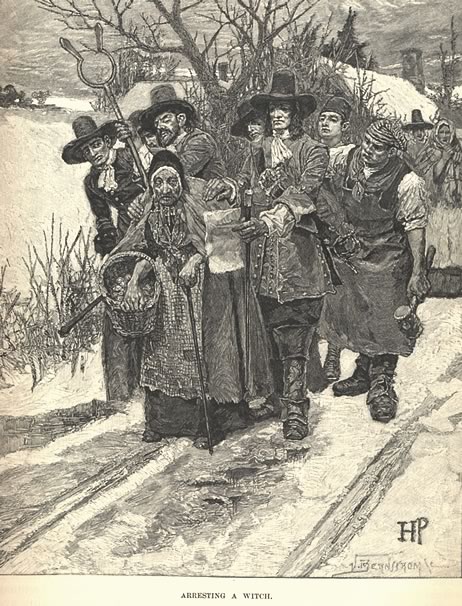
The witchcraft trials may have been part of a campaign to Christianize the populace and expand the church's authority along with propping up patriarchy in general (Bever, 2002). Bever views witchcraft trials as a method of acculturation, where over generations repression reshapes society. Women were very aggressive at the outset of these witchcraft trials, but generations of persecution served to diminish woman's power and strengthen men's (Bever). Women learned to be ashamed of their sexuality and to avoid interpersonal conflict (Bever). Some scholars propose that the medical profession used these trials to marginalize or gradually eliminate the practice of herbology and midwifery (Oster, 2004), but Bever is not convinced of this argument.
|
| ©Unknown |
| Arresting a Witch - probably a threat to the medical profession.. |
Power over women
Whitney attributes the witch hunts to a greater emergence of the modern state and individualism, with conflict between male dominated "official" and female "domestic" spheres being played out with the witchcraft trials (Whitney, 1995). She suggests the catalyst may have been economic change, and focuses on how it was mainly women that accused other women of witchcraft, which merely reinforced patriarchal norms of femininity (Whitney). She reminds us that patriarchy intentionally divides women by rewarding those who maintain the status quo with more power, as they systematically disenfranchise other women by enforcing patriarchal norms (Whitney, p. 88). In New England witch trials, women charged of witchcraft were described as malcontents who refused to accept their place in the social hierarchy, and were guilty of anger, envy, pride, maliciousness, lying and seductiveness" (Whitney, p. 85).
Violence against women
Whitney sees witchcraft trials as a form of violence against women because of the ways in which torture was used to elicit confessions (Whitney, 1995). She thinks being female was a marker for deviance, and that with the reformation came an intensified need to control nature [nature being traditionally identified with the female] (Whitney, p. 87). Many of the men and children accused of witchcraft were put on trial only because they were directly related to women already thus accused, a form of guilt by association (Whitney, p. 88). While Whitney doesn't give us a full picture of how witchcraft trials were violent, Barstow provides a great amount of detail and specific examples of the sexually violent means by which women were treated (Barstow, 1994).
According to Barstow, public humiliation was common. She tells of an instance in 1649 a.d. in Newcastle, where thirty "good" upstanding women were somewhat randomly herded into a town square, stripped, and prodded by sharp objects by male "stickers." With their dresses around their heads, if they failed to identify where they were being poked, they were accused of being witches; the fact that they were numb with fear and humiliation was discounted (Barstow, p. 130). According to Barstow, in Nuremberg unwed mothers accused of killing their child were forced to confess through a specific process. The unwed mother would have her breasts publicly checked for the presence of milk; if found, the midwife would fetch the dead infant, no matter how long it had been dead or in what condition the body was in, and would bring the dead infant to the mother as a means of shocking the woman into confession. Between 1576 and 1617 a.d., nineteen women were tried in this way, and after their confession, they were all drowned or hanged as witches (Barstow, p. 133). Women and girls not yet in puberty were raped while in jail (Barstow). Barstow is the first scholar to point out the regular practice of sending the executed witch's assets to the Bishop's treasury, implicating a more mercenary cause for accusing women who had no male relative to inherit her estate (Barstow, p. 19).
|
| ©Unknown |
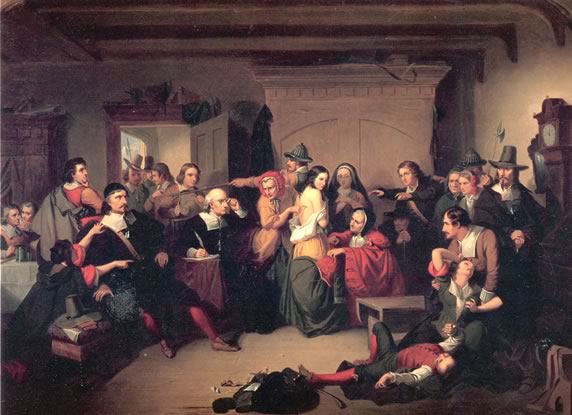
| A "witch" on trial. |
In a great analogy, Whitney provides a contemporary example of how witchcraft enhances a male's standing in the Gonja tribe in Africa, while female witches of the same tribe are feared and hated; this is Whitney's way of supporting her allegation that women are only allowed to express aggression in their care for a child, because in any other circumstance female aggression challenges male dominance and patriarchy (Whitney, 1995, p. 90).
Limits of Existing Studies
If greater quantities of historical narratives written by women were available, these could be coded and studied quantitatively to learn more about specific communicative behavior of women during this period of time. Some of the sources cited in this literature review quote one another with some regularity since there is limited access to primary source material, which is problematic for obvious reasons.
Rationale
In a patriarchal system, power over women is often expressed by controlling a woman's sexuality, access to resources, and autonomy (Wood & Eagly, 2002), and it was necessary for the Church and the males who ran it to periodically reinforce this system. Witchcraft trials were definitely an effective means to achieve this goal.
According to this review of literature, the witchcraft trials were a means by which women and particularly young girls were socialized to be sexually obedient to their husbands (Haliczer, 2002; Wood & Eagly). From this perspective, it would be logical that women who were not under the constant control of a father or husband would be more apt to be accused of witchcraft. It is clear that expressing freedom of thought or expression, sexuality, aggression, assertiveness, or autonomy would result in a woman being more vulnerable to witchcraft accusations. A contemporary analogy would be women who in some cultures today are stoned for committing adultery, and sometimes are put to death, jailed, or shunned for being the victim of rape.
Women in Europe had no real choice. In order to avoid persecution as witches, they had to sacrifice their desire for autonomy. It would be very interesting to conduct an analysis of contemporary witch trials and other historical witch hunts that occurred in different times and locations in order to discover patterns of similarity and difference. It is predicted that a study of contemporary witchcraft trials in places such as India and various African nations would show that women who express "excessive" assertiveness, sexuality, aggressiveness, or autonomy, through verbal and nonverbal communicative behaviors, would be more likely to be accused of witchcraft than those who abide by their society's prescriptive norms for female behavior.
If these specific sorts of communicative behaviors are in fact more likely to result in a witchcraft accusation in these cultures today, this cross-cultural comparison would support the idea that patriarchy and control of women's autonomy and/or sexuality, was behind the witchcraft accusations in Europe.

|
| ©Unknown |
References
Barstow, A. L. (1994). Witchcraze: A new history of the European witch hunts. San Francisco: Pandora.
Ben-Yehuda, N. (1980). The European witch craze of the 14th to 17th centuries: A sociologist's perspective. The American Journal of Sociology, 86, 1-31.
Bever, E. (2002). Witchcraft, female aggression, and power in the early modern community. Journal of Social History, 35, 955-988.
Broedel, H. P. (2003). The malleus maleficarium and the construction of witchcraft: Theology and popular belief. Manchester, UK: Manchester University Press.
Elliot, D. (2004). Proving woman: Female spirituality and inquisitional culture in the later middle ages. Princeton, NJ: Princeton University Press.
Haliczer, S. (2002). Between exaltation and infamy: Female mystics in the golden age of Spain. New York: Oxford University Press.
Horodowich, E. (2005). The gossiping tongue: Oral networks, public life and political culture in early modern Venice. Journal of the Society for Renaissance Studies, 19, 22-45.
Kempe, M. (n.d.). The Book of Margery Kempe. Luminarium: Anthology of English literature website (16 October 2007). A. Jokinen (Ed). Downloaded January 2007 from http://www.luminarium.org/.
King, M. L. (1997). Women's voices, the early modern, and the civilization of the west. Shakespeare Studies, 25, 21-31.
Larner, C. (1984). Witchcraft and religion: The politics of popular belief. New York: Blackwell. Oster, E. (2004). Witchcraft, weather and economic growth in renaissance Europe. The Journal of Economic Perspectives, 18, 215-228.
Whitney, E. (1995). International trends: The witch "she"/the historian "he." Journal of Women's History, 7, 77-101.
Wood, W., & Eagly, A. H. (2002). A cross-cultural analysis of the behavior of women and men: Implications for the origins of sex differences. Psychological Bulletin, 128, 699-727.
Deborah M. DeCloedt Pinçon, University of Wisconsin Milwaukee

















I would like to think that we are past all this, maybe not. If a mini ice age were to return, crops fail, the skies are dark, well someone is obviously to blame. It might be "witches" or simply anyone of who thinks independently.
No doubt there were decent men in those times that helped as they could. But the ruthless seem to rule each age.