
The move signals the start of a free-for-all in 'Frankenfood' - despite claims the technology is cruel and unethical.
Shoppers will be left in the dark because products from the offspring of cloned animals will not require special labels. One MEP warned supermarkets could soon be flooded with their milk.
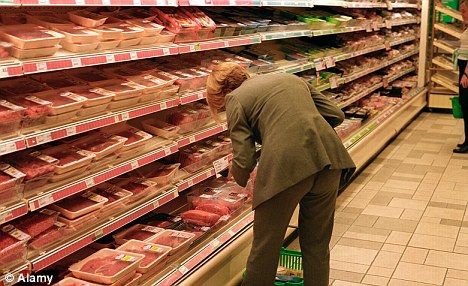
© AlamyIn the dark: The decision by the government and Brussels means that consumers will no longer know if the meat they buy comes from cloned animals
Commission officials joined her in arguing that such controls could provoke a trade war with Washington.
Most MEPs, on the other hand, called for a complete ban or, failing that, clear labelling.
However, in marathon talks which ended yesterday, the labelling compromise was rejected by the Commission, the UK Government and Tory MEPs.
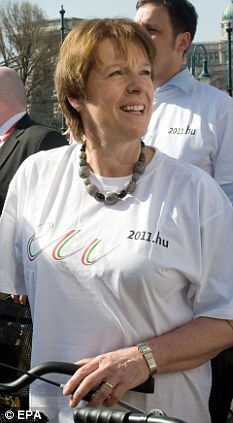
© EPABetrayal: Tory MP Caroline Spelman led the move to sabotage attempts to regulate or mark food that has come from cloned animals
Two MEPs, who led negotiations on behalf of the European Parliament, condemned the Commission and the European Council, which represents national governments.
'It is deeply frustrating that the Council would not listen to public opinion and support urgently needed measures to protect consumer and animal welfare interests,' said Gianni Pittella and Kartika Liotard in a joint statement.
'Parliament had overwhelmingly called for a ban on food from cloned animals and their descendants.
'We made a huge effort to compromise but we were not willing to betray consumers on their right to know whether food comes from animals bred using clones.
'Since European public opinion is overwhelmingly against cloning for food, a commitment to label all food products from cloned offspring is a bare minimum.'
Dagmar Roth-Behrendt, an MEP who took part in talks, said the failure to develop legislation risked Europe being flooded with 'billions of litres of cloned milk'.
The European consumer group, BEUC, said the views of ordinary people had been sacrificed to satisfy U.S. trade interests.
Its director, Monique Goyens, said: 'Europeans were very clear. They don't want cloning to be used for food purposes and yet, clearly, they have not been listened to.
'Food products derived from cloning bring no benefits to consumers. Obviously consumers' interests have been bypassed by the world trade concerns. Which interest were ministers representing exactly?'
Critics of cloning say it leads to a large number of miscarriages, malformed organs and gigantism.
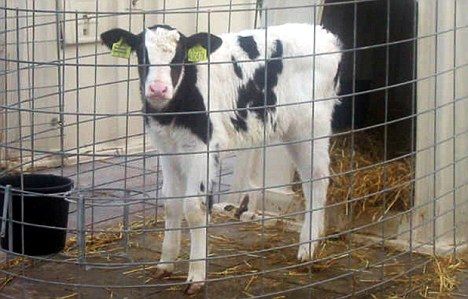
Pioneer: Dundee Paradise was Britain's first clone-descended calf and was born on a farm in Shropshire during 2006
'Cloning has huge potential to cause unnecessary pain, suffering and distress which cannot be justified by purely commercial benefits.'
Compassion in World Farming accused British ministers of 'shameful hypocrisy' for supporting clone farming while claiming to champion animal welfare.
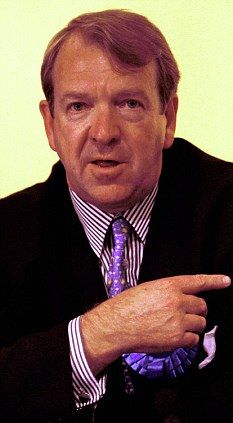
Over-complicated: MEP Struan Stevenson said the labelling would have placed great pressure on EU producers and could have caused a trade war
'A significant proportion of clones die in the early stages of life from health problems such as cardiovascular failure, respiratory difficulties and immune system deficiencies.'
The UK Government insists food from clone animals and their offspring is no different to that from conventional animals and that existing welfare laws are sufficient to deal with any cruelty.
'We remain of the view that there is no scientific justification for controls on the descendants of clones,' said a spokesman for Mrs Spelman.
Struan Stevenson, a Tory MEP, said: 'It seems to me that MEPs were too keen to over-complicate the cloning issue.
'They demanded labelling and traceability which would have placed great cost and pressure on EU producers and consumers and inevitably could have caused a trade war.'
Britain's Food Standards Agency had declared it is illegal to sell meat and milk from the offspring of clones - a policy that will now change.
There may be still be restrictions on food from the original clones but this is not an area of concern because they are fewer in number and generally too valuable to use for food.
Britain's first clone-descended cow, Dundee Paradise, was born on a Shropshire farm in 2006. She arrived by airmail as an embryo from an American clone mother.
So Much for That Pledge to be Greener than Ever
By Zac Goldsmith
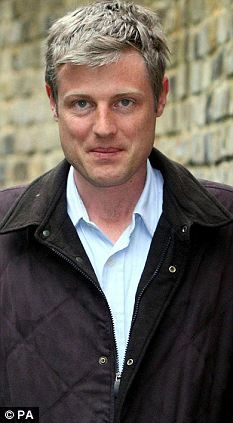
© PAThe Tory MP and environmental campaigner says the issue cloned meat has never been properly discussed in Parliament
If members of the public were asked whether they would be happy buying such food from the butcher or supermarket, there would be a resounding 'no'.
Cloning is ethically controversial, scientifically untested and the vast majority of consumers don't want cloned food anywhere near their plates.
Yet this is precisely what the Coalition Government is planning.
Attempts in the EU to control farm animal cloning have been actively killed off by our own farming minister, despite strong protests from a majority of MEPs.
As the negotiations failed, our ministers even rejected a mild compromise involving labelling food from clones and their offspring to give consumers a choice.
This is an extraordinary turnaround for a Government whose pre-election pitch placed so much emphasis on sustainable food and farming, and on consumer choice.
The lack of research into the safety of cloned produce has been well documented by British and European scientists.
Animal welfare groups, meanwhile, have identified serious welfare problems for the clones, including miscarriages, deformed organs and gigantism.
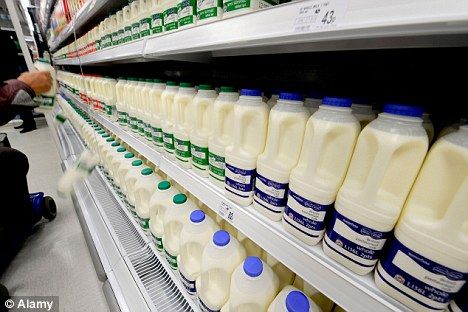
© AlamyControversial: The idea of eating meat or drinking milk from a cloned animal would leave many members of the public unhappy
What makes the Government's change of policy all the more disturbing is that it has taken place without any public debate. As far as I am aware, the issue has never been properly discussed in Parliament.
The truth is, there isn't the slightest evidence of any demand from consumers for cloned food products.
On the contrary, most people are appalled by the idea. Nor is there any great drive from the retailers, or indeed farmers for a change of policy.
Given the strong environmental commitments my party made before taking office, this represents a worrying shift.
Certainly, the Conservatives never hinted before the election that they intended to permit the sale of meat from the offspring of cloned animals.
What makes the Government's change of policy all the more disturbing is that it has taken place without any public debate
Meanwhile, the one protection that seemed to be guaranteed by the party - that of consumer choice - has also evaporated.
The Conservative's 'honest-labelling' campaign was our flagship food policy in Opposition. But when it comes to something so many of us actually care about - cloning - we are to be given no choice or information at all.
Ministers argue that produce from the offspring of cloned animals is no different, and will therefore have no special labelling. But at best, that is a matter of opinion.
One of the hallmarks of David Cameron's leadership before he moved into No 10 was his attachment to the green agenda. In his drive to modernise the Tory Party and broaden its appeal, he stressed our responsibility to the environment and the need for sustainable farming.
As a result, our manifesto was full of promises to implement a practical but bold programme of green policies.
Pledges such as 'we will not permit any commercial planting of genetically modified crops until and unless it has been assessed as safe for people and the environment' and 'we will promote honesty in food labelling' were key to that programme.'
Indeed, I recall sharing a platform with Mr Cameron at a public meeting before the election when he was asked a range of questions about food and farming.
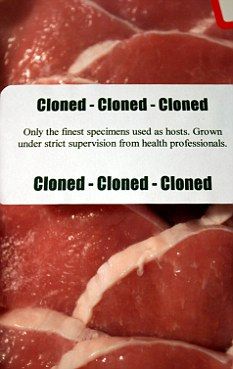
Honest: The policy to label food correctly was the Tories flagship food policy in opposition but the party now appears to have opted to give consumers no option at all
He was right. And I have yet to meet anyone who wants to eat steak from the offspring of a cloned cow.
After forming a government in coalition with the Liberal Democrats, David Cameron further emphasised his environmental credentials as Prime Minister, promising that his administration would be 'the greenest government ever'.
Instead, we have a Department for Environment, Food and Rural Affairs which seems to have yielded absolutely to the minority interests of big agribusiness, and is taking food and farming in a direction no one welcomes.
How else to explain its enthusiasm for the creation of Europe's biggest-ever factory dairy farm in Nocton, Lincolnshire?
Had the plans gone ahead, the future of every one of our 16,000 small and family dairy farmers would have been thrown into doubt, not to mention the cows themselves, 8,000 of which would have been denied fresh air, daylight and grass to graze.
Thankfully the plans were ditched, but not because of Defra.
The department should be leading the way, but it appears utterly blind to the instincts of consumers. We saw that during the proposed forest-sale fiasco, which backfired horribly, and unless we see a fundamental change in direction, there will be more to come.
The department is due to release what could be a ground-breaking White Paper on valuing our nation's natural capital, with a view to protecting it.
But until we see it, we can only judge Defra by its actions, and so far at least, the signs are deeply troubling.
I don't doubt the Prime Minister's personal commitment to environmental issues, but if the Coalition does not bring the department responsible into line, its promise to be 'the greenest government ever' will simply become another hollow political slogan.


Can't these interested groups determine for themselves who is doing it and letting the public know? Precision isn't necessary, as a general fear of a company's product is usually sufficient to do damage to their bottom line.