
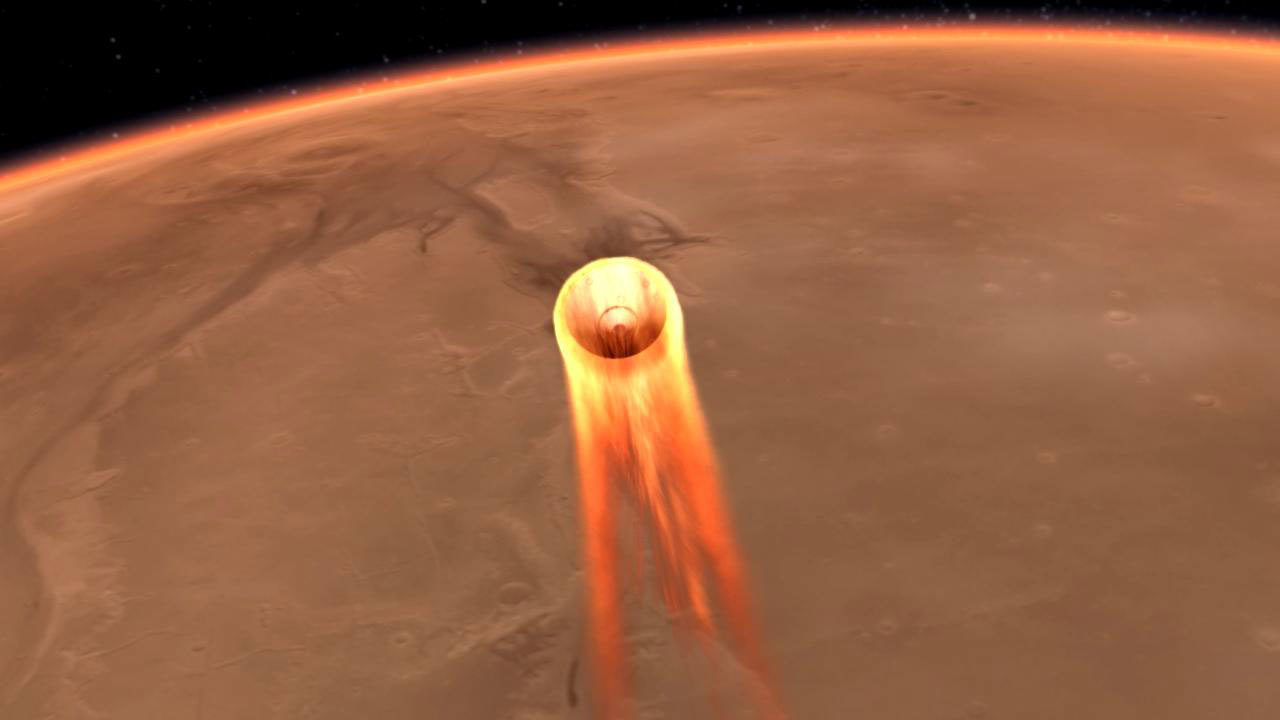
© NASA/JPL-CaltechAn artist's impression of NASA InSight's entry, descent and landing at Mars, scheduled for Nov. 26, 2018.
"Landing on Mars is hard. It takes skill, focus and years of preparation," said Thomas Zurbuchen, associate administrator for the Science Mission Directorate at NASA Headquarters in Washington. "Keeping in mind our ambitious goal to eventually send humans to the surface of the Moon and then Mars, I know that our incredible science and engineering team - the only in the world to have successfully landed spacecraft on the Martian surface - will do everything they can to successfully land InSight on the Red Planet."

© NASA/GSFCNASA Science missions circle Earth, the Sun, the Moon, Mars and many other destinations within our solar system, including spacecraft that look out even further into our universe. The Science Fleet depicts the scope of NASA's activity and how our missions have traveled throughout the solar system.
"There's a reason engineers call landing on Mars 'seven minutes of terror,'" said Rob Grover, InSight's entry, descent and landing (EDL) lead, based at NASA's Jet Propulsion Laboratory in Pasadena, California. "We can't joystick the landing, so we have to rely on the commands we pre-program into the spacecraft. We've spent years testing our plans, learning from other Mars landings and studying all the conditions Mars can throw at us. And we're going to stay vigilant till InSight settles into its home in the Elysium Planitia region."
One way engineers may be able to confirm quickly what activities InSight has completed during those seven minutes of terror is if the experimental CubeSat mission known as Mars Cube One (MarCO) relays InSight data back to Earth in near-real time during their flyby on Nov. 26. The two MarCO spacecraft (A and B) are making good progress toward their rendezvous point, and their radios have already passed their first deep-space tests.
"Just by surviving the trip so far, the two MarCO satellites have made a giant leap for CubeSats," said Anne Marinan, a MarCO systems engineer based at JPL. "And now we are gearing up for the MarCOs' next test - serving as a possible model for a new kind of interplanetary communications relay."
If all goes well, the MarCOs may take a few seconds to receive and format the data before sending it back to Earth at the speed of light. This would mean engineers at JPL and another team at Lockheed Martin Space in Denver would be able to tell what the lander did during EDL approximately eight minutes after InSight completes its activities. Without MarCO, InSight's team would need to wait several hours for engineering data to return via the primary communications pathways - relays through NASA's Mars Reconnaissance Orbiter and Mars Odyssey orbiter.
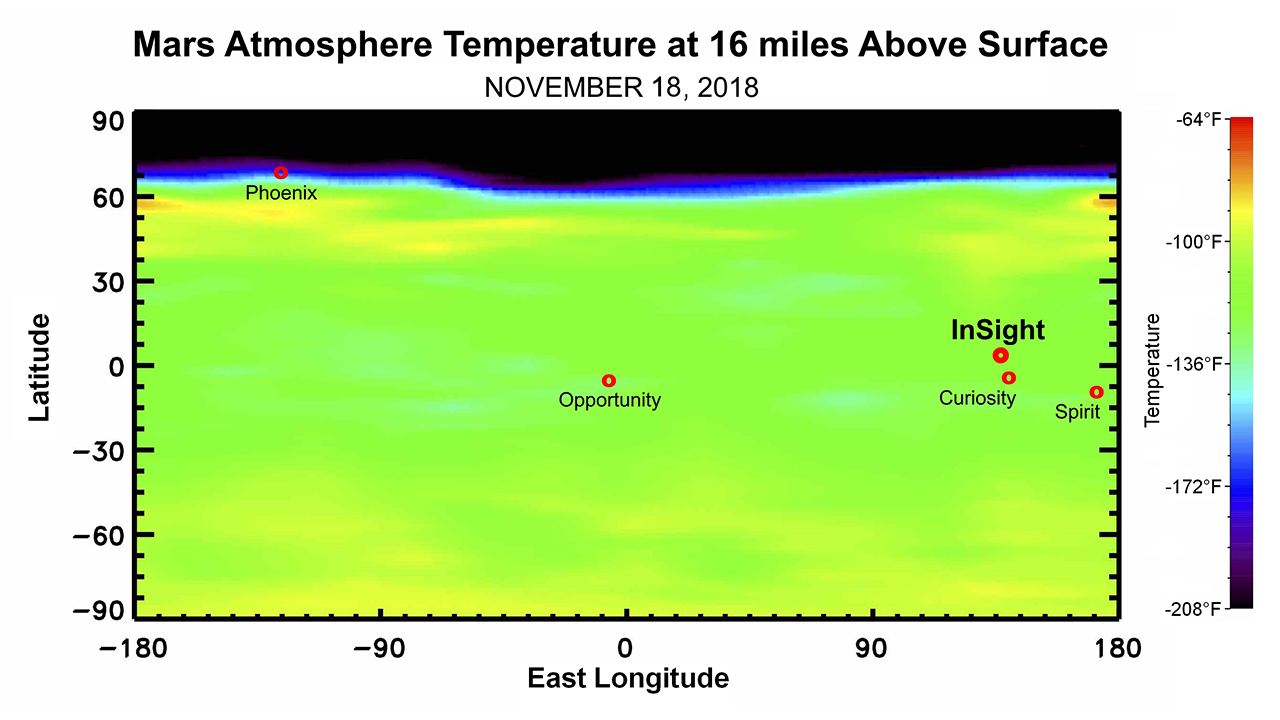
© NASA/JPL-CaltechThis map shows the temperature of the Martian atmosphere 16 miles above the surface. The data was taken on Nov. 18, 2018, about one week before NASA's InSight lander is scheduled to touchdown on the Martian surface.
"Landing on Mars is exciting, but scientists are looking forward to the time after InSight lands," said Lori Glaze, acting director of the Planetary Science Division at NASA Headquarters. "Once InSight is settled on the Red Planet and its instruments are deployed, it will start collecting valuable information about the structure of Mars' deep interior - information that will help us understand the formation and evolution of all rocky planets, including the one we call home."
"Previous missions haven't gone more than skin-deep at Mars," added Sue Smrekar, the InSight mission's deputy principal investigator at JPL. "InSight scientists can't wait to explore the heart of Mars."
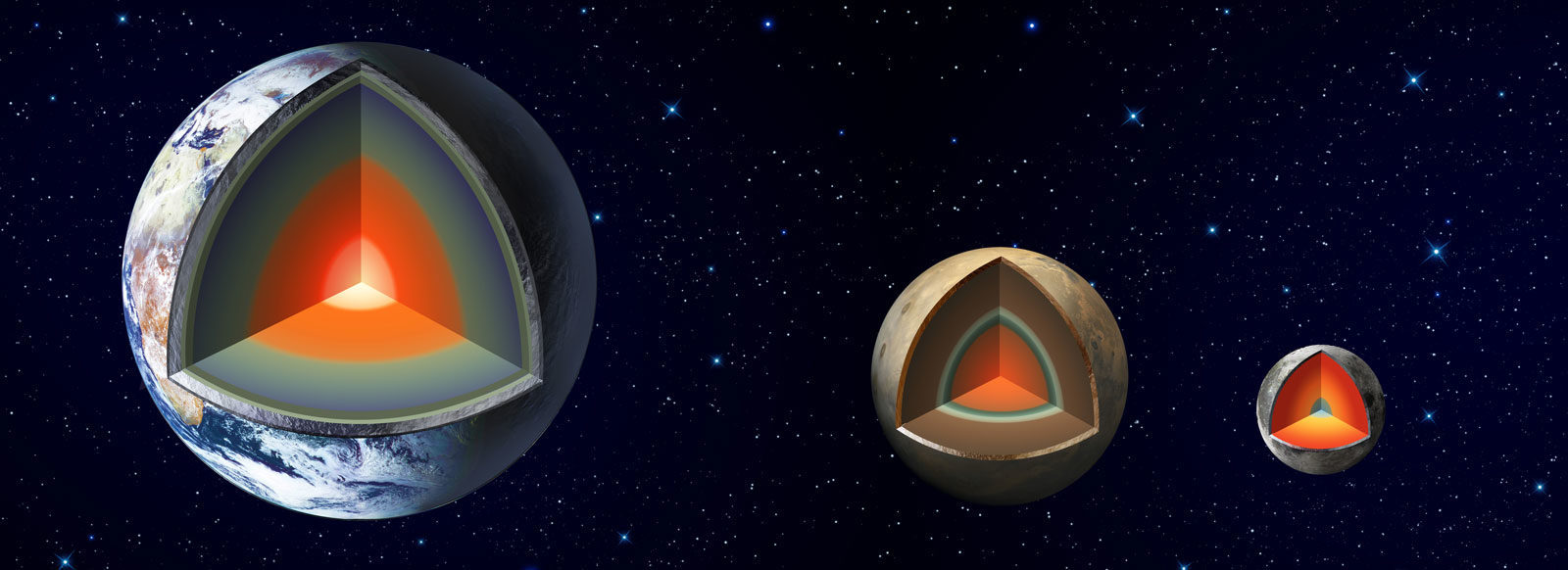
© NASA/JPL-CaltechThe artist's impression shows the major interior layers of Earth, Mars and the Moon.
A number of European partners, including France's Centre National d'Études Spatiales (CNES) and the German Aerospace Center (DLR), are supporting the InSight mission. CNES and the Institut de Physique du Globe de Paris (IPGP) provided the Seismic Experiment for Interior Structure (SEIS) instrument, with significant contributions from the Max Planck Institute for Solar System Research (MPS) in Germany, the Swiss Institute of Technology (ETH) in Switzerland, Imperial College and Oxford University in the United Kingdom, and JPL. DLR provided the Heat Flow and Physical Properties Package (HP3) instrument, with significant contributions from the Space Research Center (CBK) of the Polish Academy of Sciences and Astronika in Poland. Spain's Centro de Astrobiología (CAB) supplied the wind sensors.
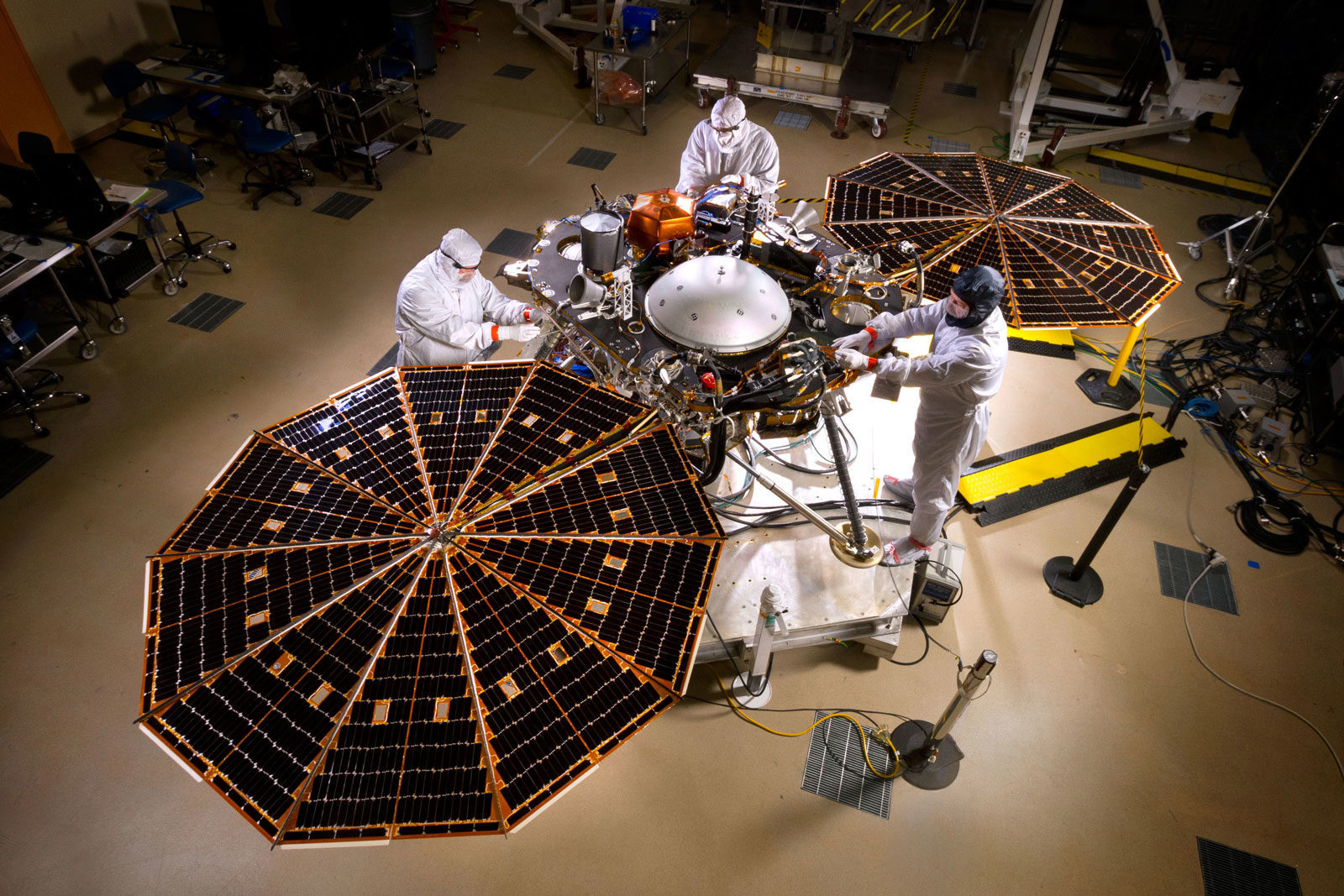
© Lockheed MartinNASA's InSight Mars Lander in fully landed configuration in the clean room at Lockheed Martin Space in Littleton, Colorado. Once the solar arrays are fully deployed on Mars, they can provide 600-700 watts on a clear day, or just enough to power a household blender.




When they re-find all the Apollo programs data that the misplaced,maybe then they'll have the ability to go beyond low earth orbit
Till then..we'll just ponder all the tax money this NASA program drains from everyday families.
So many issues right here on earth..but these chumps quite lterally salivate at pie in the sky