
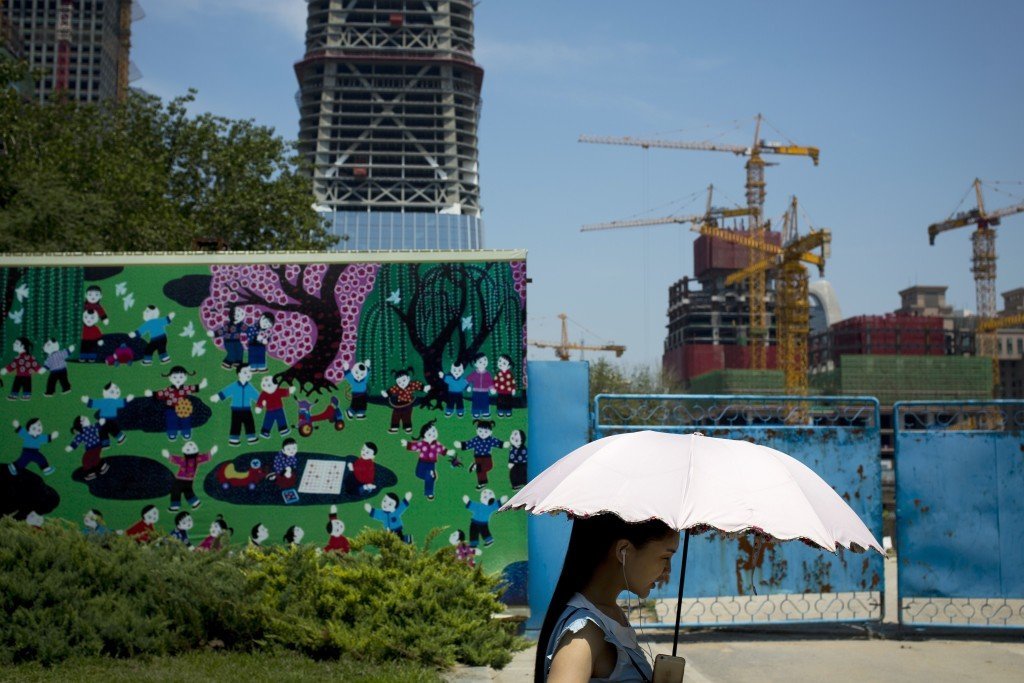
© Andy Wong/APA woman carrying an umbrella to shield from the sun as she walks past a mural on display near a construction site at the Central Business District of Beijing, Thursday, June 16, 2016.
The sinking is happening because of the city's depleted groundwater, with central districts the most severely affected. The city regulates the instillation of wells but inconsistently applies it, the Guardian reported.
China requires around 3.5 billion liters of water each year. Water management has been a struggle for the world's most populous country, with droughts causing billions of dollars in damage and leaving many citizens and animals without drinking water in southern China a few years ago.
"We are currently carrying out a detailed analysis of the impacts of subsidence on critical infrastructure (eg high-speed railways) in the Beijing plain," three of the seven academics involved in the study told the Guardian. "Hopefully a paper summarising our findings will come out later this year."
The draining of water could deeply affect the integrity of the city's infrastructure — especially buildings and the rail system. Problems could also get much worse, especially with sparse enforcement of well-digging regulations
"There are some rules but the enforcement is doubtful," Ma Jun, director of the Institute of Public and Environmental Affairs in Beijing, told the Guardian.



Reader Comments
to our Newsletter