
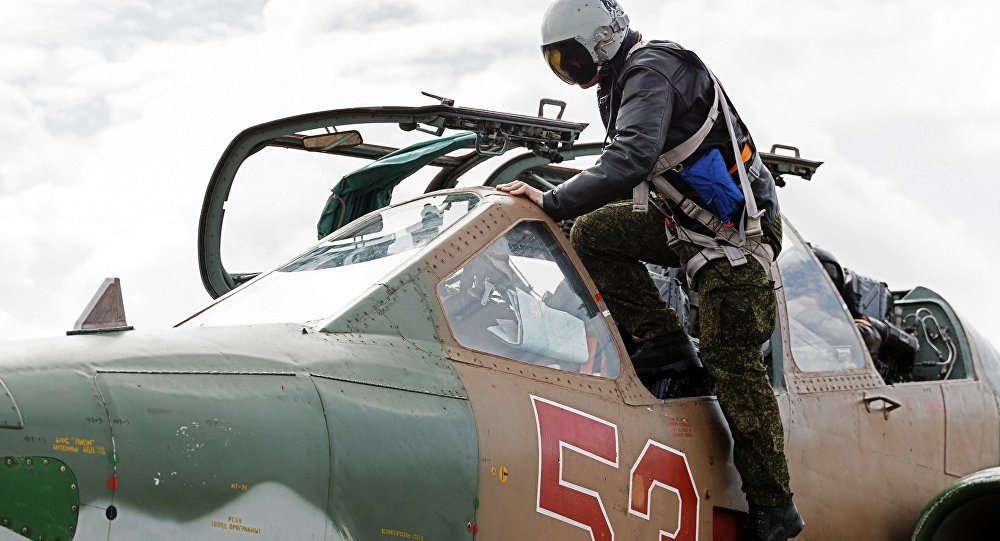
© Russian Defense MinistryRussian Aerospace Forces aircraft leave Hmeimim airbase in Syria
The military operation of the Russian Aerospace Forces against various terrorist groups operating on the territory of Syria was launched on September 30, 2015. On March 14, 2016 President Putin ordered a partial withdrawal from the country starting March 15, 2016.
Number of Sorties and Achieved Objectives
According to the report of Russia's Defense Minister Sergei Shoigu to Commander-in-Chief Vladimir Putin, more than 9,000 sorties were completed; first massed strikes were conducted with various platforms at a range of more than 1,500 kilometers with rockets from air and naval bases.
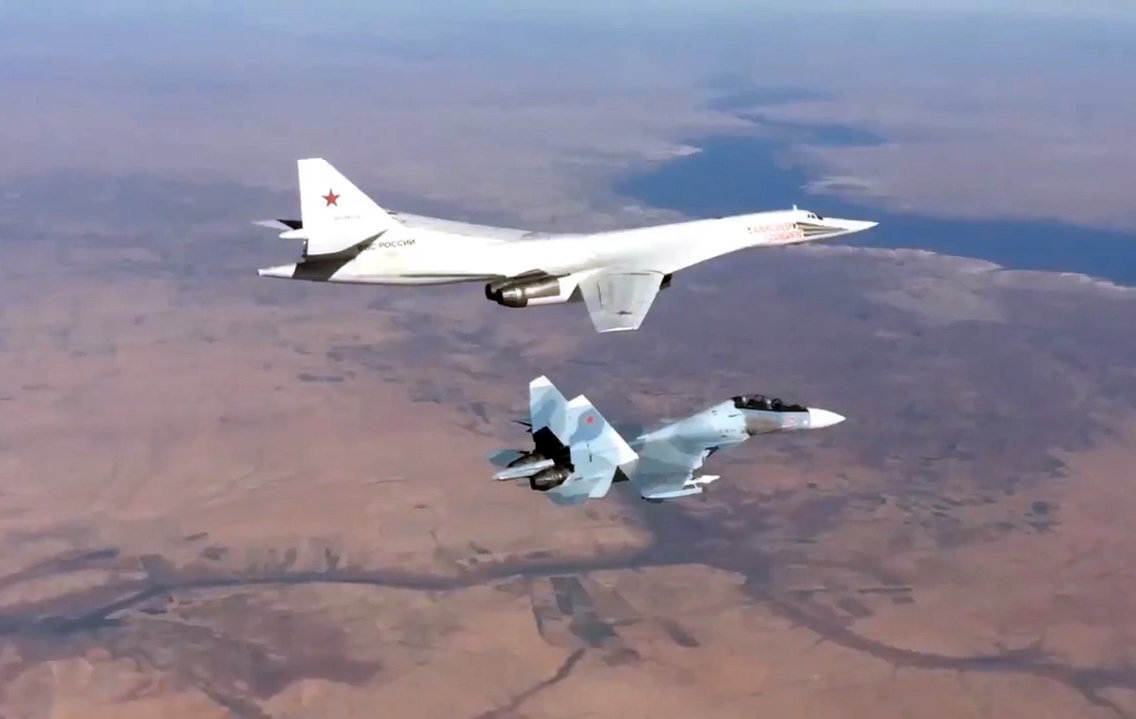
© Russian Ministry DefenceRussian Air Force's long-range aircraft hit ISIS targets in Syria
Russian aviation destroyed 209 oil supply, processing, and pumping locations, and also 2,912 means of moving oil products, or, as they are also called, "liquids."
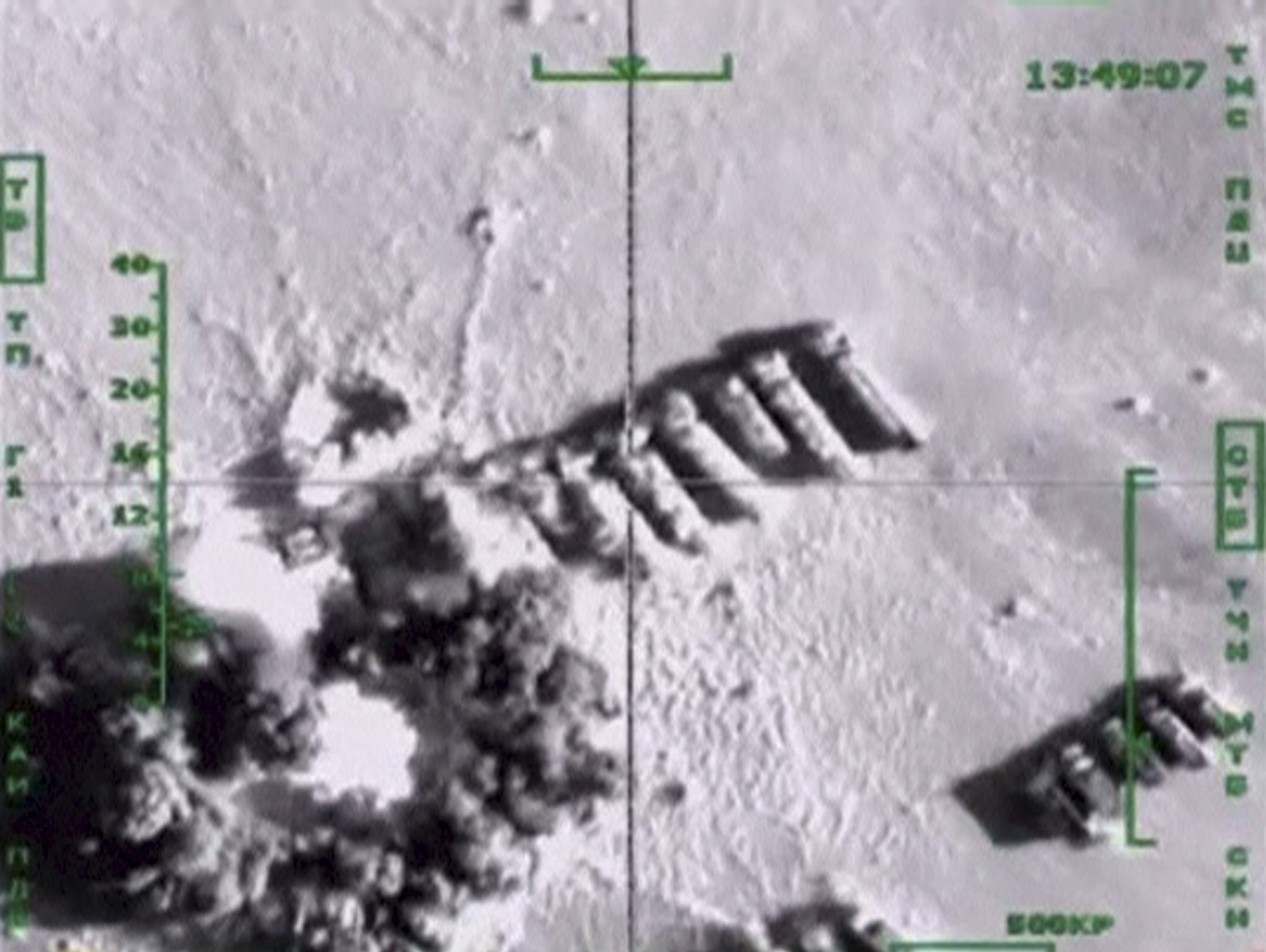
© Russian Defence Ministry/ReutersOil trucks, which, according to Russia's Defence Ministry, are being used by Islamic State militants, are hit by air strikes carried out by Russia's air force, at an unknown location in Syria, in this still image taken from video footage released by Russia's Defence Ministry on November 18, 2015
More than 2,000 illegal mercenaries from Russia, including 17 field commanders, were eliminated on the territory of Syria.
Liberated Territories
With the support of Russian aviation, Syrian troops have liberated 400 populated areas and more than 10,000 kilometers of territory. They have achieved a fundamental turning-point in the fight against terrorism.
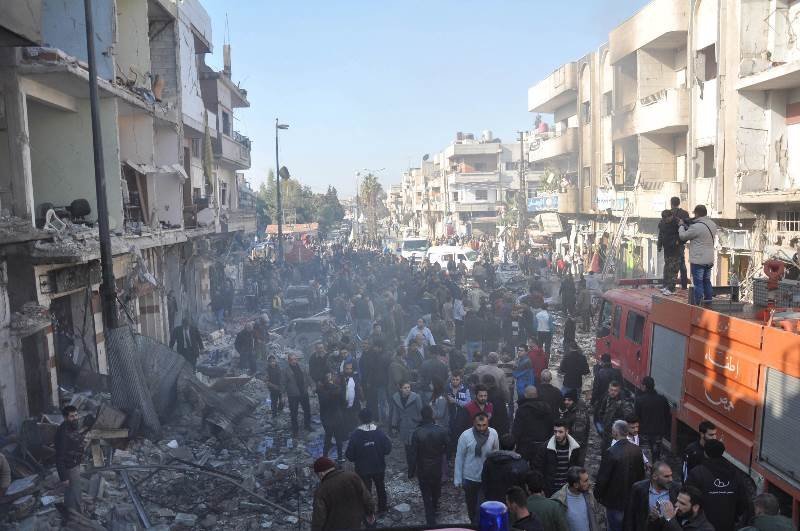
© Reuters/ SANASyrian army soldiers, members of security services and civilians inspect the site of two bomb explosions in the Syrian city of Homs, Syria, in this handout picture provided by SANA on December 28, 2015
The greater part of the provinces of Hama and Homs have been cleared, Kuweires airbase has been unblocked after being besieged for more than three years.
Control has been established over oil and gas fields near Palmyra and three large fields, as of now, have returned to stable operations.
Cessation of Hostilities and the Peace Process
The cessation of hostilities, backed by Russia and the US, came into force on February 27, 2016 at 00:00 Damascus time.
All the organizations which signed up to the negotiation process have begun taking active steps to ensure the ceasefire (there are currently 42 organizations in the group); plus, an additional 40 towns that joined the ceasefire.
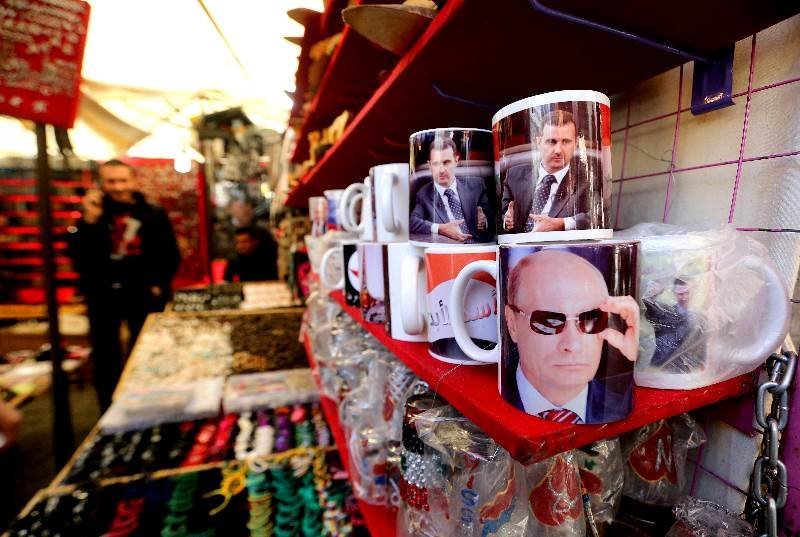
© Joseph Eida/Agence France-PresseSyrian vendor sells mugs bearing portraits of Russian President Vladimir Putin (bottom) and Syrian President Bashar Assad (top) in the popular Hamidiyeh market in the old part of the capital Damascus on November 26, 2015
Warfare Equipment Used in Syria
At the start of the air campaign Russia had 48 aircraft, including combat jets and helicopters. It included SU-30M fighters, SU-35C supermaneuverable multirole fighters, SU-34 fighter-bombers, SU-24M attack aircraft, Su-25 close air support jet and helicopters Mi-8 and Mi-24.
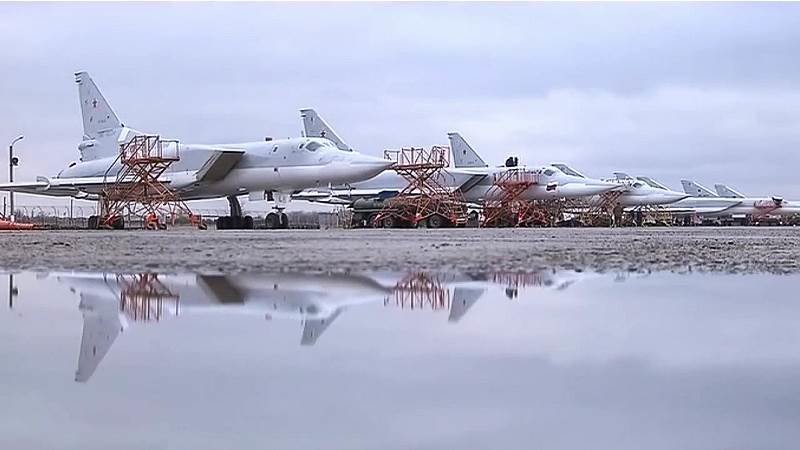
© Ministry of Defence of the Russian FederationTupolev Tu-22M3 strategic bombers hit terrorists in Syria
Russian bases were protected by Russia's S-400 and Pantsir-S1 advanced surface-to-air missile defense systems and sea-based S-300.
The strikes were performed with Kh-29L and Kh-25ML air-to-surface missiles, KAB-500C guided bombs, concrete-piercing BETAB-500 air bombs, fragmentation demolition air bombs (OFAB-250), cruise missiles Kh-555 and 3M-14 (Kalibr).
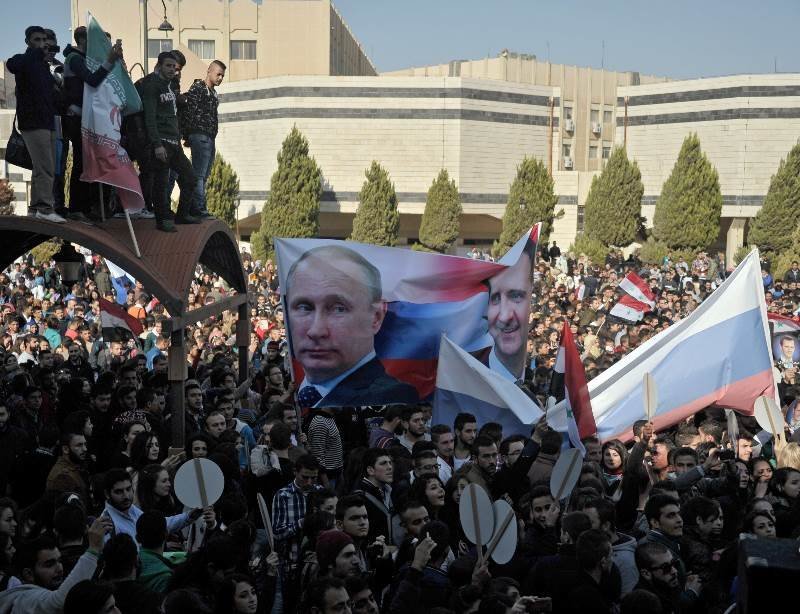
© Dmitriy VinogradovAl-Baath/SputnikUniversity students hold rally in support of Russia's military operation in Syria



Comment: Another measure of the Russian character. Putin outlined clear goals for the Syrian operation and what would happen when they were achieved. Russia is a country that keeps its word.