
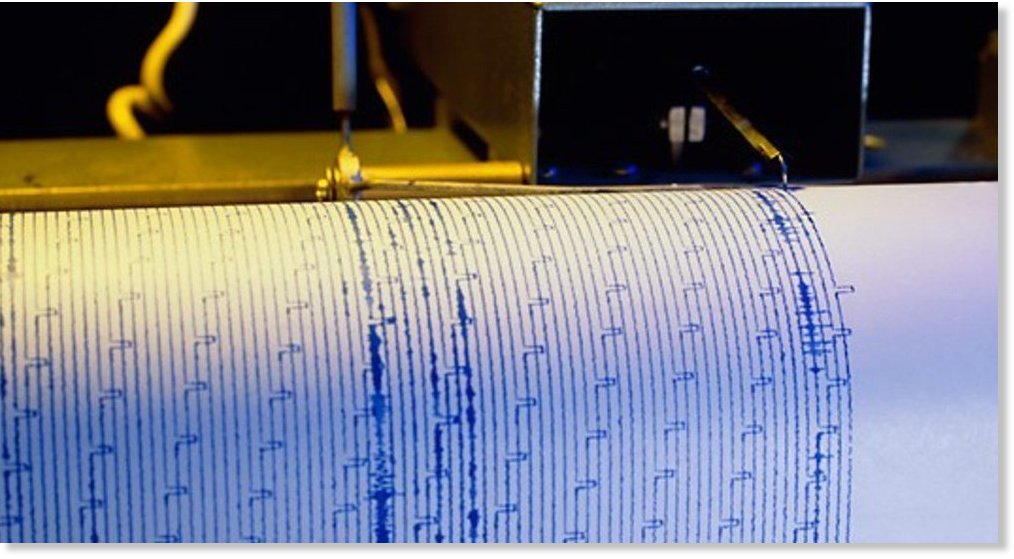
© Science Photo Library
Jammu and Kashmir has recorded 34 earth quakes in 2015 which has brought to limelight the state"s vulnerabilities to natural disasters.
According to the Indian metrological department, most parts of Kashmir covering the districts of Srinagar, Ganderbal, Baramulla, Kupwara, Bandipora, Budgam, Anantnag and parts of Jammu region, Doda, Ramban, Kishtwar come under Seismic Zone V and are prone to earthquakes. While the rest part of the state comes under Seismic Zone IV.
In 2015, the frequent earth quakes some were measured above 7 magnitude on the Richter scale has proved that J&K is prone to earthquakes and there is a dire need of having well equipped agencies to deal with natural disasters.
According to the official figures of J&K meteorological department, 34 earthquakes hit J&K in 2015. Tremors were felt twice in February last while eight earth quakes were reported in March. Tremors jolted the state four times in April including a powerful earth quake on April 25 measuring 7.5 on the Richter scale. Tremors were felt twice and once in the month of May and June respectively. In July, the state recorded four earthquakes although of low intensity. Mild to moderate tremors were felt twice and thrice in the month of August and September respectively. In October, two earth quakes were recorded including a powerful one on October 26 of 7.5 magnitude in which three people lost their lives and caused damage to scores of houses across the state. The figures reveal, earth quakes were recorded thrice in the month of November. In December also, tremors jolted J&K thrice including a power earthquake on 26 midnight of the month measuring 6.5 on the Richter scale in which two people died due to heart attack.
In this month too, the J&K was jolted by an earthquake on January 2 of magnitude 5.8. The frequent earth quakes have been scaring the people while government seems not interesting in taking measures how to deal with such disasters.
According to Director Meteorological Department Sonam Lotus, the frequent earth quakes in 2015 have proved that people and the government should be well prepared in dealing with such incidents.
Professor Shakil Ahmad Romshoo, who teaches Earth Sciences at Kashmir University says J&K falls in the seismic zone of IV and V and people should be well prepared to deal with such eventualities. "We can"t predict the timing, magnitude and place of an earthquake but we should be well prepared in dealing with any such natural disaster," Romshoo said. "There happens earthquake every day in Japan but they are well prepared and build earthquake resistant houses which we lack in the state."
He said the Earth Sciences department of Kashmir University with other institutes would soon carry out a programme to assess the vulnerability of Srinagar city to earthquakes.
In backdrop of repeated earthquakes in 2013 in Kishtwar district, an expert team headed by former vice-chancellor of Kashmir University Professor Talat Ahmad found that majority of the offices and schools were not in a position to resist the earth quake and could face damages due such tremors.
The expert team had told the government that buildings which are being constructed in the state are poorly designed and are highly vulnerable to earthquake.
In July this year, the state Cabinet approved state"s first-ever disaster management plan. The government had said the plan is aimed at reducing the state"s vulnerability to hazards and enhance human and institutional capabilities to cope with disasters and natural calamities in a more effective manner.
Sources said despite having passed five months, there has been no progress in implementation of the disaster management plan.
"No work has been started for its implementation and it has been confined to papers," an official of Revenue and Rehabilitation department said. "It shows the non-seriousness of the government in dealing with natural disasters."
Two battalions of auxiliary forces were converted into State Disaster Response Force (SDRF) in 2012. However, the SDRF is still ill-equipped and its forces are not in a position to deal with any emergency at the time of any natural calamity. Its men have also been assigned other duties like security.
Divisional Commissioner Kashmir Asgar Samoon admitted that SDRF lacks equipment and proper training to deal with natural calamities. He said the government was considering how to strengthen the SDRF in the state.



Comment: See also: 4,300 earthquakes strike Indonesia in 2015
Seismic activity increases in Azerbaijan: 7,000 earthquakes in 2015