
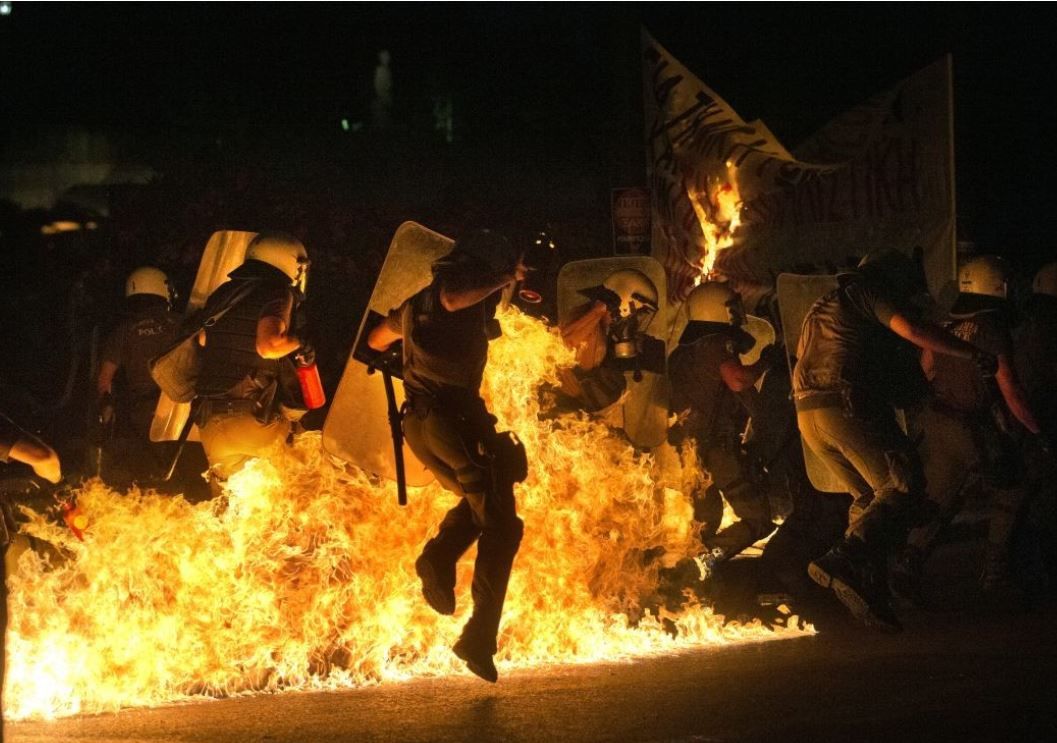
© Reuters/Yannis Behrakis A police officer jumps to avoid fire from a petrol bomb thrown by anti-austerity protesters
Of the 14 people arrested during the protests in Athens last, not one was from Greece, according to Greek paper Kathimarini.
Twelve were arrested for graffiti in metro stations, while above them, in Athens' central Syntagma Square, demonstrators threw petrol bombs, stones and stun grenades in protest against the vote on further austerity reforms in parliament.
The unrest comes after weeks of peaceful political rallies during the crisis Kathimarini reported that four of those arrested came from Germany, two were French, one Australian, one Ukraine, one Dutch and three Polish. There were given charges relating to damage of a metro station.
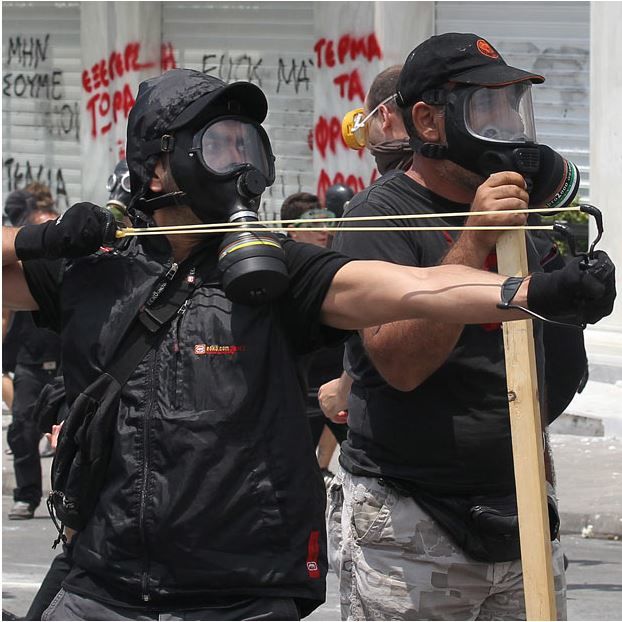
A further two people were arrested in front of the parliament for attacks on police officers - one an Italian and one an Albanian.
A protester is arrested following clashes outside the parliament building Just before 9.30pm, protests against the Greek government's full capitulation to the demands of the country's creditors turned nasty. Petrol bombs were thrown in the city's central square, Syntagma. The riot police tried to bring the demonstrations under control with tear gas. Police estimated the number of demonstrators at 12,500.


Was Greece Always Part Of The Plan?
Since its inception, critics of the eurozone have been pointing to its incomplete nature — everyone uses the same money but keeps their own national budgets and tax regimes — and speculating that this “fatal flaw” would doom the system. Other observers, however, gave the euro’s creators more (Machiavellian) credit and assumed the initial version was simply what was politically attainable at the time. Future leaders, they predicted, would wait for (or engineer) a crisis and the use it to bully their reluctant citizens into a centralized government.
This month the crisis erupted, with Greece closing its banks, imposing capital controls and briefly defaulting on its debt before finally giving up. And now come the calls for centralization:......continued