
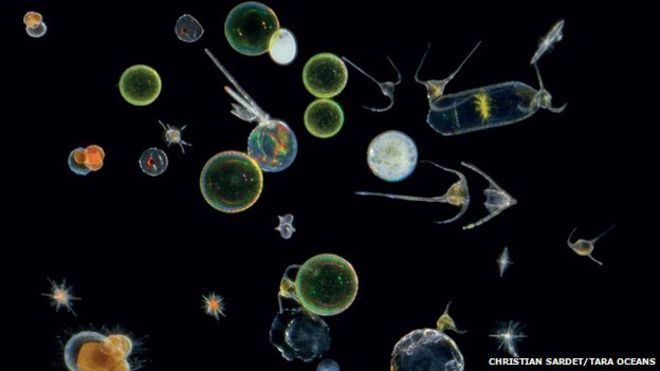
© Christian Sardet / Tara OceansPlanktonic organisms such as these single-celled creatures are found throughout the oceans
An international team has been studying samples of plankton collected during a three-year global expedition.
They have so far found 35,000 species of bacteria, 5,000 new viruses and 150,000 single-celled plants and creatures.
They believe that the majority of these are new to science.
Dr Chris Bowler, from the National Centre for Scientific Research (CNRS), in Paris, told BBC News: "We have the most complete description yet of planktonic organisms to date: what's there in terms of viruses, bacteria and protozoa - we finally have a catalogue of what is present globally."
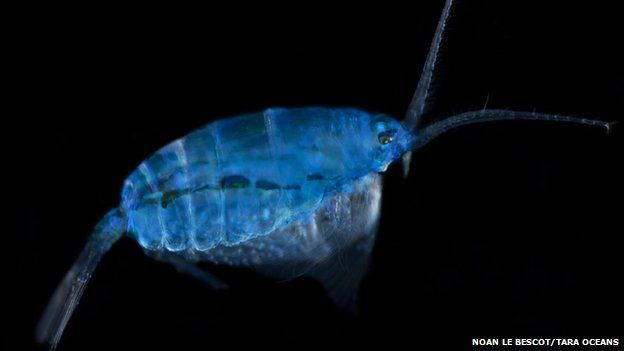
© Noan Le Bescot / Tara OceansThis tiny crustacean was found in a sample taken in the South Pacific
They include viruses, bacteria, single-celled plants and creatures (protozoa).
They form the very base of the food chain, and produce - through photosynthesis - half of the oxygen we breathe.
However, until now, little has been known about this unseen ocean ecosystem.
The Tara expedition, primarily funded by the French fashion designer Agnes B, set out to change that.
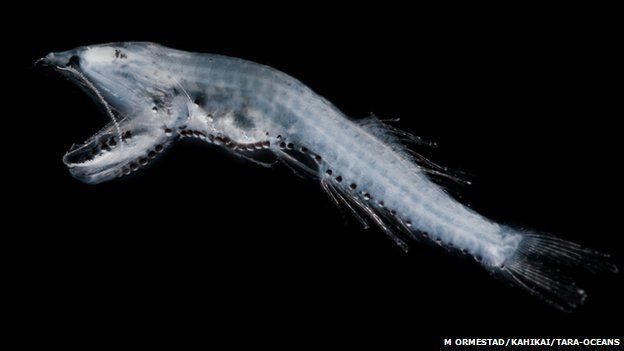
© M Ormestad / Kahikai / Tara OceansMany of the organisms are new to science
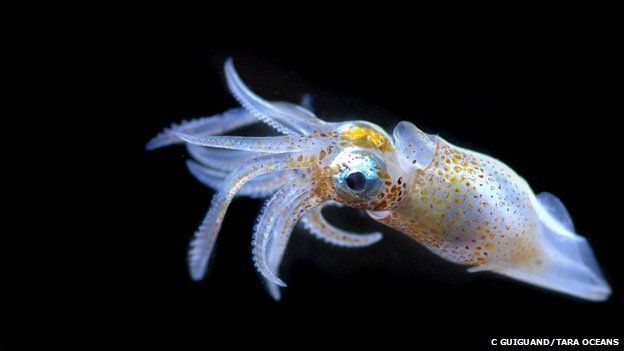
© C Guiguand / Tara OceansSo far the team has analysed 579 of the 35,000 samples that were collected
It sailed 30,000km across the world's oceans, with researchers collecting 35,000 samples, taking them from the very top layers of the ocean down to 1,000m below the waves.
The project has cost about 10m euros.
New viruses
So far the scientists have analysed 579 of the 35,000 samples collected, presenting the results in five scientific papers.
Dr Bowler said the research was transforming our understanding of these ocean communities.
"For the viruses, we describe about 5,000 virus communities - only 39 of these were previously known.
"And for protists - unicellular organisms - we estimate something like 150,000 different taxa.
"There are about 11,000 formally described species of plankton - we have evidence for at least 10 times more than that."
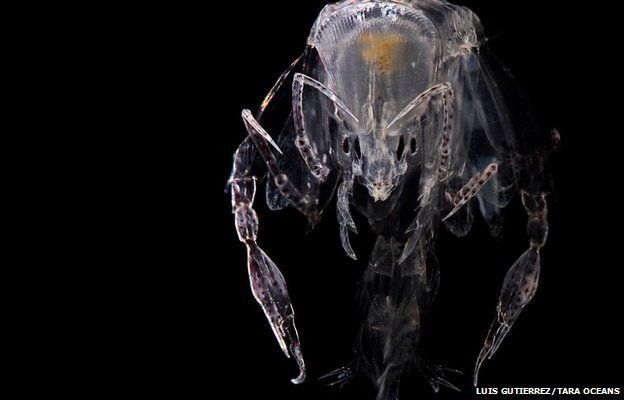
© Luis Gutierrez / Tara OceansThe analysis has revealed that many of the organisms are sensitive to temperature
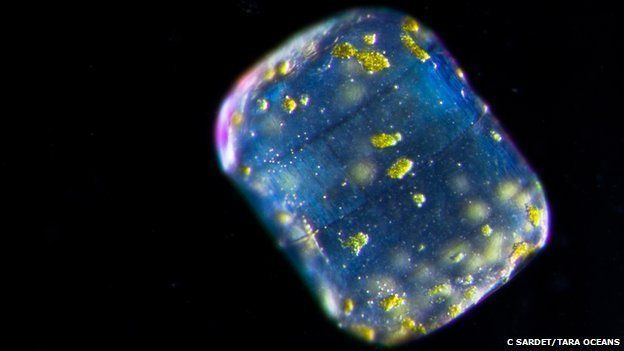
© C Sardet / Tara OceansThe researchers also looked at how the different organisms interacted
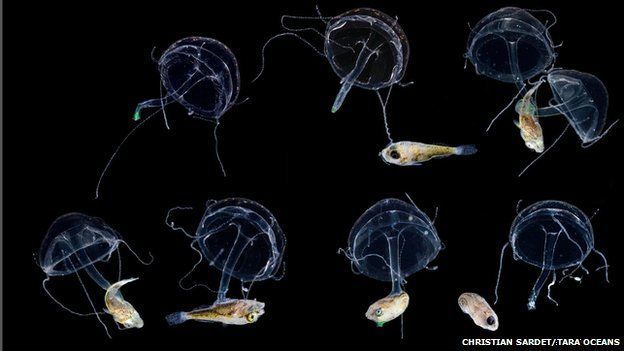
© Christian Sardet / Tara OceansPlanktonic organisms such as these tiny jellyfish and fish are found throughout the oceans
"We have 40 million genes - about 80% of which are new to science," explained Dr Bower.
The researchers also analysed how plankton communities are organised.
"We have thrown all of these together to see who interacts with whom," said Dr Bower.
"We now have a big dataset where we can ask: 'who do you always find with someone else?' or 'who do you never find with someone else'.
"This helps us to describe symbiosis and interactions that go beyond grazing and predator-prey relationships."
'Enormous' database
The researchers have found that many of the organisms, particularly the bacteria, are sensitive to temperature.
Dr Bowler said: "It is temperature that determines what sort of communities of organisms we find. If we look at our data and we see what organisms are there, we can predict with 97% probability the temperature of the water they are living in.
"These organisms are most sensitive to temperature, more than anything else, and with changing temperatures as a result of climate change we are likely to see changes in this community."
The researchers say that this scientific analysis is just the beginning.
They are making their findings freely available to the scientific community to gain a better understanding of this vital but unseen underwater world.
Dr Bowler continued: "The amount of data we have released is already enormous; it is one of the largest databases of DNA available to the scientific community. But we've analysed perhaps 2% of the samples we have collected throughout the world - so there is a huge amount of work to do in the future to understand even more about the functioning of these marine ecosystems and the importance of that for the wellbeing of the planet.
"So it's really just the beginning of the study."



I love this kind of science. So detailed. Minute, exotic and necessary life we can hardly imagine. I am glad that the study began before Fukushima. The ongoing nuclear plume of toxin from there is already greatly reducing the plankton and the layer of life above them that now have no food.
This is one of the benefits that we get from the development of high-resolution physical science and the computer.