
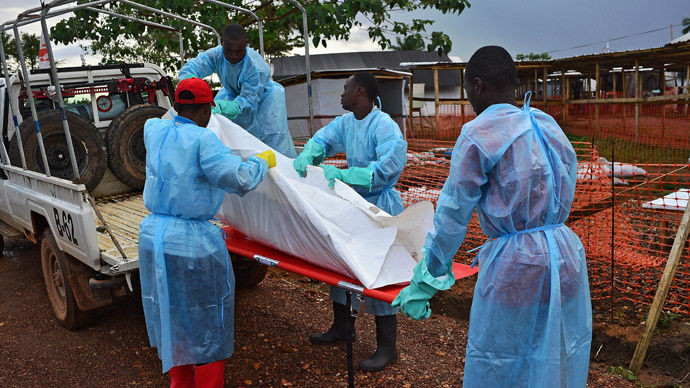
© AFP Photo / Carl de SouzaSierra Leone government burial team members load the body of an Ebola victim onto a truck at an MSF facility in Kailahun, on August 14, 2014.
"[WHO] staff at the outbreak sites see evidence that the numbers of reported cases and deaths vastly underestimate the magnitude of the outbreak," the organization wrote on its website.
While no new cases surfaced, the outbreak is expected to continue "for some time" in West African states affected by the virus, the WHO said, adding that the "operational response plan extends over the next several months."
WHO is coordinating the international response such as the World Food Programme and is using its "well-developed logistics to deliver food to the more than one million people locked down in the quarantine zones, where the borders of Guinea, Liberia, and Sierra Leone intersect." The organization is also mapping out the outbreak to effectively locate closest treatment facilities.
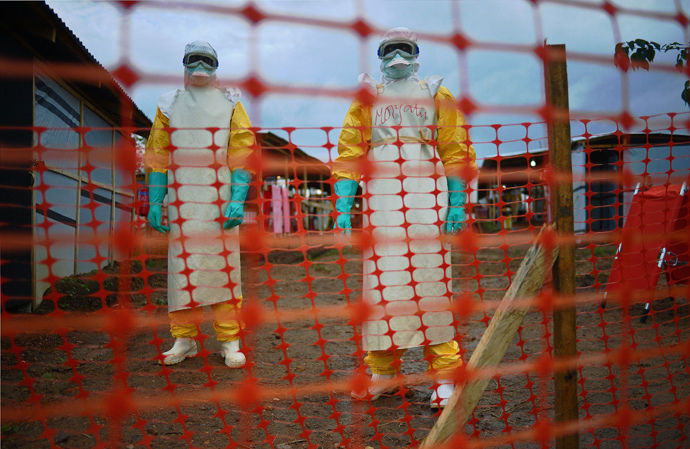
© AFP Photo / Carl de Souza
As the number of deaths rises, the affected countries eagerly await experimental drugs from Western pharmaceutical firms that have been blessed by the WHO as ethical to treat the ill.
In the worst epidemic since the disease was first discovered in 1976, the death toll has now reached 1,069 with 56 people dying in the last two days and a total of around 2,000 infected.



Comment:
New Light on the Black Death: The Viral and Cosmic Connection
Comets, plagues, tobacco and the origin of life on earth
Pestilence, the Great Plague and the Tobacco Cure
Black Death found to be Ebola-like virus
Beneficial tobacco: Monoclonal antibodies derived from tobacco thwart West Nile virus
Health Benefits of Smoking Tobacco
Are you prepping your diet?