
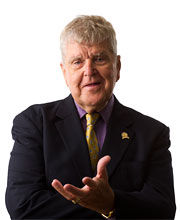
© Andrew KornylakDr. Armon B. Neel Jr.
Not all medical professionals contribute to this trend, though. Some, like certified geriatric pharmacist Armon Neel, are standing up to the overprescribe method of treating patients and trying to reel back health care practices. A profile of Neel by the AARP describes his role well:
The way Neel sees it, pharmacists are often a patient's last line of defense in a nation of doctors who, more often than not, don't know much about the drugs they are prescribing and the geriatric population they are treating. It's his job to say "no" to drugs and cut down on the amount of prescription medications his patients take.
Over-Prescribed to Death
Americans take millions and millions of prescription medications per day. This is cost-efficient medication to grow into a billion-dollar industry. In 2010 alone, Americans spent over $300 BILLION on medication! This averages out to every American paying over $2 million per day just in meds! (Note that insurance companies and the government paid much of this bill - it's just a staggering number.) It's no wonder people like Neel say our society has become over-prescribed.
If the medications worked as intended, this approach may work. But the prescribe and go method of treating age-related problems simply doesn't work. According to Neel,
"You see so many cookie-cutter approaches to taking care of old people . . . Almost 100 percent of the people I see as outpatients are overmedicated, because the ones I see are the ones who are having problems. If I go into a long-term care environment, it's about 80 percent."So what's the solution to the overmedication problem in the United States? In addition to people like Neel carefully and intelligently knowing what medications are actually doing to patients, a greater interest in alternative medicine would decrease the risk of overprescription.
Of course, medical doctors have to be on board with this, too. Many times, Neel's suggestions for patient medicine adjustments are immediately rejected by the patient's primary care physicians. This is troubling as many of these doctors only spend, in Neel's words, "Maybe five minutes per patient. That's all a medical director is required to do."
This disinterest by the doctor is very typical of what one would see in many nursing homes. If the doctor were to actually fill his or her hippocratic oath - the promise they would do no harm - it's very possible they would need to spend much more time with each patient becoming very familiar with their individual health situations.
Instead, time is money, so the time spent on these patients is short.
Fewer drugs, greater safety
Typically, medication levels in nursing homes can be cut in half or better. "If I can get the drug therapy management correct," Neel says, "there are fewer hospital stays, fewer hospital admissions, lower labor costs involved in care and a better quality of life for residents." In total, over 70% of Americans use prescription drugs regularly, even though these drugs kill hundreds of thousands of people annually. The solution has to involve two parts:
- A reduction of prescription drugs taken by Americans, especially geriatrics
- An increase in alternative health treatments and natural cures
Until something changes in the way patients are treated, it's going to take more people like Neel to say "No" to overmedication and too many prescription drugs. If enough of us can demand doctors actually pay attention to what's being fed to their patients (and seek alternative treatment), there's hope for the health system in America.







only take herbal medicine and use yoga and fasting to treat your illnesses!