
The unusually weak Atlantic storms can be partially blamed on factors such as the especially dry air, lack of El Nino, and colder than normal waters, but as a whole it has scientists scratching their heads.
It also has many wondering what factors they need to start considering in order to improve seasonal predictions in the future.
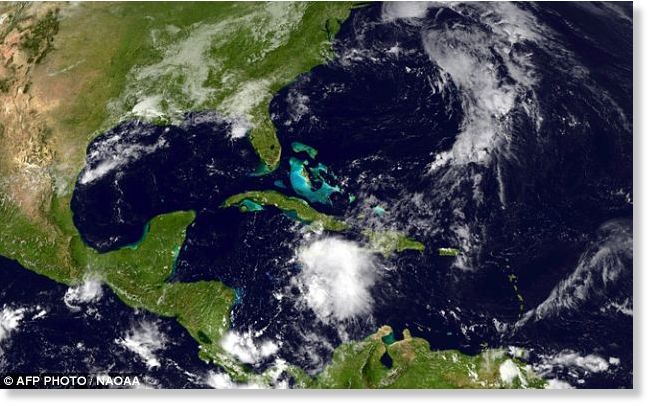
© AFP/ NOAAWeak and alone: Tropical Storm Jerry swirls September 30 in the Central Atlantic during what has been a shockingly slow hurricane season. Scientists predicted a frenzied season, but it has actually been slower than normal
'My research has highlighted the dramatic multi-year downturn in global hurricane activity beginning in 2007 which slightly recovered before dropping even further here in 2013,' writes Dr. Ryan Maue.
According to Maue, only four other years on record have had a lower total storm energy as of September 30: 1962, 1977, 1983, and 1994.
Though the number of storms has been near normal, they have been weaker or more short-lived than usual in the reports the Washington Post.
A big reason for this could be dry air.
2013 has been one of the most extreme years on record in terms of dryness, with humidity being key to storm formation.
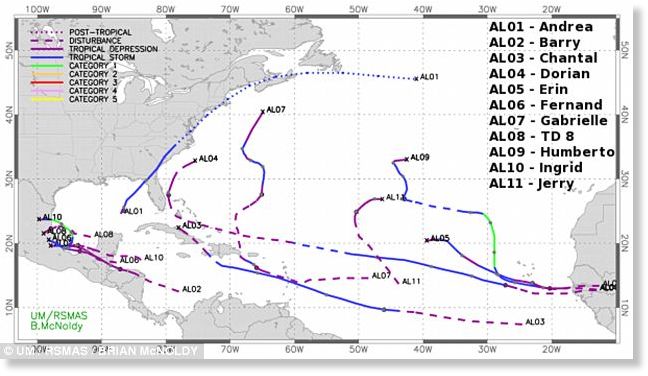
© Brian McNoldySlow: A ckose to average number of storms have occurred this year, but they've been weak. Also, as the chart shows, few have affected land masses
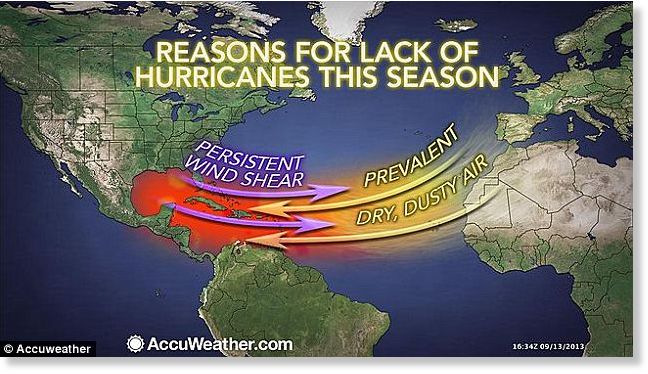
© AccuweatherDry: Record dryness is a major factor in the slow Atlantic storm season, along with cold water surface temps and weak westerly winds
Colder than normal water surface temperatures off the coast of Portugal have also help pacify the Atlantic this year.
Despite hints at what has caused the slow year, scientists still aren't sure why factors like unprecedented dryness are occurring.
Most maintain there is still a need for seasonal predictions and insist that just because one year has been way off for forecaster, not all of them will be.
While a single very dry year makes things challenging for researchers, it doesn't constitute an overall average. It also forces science to work toward a better understanding of how the atmosphere works.
Bad year for hurricane research: Scientists understand the factors behind slow 2013 year but not what caused them
This year was predicted to be rough by every group that makes seasonal hurricane predictions, but the season has actually been slower than usual.
While close to the same number of storms have occurred, they've all been weaker than usually, or dissipated more quickly.
While researchers have pointed to factors behind slow year, they still don't understanding why those factors came to be.
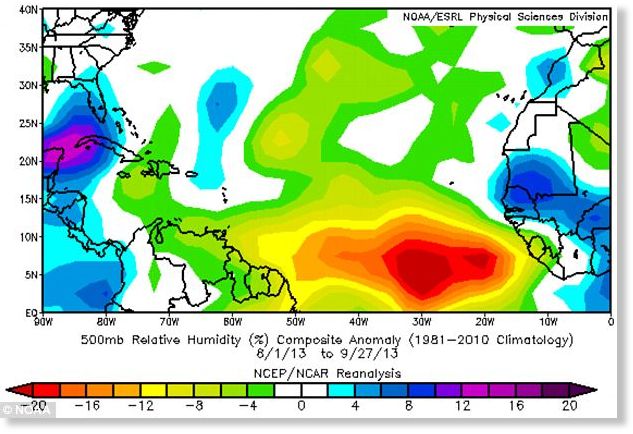
© NOAAry: This year has been among the driest on record, which inhibits formation of storms. While scientists can point out lack of moisture as a factor in the slow year, they can't say why it was so dry
Moisture is one of the big contributors to hurricane formation and 2013 has had precious little of it.
In fact, only four years since 1950 have been dryer than 2013. Maps of air moisture over the Atlantic show a massive dry spot right over the spot off Africa's coast where hurricane's are born.
Meanwhile, scientists aren't able to explain just why this year was so dry.
Subsidence
Sinking air, or subsidence, has followed the extremely dry areas over the Atlantic.
The downward flowing air inhibits the formation of clusters of thunderstorms, which are necessary for hurricanes.
Cold water
Colder than average water surface temperatures off the coast of Portugal have contributed to the weakness of 2013 storms, which need warm water to grow.
There was also no El Nino this year, which means colder Pacific water, and 'globally, the Pacific Ocean is the king when it comes to tropical cyclones,' which we call hurricanes on the U.S. East Coast, writes meteorologist Dr. Ryan Maue.




Could this be a sign of a coming ice age?