
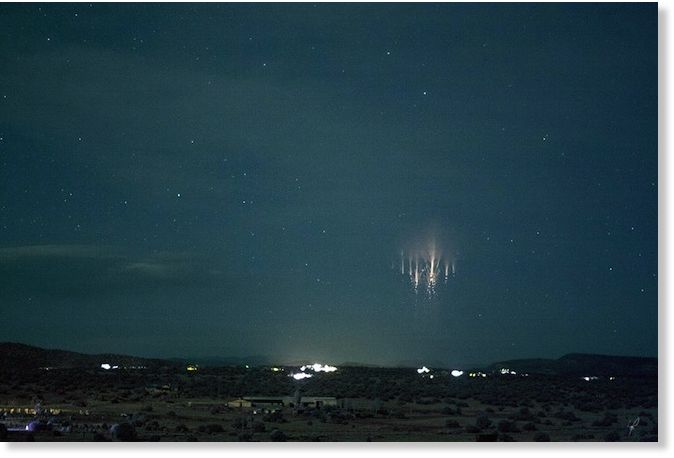
© Thomas AshcraftAshcraft captures a large sprite hanging over West Kansas.
In the blink of an eye, an enormous bright red light flashes above a thundercloud, spreading energetic branches that extend five times taller than Mount Everest and look like jellyfish tendrils and angel's wings.
These mysterious phenomena are known as Transient Luminous Events (TLEs), and are usually invisible to the naked eye because they happen on millisecond timescales, too fast to be seen. They occur between 50 to 100 kilometers above the ground, a long-ignored area of the atmosphere that is too high for aircraft but too low for satellites to investigate. There, the thin air interacts with strong electrical fields to ionize molecules and create arcing plasmas.
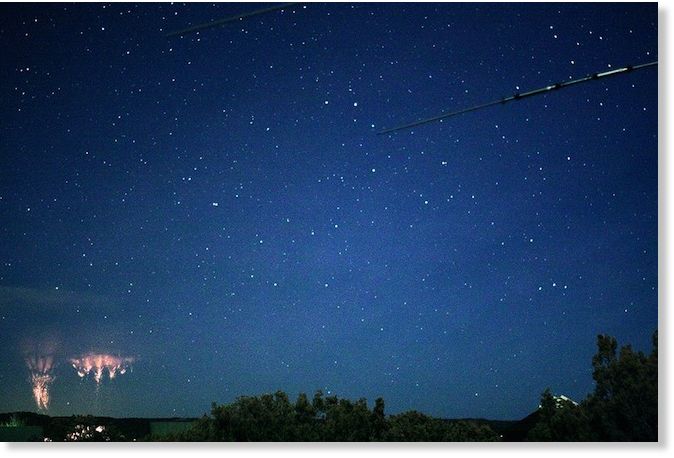
© Thomas AshcraftTwo sprites burst on the scene above Oklahoma.
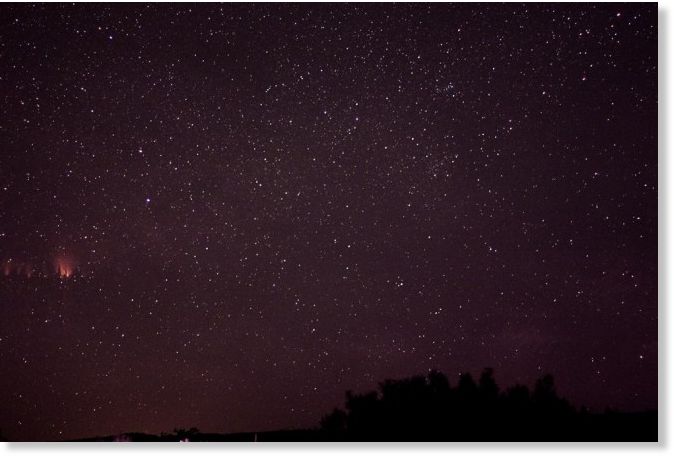
© Thomas AshcraftThe long tendrils from a sprite can be seen in this video, which captures an incident above Amarillo, Texas in 2012.
To deliver great TLE shots, Ashcraft first checks radar maps of the local area around his observatory in Santa Fe, New Mexico. Red spots on such maps indicate strong lightning cells, which increases the probability of sprite activity. Because the phenomena are mostly visible in near infrared wavelengths, he uses a modified off-the-shelf DLSR camera from which he removed the clear glass filter covering the CCD that blocks infrared light.
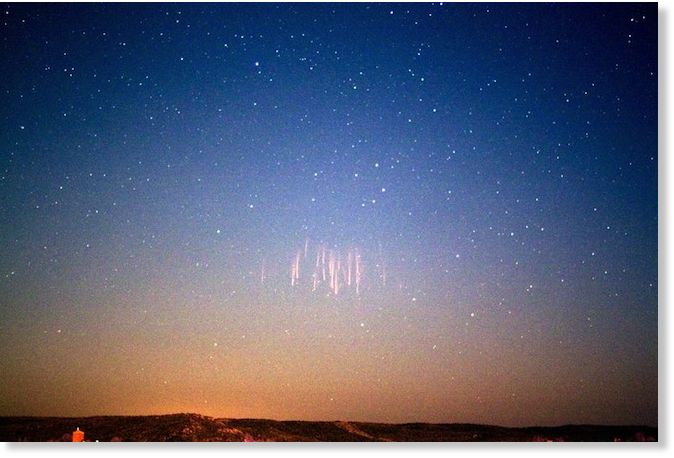
© Thomas AshcraftA donut ELVE is an extremely powerful ELVE that has a hole in its center.
By taking continuous three-second exposures, Ashcraft records thousands of pictures each night. He then goes through the catalog looking for a sprite to appear. If he spots something, he can check a video camera that he has running during the night to see if captured more detail there. He shares his most interesting findings with other sprite observers, who may chime in with their own pictures from other positions.
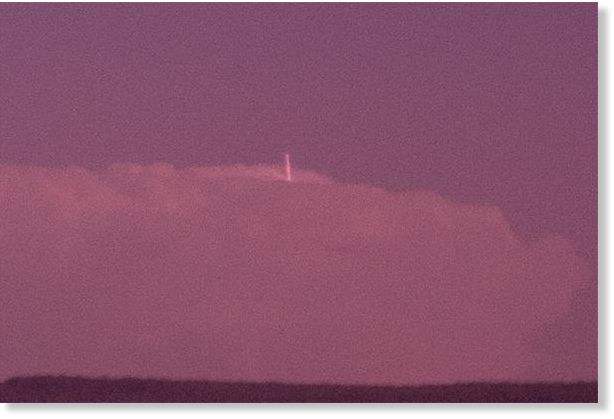
© Thomas AshcraftA spectacular vista shows a tiny blip above a cloudbank. Ashcraft thinks the small flash is either a starter, a blue jet, or a gnome.
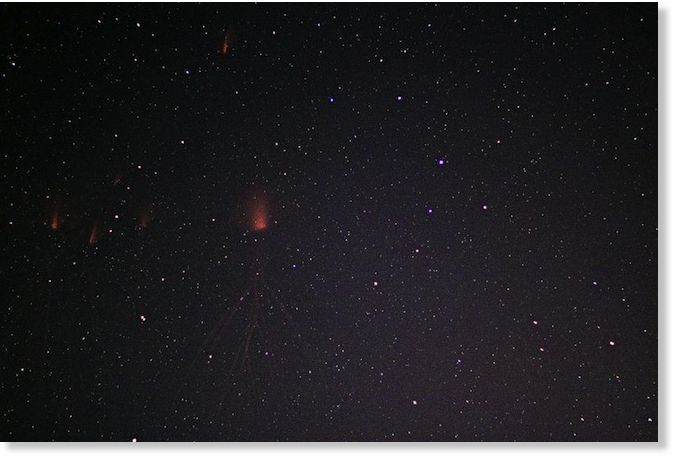
© Thomas AshcraftThe forking nature of a sprite is evident in this image, taken above a storm east of Las Vegas in 2012.
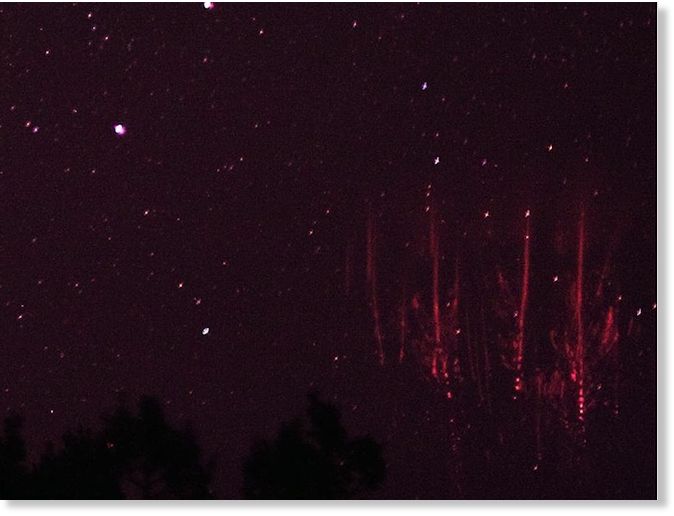
© Thomas AshcraftA zoomed-in image showing a cluster of sprites.
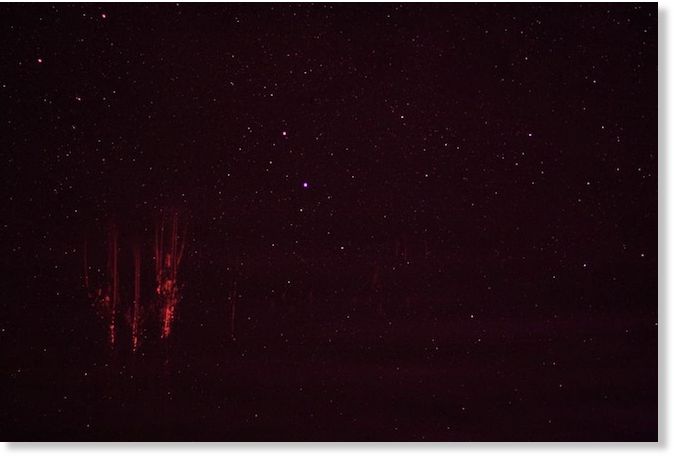
© Thomas AshcraftAn amazing flash of sprites
In this gallery, we take a look at some of Ashcraft's most spectacular TLE recordings to get a better appreciation of these weird and wonderful phenomena.
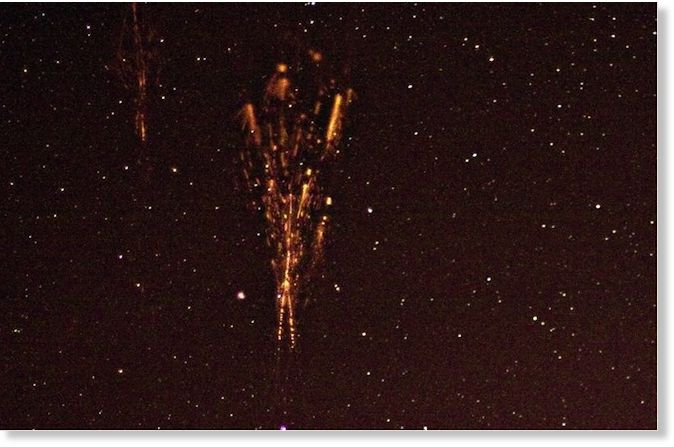
© Thomas AshcraftA great bright sprite from a storm above Clovis, New Mexico.


I have heard of no reason to believe sprites are only a recent occurrence. The reason they have only been studied in earnest in the past few decades has been a) people would say that observers could not have seen what they did, must have been something else (because they were not aware of a suitable explanation), and b) the flashes are very fast, enough to glimpse but not to really see. Yes, you can see them with high-speed cameras, and yes, we have had those for a while, but you need to be looking in the right place at the right time: above particularly intense lightning storms. It also helps to have low-light, hi-res colour cameras, and analysis of radio signals.
Anyway, Ashcraft is an interesting individual for a number of reasons. His site is Heliotown.com.