
© Latin American Herald Tribune
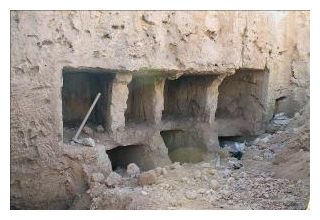
The ministry said in a statement that it suspected antiquities might be found at a planned construction site for a public service building and dispatched a team of experts who found the burial chambers there.
The tombs have two stories and some parts are submerged in subterranean water.
Al-Qabari is considered a major archaeological zone because it is home to the necropolis of Alexandria and numerous other ancient tombs have been found there.
The newly discovered tombs do not contain mummies or skeletons and were used to bury citizens who were not high-ranking officials. EFE




The Lycurgus cup was created by the Romans in 400 A.D. Made of a dichroic glass, the famous cup exhibits different colors depending on whether or not light is passing through it; red when lit from behind and green when lit from in front. It is also the origin of inspiration for all contemporary nanoplasmonics research—the study of optical phenomena in the nanoscale vicinity of metal surfaces.
“This dichroic effect was achieved by including tiny proportions of minutely ground gold and silver dust in the glass,” Liu added
Read more: [Link]
Read more: [Link]