
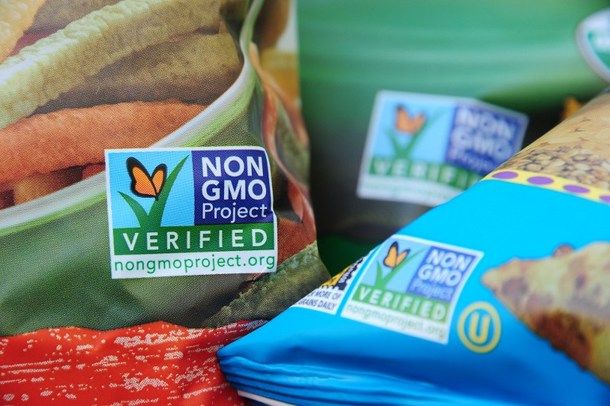
Labels on bags of snack foods indicate they are non-GMO food products, in Los Angeles, California, October 19, 2012. Even then, GMO seed has mixed with non-GMO seeds so it's probably impossible to ensure the isolation of non-GMO crops these days.
The opposite opinion is shared by 16% of those polled.
At the same time, the survey shows that almost half of the respondents (45%) believe that GMOs are equally prevalent in Ukrainian-produced and imported products.
However, a third of Ukrainians (28%) say that imported foods contain more GMOs than Ukrainian-made ones, whereas 19% of those polled have the opposite opinion.
According to the survey's findings, less than half of those polled (45%) sometimes read food labels, while 27% do not pay attention to this information. Twenty-five percent respondents say they always read data about the GMO content in foods.
In addition, the lion's share of respondents (71%) acknowledged that the issue of GMOs is relevant to them, while 25% think the subject is irrelevant to them.
Meanwhile, female respondents (74%) pay more attention to GMO content than male ones do (66%).
Almost three-quarters (74%) of those polled claim to know about what GMOs are, while 23% state the opposite.
According to the survey, 80% of Ukrainians believe that GMOs are dangerous to human health, and one in ten (10%) has the opposite opinion.
Eighty percent of those polled say that the GMO content in food is a problem of current importance to the country, while 13% have the opposite opinion.
Source: Interfax-Ukraine



Ukrainians are far better informed about their food sources than most Americans...