
© n/a
The Heartland Institute is likely to be a central figure in this program as we welcomed "Frontline" producer Catherine Upin and her crew to our Seventh International Conference on Climate Change in Chicago in May. Heartland Institute Senior Fellow James M. Taylor also gave a three-hour interview to the film crew in August. Earlier this year, The Economist called Heartland "the world's most prominent think tank promoting skepticism about man-made climate change."
We hope the program is accurate and fair, but past experience both with PBS and other mainstream media outlets leads us to predict it will be neither. Several Heartland staff will be watching the program and commenting live via Twitter and on our blog, Somewhat Reasonable.
Meanwhile, here are some facts to keep in mind when watching this program:
- There is no "scientific consensus" about how much the planet has warmed, how much of the warming may be due to human activity, whether the warming has had positive or negative consequences, or what should be done about it. These are all hotly contested issues in the scientific, economic, and public policy communities.
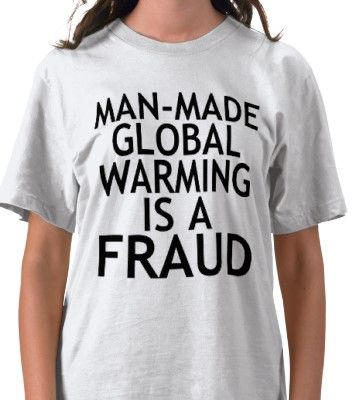
- The best scientific data show there has been no warming for 16 years, something none of the computer models that predict an eco-catastrophe predicted or can explain. Data show no connection between man-made emissions of carbon dioxide and extreme weather events such as hurricanes, tornadoes, or floods. Natural variation in climate readily explains the small changes in temperature that occurred in the twentieth century. Global warming, simply put, is not a crisis.
- The more scientists explore climate, the more they realize how small the human impact can be. But the global warming movement - the environmental activists, "green" businesses, politicians, and even the researchers - has strong financial motives to deny that the science behind their cause, never strong to begin with, is now collapsing.
- The Heartland Institute emerged as a major voice in the international debate over climate change about seven years ago when we observed a lack of balance in the mainstream media's coverage of the climate debate. We challenged Al Gore to debate his critics, and he never did. We documented errors in his documentary film, "An Inconvenient Truth," but he refused to correct them. We identified scores and then hundreds of scientists whose important work on the issue was being ignored - actually censored - by reporters in the mainstream media and published their work.
- In 2009 and 2011 we published two volumes in a series titled Climate Change Reconsidered that comprehensively refutes the reports of the alarmist Intergovernmental Panel on Climate Change (IPCC). Our reports, which cite thousands of scientific articles published in peer-reviewed journals, have never been refuted by alarmists because they cannot be refuted: They cite the published research of many scientists who self-identify as alarmists in the debate, but whose own research finds evidence of only a small or even nonexistent human impact on climate. After repeated scandals involving the IPCC, Climate Change Reconsidered stands as the most authoritative overview of the science of climate change now available.
- Because of our leadership role in opposing global warming alarmism, Heartland has been mercilessly attacked and demonized by environmental groups and their allies in the mainstream media. We've even had our corporate documents stolen and our donors subjected to fake petitions demanding they stop funding us. The mainstream media has participated in these attacks in a clear violation of journalistic ethics.




Both sides of the issue got aired, so that was a Climate Change all to itself.
2012 saw the Arctic Sea Ice go to new lows, while the temperature up there was about as normal as it ever was. The Sea Ice is now reforming like nothing ever happened, which begs the question: If the temperature was normal in the Arctic, what melted all that ice?
Simple.
The ocean current that transports the warmer waters to coastal Europe ran much further North. The energy, instead of bringing seasonal summer weather to Europe, instead was used to melt the ice. Great. Now, where is that energy? It's Arctic nighttime. At night, the energy is either released to space, or if there are storms about, turned into the Jet Streams headed south. That's how you get more snow on the landmasses. The Sea Ice travels aloft via transformation. No Global Warming needed.
In about 10,000 years, the Sahara will turn back into grasslands, along with all the other deserts. Sea level will drop, and so will the snow levels.
The Earth will spend the next 80,000 or so years in Glacial.
It's not called the Pleistocene Great Ice Age for nothing.