Remembering Gerald Ford: Congressional Perks: How the Trappings of Office Trap Taxpayers NTUF Policy Paper 131 Remembering Gerald Ford: Congressional Perks: How the Trappings of Office Trap Taxpayers NTUF Policy Paper 131by Peter J. Sepp
Since the founding of the Republic, Americans have had a healthy skepticism of the concentration of power. The Framers of the Constitution established a system they hoped would prevent not only the disproportionate accumulation of influence in one branch of government, but also the disproportionate accumulation of privilege.
Today, Members of the United States Congress enjoy a vast web of perquisites that benefit them personally as well as professionally, including: * Comfortable salaries that are often determined through legislative sleight-of-hand. Contrary to the arguments of many Washington "insiders," the cost of living has rarely eroded the historical value of lawmakers' pay, which on a constant-dollar basis is hovering near the postwar high. * Pension benefits that are two to three times more generous than those offered in the private sector for similarly-salaried executives. Taxpayers directly cover at least 80 percent of this costly plan. Congressional pensions are also inflation-protected, a feature that fewer than 1 in 10 private plans offer. * Health and life insurance, approximately 3/4 and 1/3 of whose costs, respectively, are subsidized by taxpayers. * Wheeled perks, including limousines for senior Members, prized parking spaces on Capitol Hill, and choice spots at Washington's two major airports. * Travel to far-flung destinations as well as to home states and districts. Despite recent attempts to toughen gift and travel rules, "junkets" are still readily available prerogatives for many Members. * A wide range of smaller perks that have defied reform efforts, from cut-rate health clubs to fine furnishings. But the very nature of public office itself demands a more comprehensive definition of a "perk" than that normally applied to corporate America. Members of Congress can also wield official powers that allow them to continue to enjoy the personal benefits outlined above, such as: * The franking privilege, which gives lawmakers millions in tax dollars to create a favorable public image. Experts across the political spectrum have labeled the frank as an unfair electioneering tool. In past election cycles, Congressional incumbents have spent as much on franking alone as challengers have spent on their entire campaigns. * An office staff that performs "constituent services" and doles out pork-barrel spending, providing more opportunities for "favors" that can be returned only at election time. * Exemptions and immunities from tax, pension, and other laws that burden private citizens -- all crafted by lawmakers themselves. 

Since the founding of the Republic, Americans have had a healthy skepticism of the concentration of power. The Framers of the Constitution established a system they hoped would prevent not only the disproportionate accumulation of influence in one branch of government, but also the disproportionate accumulation of privilege. Congressional pay and perks directly add hundreds of millions of dollars to the yearly bill that Americans are forced to pay for the federal government -- a significant cost for taxpayers, even if pundits dismiss the amount as a "drop in the bucket." Yet, beyond the basic issue of dollars and cents, Congress's perks have other pernicious effects. They distort the budget process, by diminishing lawmakers' moral authority to say "no" to special interest spending requests and benefit boosts for other government officials. They distort the electoral process, by tilting the playing field against challengers. Most importantly, they undercut efforts for long-term economic and budget reform, by insulating Members from the real-world effects of their own policies. American taxpayers and American government would be better served by benefits for Members of Congress that look more like incentives than perks. Enactment of proposals for a defined-contribution pension plan, a scaled-back franking privilege, a pay level tied to government efficiency, and a term-limit Constitutional amendment would help to restore balance to a system plagued by the trappings of office. Since the founding of the Republic, Americans have had a healthy skepticism of the concentration of power. The Framers of the Constitution understood the historical importance of maintaining a connection between government and the governed. Through the first three Articles of that document they established a framework of government that aimed to prevent the disproportionate accumulation of influence in one branch of government or one body of people. A lesser-known but likewise important current in American political history has been the ongoing struggle to prevent the disproportionate accumulation of privilege in government. In no other area of our public sector has this battle taken more prisoners, inflicted more collateral damage on the public, or defied more attempts at "peaceful" resolution, than the United States Congress. The Webster's New World Dictionary defines a "perquisite" as "something additional to regular profit or pay," or a "gratuity," or "something claimed as an exclusive right." Through the years, lawmakers have employed any and all of these descriptions in various commentaries on their system of "perks." Yet, the very nature of public office requires a somewhat more expansive definition, for reasons which this paper will outline and hopefully justify. Business or Personal? The Benefits of Being a Lawmaker At first glance, the issue of Congressional compensation would seem straightforward. Rank- and-file lawmakers are currently paid a salary of $141,300. The Speaker of the House earns $181,400, while the Senate President Pro Tem and the Majority and Minority Leaders each earn $157,0001. The total annual cost to taxpayers to pay Members of Congress is thus roughly $75 million. All of these salaries are subject to periodic increases depending upon the actions of lawmakers. But as with any position, the salary is only a part of the total compensation package. Certain perquisites for Members of Congress are intended more for their personal comfort than to enhance their ability to do the nation's business. Although these perks tend to have counterparts in the private sector, many of them come with frills or subsidies that even similarly-salaried executives in the private sector would envy. Pensions - Platinum Parachutes By far the single most personally valuable perk to a Member of Congress is his or her pension plan. Lawmakers began coverage under the government's pension system in 1942, but suspended their participation until after World War II. The rules can be complex, but extremely rewarding.2 Basically, Congressional pensions are determined by tenure in office, other federal service, age at retirement, and the average salary upon leaving Congress. The "accrual rate," the amount by which lawmakers build their pension benefit, is the most generous in the federal government short of the President of the United States. For lawmakers who were elected before 1984, the pension formula upon retirement is the average of the three highest years' salaries, multiplied by years of Congressional, federal, and active duty military service, multiplied by 2.5 percent. The first year's benefit may not exceed 80 percent of final salary (but subsequent Cost of Living Adjustments (COLAs) can boost the figure well past 80 percent). The retirement age can be as early as age 50, depending upon years of service. This plan is part of the Civil Service Retirement System (CSRS) that covers many other rank-and-file federal civilian workers. For lawmakers elected in 1984 and thereafter, the formula is generally the same as above, except that the accrual rate is 1.7 percent instead of 2.5 percent, and after the first 20 years of service, the rate falls to 1.0 percent. Also, there is no "80 percent of final salary rule" for these Members (lawmakers under the old CSRS also had the option of converting to this plan). This plan is part of the Federal Employees' Retirement System (FERS), and along with CSRS, enrolls millions of government employees and their dependents (there is an optional spousal annuity). Nonetheless, there are key differences in the way lawmakers' benefits are calculated versus other government personnel. Members of Congress under CSRS have a generous accrual rate of 2.5 percent for all years served, while most workers in the Executive Branch get a sliding rate of between 1.5 and 2.0 percent. For FERS, Members get a 1.7 percent initial rate, versus 1.1 percent or 1.0 percent for most rank-and-file federal employees. Also, lawmakers with longer careers in Congress can generally collect pension benefits at a far earlier age than their counterparts with similar service elsewhere in the government. In both cases, Members of Congress do contribute to their pension plans, although the rates are somewhat complicated by the fact that since 1984, all lawmakers have been required to pay into Social Security. Members elected before 1984 have usually paid 8 percent of their salaries into the pension plan, but some may have elected a "Social Security offset" provision that allows them to split part of the pay-in (6.2 percent for Social Security and 1.8 percent for the pension.) The result is that upon retirement, Members receive a pension that is reduced by the amount of Social Security that is attributable to Congressional service. Members elected in 1984 and thereafter have generally paid 1.3 percent towards the pension and 6.2 percent to Social Security. For Congress overall, these contributions only cover roughly 20 percent of the actual average lifetime pension payout. All Members of Congress are eligible to participate in a "Thrift Savings Plan," a supplemental retirement contribution plan that works much like a private sector 401 (k) arrangement. However, only those first elected in 1984 and thereafter are entitled to receive a very generous government match -- up to 5 percent of salary, if the Member contributes a like amount. The end results of these formulas -- huge pension windfalls for lucky lawmakers -- have been the subject of thousands of print, radio, and television media features since National Taxpayers Union Foundation (NTUF) began publicizing them. In 1988, NTUF announced that for the first time, the Congressional pension system had delivered a million dollars each to three retired Members -- Ben Reifel (R-SD), Margaret Chase Smith (R-ME), and Al Gore, Sr. (D-TN).3 Today, a sitting lawmaker who retires at age 60 with 15 or 20 years of service will likely collect at least a million dollars in inflation-compensated lifetime pension benefits. Some will collect four or even five times that amount. In 1997 the Congressional Research Service (CRS) reported that 400 lawmakers were receiving pensions, at an average benefit of just under $47,000.4 Based on a subsidy rate of 80 percent, this would amount to an annual taxpayer cost of approximately $15 million. But how do these benefits compare with those of the public and private sectors? It would be tempting to simply measure a Member's pension against the average individual Social Security benefit of just under $10,000 annually, or the national defined benefit average of slightly above $17,000 for "private-sector employees earning $50,000 or more."5 But much more precise (and alarming) comparisons are possible. According to CRS, a lawmaker with 20 years of service under FERS could expect to receive a pension equivalent to 34.0 percent of his or her highest three years' salary average. For other federal employees in the Executive Branch, the "replacement rate" would be just 20.0 percent. For CSRS participants, the gap between a Member of Congress and an Executive Branch employee is 50.0 percent versus 36.5 percent.6 In 1995, the Wall Street Journal asked private-sector pension consultants to compare the first year's pension benefit for a 60-year-old Member of Congress with 30 years of service to that of a similarly-salaried private-sector executive fitting the same profile. The Journal determined that the lawmaker's benefit would start at $99,175, versus just $56,220 for the executive.7 More recently, Reader's Digest cited a projection from a survey by the benefits firm Watson Wyatt Worldwide that compared pensions for a Member of Congress with a final salary of $136,000 and 20 years of service to a corporate manager with the same tenure and pay. Ten years after retirement, the hypothetical lawmaker would enjoy a benefit of $104,290, while the comparable private-sector retiree would receive $62,500.8 But even these estimates don't completely illustrate the compounding value of Congressional pension COLAs (see Table 1 on page 6 for examples). NTUF estimates that fewer than 1 in 10 private-sector defined benefit plans offer COLAs (regular or occasional). In the space of a typical retired "lifetime" spanning a few decades, the inflation-adjusted Congressional payout can become many times more generous than its corporate counterpart. Ironically, since 1989 every NTUF pension estimate has been just that -- an estimate. Because of an Appeals Court decision involving the revelation of pension information for a participant in CSRS, actual benefits for individual Members of Congress are not a matter of public record.9 One issue that will likely never make it to a courtroom involves pensions for lawmakers convicted of crimes. Unlike military retirement pay, which may be revoked under these circumstances, only conviction for a "high crime" such as treason can automatically deprive a lawmaker of his or her pension. In March 1995, NTUF revealed that at least 13 Members in the "felonious fraternity" collected taxpayer-funded benefits, some while serving time in prison: * John Dowdy (D-TX), who went to jail on a perjury charge involving a $25,000 bribe, managed to pull in 40 times that amount in pensions after leaving Congress in 1970. * Mario Biaggi (D-NY), who served 26 months of an 8-year sentence as a result of the infamous Wedtech bribery scandal, was drawing more than $44,000 per year. * Harrison Williams (D-NJ), sent to prison as a result of the ABSCAM investigation, was using his $40,000+ pension to help pay off the fines associated with his conviction.10 The irony of this situation never ceased. Shortly after House Post Office scofflaw Daniel Rostenkowski's (D-IL) release to a halfway house, National Taxpayers Union (NTU) told the Chicago Tribune that COLAs had pushed his pension past the $100,000 mark. Attempts in the 104th Congress to end taxpayer-subsidized pensions to Members convicted of a felony failed.11 Since its deceptive attempt at "reform" by instituting the FERS program in 1983, Congress's only other significant act on its own pensions took place in the 104th Session, when lawmakers passed a mammoth budget bill that included a provision to equalize their retirement formulas with rank-and-file federal workers. After President Clinton vetoed the bill for other reasons, this change was quietly dropped. An Even Prince-lier Pension? Perhaps the only federal elected officials whose pensions can compete with those of lawmakers are ex-Presidents, who receive a pension equal to the annual salary of a Cabinet-level official (currently $157,000). This benefit rises as the Cabinet pay rises. Only the dual act of impeachment and conviction (removal from office) can automatically strip a President of his or her pension.12 In addition, former Presidents receive staff, travel, mail, and office expense allowances that ranged from $308,000 to $548,000 for FY 1999 alone. Secret Service protection costs are not reported.13 Attempts to limit these Presidential perks have not fared much better than similar efforts to curtail Congress's privileges. The FY 1994 Treasury/Postal Service Appropriations Bill would have ended the staff and office allowance portion of the Presidential retirement package by October 1998, but these benefits were restored when Congress repealed the "sunset" provision in 1997.14 Given the lack of any public groundswell in favor of these perks, who could have possibly prevailed upon Congress to change its mind? None other than Gerald Ford, who, according to NTUF calculations, drew more than $253,000 in Congressional and Presidential pensions in 1999 alone. Health and Life Insurance - Super Subsidies Members of Congress may obtain health insurance coverage for themselves and their families through the Federal Employees Health Benefits Program (FEHBP), which covers approximately 9 million government workers, retirees, and dependents. Widely touted as a model program even by fiscal conservatives, FEHBP allows employees to select the level and type of health insurance they desire (such as fee-for-service or managed care) from a variety of competing private plans, cooperatives, and union-negotiated arrangements. Providers are encouraged to "bid" with the government by offering specially-designed benefit packages at varied prices.15 According to Office of Personnel Management reports, the average biweekly premium for family coverage paid by the enrollee will amount to $80.16; for self-only coverage, the biweekly amount would be $36.52. However, the government provides workers with a large subsidy for the coverage, under a formula ironically dubbed the "Fair Share." Enacted into law in 1997, taxpayers generally contribute 72 percent of the "program-wide weighted average of premiums in effect each year," or 75 percent of the "total premium for the particular plan an enrollee selects."16 If each Member of Congress selected the average self-only coverage option under FEHBP for the year 2001, taxpayers would contribute a subsidy of roughly $1.2 million. Lawmakers may also participate in the Federal Employees' Group Life Insurance (FEGLI) program, which like FEHBP is also generally available on a government-wide basis. Basic coverage is equivalent to one year of the employee's salary, for which the employee contributes 2/3 of the program cost (taxpayers pick up the remainder of the tab). There is an "Extra Benefit" at no cost to the employee that doubles the amount payable for workers 35 or younger (it declines in value to zero by age 45). Extra coverage options for additional fees include a flat $10,000 supplemental benefit, a payment of up to five times an employee's annual salary, and payments for the death of a spouse or children.17 For a Member of Congress, the premium for basic coverage would amount to approximately $48 per month, and the taxpayer contribution $24 per month. If every lawmaker opted to take this lowest level, the total annual government subsidy would add up to approximately $150,000. Although these costs may be comparable with private life insurance rates for some Americans, the rates for lawmakers are basically flat, with little regard for age or health. In addition, Congressmen retain a 1/4-of-final-salary life insurance benefit once they reach age 65, at no cost to themselves. But life and health care for lawmakers does not end with insurance. The Attending Physician's Office is a $1.8 million-per-year operation that encompasses three separate facilities employing nearly twenty doctors, nurses, and technicians in the U.S. Capitol (some of whom are part-time workers). The clinics are open to Members of Congress and Legislative Branch employees.18 Until 1992 lawmakers were entitled to receive acute care, lab tests, and other clinical work free of charge. Since that time, an annual fee has been instituted, which this year is reportedly set at $332 for House Members and $520 for Senators. At this rate, the annual taxpayer subsidy for the Attending Physician is still at least $1.6 million. However, Americans may take comfort in the fact that their subsidy has personal value -- Capitol visitors who fall victim to medical emergencies may receive treatment as well. One medical benefit for lawmakers that even other Congressional employees can't obtain is the combination of outpatient care at the Walter Reed Army Hospital and Bethesda Naval Hospital -- along with inpatient care at the minimum flat daily rate even if intensive care treatment is required.19 Wheeled Perks - Driven to the Brink The public is often under the impression that all lawmakers receive chauffeured limousines. In reality, only the top ten ranking leaders in the House and Senate are entitled to this courtesy on a regular basis, and not all of them avail themselves of the perk. It is difficult to put a price tag on this benefit, but an unofficial estimate by the Office of Management and Budget from 1992 claimed that the Executive Branch spent $5.7 million for 288 cars and 190 drivers.20 Adjusting for inflation and accounting for overlap of drivers and cars, the Congressional limousine perk probably runs up a taxpayer tab of at least $250,000 per year. In addition, lawmakers may rent or lease automobiles for business use, and are entitled to receive the standard IRS reimbursement rate of 32.5 cents this year for business-related travel in a personal vehicle.21 Either way, such reimbursements come out of the official allowances provided to each House and Senate Member. During the early 1990s, Congress was rocked by allegations that Representatives were playing fast and loose with automobile leasing costs. One investigation determined that nearly one-third of House Members were leasing cars, some them luxury models that fetched up to $1,000 per month at the time. The report concluded that the House could have saved more than half of its $769,000 total leasing cost that year if it had simply leased "through the government's motor pool manager, the General Services Administration."22 But this is not the end of automobile-related perks for Congress. The U.S. Capitol provides 11,000 parking spaces for employees and authorized users, half of which are indoors. They are administered by an army of parking-garage and parking-lot employees estimated to number close to 100.23 The choicest spots belong to Members of Congress. And just like office space, parking spaces for lawmakers are issued on a seniority basis -- the longer they serve, the closer to the Capitol and its offices they can park. Although some say this privilege is justified because lawmakers must get to House and Senate chambers for quick votes, its value is undeniable to Washington, DC residents who must pay for their own parking. According to a quick survey by NTUF, downtown and Capitol Hill monthly garage parking rates range from an average of approximately $200 to as much as $300. Using the lower value, taxpayers subsidize lawmakers' parking to the tune of nearly $1.3 million per year.24 Ironically, Capitol Hill residents and visitors can pay an additional "tax" of their own on Congress's parking spaces. The U.S. Capitol Police are empowered to issue parking tickets on spaces within their jurisdiction, and they have done so at the exhausting pace of more than 12,000 issued per year. Another parking perk that taxpayers -- especially traveling ones -- are more likely to notice are the 150 prime parking spaces located at Washington's Reagan National and Dulles airports, which have been set aside for use by Members of Congress and a handful of other high-ranking officials. Rates for the general public in more remote lots at the same airports can run as high as $28 per day. Whereas everyday passengers can travel a mile or more by foot or shuttle bus between parking lots and terminals, in the case of Reagan National, lawmakers are literally yards from one of the departure terminals. Apparently even retired lawmakers can avail themselves of the privilege. Former Rep. (and now high-powered lawyer) Guy Vander Jagt (R-MI) continued to slip in to the reserved lot when space was available long after being voted out of Congress.25 But if Americans do notice these spaces, it wouldn't be for Congress's lack of trying to disguise them. For years, the signage in front of these lots read "Reserved Parking/Supreme Court Justices/Members of Congress/Diplomatic Corps." Amidst adverse criticism in the 1980s and 1990s, the signs were replaced to read "Restricted Parking/Authorized Users Only." In 1994, U.S. Senator John McCain (R-AZ) offered a resolution to end the taxpayer-funded parking lots at these two airports, but it was voted down 53-44. Opening these spaces to the paying public might have generated $1.6 million in savings, according to McCain's own estimates.26 Perhaps Congress's most unique transportation perk is the Capitol Subway system that links House and Senate Office Buildings with the Capitol Building (replete with cars that had "Reserved for Members" seats). In 1994, the Architect of the Capitol unveiled an $18 million automated improvement to the system that would connect the Senate chamber with two of the office complexes. Four years earlier, when the federal budget deficit was climbing to new heights, Congress appropriated $6 million for improvements to overall operations.27 Travel and Junkets - Is This Trip Necessary? Although the House and Senate maintain different systems of reimbursement for Member expenses, domestic travel to and from Washington and the lawmakers' homes is basically funded through office accounts. The House's Members' Representational Allowance, for example, is adjusted on an individual basis to account for the relative distance (and hence cost of travel) from each district to the nation's capital. According to an examination of House records, Members of the lower chamber spent approximately $12 million in 1997 to travel on official business both to their districts and other points in the United States.28 Millions more were spent by Committees. Yet these figures can't comprise the actual price tag, since they do not include the services of the Air Force's 89th Airlift Wing, which provides the planes for many trips taken by lawmakers, the President, and other dignitaries. A recent study by the General Accounting Office -- which even the auditors themselves admitted was incomplete -- found that the total tab for aircraft alone for President Clinton's foreign excursions in the past three years amounted to $247 million.29 Although Members of Congress do not require the elaborate arrangements of the Chief Executive, it is safe to assume that lawmakers run up tens of millions on their own military aircraft adventures. Even travel within the Continental U.S. is not without costly controversy for taxpayers. Thanks to a loophole created in 1991, employees of the House are able to convert the frequent-flyer mileage benefits they receive on official taxpayer-funded travel to personal use. One anonymous staffer told the Washington Times in 1994 about a lawmaker who gave his frequent-flyer miles to his daughter for her honeymoon; another official recalled a House Member who gave away a vacation gift to a lobbyist friend.30 No one is certain how extensive this practice is, but two government agencies have taken an ongoing interest: the IRS, which claims that personal windfalls from official travel are generally taxable income, and the Federal Election Commission, which would require disclosure of frequent- flyer coupons used to support any kind of election activity. The Senate and all other agencies in the federal government have banned personal use of frequent-flyer mileage earned through this type of travel. To this day, the House officially frowns on conversion fever, but does not ban it. According to the closely-guarded Members' Congressional Handbook: Free travel mileage, discounts, upgrades, coupons, etc. accrued by Members or employees as a result of official travel awarded at the sole discretion of the [airline] company as a promotional award, may be used at the discretion of the [recipient Member(s) or employees]. The Committee on House Administration encourages the official use of these travel awards wherever practicable.31 When most Americans hear the word "junket," however, they tend to think of privately-funded trips to resorts in sunny Florida or Hawaii, and taxpayer-funded "fact-finding missions" to far-flung foreign destinations. The rules of Congress, along with increased media scrutiny, seem to have curtailed beach-hopping and globe-trotting, but for how long? According to House rules, for example, "Official travel to a foreign country may be authorized by the Speaker ... or by a Committee Chair."32 Staff travel for official purposes must likewise receive the approval of the Member-employer. Privately-funded journeys connected with a Member's official duties is limited to 4 days for domestic trips and 7 days for trips outside the Continental U.S. Trips of longer duration require advance written approval by the Standards Committee of the House. Like the President, lawmakers have readily available access to military aircraft for official travel. In the case of travel on a private aircraft for "a political or an official purpose," House Administration Committee and Federal Election Commission rules require Members to reimburse the operator for the equivalent of a first-class ticket on a regularly scheduled flight or the cost of a charter for a flight arranged especially for the Member. Representatives may accept special-interest expenses to cover the costs of one spouse or accompanying family member.33 Yet, these rules and their interpretations have their genesis in a number of high-profile travel travails that continue today: * In 1989, Rep. Charlie Wilson (D-TX) reportedly attempted to deny funding to the Department of Defense in retaliation for the Air Force's refusal to allow his girlfriend to board a military aircraft in the Middle East.34 * In the fall of 1992, four lawmakers took 25 aides, spouses, and escorts on a 17-day tour of the Orient to study "infrastructure." Not coincidentally, the "infrastructure" they examined led to famous tourist attractions, such as the Great Wall of China and a giant panda preserve. Charges to taxpayers included $497,000 for an Air Force jet and $68,000 for meals, lodging, and bellhop tips.35 * In 1994, House Public Works Committee Chair Norm Mineta (D-CA) led a similar 23-member entourage on an estimated $500,000 trip through Europe and Russia that included visits to "premier museums and ... boat tours through St. Petersburg."36 * In 1996, the House sent a 16-member delegation to the North Atlantic Assembly's biannual meeting in Paris, even though "opinions about the importance of the Assembly vary" and the transportation costs for the journey typically stick taxpayers for $470,000 per year.37 * In December 1997, the Capitol Hill newspaper Roll Call, normally a strong supporter of Congressional fact-finding missions, chided lawmakers for accepting too much hospitality from the Commonwealth of the Northern Mariana Islands, which sought Congressional exemptions from certain labor standards that could be applied to the territory's garment factories. "Trips by one or two leadership staffers and a couple of Members would be more than defensible," the Editors wrote. "But when 80-odd people flock halfway across the world from Capitol Hill to a sunny island destination in the guise of fact-finding, there's only one word to describe their collective actions: junket."38 * The House International Relations Committee reported spending $722,462 on delegation travel in 1999, approximately 1/3 of which went to per-diem allowances for hotels, restaurants, and entertainment. However, some lawmakers ran up per-diem bills that were 2-3 times higher than "the maximum allowances available to foreign services officers and other agency officials" that are established by the State Department.39 In a supremely ironic twist, the 1989 "Ethics in Government Act," which banned Members from accepting honoraria but gouged taxpayers with a 40 percent Member pay hike, was expected to reduce the itch to travel on private dollars. After all, without honoraria to collect, it was thought Members would lose the incentive to take trips offered by special-interest hosts. But two full years after the honoraria ban, the Washington Post reported that "Many Members of Congress [were] still venturing far and wide." The article quoted one "top honoraria giver" from a New Jersey agribusiness firm as saying he simply "sends [honoraria] checks to charities" instead.40 To many taxpayers, this charity should have begun at home. Gymnasiums & Personal Care - No Sweat Among the personal perks offered to Members of Congress, the House and Senate gymnasiums remain heavily shrouded in secrecy. Few photos of these facilities have ever been published, and less still is known of the type of equipment they feature. The Washington Post reported that the House gym in the bowels of the Rayburn Office Building sported "a swimming pool, and basketball and paddle-ball courts."41 Much of the public's knowledge of the gyms is second-hand, through early accounts of renovation plans that did not meet approval. For example, investigative reporter Don Lambro uncovered schemes in the 1980s to add to already lavish arrangements: The gyms contain swimming pools, saunas, steam baths, bodybuilding and exercise equipment, whirlpools, a heated pool, wrestling mats, and other equipment. The gyms are open sixteen hours a day and are staffed by eleven 'physical therapists.' 42 In 1992, House and Senate leaders agreed to establish a $400 annual fee system for the House and Senate gymnasiums, which according to NTUF research is one-half to one-third the going rate for Washington, DC's better health clubs. Another target of popular derision in Congress -- the "five-dollar Hill haircut" -- was clipped on the House side of the Capitol beginning in 1995. The estimated annual saving to taxpayers, in foregone operating deficits, is nearly $100,000. Yet, the Senate's Barber and Beauty Salon continues to shear taxpayers of their hard-earned funds ($1.8 million in subsidies from 1993-97). The large annual payroll may have something to do with these exorbitant costs: seven barbers, five hair stylists, two manicurists, two receptionists, and a shoeshine attendant. In 1998, one barber was reported to have received $62,000, while a receptionist pulled down $47,000 and a shoeshine attendant $27,000. A generous pension plan ensures that these coiffeurs will be living in style long after their scissors stop snipping.43 A similar split has occurred over the "cheap eats" in cafeterias located throughout the Capitol. Although both the House and Senate have attempted to bring in private contractors and restore market-level prices to their eateries, a recent audit of the Senate's restaurants by the General Accounting Office determined that the facilities posted a $680,000 loss in sales in 1999 (a 50 percent improvement versus 1998!). Taxpayer subsidies, "in the form of loans and appropriations, [were] reduced ... from $1.7 million in 1998 to $1.1 million in 1999."44 Ironically, much of the losses at the restaurants are directly traceable to Senators and their staffs, who owed close to $200,000 in unpaid tabs at the end of the fiscal year. Congress's "reforms" of its gymnasium, barber shop, and restaurant privileges are not the only efforts made over the past decade to curtail perks (see Table 2). However, given the strings attached to many of these give-backs, the list may not seem all that impressive to outside observers. Cradle to Grave Perks? Lawmakers who need their little ones looked after may use the Congressional employees' Child Care Centers. The Chief Administrative Officer's Statement of Disbursements reported that the House spent $132,000 on the operations of its facility during the first quarter of the year 2000. But Representatives and Senators strive to take care of young and old alike, regardless of their financial circumstances. It is the time-honored practice to award widows of lawmakers who die in office a "gratuity" equal to one year's salary of the dear departed.45 Another legacy is reserved for lawmakers who are dead or alive. Although the rules of Congress do not allow Committees that supervise building projects from naming structures after actively-serving Members of Congress, nothing prevents other Members from doing so through amendments to spending bills. Recent commemorations for living Members who were also in Congress at the time the honor was bestowed include: Sen. Ernest Hollings (D-SC, 1987); Sen. Mark Hatfield (R-OR, 1996); and, Rep. Louis Stokes (D-OH, 1998). In the 106th Congress, Rep. Tom Tancredo (R-CO) had introduced legislation to end this practice.46 The Fiscal Year 2001 Budget of the United States Government reported that in 1999, $1 million in funding was appropriated to the "Congressional Cemetery." Lest taxpayers think that Members are entitled to a free burial plot of their own, the Cemetery is actually a non- profit historic landmark containing the remains of 60,000 people, just 76 of whom are (or were) Members of Congress. But the hand of corruption has touched even this hallowed ground -- this year Roll Call reported that the former Superintendent of the Congressional Cemetery was indicted for embezzling $175,000 in charitable contributions to the graveyard.47 House Bank - Gone But Not Forgotten One of the seminal scandals in the history of the House of Representatives involved its bank. Between January and June of 1990, 134 House Members passed 581 bad checks in amounts of $1,000 or more at the House's $50 million-a-year facility operated by the Sergeant-at-Arms. Overdrafts were routinely covered for periods of up to a month, and no banking privileges were ever suspended, even for the worst offenders. Altogether, 8,331 checks in all amounts were bounced between July 1989 and June 1990.48 Nearly two years prior, House Speaker Thomas Foley (D-WA) knew that these easy practices were producing a scandal. He ordered the House Bank to initiate reforms to curtail overdrafts. But the number of bounced checks actually increased 8 percent after the alleged reforms took effect. The Bank subsequently closed, and Congressional incumbents suffered on the campaign trail. Members of Congress may have lost their own exclusive piggy bank, yet they can still reap the rewards of cut-rate financial services through the Congressional Federal Credit Union (CFCU). As this paper went to press CFCU offered members deals such as: * A 6.35% Certificate of Deposit Yield on a 1-Year Account with a $500 minimum. * A 7.5% APR loan on the purchase of a new car, up to 100% of purchase price or retail value. * A Visa Gold Card with a line of credit of as much as $15,000, with finance rates of 10.9% APR - 11.9% APR.49 Unlike the House Bank, which had to rely on the fickle financial habits of lawmakers, the CFCU has 44,000 members to balance the bad debts of a few deadbeats. On the other hand, since CFCU is a federally-insured financial institution, taxpayers can never be sure that their wallets are safe from Congressional check-kiters. Offices - Fine-Feathered Nests No one wants to work in a hovel, but the halls of Congress are rarely described as such. Over the years, lawmakers have come under fire for some fabulous digs: * Senate "hideaways" have long served as quiet, poshly-furnished areas where the upper chamber's solons can unwind, reflect, and cut deals with colleagues. The locations are so secret that even some Senate staffers admit to not knowing where their own bosses' cubbyholes have been carved out. According to the National Journal, "Several years ago, then-Sen. Paul Simon [D-IL] gave Chicago Tribune reporters a tour of his small room, but only after being promised that they would not publish its location."50 * In 1992, House Speaker Thomas Foley (D-WA) raised a flap when he authorized $20,000 to be spent on marble-inlaid floors in just three elevators on the House side of the Capitol.51 * In 1994, it was revealed that the Senate spent $324,000 (not including installation) for slightly over 100 silver-plated bronze chandeliers modeled after those that hung in the Russell Office Building when it opened in 1905.52 * In 1993, a mini-scandal erupted over a little-known 1974 law that allowed retiring Members of Congress to purchase like-new office equipment for personal use, at 50 to 90 percent discounts. Rep. John Boehner (R-OH) recalled that his 1991 office inventory "nowhere matched" what he actually had, because his predecessor Buz Lukens had carted off much of the furniture at a cut rate.53 * Since 1998, the Clerk of the House has been on a hunting and gathering expedition to recover millions of dollars in taxpayer property looted by House Speakers for their own museums as they left office, including a fireplace from the White House, the original marble Speaker's rostrum, and a Grecian urn valued at up to $3 million.54 Apparently, Congress doesn't even need to buy new furnishings to spend more tax dollars on offices. Following each election cycle, lawmakers who move up the seniority ladder are likewise eager to "trade up" their office space, prompting what many Capitol Hill staffers call the "post- election shuffle." One investigation found that after the 1996 election, 232 of the House's 435 Members moved their offices, at a cost to the House Architect's decorating and moving staff of $600,000.55 Public Perks, Public Purse: The Link Taxpayers may be tempted to conclude that lawmakers who are willing to spend freely on themselves are just as willing to spend freely on special interest programs. But how valid is this assumption? At least two comprehensive comparisons confirm this suspicion. In 1992, National Taxpayers Union assessed the performance of lawmakers involved in the House check-bouncing scandal on its 1991 Rating of Congress, which scored every lawmaker on every roll call vote affecting fiscal policy. Nine of the 17 worst check-kiters fell into the category of "Big Spender," which denotes lawmakers with the worst pro-taxpayer voting records. Fifteen of the 17 worst abusers had below-average taxpayer scores. On the "full list" of abusers, 78 percent of the Members with 50 or more overdrafts rated below the average pro-taxpayer score.56 In 1996, National Taxpayers Union compared House Members' office and staff expenditures for the previous year with its Rating of Congress. The 100 biggest office spenders had an average pro- taxpayer NTU Rating of 46 percent, or 12 points lower than the overall House average. The 100 must frugal office spenders had an NTU Rating of 72 percent, or 14 points higher than the average.57 What's In a Name? Ironically, simply being a former Member of Congress can constitute a "perk" in the private sector too. According to a review of the 1998 Edition of Washington Representatives, at least 128 former Members of Congress were listed as lobbyists among the 17,000 individuals included in the directory. That accounts for 12 percent of all Members who retired from Congress since 1970. Some Members offer themselves as "consultants for hire" on issues they may have tackled on Committees. Others have signed on full-time in government affairs departments: * Connecticut Rep. Anthony Moffett (D, 1975-83) joined Monsanto Corporation as the Vice President for International Government Affairs. * Colorado Rep. Pat Schroeder (D, 1973-97) became President of the American Association of Publishers. * Louisiana Rep. W. Henson Moore (R, 1975-87) went on to serve as President of the American Forest and Paper Association.58 As a bonus, Congressional pensions are not reduced or otherwise affected by decisions to seek additional private sector or lower-level public sector employment. Only those Congressional retirees named to new federal positions -- like Ambassador (and Former House Speaker) Tom Foley (D-WA) -- must normally forgo their benefits while on active duty. The upside (for them) is, these former Members may elect to count their additional service and higher salaries toward a bigger, recalculated pension once they leave the federal government permanently. Official Perks: Helping Those in Power Stay There By definition, any "perk" worth its name must deliver something of value to its intended recipient. That's why even a lawmaker's official powers function like perks. By helping to keep incumbent Members in office, items such as franking privileges, personal staffs, and other "official" powers are the means to a very comfortable end. The Frank - Mailing Challengers to the Wall The privilege to send mail under a "frank" (whereby a lawmaker's signature serves as postage) is one of the oldest prerogatives of office ever granted to members of a legislative body. The First Continental Congress, borrowing an idea that originated in the British House of Commons in 1660, enacted mailing privileges in 1775. According to the Congressional Research Service, however, "the franking privilege has carried an element of controversy since the earliest days of the Continental Congress. ... Misuse was such a problem in the latter part of the nineteenth century that Congress repealed the franking law for one year (1873), and then reenacted it."59 Lawmakers, of course, argue that the franking privilege is an essential communication tool that they use not only to conduct everyday legislative business, but also to reply to the crushing volume of mail they receive from their constituents. That myth was destroyed on the floor of Senate itself in 1982, when Sen. Charles Mathias (R-MD) revealed data suggesting that the "crushing volume" comes from Congress, not citizens -- less than 5 percent of Congress's outgoing mail was sent in reply to constituent inquiries.60 The rest generally consists of unsolicited mass mailings. Historically, the most vocal complaints about the frank have come not just from taxpaying citizens, but also from other Congressional candidates. This is because the content of even "official" mailings can portray the incumbent Member in such a favorable light to his or her constituents that political challengers must devote scarce resources of their own toward counter- advertising. Veteran Capitol Hill reporter Glenn R. Simpson and Professor Larry J. Sabato captured the essence of the frank when they related the following sales pitch from a Capitol Hill computer vendor: You've got to get his [the lawmaker's] name out seven times in a two-year period, so that they'll remember him at the polls. I sometimes go in and do a training session and say, 'hey, you guys are in the advertising business. You guys got to get your Member's name out over and over.'61 As with so many other perks, the more Congress attempted to self-regulate the franking privilege, the more susceptible it became to abuse. By 1969 Congress ceased to rely on the U.S. Postal Service for rulings on what kind of Member mail could be sent under the frank. Charges of self-interest from challengers in the 1972 campaign became so prevalent that Common Cause, a citizen group working for cleaner elections, sought to overturn the frank in court as an unconstitutional and "unfair advantage." The suit took ten years to wind its way through the "justice" system, until the Supreme Court finally decided to let stand a lower court ruling against Common Cause and place trust in Congress's latest round of "reforms."62 Predictably, Congress's feeble steps to curb its own excesses during the 1980s went nowhere. The House created a "Commission on Mailing Standards" to conduct a pre-mailing review process designed to weed out blatantly political messages, family references, and obsequious holiday greetings. The Commission also established "content guidelines" that, among other provisions, "recommends" Members limit references to themselves to 8 per printed page. Even in this regulatory process, Congress's embarrassment over the frank was apparent. As recently as 1995, when a National Taxpayers Union Foundation staff member contacted the Commission to inquire about viewing the tax-funded mass mailings of his own Representative, he was told: * 24 hours' advance notice was preferred. * Mailings could only be viewed in the Commission's Washington, DC office. * Copying of documents was prohibited. * Note-taking was "permitted." * A "release form" to view "the Congressman's mail" was required.63 The Senate provides comparatively convenient access to franking records, the House remains mired in Dark-Age disclosure policies -- one of its only recent "reforms" was to allow public photocopying of Commission advisories issued after January 1, 1996. But it would take more lawsuits and more adverse publicity to loosen the electoral stranglehold of the franking privilege. In July 1992, a federal Appeals Court agreed with the National Taxpayers Union in ruling that a law permitting certain mass mailings outside current Congressional districts was unconstitutional. Prior to the ruling, many mailings were being sent outside Members' own districts under the guise of "introducing themselves" in newly-drawn districts shortly after the decennial census.64 Additional abuses kept revealing themselves. In the first 18 months of the 1993-94 election cycle, House incumbents spent $51 million on the frank. By comparison, the Federal Election Commission reported that the 1,041 challengers had raised just $40.8 million over that same period for their entire campaigns.65 In 1994, nearly three dozen House Members were caught red-handed in attempts to circumvent a rule forbidding mass mailings of more than 500 pieces in the 60 days prior to a primary or general election (now 90 days). First, 27 Members "bundled" their communications in 333 mailings of 400 pieces or more within the 60-day window. Second, 15 Members of Congress sent out a combined total of 4.6 million pieces of mail in the week prior to the 60-day deadline, at a cost to taxpayers of nearly $600,000.66 By 1995, Members of the 105th Congress felt compelled to enact a new round of reforms. The Senate ambitiously chose to limit use of the Official Mail Account to constituent inquiry responses and town meeting notices only, up to 15 cents per address in most states. Mass mailings could only be funded from each Senator's Office Expense Account, and postage for this type of mail was limited to $50,000 per Senator per year. The House was somewhat less bold, opting instead to slash the combined mass mail and constituent reply allowance from approximately 67 cents per address to 43 cents.67 Today, the Senate spends roughly 1/5 to 1/4 as much on franked mail postage as the House, even though both chambers represent the same number of constituents. And although House expenditures have fallen to approximately $25 million per year from the high of nearly $80 million in 1988, the franking privilege is as effective as ever. The Information Age may have made "snail mail" a dated technology for many citizens, but not for Congress. Separate individual postage limits for House Members were lifted in 1999. Offices can now purchase CD-ROM mailing lists customized to virtually any demographic group, meaning that Members need no longer blanket an entire district with mass mailings just to make sure they are reaching their desired audience. The use of glossy color inserts in newspapers, radio airtime, and television programs beamed back to district stations have also served to supplement the frank's outreach potential. In the 1995-96 cycle one enterprising Member, Steve Stockman (R- TX), used $68,800 from his office funds to purchase radio time to supplement the message in his mass mailings.68 By most accounts, the franking privilege will continue to exert a disproportionate influence on the electoral process until citizens pressure lawmakers for genuine reform. Meanwhile, complaints from challengers during the current 1999-2000 election cycle are already filling the nation's newspapers.69 Constituent Services - An Offer They Can't Refuse In the opening scene of the movie "The Godfather," Don Vito Corleone greets a series of characters asking for a variety of "favors" that the normal institutions of society can't provide. Knowing he cannot turn down such requests on his daughter's wedding day, Corleone reminds his well-wishers that someday he may ask them to "perform a service" for their new-found friend, the Don. This Hollywood lesson has apparently been well-learned in Washington, DC, in the form of "constituent service." In 1998, the Legislative Branch employed more than 31,000 individuals, about the same level as in 1971.70 Yet, these figures are deceptive, for they fail to account for the explosive growth of one category within that workforce - personal staffs. Between 1967 and 1977, for example, personal staffs for Senators and Representatives mushroomed by 94 percent and 75 percent, respectively. During the mid-1970s about 75 percent of these staffs worked in Washington, DC, with the remainder scattered among small offices in the Members' home states and districts. By 1990, that level had fallen below 40 percent.71 Today about half of all employees in the Legislative Branch work in Congressional offices or on Committees (the rest work for agencies such as the Architect of the Capitol and the Library of Congress).72 Prior to World War II, the notion of ever-larger permanent staffs would have seemed ludicrous to most lawmakers. Today, every Member of Congress maintains a cadre of "constituent caseworkers" in Washington and in district offices who help citizens to deal with the very bureaucracy that Congress helped to create. These staffers do everything from assisting retirees with Social Security check problems to arranging for school group tours of the Capitol to resolving disputes with the IRS. Nearly 40 years ago, a Brookings Institution scholar made the electoral connection to this process when he observed that it offers "great potential for political benefit to the Congressman since [it affects] the constituent personally. If the legislator can be of assistance, he may gain a firm ally; if he is indifferent, he may even lose votes."73 The Congressional Management Foundation, a private organization dedicated to "helping Members of Congress and their staff better manage their workloads," was equally blunt, but in a more empirical manner, when it surveyed top Capitol Hill aides as to what they thought the "most important factors in solidifying [their] Member's base" were. Heading the list of replies was "constituent services."74 The result, according to political scholars James Bennett & Thomas DiLorenzo, "is a nationwide network ... of tax-funded flunkies whose primary job is to subvert the electoral process -- that is, to give incumbents unfair advantages over their already under- financed challengers." In fact, the authors found that often "no effort is made to mask" the naked political purpose -- in one election cycle, 40 percent of lawmakers seeking reelection hired a member of their official personal staff for their campaign.75 The rules of Congress continue to permit this practice. No survey of reelection perks would be complete without noting the power of the purse. The ability to deliver pork-barrel projects to home districts certainly helps to curry favor among special interest supporters. For example, Congress's largest standing Committee, Transportation and Infrastructure, includes about 1 out of 7 House Members in its ranks. In 1998 the Committee helped to draft the $216 billion "BESTEA" bill, whose $21.3 billion in earmarked projects for roads and mass transportation dwarfed the amount of pork in the last major transportation funding bill passed in 1990.76 Majority and Minority Staffs - Covering Both Sides Traditionally, parliamentary systems of government provide for a "majority" and a "minority" side of the aisle, in order to foster structured debate on questions put before them. But in the United States, these two titles also carry with them some serious taxpayer costs -- and some serious subsidies for incumbent lawmakers. The FY 2001 Budget of the United States Government requests more than $17 million in funds for the offices and staff of the House and Senate Majority and Minority Leaders, Republican and Democratic Conferences, Majority and Minority Policy Committees, and Steering Committees.77 These requests come above and beyond budgets and staff reserved for those who actually preside over the daily business of Congress, such as the House Speaker, President Pro Tem of the Senate, and the Whips. What does this $17 million buy? In addition to some purposes relating to the business of the nation, the tax dollars also apparently help to fund a fair amount of partisanship aimed at extending or preserving incumbent advantages. As a tour of just four House leadership websites shows: * The Democratic Caucus describes its mission as providing "essential information on House Democrats, our agenda, and the work of this Congress." Its newsletter, Beyond the Rhetoric, "...shines the spotlight on what GOP leaders really believe by cataloguing some of their most extremist statements."78 * Part of the Republican Conference's mission is to furnish "Republican Members and staff with pending legislative, press, and constituent service handbooks, ... talking points, and analyses..." along with "Coordinating talk radio." 79 * The Majority Leader's website states, "The Vice President now claims that he has a plan to lower oil prices. That raises the question: what has he been doing the past 8 years?"80 * The "Leader's Corner" of the Minority Leader's website proudly proclaims that "Ten years ago, Democratic Leader Dick Gephardt began his pioneering efforts to develop a more unified Democratic message ... [by] creating the House message group which set the pace and tone as Democrats regained their voice on the issues that matter -- working families, new opportunities, and new ideas."81 Members of Congress and political parties are certainly free to speak their minds within the American political system. Yet, how much of this "free speech" should their constituents pay for? The Bottom Line How effective are these perks of power in helping lawmakers to boost their own job security? This year, Congressional Quarterly, one of the media's most respected observers of events in Congress, could only identify 90 of the 435 contests for the House of Representatives where there was "any possibility of partisan turnover." The overwhelming majority of the races - nearly 80 percent - were described as "safe Republican or Democratic."82 Obviously, many factors contribute to the lack of competitiveness in Congressional election contests. Private fundraising, constituent demographics, and the method in which a district is drawn can present formidable obstacles that deter challengers from the beginning. At the very least, however, the privileges of incumbency greatly augment these advantages. Above the Law: A Unique Advantage for Those Who Make the Law In 1995, lawmakers adopted the Congressional Accountability Act. Based upon the notion that "no one should be above the law," the bill applied a litany of civil rights and worker protection laws from which Members of Congress had previously exempted themselves, including: the Fair Labor Standards Act; Title VII of the Civil Rights Act; the Americans With Disabilities Act; the Age Discrimination in Employment Act; the Family and Medical Leave Act; the Occupational Safety and Health Act; and, several other lesser-known laws that normally affect private employers.83 Despite this laudable progress, Members of Congress continue to skirt laws or rules that apply to the rest of America, as if doing so were their prerogative. This indifference to equality under the law often amounts to a "perk" that even the most callous private-sector boss would avoid. Special Tax Policies - Roadblock to Reform Taxpayers may wonder why Congress always talks a good game about tax reform, but rarely does anything about it. Perks may have a role to play. In addition to the IRS's past tax-time consulting offices (open to Capitol Hill employees), the tax agency also maintains an extremely active "Legislative Affairs Division" in Washington, along with a host of "Congressional Affairs Program" and "Casework Inquiries" contacts to help Members iron out tax problems with their constituents.84 A recent opinion survey conducted for the Discovery Health Channel found that by a 57 percent to 30 percent margin, Americans feared the IRS more than God.85 Many beleaguered taxpayers would view their Congressman's help with IRS problems as Heaven- sent, for which thanks could be given in voting booths as well as church pews. Yet, Congress plays its own devil's advocate, by having given the tax agency the very powers that have led to high- profile civil rights abuses, not to mention creating the complex Tax Code that invites bureaucratic bungling. Why such an apparent disconnect? In 1993 Money Magazine determined that 60 percent of the Members of the House Ways and Means and Senate Finance Committees, who are responsible for our tax laws, didn't even prepare their own tax returns. Money also estimated at the time that the IRS's two "customer service centers" for lawmakers and Capitol Hill employees cost taxpayers $100,000.86 Another tax-related controversy arose in 1993, when the New York Times revealed that Congress was following the lead of IRS officials who discovered a "creative valuation method" to avoid having to pay income taxes on "free" parking spaces when their private-sector equivalent value exceeded $155 per month. Even at the current $175 threshold, most Capitol parking would constitute a partially taxable fringe benefit.87 Today, however, the clearest illustration of Congress's elevation above normal taxpayers is its own $3,000 annual income tax deduction for maintaining a second residence. Normally, a taxpayer in a lawmaker's income bracket could be subject to reductions in the value of his or her mortgage interest write-off for residences. The typical American who uses an additional residence for business or rental purposes may qualify for certain expense deductions, but only by filing complex forms.88 Immunity - Or Impunity? Article I, Section 6 of the U.S. Constitution states that Senators and Representatives: [S]hall, in all cases, except treason, felony, and breach of the peace, be privileged from arrest during their attendance at the session of their respective Houses, and in going to and returning from the same; and for any speech or debate in either House, they shall not be questioned in any other place. Given the era in which the Constitution was written, this clause made good sense. Parliaments had much to fear from kings or other sovereigns who would use their own troops to interfere with legislative business. Additionally, partisans within Congress might very well be able to manipulate law enforcement officials to act maliciously against their political opponents, and thus influence the outcome of key votes. Predictably, lawmakers in the modern age have put their own "spin" on this clause. Not until 1992 was Congress put out of the business of helping Members to avoid traffic and parking tickets. Prior to that time, the House's Sergeant-At-Arms would process all the necessary paperwork on behalf of Members to have the tickets canceled, a process conducted with the District of Columbia Mayor's Office and the Department of Public Works.89 However, even without help from Congressional staff, lawmakers still often enjoy "free rides" from police who are reluctant to push tickets anyway. According to press accounts, 81-year-old Senator Robert Byrd (D-WV) was recently involved in a rear-end collision with a van on Route 50 in Fairfax, VA, during which he produced to the ticketing officer a copy of the Constitution and pointed to the clause mentioned earlier in this section. At the Fair Oaks Police Station Byrd reiterated his claim of immunity and asked the shift commander to call the Commonwealth's Attorney for Fairfax to obtain confirmation that his claim was valid. Byrd was re-issued the ticket one week later, but he was not fined.90 Lawmakers claimed the right to exempt themselves from another system of "fines" known to children across America -- those applying to overdue library books. In 1994, Senator John McCain (R-AZ) introduced the "Library of Congress Book Protection Act," in response to official estimates that 1/3 of the books on loan from the Library of Congress were overdue, and that $12 million worth of books were "missing." In many cases, Senators, Representatives, and Congressional staff members were implicated.91 Even Congress's retirement policy has given lawmakers a legal "leg up" on the rest of America. According to the Wall Street Journal, former Rep. Philip Sharp's (D-IN) pension -- which began at $65,000 when he was just 52 years old -- would be "almost unheard of [in the private sector] because it exceeds by $14,000 or more the Tax Code limits Congress has placed on business deductions for early pensions above certain levels."92 When the Best Isn't Enough  |
|
By James Bovard
Lew Rockwell 31 Jan 06 A recent denunciation of U.S. government foreign policy offers insights into a paradox of the war of terrorism. On January 24, 2006, the East Timor Commission for Reception, Truth and Reconciliation denounced the U.S. government for backing the 1975 Indonesian invasion of East Timor. In the following decades, a quarter million East Timorese residents died as a result of this incursion. The commission declared that U.S. "political and military support were fundamental to the Indonesian invasion and occupation."
The Indonesian invasion and occupation of East Timor were among the most barbaric actions of the late 20th century. President Gerald Ford and Secretary of State Henry Kissinger met with Indonesian President Suharto in Jakarta the day before the invasion and gave U.S. approval. The primary concern of U.S. officials seemed to be to get back to Washington before the bloodbath began. Kissinger told Suharto, "We understand your problem and the need to move quickly but I am only saying that it would be better if it were done after we returned." Kissinger, doing his best imitation of Lady Macbeth, urged Suharto, "It is important that whatever you do succeeds quickly." Indonesia used U.S. military weapons to bombard East Timor and to crush resistance. The Indonesian military finally left East Timor in 1999, inflicting one more orgy of burning and killing on the island in the final days before its exit. More people died as a result of the U.S.-backed invasion of East Timor than were killed by international terrorists in the subsequent 30 years. According to the U.S. State Department, between 1980 and 2005 fewer than 25,000 people were killed in international terrorist incidents around the globe. The Bush administration, in its war on terror, stresses that anyone who aids and abets a terrorist is as guilty as the terrorist. By this standard, the U.S. government was guilty of enabling the Indonesian government to terrorize the Timorese people. The Timorese victims of U.S.-backed aggression received far less than 1 percent of the attention than have American victims of terrorist attacks. The U.S. government currently bankrolls and arms many foreign regimes that terrorize their own people, including Colombia, Indonesia, Uzbekistan, and Turkmenistan. Frida Berrigan of the World Policy Institute noted that the State Department's 2002 Country Reports on Human Rights Practices "lists 52 countries that are currently receiving U.S. military training or weapons as having 'poor' or 'very poor' human-rights records." President Bush declared in 2002, "Our mission is to make the world free from terror." But the only way that Bush's pledge makes any sense is by relying on a myopic - if not absurd - definition of terrorism. The United States has long insisted that government agents cannot be terrorists. The FBI defines terrorism as "the unlawful use of force or violence against persons or property to intimidate or coerce a government, the civilian population, or any segment thereof, in furtherance of political or social objectives." Since government action is almost always lawful - or at least not considered criminal by the government itself - governments almost never qualify as terrorists under the U.S. definitions. A far sounder definition was offered by Israeli National Security Council chairman Major General Uzi Dayan, who defined as terrorist in a December 2001 speech "any organization that systematically harms civilians, irrespective of its motives." This definition catches all types of terrorism - not just actions that lack political blessings or official sanctions. If a government systematically attacks civilians, the government is no less culpable than private cabals that blow up planes, buses, or cafés. By this standard, the Indonesian invasion of East Timor was as much a terrorist action as the bombings of Bali nightclubs in October 2002 that killed hundreds of civilians. The U.S. terrorism definition is the key to the Bush administration claim that the war on terrorism is automatically a war for freedom. Without the "state-exempt" concept of terrorism, fighting terrorism would, in most parts of the world, have little or nothing to do with defending freedom. With an honest definition of terrorism, many governments in the Bush "freedom-loving coalition" are guilty of inflicting more terrorism than they prevent. Having a "state action" exemption to the concept of terrorism is like having a "mass murder exemption" in the homicide statute. Any action carried out by private citizens that would be considered terrorism should also be considered terrorism if carried out by government agents. The United States should recognize that its bankrolling and support of governments that terrorize their own people make a mockery of Bush's promise to rid the world of evil. James Bovard is the author of the just-released Attention Deficit Democracy, The Bush Betrayal, and Terrorism & Tyranny: Trampling Freedom, Justice, and Peace to Rid the World of Evil. He serves as a policy advisor for The Future of Freedom Foundation. Copyright © 2006 The Future of Freedom Foundation |
|
ICH
C-Span 28 Jan 06 William Blum, "Rogue State," on the author's 2000 book, which was recently cited by Osama bin Laden as one Americans should read.
First broadcast - C-Span - 28/01/06 - 40 Minutes Below: This is a chapter from the book Rogue State: A Guide to the World's Only Superpower, by William Blum
War Criminals: Theirs and Ours I suppose if I had lost the war, I would have been tried as On December 3, 1996, the US Justice Department issued a list of 16 Japanese citizens who would be barred from entering the United States because of "war crimes" committed during the Second World War. Among those denied entry were some who were alleged to have been members of the infamous "Unit 731", which, said the Justice Department, "conducted inhumane and frequently lethal pseudo-medical experiments -- on thousands of ... prisoners and civilians," including mass dissections of living humans.[2] Oddly enough, after the war the man in charge of the Unit 731 program -- whose test subjects included captured American soldiers -- General Shiro Ishii, along with a number of his colleagues, had been granted immunity and freedom in exchange for providing the United States with details about their experiments, and were promised that their crimes would not be revealed to the world. The justification for this policy, advanced by American scientists and military officials, was, of course, the proverbial, ubiquitous "national security".[3] Apart from the hypocrisy of the Justice Department including Unit 731 members on such a list while protecting its leaders, we are faced with the fact that any number of countries would be justified in issuing a list of Americans barred from entry because of "war crimes" and "crimes against humanity". Such a list, of those still alive in 2005, might include: William Clinton, president, for his merciless bombing of the people of Yugoslavia for 78 days and nights in 1999, taking the lives of many hundreds of civilians, and producing one of the greatest ecological catastrophes in history; for his relentless continuation of the sanctions and rocket attacks upon the people of Iraq; and for his illegal and lethal bombings of Somalia, Bosnia, Sudan, and Afghanistan. General Wesley Clark, Supreme Allied Commander in Europe, for his direction of the NATO bombing of Yugoslavia with an almost sadistic fanaticism ... "He would rise out of his seat and slap the table. 'I've got to get the maximum violence out of this campaign -- now!'"[4] George H. W. Bush, president, for the death of more than a million innocent Iraqi citizens, the result of his 40 days of bombing in 1991, the deliberate ruination of the public water supply, the widespread use of depleted uranium weapons which has brought continuing suffering to many thousands of American servicemen and to many more Iraqis, and for the institution of draconian sanctions against Iraq, which lasted 12 years. For his unconscionable bombing of Panama in 1989, producing widespread death, destruction and homelessness, for no discernible reason that would stand up in a court of law or a court of public opinion. General Colin Powell, Chairman of the Joint Chiefs of Staff, for his prominent role in the attacks on Panama and Iraq, the latter including destruction of nuclear reactors as well as plants making biological and chemical agents. Hardly more than a month had passed since the United Nations, under whose mandate the United States was supposedly operating in Iraq, had passed a resolution reaffirming its "prohibition of military attacks on nuclear facilities" in the Middle East.[5] In the wake of the destruction, Powell gloated: "The two operating reactors they had are both gone, they're down, they're finished."[6] He was just as cavalier about the lives of the people of Iraq. In response to a question concerning the number of Iraqis killed in the war, the good general replied: "It's really not a number I'm terribly interested in."[7] For his part in the cover up of war crimes in Vietnam by troops of the same brigade that carried out the My Lai massacre.[8] General Norman Schwarzkopf, Commander in Chief, U.S. Central Command, for his military leadership of the Iraqi carnage in 1991; for continuing the carnage two days after the cease-fire; for continuing it against Iraqis trying to surrender. Elliott Abrams, assistant secretary of state under Reagan; a tireless campaigner and propagandist for the vilest of dictatorships, death squads, and torturers in Central America and Pinochet's Chile; a spinmeister for the ages, who wrestled facts into ideological submission. "When history is written," he declared, "the Contras will be folk heroes," he wrote of the terrorists who carried out multiple atrocities against the people of Nicaragua.[9] Caspar Weinberger, Secretary of Defense for seven years under Reagan, for his official and actual responsibility for the numerous crimes against humanity perpetrated by the United States in Central America and the Caribbean, and for the bombing of Libya in 1986. Lt. Col. Oliver North, assigned to Reagan's National Security Council, for being a prime mover behind the Contras of Nicaragua, and for his involvement in the planning of the completely illegal invasion of Grenada, which took the lives of hundreds of innocent civilians. Henry Kissinger (who has successfully combined three careers: scholar, Nobel peace laureate, and war criminal), National Security Adviser under Nixon and Secretary of State under Nixon and Ford, for his Machiavellian, amoral, immoral roles in the US interventions into Angola, Chile, East Timor, Vietnam, and Cambodia, which brought unspeakable horror and misery to the peoples of those lands. Gerald Ford, president, for giving his approval to Indonesia to use American arms to brutally suppress the people of East Timor, thus setting in motion a quarter-century-long genocide. Robert McNamara, Secretary of Defense under presidents Kennedy and Johnson, a prime architect of, and major bearer of responsibility for, the slaughter in Indochina, from its early days to its extraordinary escalations; and for the violent suppression of popular movements in Peru. General William Westmoreland, Army Chief of Staff, for the numerous war crimes under his command in Vietnam. In 1971, Telford Taylor, the chief US prosecutor at the post-World War II Nuremberg Tribunal, cited the "Yamashita" case as grounds for indicting Westmoreland. Following the war, a US Army Commission had sentenced Japanese General Tomayuki Yamashita to be hanged for atrocities committed by his troops in the Philippines. The Commission held that as the senior commander, Yamashita was responsible for not stopping the atrocities. The same ruling could of course apply to General Powell and General Schwarzkopf. Yamashita, in his defense, presented considerable evidence that he had lacked the communications to adequately control his troops; yet he was still hanged. Taylor pointed out that with helicopters and modern communications, Westmoreland and his commanders didn't have this problem.[10] And the Bush administration, some of them are still at it, even as you read this: George W. Bush, president, Richard Cheney, vice president, Donald Rumsfeld, Secretary of Defense, Paul Wolfowitz, Deputy Secretary of Defense, Colin Powell, Secretary of State, Condoleezza Rice, National Security Advisor, for the awful horrors and grave suffering they deliberately brought down upon the heads of the people of Iraq and Afghanistan, who had done them no harm; for the unending lying they engaged in, in an attempt to enlist American and world support for these atrocities. The crime of bombing As mentioned in the "Bombings" chapter, the bombing of cities from airplanes goes not only unpunished but virtually unaccused. This is a legacy of World War II. The Nuremberg and Tokyo judgments are silent on the subject of aerial bombardment. Since both sides had played a terrible game of urban destruction -- the Allies far more successfully -- there was no basis for criminal charges against the Germans or Japanese, and in fact no such charges were brought. But as Telford Taylor has asked: "Is there any significant difference between killing a babe-in-arms by a bomb dropped from a high-flying aircraft, or by an infantryman's point-blank gunfire? ... The aviator's act [is described] as more 'impersonal' than the ground soldier's. This may be psychologically valid, but surely is not morally satisfactory."[11] No one ever thinks they're guilty of anything ... they're all just good ol' patriots: "Asked whether he wants to apologize for the suffering he caused, he looks genuinely confused, has the interpreter repeat the question, and answers 'No'. ... 'I want you to know that everything I did, I did for my country.'" "I tell you how I feel. I would like to be remembered as a man who served his country, who served Chile throughout his entire life on this earth. And what he did was always done thinking about the welfare of Chile." (While Pinochet was being held, George H.W. Bush, the Pope, and the Dalai Lama all called for his release.) How to deal with the unthinkable At the close of World War II, the International Military Tribunal for the Far East held a trial in Tokyo of former Japanese prime minister Hideki Tojo. His lawyer asked why Tojo's crimes were any worse than dropping the A-bomb on Hiroshima and Nagasaki. At that moment, the prosecution interrupted the Japanese translation and ordered the removal of the remarks in the official trial record and in the press.[14] Another unthinkable The Convention on the Prevention and Punishment of the Crime of Genocide ("Genocide Convention"), adopted by the United Nations General Assembly in 1948: "The Contracting Parties confirm that genocide, whether committed in time of peace or in time of war, is a crime under international law which they undertake to prevent and to punish." The Convention then goes on to define genocide as certain acts, listed therein, "committed with intent to destroy, in whole or in part, a national, ethnical, racial or religious group, as such." Missing from this list is perhaps the most significant manifestation of genocide in modern times: the extermination of people because of their political ideology. The Nazis became notorious for their slaughter of Jews and Gypsies, but German fascism, as in Italy, Spain, Greece, Chile, Indonesia, and elsewhere, was firstly and primarily directed against socialists and communists, regardless of any other characteristic. (Hitler, in any event, largely equated Jews and communists.) As can be seen in the chapter on "Interventions" and in other chapters -- from China and the Philippines in the 1940s to Colombia and Yugoslavia in the 1990s, the United States has long been practicing this politicide. However, the CEOs of The World's Only Superpower can rest easily. There will be no international convention against it, and no American official will ever have to answer to a court for it. Yugoslavia -- another war-crimes trial that will never be Beginning about two weeks after the US-inspired and led NATO bombing of Yugoslavia began in March, 1999, international- law professionals from Canada, the United Kingdom, Greece, and the American Association of Jurists began to file complaints with the International Criminal Tribunal for the Former Yugoslavia in The Hague, Netherlands, charging leaders of NATO countries and officials of NATO itself with crimes similar to those for which the Tribunal had issued indictments shortly before against Serbian leaders. Amongst the charges filed by the law professionals were: "grave violations of international humanitarian law", including "wilful killing, wilfully causing great suffering and serious injury to body and health, employment of poisonous weapons and other weapons to cause unnecessary suffering, wanton destruction of cities, towns and villages, unlawful attacks on civilian objects, devastation not necessitated by military objectives, attacks on undefended buildings and dwellings, destruction and wilful damage done to institutions dedicated to religion, charity and education, the arts and sciences." The Canadian suit named 68 leaders, including William Clinton, Madeleine Albright, William Cohen, Tony Blair, Canadian Prime Minister Jean Chretien, and NATO officials Javier Solana, Wesley Clark, and Jamie Shea. The complaint also alleged "open violation" of the United Nations Charter, the NATO treaty itself, the Geneva Conventions, and the Principles of International Law Recognized by the International Military Tribunal at Nuremberg. The complaint was submitted along with a considerable amount of evidence to support the charges. The evidence makes the key point that it was NATO's bombing campaign which had given rise to the bulk of the deaths in Yugoslavia, provoked most of the Serbian atrocities, created an environmental disaster, and left a dangerous legacy of unexploded depleted uranium and cluster bombs. In June, some of the complainants met in The Hague with the court's chief prosecutor, Louise Arbour of Canada. Although she cordially received their brief in person, along with three thick volumes of evidence documenting the alleged war crimes, nothing of substance came of the meeting, despite repeated follow-up submissions and letters by the plaintiffs. In November, Arbour's successor, Carla Del Ponte of Switzerland, also met with some of the complainants and received extensive evidence. The complainants' brief in November pointed out that the prosecution of those named by them was "not only a requirement of law, it is a requirement of justice to the victims and of deterrence to powerful countries such as those in NATO who, in their military might and in their control over the media, are lacking in any other natural restraint such as might deter less powerful countries." Charging the war's victors, not only its losers, it was argued, would be a watershed in international criminal law. In one of the letters to Arbour, Michael Mandel, a professor of law in Toronto and the initiator of the Canadian suit, stated: Unfortunately, as you know, many doubts have already been raised about the impartiality of your Tribunal. In the early days of the conflict, after a formal and, in our view, justified complaint against NATO leaders had been laid before it by members of the Faculty of Law of Belgrade University, you appeared at a press conference with one of the accused, British Foreign Secretary Robin Cook, who made a great show of handing you a dossier of Serbian war crimes. In early May, you appeared at another press conference with US Secretary of State Madeleine Albright, by that time herself the subject of two formal complaints of war crimes over the targeting of civilians in Yugoslavia. Albright publicly announced at that time that the US was the major provider of funds for the Tribunal and that it had pledged even more money to it.[15] Arbour herself made little attempt to hide the pro-NATO bias she wore beneath her robe. She trusted NATO to be its own police, judge, jury, and prison guard. In a year in which General Pinochet was still under arrest, which was giving an inspiring lift to the cause of international law and justice, the International Criminal Tribunal for the Former Yugoslavia, under Arbour's leadership, ruled that for the Great Powers it would be business as usual, particularly the Great Power that was most vulnerable to prosecution, and which, coincidentally, paid most of her salary. Here are her own words: I am obviously not commenting on any allegations of violations of international humanitarian law supposedly perpetrated by nationals of NATO countries. I accept the assurances given by NATO leaders that they intend to conduct their operations in the Federal Republic of Yugoslavia in full compliance with international humanitarian law. I have reminded many of them, when the occasion presented itself, of their obligation to conduct fair and open-minded investigations of any possible deviance from that policy, and of the obligation of commanders to prevent and punish, if required.[16] NATO Press Briefing, May 16, 1999: Question: Does NATO recognize Judge Arbour's jurisdiction over their activities? The Tribunal -- created in 1993, with the US as the father, the Security Council as the mother, and Madeleine Albright as the midwife -- also relies on the military assets of the NATO powers to track down and arrest the suspects it tries for war crimes. There appeared to be no more happening with the complaint under Del Ponte than under Arbour, but in late December, in an interview with The Observer of London, Del Ponte was asked if she was prepared to press charges against NATO personnel. She replied: "If I am not willing to do that, I am not in the right place. I must give up my mission." The Tribunal then announced that it had completed a study of possible NATO crimes, which Del Ponte was examining, and that the study was an appropriate response to public concerns about NATO's tactics. "It is very important for this tribunal to assert its authority over any and all authorities to the armed conflict within the former Yugoslavia." Was this a sign from heaven that the new millennium was going to be one of more equal justice? Could this really be? No, it couldn't. From official quarters, military and civilian, of the United States and Canada, came disbelief, shock, anger, denials ... "appalling" ... "unjustified". Del Ponte got the message. Her office quickly issued a statement: "NATO is not under investigation by the Office of the Prosecutor of the International Criminal Tribunal for the former Yugoslavia. There is no formal inquiry into the actions of NATO during the conflict in Kosovo."[17] And there wouldn't be, it was unnecessary to add. But the claim against NATO -- heretofore largely ignored by the American media -- was now out in the open. It was suddenly receiving a fair amount of publicity, and supporters of the bombing were put on the defensive. The most common argument made in NATO's defense, and against war-crime charges, was that the death and devastation inflicted upon the civilian sector was "accidental". This claim, however, must be questioned in light of certain reports. For example, the commander of NATO's air war, Lt. Gen. Michael Short, declared at one point during the bombing: If you wake up in the morning and you have no power to your house and no gas to your stove and the bridge you take to work is down and will be lying in the Danube for the next 20 years, I think you begin to ask, "Hey, Slobo [Serbian president Slobodan Milosevic], what's this all about? How much more of this do we have to withstand?"[18] General Short, said the New York Times, "hopes that the distress of the Yugoslav public will undermine support for the authorities in Belgrade."[19] At another point, NATO spokesman Jamie Shea declared: "If President Milosevic really wants all of his population to have water and electricity all he has to do is accept NATO's five conditions and we will stop this campaign."[20] After the April NATO bombing of a Belgrade office building -- which housed political parties, TV and radio stations, 100 private companies, and more -- the Washington Post reported: Over the past few days, U.S. officials have been quoted as expressing the hope that members of Serbia's economic elite will begin to turn against Milosevic once they understand how much they are likely to lose by continuing to resist NATO demands.[21] Before missiles were fired into this building, NATO planners spelled out the risks: "Casualty Estimate 50-100 Government/Party employees. Unintended Civ Casualty Est: 250 -- Apts in expected blast radius."[22] The planners were saying that about 250 civilians living in nearby apartment buildings might be killed in the bombing, in addition to the government and political party employees. What do we have here? We have grown men telling each other: We'll do A, and we think that B may well be the result. But even if B does in fact result, we're saying beforehand -- as we'll insist afterward -- that it was unintended. The International Criminal Court Following World War II there was an urgent need for a permanent international criminal court to prosecute those accused of war crimes, crimes against humanity, and genocide, but the Cold War intervened. Finally, in 1998 in Rome, the nations of the world drafted the charter of The International Criminal Court. American negotiators, however, insisted on provisions in the charter that would, in essence, give the United States veto power over any prosecution through its seat on the Security Council. The American request was rejected, and primarily for this reason the US refused to join 120 other nations who supported the charter. The ICC is an instrument Washington can't control sufficiently to keep it from prosecuting American military and government officials. Senior US officials have explicitly admitted that this danger is the reason for their aversion to the proposed new court,[23] although most commonly US government spokespersons speak of "frivolous lawsuits". They know they have no legal or moral argument to explain why the United States and its officials should be exempt from international law and justice, so they insist that all such indictments would be "frivolous" or "politically motivated"; i.e., without sufficient merit to take seriously and undertaken purely out of some perverse anti-Americanism. Their real concern of course is not that charges of war crimes will be made against American civilian and military officials "frivolously", but that they will be made "seriously" and that there are indeed quite a few American officials who would qualify. But this is clearly not the problem with the International Criminal Tribunal for the Former Yugoslavia. It's Washington's kind of international court, a court for the New World Order. The key human right promoted abroad by the United States is the right to shop. Washington tries to sell the notion that respect for human rights arises organically from free-market economics. NOTES 1. The New Yorker, June 19, 1995, p.48 2. Washington Post, December 4, 1996, p.1 3. Leonard A. Cole, Clouds of Secrecy: The Army's Germ Warfare Tests over Populated Areas (Maryland, 1990), p.12-14 4. Washington Post, September 21, 1999, p.1 5. United Nations General Assembly Resolution: "Establishment of a nuclear-weapon-free zone in the region of the Middle East", December 4, 1990, Resolution No. 45/52. 6. New York Times, January 24, 1991, p.11 7. Ibid., March 23, 1991 8. Michael Bilton and Kevin Sim, Four Hours in May Lai (Viking, New York, 1992), p.175, 209-13 9. LA Weekly (Los Angeles), March 9-15, 1990, p.12 10. New York Times, January 9, 1971, p.3 11. Telford Taylor, Nuremberg and Vietnam: an American Tragedy(New York, 1970), p.140-43 12. Far Eastern Economic Review (Hong Kong), October 30, 1997, p.15, 20 13. Sunday Telegraph (London), July 18, 1999, interview with Pinochet 14. Washington Post, May 25, 1998, p.B4 15. This and most of the other material concerning the complaints to the Tribunal mentioned here were transmitted to the author by Mandel and other complainants. 16. Press Release from Chief Prosecutor Louise Arbour, The Hague, May 13, 1999. 17. The Observer (London), December 26, 1999; Washington Times, December 30 and 31, 1999; New York Times, December 30, 1999 18. Washington Post, May 24, 1999, p.1 19. New York Times, May 13, 1999, p.1 20. NATO press conference, Brussels, May 25, 1999 21. Washington Post, April 22, 1999, p.18 22. Ibid., September 20, 1999, p.1 23. New York Times, December 2, 1998, p.1; January 3, 2000 http://killinghope.org/ To write to the author: bblum6@aol.com Comment: If you wake up in the morning and you have no power to your house and no gas to your stove and the bridge you take to work is down and will be lying in the river for the next 20 years, I think you begin to ask, "Hey, Dubya, what's this all about? How much more of this do we have to withstand?"
|
|
March 5, 2006
Team Liberty In 1976, President Gerald R. Ford signed a directive that granted Iran the opportunity to purchase U.S. built reprocessing equipment and facilities designed to extract plutonium from nuclear reactor fuel.
When Gerald Ford assumed the Presidency in August 1974, the current Vice President of the United States, Richard B Cheney served on the transition team and later as Deputy Assistant to the President. In November 1975, he was named Assistant to the President and White House Chief of Staff, a position he held throughout the remainder of the Ford Administration.[1] In August 1974, the current Secretary of Defense, Donald H. Rumsfeld served as Chairman of the transition to the Presidency of Gerald R. Ford. He then became Chief of Staff of the White House and a member of the President's Cabinet (1974-1975)[2] and was the Ford Administration's Secretary of Defense from 1975-1977. The current President of the World Bank, Paul Wolfowitz served in the Arms Control and Disarmament Agency under President Gerald Ford.[3] Wolfowitz is considered as a prominent architect of the Bush Doctrine, which has come to be identified with a policy that permits pre-emptive war against potential aggressors before they are capable of mounting attacks against the United States. According to Washington Post Staff Writer Dafna Linzer, "Ford's team endorsed Iranian plans to build a massive nuclear energy industry, but also worked hard to complete a multibillion-dollar deal that would have given Tehran control of large quantities of plutonium and enriched uranium - the two pathways to a nuclear bomb. Either can be shaped into the core of a nuclear warhead, and obtaining one or the other is generally considered the most significant obstacle to would-be weopons builders."[4] What the current Bush Administration is asserting, particularly through its news agency Fox News, or as I like to call it, the Fascist Opinion X-change, is that it needs to prevent Iran from achieving the exact same nuclear capabilities that President Ford and his key appointees, Cheney, Rumsfeld, and Wolfowitz were encouraging Iran to accomplish 30 years ago. Iran, a party to the Nuclear Nonproliferation Treaty, is guaranteed the right to develop peaceful nuclear power programs - regardless of whether the United States approves or disapproves the politics or political leadership of that country; a point that Iran has repeated over and over again. For 30 years, Iran has proclaimed that it needs nuclear power since its oil and gas supplies are limited, just like the United States, and therefore has the legal right to produce and operate nuclear power plants. Thirty years ago, Dick Cheney and Donald Rumsfeld agreed. Today, Cheney and Rumsfeld appear to be crawling out of their skins with uncontrollable militarized lust for control of Iranian oil fields via a U.S. occupied, Iran. The NEO-CON war drumbeaters have already devised their plans for the liberation of the people again, this time Iranian people, and making things all better, just like they have done in Iraq. Scary stuff, but it is true. In preparation, the Bush Administration has primed the mainstream media so effectively that 8 out of 10 Americans believe Iran poises an immediate nuclear threat to the United States. The President's recent and risky travel to regional nuclear powers, Pakistan and India, no doubt also served as a strategic warning to those countries to prepare for the certain public backlash to be expected once the U.S. or Israel begins to drop bombs on Iran. It is also worth noting that in 2000, the World Bank resumed making loans to Iran. As of June 30, 2004, the World Bank as made 51 loans valued at $2.6 billion to Iran. The World Bank gets its funds from the International Monetary Fund, which in turn, gets its money from member nation dues / contributions. The United States is required to contribute $37.2 billion per year into the IMF. The atrocious Federal Reserve Banking Cartel orchestrated this money scheme so that it can continue to print and loan astronomical numbers of debt notes. If the American people understood that the Federal Reserve and the U.S. Congress have been funding many activities of the Islamic Republic of Iran, most would be skeptical of the federal government's current claim that Iran's 30 year old, U.S. sanctioned, nuclear program is somehow now an immediate threat to the security of the United States. The IMF and the World Bank create just enough degrees of separation to shield the government from the people recognizing that the federal government has fed the dog well that it now claims will bite if we do not 'put it down' with a pre-emptive strike. With Wolfowitz at the helm of the World Bank, one has to wonder if once again the Federal Reserve has positioned itself to fund both sides of a warring conflict. One thing is certain; loaning money to fund both sides of a war is a perfected craft of the member banks of the Federal Reserve, which is interested only in loan collateral and interest payments. Patriotism is not part of the equation. What is most disturbing about the relationship between the Fed, IMF, and World Bank is that the $37.2 billion the U.S. is obligated to pay to the IMF annually, is actually secured by the American taxpayer. We the People, and the ability of the U.S. Congress to confiscate our wealth through that unconstitutional apparatus referred to as a federal income tax, makes loaning money to the Islamic Republic of Iran easy because if Iran defaults on its World Bank loans, the U.S. portions of the loans work their way back to the lender of last resort, which is the U.S. Congress. When the U.S. Congress responds to failed loans and failed banking institutions, they assume responsibility for the loan amount, and pass the burden of repayment onto the American people. Finally, but very much part of the U.S. government's charade aimed at deceiving the American people into believing that the U.S. has played no part in the development of Iran or its nuclear power programs, is the absolute economic threat that Iran poses to the global value of the U.S. dollar. Unless the U.S. intervenes, on March 20, 2006 the world will have the option of purchasing oil with euros instead of dollars through the opening of the Iranian Oil Bourse. The Iran Oil Bourse will be the third exchange in which global oil transactions will be executed. While financial analysts debate whether such an exchange operating solely in euros will have the potential to collapse the U.S. economy, the complete silence of the mainstream media regarding this most important untold story can be interpreted as a sign that this suggested economic threat is real. As the Bush Administration has proven itself to be the most dishonest, secretive presidency in the history of the United States, it has repeatedly demonstrated that the truth about its motives and agendas can only be found in what is not being reported to the American people. And if the Iran nuclear threat rhetoric is the firewall that the U.S. government is hiding the U.S. dollar global supremacy behind, than any military action in Iran will be solely on behalf of the member banks of the Federal Reserve - at the expense of American sons and daughters serving in the U.S. military and at the burden of the U.S. taxpayer who is already indebted to the federal government to the tune of $28 thousand, which is each and every American's current share of the Federal Reserve / U.S. Congress banking cartel produced national debt - $28,000 and growing faster than ever! Here's a patriotic challenge and very American gut check for your consideration: Next time you hold your children and / or grandchildren, look them in the eye and explain to them how they are, right at this very moment, indebted to the federal government of the United States of America, to the tune of $28,000, and then ask yourself how you allowed it to happen. Sobering fact that feels better to ignore, does it not? But hell, we're spreading democracy, right? I don't think so, and hopefully soon, neither will you. |
|
May 12, 2006
Socialist Worker Online FOR WEEKS, the mainstream media have been filled with accusations that Iran's nuclear program presents an alarming threat to the U.S. and the world. And a string of U.S. officials are threatening military action against Iran for refusing to "cooperate."
Dick Cheney promised that Iran would suffer "meaningful consequences" if it refused to abandon its nuclear program--words slightly less stark but no less menacing than U.S. Ambassador to the United Nations (UN) John Bolton's threat of "tangible and painful consequences."
But the media have ignored some essential facts about the brewing "crisis" between the U.S. and Iran. The U.S. is striving to get a UN Security Council resolution demanding that Iran stop its nuclear program. But the truth is that Iran hasn't violated the Nuclear Non-Proliferation Treaty (NPT) or any other international obligations. "Let me remind everybody that nothing Iran is accused of doing is illegal," said Scott Ritter, the former UN weapons inspector who challenged the Bush drive to war against Iraq, in an interview last month. "We're condemning Iran for doing that which is permitted under a treaty which it has signed and entered into in force, and has UN inspectors on the ground verifying Iranian compliance." The NPT explicitly allows nations to enrich uranium to provide energy for civilian power plants. But the U.S. refuses to believe Iran's many pledges that its nuclear facilities are for this purpose and endlessly repeats the claim that Iran could field a nuclear weapon soon. Iran's announcement in April that it had successfully set up 164 centrifuges to enrich uranium spurred U.S. officials to assert that Iran could produce a nuclear weapons in 16 days--an absurd claim slavishly repeated by the U.S. media. In reality, Iran would need 16,000 of these centrifuges to refine enough uranium for a weapon--and Iran doesn't have enough uranium for this purpose. Although Iran has indigenous uranium deposits, they are contaminated by the element molybdenum, which Iran does not have the technology to remove. A more realistic approximation came in the 2005 U.S. National Intelligence Estimate, which stated that Iran is at least 10 years away from being able to produce a nuclear weapon. And this assessment depends on two key assumptions--that Iran already has an active nuclear weapons program, and that the "international atmosphere" were conducive to Iran obtaining the necessary raw materials and technical support--neither of which are true. In an attempt to defuse the controversy around its nuclear program, Iran offered to limit itself to procuring no more than 3,000 centrifuges--an offer that the U.S. refused to accept. - - - - - - - - - - - - - - - - WHILE IRAN hasn't violated the provisions of the NPT, the same can't be said of the U.S. Kennedy-era Defense Secretary Robert McNamara declared last year that the U.S. is nothing short of a "nuclear outlaw." "I would characterize current U.S. nuclear weapons policy as immoral, illegal, militarily unnecessary and dreadfully dangerous," said McNamara. Since 1999, when the Senate rejected the Nuclear Test Ban Treaty, the U.S. has developed a new generation of "mini-nukes," also called "bunker busters," which U.S. officials have openly threatened to use against Iran--a clear violation of international law and the NPT. The U.S. is in flagrant violation of the NPT's provisions calling on nuclear powers "to facilitate the cessation of the manufacture of nuclear weapons, the liquidation of all their existing stockpiles, and the elimination from national arsenals of nuclear weapons and the means of their delivery." According to the media watchdog group Fairness and Accuracy in Reporting (FAIR), "Thirty-seven years after agreeing to these conditions, the U.S.--the only nation to have ever used nuclear weapons against human beings--spends $40 billion a year to field, maintain and modernize nuclear forces, including an arsenal of 10,000 warheads, 2,000 of which are on hair-trigger alert." Of that number, the U.S. has some 480 nuclear weapons based in Europe--making it the only nuclear power that still deploys nuclear warheads outside its borders. U.S. war plans include the strategic handover of 180 of these weapons to other non-nuclear countries, such as Germany, Italy and Turkey, for deployment by their militaries--another clear violation of NPT provisions. And, according to FAIR, "When details of a secret White House planning document, called the Nuclear Posture Review, were leaked in 2002, they revealed that the Bush administration intended to create and test new nuclear weapons, and outlined a broad array of contingencies under which the U.S. might use nuclear weapons. "Among these contingencies: Using nuclear weapons against countries with no nuclear weapons capacity, such as Iran, Iraq and Syria. (To be fair, Presidential Directive 60, signed by President Bill Clinton in 1997, had earlier added these countries to nuclear targeting lists, canceling assurances that went back to 1978 that the U.S. would not use nuclear force against a non-nuclear country.)" - - - - - - - - - - - - - - - - THE U.S. refusal to consider Iran's proposal to make the Middle East a nuclear-free zone exposes what all the U.S. hype about Iran's supposed nuclear weapons program is really about. On the surface, Iran's proposal appears to fit U.S. aims. In fact, the U.S. used UN Security Council Resolution 687, passed in 1991, which for "establishing in the Middle East a zone free of weapons of mass destruction" as justification for its 2003 war on Iraq. But Israel is currently the only nuclear power in the Middle East--with an arsenal of some 300 nuclear weapons. The U.S. doesn't want to eliminate nuclear weapons in the Middle East--so long as they remain in the hands of an ally. That's why the U.S. gave a green light to Iran's nuclear program back in the 1970s, before the U.S.-backed Shah of Iran, Muhammed Reza Pahlavi, was overthrown by a popular uprising in 1979. "The White House staffers, who are trying to deny Iran the right to develop its own nuclear energy capacity, have conveniently forgotten that the United States was the midwife to the Iranian nuclear program 30 years ago," wrote nuclear weapons expert William Beeman in January. "Every aspect of Iran's current nuclear development was approved and encouraged by Washington in the 1970s. President Gerald Ford offered Iran a full nuclear cycle in 1976, and the only reactor currently about to become operative, the reactor in Bushire, was started before the Iranian revolution with U.S. approval." Today, the U.S. faces different circumstances--some of its own making. The disastrous U.S. invasion of Iraq not only failed to cement Washington's hold on the country's huge oil reserves and give it a strategic foothold of the Middle East, but it brought to power Shiite religious parties with ties to Iran's Shiite establishment. This inadvertently strengthened Iran's influence in Iraq and the region, creating fears in the U.S. and among its Arab allies of a "Shiite crescent," stretching from Iran through Iraq to Lebanon and Syria. So when the U.S. raises alarms about Iran's nuclear program, it's the responsibility of the antiwar movement to raise even louder alarms about U.S. aggression. "[B]e careful of falling into the trap of nonproliferation, disarmament, weapons of mass destruction; this is a smokescreen," said Ritter in an April interview with San Diego CityBeat. "The Bush administration does not have policy of disarmament vis-à-vis Iran. They do have a policy of regime change... "It's the exact replay of the game plan used for Iraq, where we didn't care what Saddam did, what he said, what the weapons inspectors found. We created the perception of a noncompliant Iraq, and we stuck with that perception, selling that perception until we achieved our ultimate objective, which was invasion that got rid of Saddam." The U.S. wants to sell its war in Iran by using the language of nuclear disarmament. But its threats to use nuclear weapons in a pre-emptive strike, its support for a nuclear-armed Israel and its own massive nuclear arsenal make the U.S. itself the biggest threat to peace and justice in the Middle East and around the world. |
|
By Robert Parry
06/24/06 The Bush administration finally took action against alleged terrorists living in plain sight in Miami, but they weren't the right-wing Cuban terrorists implicated in actual acts of terror, such as blowing a civilian Cuban airliner out of the sky. They were seven young black men whose crime was more "aspirational than operational," the FBI said.
As media fanfare over the arrests made the seven young men, many sporting dreadlocks, the new face of the terrorist enemy in America, Attorney General Alberto Gonzales conceded that the men had no weapons or explosives and represented "no immediate threat." But Gonzales warned that these kinds of homegrown terrorists "may prove to be as dangerous as groups like al-Qaeda." [NYT, June 24, 2006] For longtime observers of political terrorism in South Florida, the aggressive reaction to what may have been the Miami group's loose talk about violence, possibly spurred by an FBI informant posing as an al-Qaeda operative, stands in marked contrast to the U.S. government's see-no-evil approach to notorious Cuban terrorists who have lived openly in Miami for decades.
For instance, the Bush administration took no action in early April 2006, when a Spanish-language Miami television station interviewed Cuban terrorist Orlando Bosch, who offered a detailed justification for the 1976 mid-air bombing of a Cubana Airlines flight that killed 73 people, including the young members of the Cuban national fencing team. Bosch refused to admit guilt, but his chilling defense of the bombing - and the strong evidence that has swirled around his role - left little doubt of his complicity, even as he lives in Miami as a free man, protected both in the past and present by the Bush family. The Bush administration also has acted at a glacial pace in dealing with another Cuban exile implicated in the bombing, Luis Posada Carriles, whose illegal presence in Miami was an open secret for weeks in early 2005 before U.S. authorities took him into custody, only after he had held a press conference. But even then, the administration has balked at sending Posada back to Venezuela where the government of Hugo Chavez - unlike some of its predecessors - was eager to prosecute Posada for the Cubana Airlines murders. Summing up George W. Bush's dilemma in 2005, the New York Times wrote, "A grant of asylum could invite charges that the Bush administration is compromising its principle that no nation should harbor suspected terrorists. But to turn Mr. Posada away could provoke political wrath in the conservative Cuban-American communities of South Florida, deep sources of support and campaign money for President Bush and his brother, Jeb." [NYT, May 9, 2005] Bush Family Ties But there's really nothing new about these two terrorists - and other violent right-wing extremists - getting protection from the Bush family. For three decades, both Bosch and Posada have been under the Bush family's protective wing, starting with former President George H.W. Bush (who was CIA director when the airline bombing occurred in 1976) and extending to Florida Gov. Jeb Bush and President George W. Bush. The evidence points to one obvious conclusion: the Bushes regard terrorism - defined as killing civilians to make a political point - as justified in cases when their interests match those of the terrorists. In other words, their moral outrage is selective, depending on the identity of the victims. That hypocrisy was dramatized by the TV interview with Bosch on Miami's Channel 41, which was cited in articles on the Internet by Venezuela's lawyer José Pertierra, but was otherwise widely ignored by the U.S. news media. [For Pertierra's story, see Counterpunch, April 11, 2006] "Did you down that plane in 1976?" asked reporter Juan Manuel Cao. "If I tell you that I was involved, I will be inculpating myself," Bosch answered, "and if I tell you that I did not participate in that action, you would say that I am lying. I am therefore not going to answer one thing or the other." But when Cao asked Bosch to comment on the civilians who died when the plane crashed off the coast of Barbados in 1976, Bosch responded, "In a war such as us Cubans who love liberty wage against the tyrant [Fidel Castro], you have to down planes, you have to sink ships, you have to be prepared to attack anything that is within your reach." "But don't you feel a little bit for those who were killed there, for their families?" Cao asked. "Who was on board that plane?" Bosch responded. "Four members of the Communist Party, five North Koreans, five Guyanese." [Officials tallies actually put the Guyanese dead at 11.] Bosch added, "Four members of the Communist Party, chico! Who was there? Our enemies..." "And the fencers?" Cao asked about Cuba's amateur fencing team that had just won gold, silver and bronze medals at a youth fencing competition in Caracas. "The young people on board?" Bosch replied, "I was in Caracas. I saw the young girls on television. There were six of them. After the end of the competition, the leader of the six dedicated their triumph to the tyrant. ... She gave a speech filled with praise for the tyrant. "We had already agreed in Santo Domingo, that everyone who comes from Cuba to glorify the tyrant had to run the same risks as those men and women that fight alongside the tyranny." [The comment about Santo Domingo was an apparent reference to a strategy meeting by a right-wing terrorist organization, CORU, which took place in the Dominican Republic in 1976.] "If you ran into the family members who were killed in that plane, wouldn't you think it difficult?" Cao asked. "No, because in the end those who were there had to know that they were cooperating with the tyranny in Cuba," Bosch answered. In an article about Bosch's remarks, lawyer Pertierra said the answers "give us a glimpse into the mind of the kind of terrorist that the United States government harbors and protects in Miami." The Posada Case Bosch was arrested for illegally entering the United States during the first Bush administration, but he was paroled in 1990 by President George H.W. Bush at the behest of the President's eldest son Jeb, then an aspiring Florida politician. Not only did the first Bush administration free Bosch from jail a decade and a half ago, the second Bush administration has now pushed Venezuela's extradition request for his alleged co-conspirator, Posada, onto the back burner. The downed Cubana Airlines flight originated in Caracas where Venezuelan authorities allege the terrorist plot was hatched. However, U.S. officials have resisted returning Posada to Venezuela because Hugo Chavez is seen as friendly to Castro's communist government in Cuba. At a U.S. immigration hearing in 2005, Posada's defense attorney put on a Posada friend as a witness who alleged that Venezuela's government practices torture. Bush administration lawyers didn't challenge the claim, leading the immigration judge to bar Posada's deportation to Venezuela. In September 2005, Venezuela's Ambassador Bernardo Alvarez called the 77-year-old Posada "the Osama Bin Laden of Latin America" and accused the Bush administration of applying "a cynical double standard" in its War on Terror. Alvarez also denied that Venezuela practices torture. "There isn't a shred of evidence that Posada would be tortured in Venezuela," Alvarez said, adding that the claim is particularly ironic given widespread press accounts that the Bush administration has abused prisoners at the U.S. military base in Guatanamo Bay, Cuba. Theoretically, the Bush administration could still extradite Posada to Venezuela to face the 73 murder counts, but it is essentially ignoring Venezuela's extradition request while holding Posada on minor immigration charges of entering the United States illegally. Meanwhile, Posada has begun maneuvering to gain his freedom. Citing his service in the U.S. military from 1963-65 in Vietnam, Posada has applied for U.S. citizenship, and his lawyer Eduardo Soto has threatened to call U.S. government witnesses, including former White House aide Oliver North, to vouch for Posada's past service to Washington. Posada became a figure in the Iran-Contra scandal because of his work on a clandestine program to aid Nicaraguan contra rebels fighting Nicaragua's leftist Sandinista government. The operation was run secretly out of the White House by North with the help of the office of then-Vice President George H.W. Bush. Posada reached Central America in 1985 after escaping from a Venezuelan prison where he had been facing charges from the 1976 Cubana Airlines bombing. Posada, using the name Ramon Medina, teamed up with another Cuban exile, former CIA officer Felix Rodriguez, who reported regularly to Bush's office. Posada oversaw logistics and served as paymaster for pilots in the contra-supply operation. When one of the contra-supply planes was shot down inside Nicaragua in October 1986, Posada was responsible for alerting U.S. officials to the crisis and then shutting down the operation's safe houses in El Salvador. Even after the exposure of Posada's role in the contra-supply operation, the U.S. government made no effort to bring the accused terrorist to justice. Secret History As for the Cubana Airlines bombing, declassified U.S. documents show that after the plane was blown out of the sky on Oct. 6, 1976, the CIA, then under the direction of George H.W. Bush, quickly identified Posada and Bosch as the masterminds of the Cubana Airlines bombing. But in fall 1976, Bush's boss, President Gerald Ford, was in a tight election battle with Democrat Jimmy Carter and the Ford administration wanted to keep intelligence scandals out of the newspapers. So Bush and other officials kept the lid on the investigations. [For details, see Robert Parry's Secrecy & Privilege.] Still, inside the U.S. government, the facts were known. According to a secret CIA cable dated Oct. 14, 1976, intelligence sources in Venezuela relayed information about the Cubana Airlines bombing that tied in anti-communist Cuban extremists Bosch, who had been visiting Venezuela, and Posada, who then served as a senior officer in Venezuela's intelligence agency, DISIP. The Oct. 14 cable said Bosch arrived in Venezuela in late September 1976 under the protection of Venezuelan President Carlos Andres Perez, a close Washington ally who assigned his intelligence adviser Orlando Garcia "to protect and assist Bosch during his stay in Venezuela." On his arrival, Bosch was met by Garcia and Posada, according to the report. Later, a fundraising dinner was held in Bosch's honor during which Bosch requested cash from the Venezuelan government in exchange for assurances that Cuban exiles wouldn't demonstrate during Andres Perez's planned trip to the United Nations. "A few days following the fund-raising dinner, Posada was overheard to say that, 'we are going to hit a Cuban airplane,' and that 'Orlando has the details,'" the CIA report said. "Following the 6 October Cubana Airline crash off the coast of Barbados, Bosch, Garcia and Posada agreed that it would be best for Bosch to leave Venezuela. Therefore, on 9 October, Posada and Garcia escorted Bosch to the Colombian border, where he crossed into Colombian territory." The CIA report was sent to CIA headquarters in Langley, Virginia, as well as to the FBI and other U.S. intelligence agencies, according to markings on the cable. A Round-up In South America, investigators began rounding up suspects in the bombing. Two Cuban exiles, Hernan Ricardo and Freddy Lugo, who had left the Cubana plane in Barbados, confessed that they had planted the bomb. They named Bosch and Posada as the architects of the attack. A search of Posada's apartment in Venezuela turned up Cubana Airlines timetables and other incriminating documents. Posada and Bosch were arrested and charged in Venezuela for the Cubana Airlines bombing, but the men denied the accusations. The case soon became a political tug-of-war, since the suspects were in possession of sensitive Venezuelan government secrets that could embarrass President Andres Perez. The case lingered for almost a decade. After the Reagan-Bush administration took power in Washington in 1981, the momentum for fully unraveling the mysteries of anti-communist terrorist plots dissipated. The Cold War trumped any concern about right-wing terrorism. By the late 1980s, Orlando Bosch also was out of Venezuela's jails and back in Miami. But Bosch, who had been implicated in about 30 violent attacks, was facing possible deportation by U.S. officials who warned that Washington couldn't credibly lecture other countries about terrorism while protecting a terrorist like Bosch. But Bosch got lucky. Jeb Bush, then an aspiring Florida politician, led a lobbying drive to prevent the U.S. Immigration and Naturalization Service from expelling Bosch. In 1990, the lobbying paid dividends when Jeb's dad, President George H.W. Bush, blocked proceedings against Bosch, letting the unapologetic terrorist stay in the United States. In 1992, also during George H.W. Bush's presidency, the FBI interviewed Posada about the Iran-Contra scandal for 6 ½ hours at the U.S. Embassy in Honduras. Posada filled in some blanks about the role of Bush's vice presidential office in the secret contra operation. According to a 31-page summary of the FBI interview, Posada said Bush's national security adviser, Donald Gregg, was in frequent contact with Felix Rodriguez. "Posada ... recalls that Rodriguez was always calling Gregg," the FBI summary said. "Posada knows this because he's the one who paid Rodriguez' phone bill." After the interview, the FBI agents let Posada walk out of the embassy to freedom. [For details, see Parry's Lost History: Contras, Cocaine, the Press & Project Truth.] More Attacks Posada soon returned to his anti-Castro plotting. In 1994, Posada set out to kill Castro during a trip to Cartagena, Colombia. Posada and five cohorts reached Cartagena, but the plan flopped when security cordons prevented the would-be assassins from getting a clean shot at Castro, according to a Miami Herald account. [Miami Herald, June 7, 1998] The Herald also described Posada's role in a lethal 1997 bombing campaign against popular hotels and restaurants inside Cuba that killed an Italian tourist. The story cited documentary evidence that Posada arranged payments to conspirators from accounts in the United States. Posada landed back in jail in 2000 after Cuban intelligence uncovered a plot to assassinate Castro by planting a bomb at a meeting the Cuban leader planned with university students in Panama. Panamanian authorities arrested Posada and other alleged co-conspirators in November 2000. In April 2004, they were sentenced to eight or nine years in prison for endangering public safety. Four months after the sentencing, however, lame-duck Panamanian President Mireya Moscoso - who lives in Key Biscayne, Florida, and has close ties to the Cuban-American community and to George W. Bush's administration - pardoned the convicts. Despite press reports saying Moscoso had been in contact with U.S. officials about the pardons, the State Department denied that it pressured Moscoso to release the Cuban exiles. After the pardons and just two months before Election 2004, three of Posada's co-conspirators - Guillermo Novo Sampol, Pedro Remon and Gaspar Jimenez - arrived in Miami to a hero's welcome, flashing victory signs at their supporters. While the terrorists celebrated, U.S. authorities watched the men - also implicated in bombings in New York, New Jersey and Florida - alight on U.S. soil. As Washington Post writer Marcela Sanchez noted in a September 2004 article about the Panamanian pardons, "there is something terribly wrong when the United States, after Sept. 11 (2001), fails to condemn the pardoning of terrorists and instead allows them to walk free on U.S. streets." [Washington Post, Sept. 3, 2004] But a whole different set of standards is now being applied to the seven black terrorism suspects in Miami. Even though they had no clear-cut plans or even the tools to carry out terrorist attacks, they have been rounded up amid great media hoopla. The American people have been reassured that the terrorists in Miami have been located and are being brought to justice. Robert Parry broke many of the Iran-Contra stories in the 1980s for the Associated Press and Newsweek. His latest book, Secrecy & Privilege: Rise of the Bush Dynasty from Watergate to Iraq, can be ordered at secrecyandprivilege.com. It's also available at Amazon.com, as is his 1999 book, Lost History: Contras, Cocaine, the Press & 'Project Truth.' |
 Remembering Gerald Ford: Where Bush's Arrogance Has Taken Us - An illegal war, a long list of eroded rights, and a country run by and for the benefit of corporate campaign donors -- all courtesy of the imperial presidency Remembering Gerald Ford: Where Bush's Arrogance Has Taken Us - An illegal war, a long list of eroded rights, and a country run by and for the benefit of corporate campaign donors -- all courtesy of the imperial presidencyBy Jim Hightower
Hightower Lowdown August 23, 2006 During his gubernatorial days in Texas, George W let slip a one-sentence thought that unintentionally gave us a peek into his political soul. In hindsight, it should've been loudly broadcast all across our land so people could've absorbed it, contemplated its portent?and roundly rejected the guy's bid for the presidency. On May 21, 1999, reacting to some satirical criticism of him, Bush snapped: "There ought to be limits to freedom."
Gosh, so many freedoms to limit, so little time! But in five short years, the BushCheneyRummy regime has made remarkable strides toward dismembering the genius of the Founders, going at our Constitution and Bill of Rights like famished alligators chasing a couple of poodles.
Forget about such niceties as separation of powers, checks and balances (crucial to the practice of democracy), the First Amendment, the Fourth Amendment, and open government-these guys are on an autocratic tear. Whenever they've been challenged (all too rarely), they simply shout "war on terror," "commander-in-chief," "support our troops," "executive privilege," "I'm the decider," or some other slam-the-door political phrase designed to silence any opposition. Indeed, opponents are branded "enemies" who must be demonized, personally attacked, and, if possible, destroyed. Bush's find-the-loopholes lawyers assert that a president has the right to lie (even about going to war), to imprison people indefinitely (without charges, lawyers, hearings, courts, or hope), to torture people, to spy on Americans without court or congressional review, to prosecute reporters who dare to report, to rewrite laws on executive whim?and on and on. Here, we are pleased to give you a sense of the enormity of what Bush & Company are doing under the cloak of war and executive privilege in a handy-dandy poster format. The War President "Our enemies are innovative and resourceful, and so are we. They never stop thinking about new ways to harm our country and our people, and neither do we." * Number of Americans killed in Bush's Iraq war as of August 2006: 2577 * What Bush press flack Tony Snow said the day the total number of American dead reached 2,500: "It's a number" * Number of Americans killed since Bush declared "Mission Accomplished" on May 1, 2003: 2,438 * Number of Americans wounded (a vague term that includes such horrors as brain damage, limb blasted off, eyes blown out, psyche shattered, etc.) in Bush's war: o Official count: 18,777 o Independent count: up to 48,000 * Estimated number of Iraqi civilians (men, women, and children) killed in Bush's war since Saddam Hussein was ousted: 38,960 * For Iraqis, the bloodiest month of the war so far: June 2006 more than 100 civilians killed per day * Brig. Gen. Mark Kimmit's advice to Iraqis who see TV reports of innocent civilians being killed by occupying troops: "Change the channel." * Percent of Iraqis who want American troops to leave: 82 * Stockpiles of Weapons of Mass Destruction found in Iraq since Bush committed Americans to war in 2003 on the basis that Saddam had and was about to use WMDs: 0 * Number of nations in the world: 192 * Number that joined Bush's "Coalition of the Willing" (COW) to invade Iraq: 48 (The list includes such military powers as Angola, El Salvador, Eritrea, Estonia, Latvia, Marshall Islands, Micronesia, Palau, Romania, Solomon Islands, and Uganda.) * Number of COW nations that actually sent any troops to Iraq: 39 (Of these, 32 sent fewer than 1,000 troops. Many sent no fighting units, deploying only engineers, trainers, humanitarian units, and other noncombat personnel.) * Number of the 39 COW nations contributing troops that have since withdrawn them: 17 (An additional 7 have announced plans to withdraw all or part of their contingents this year.) * Number of COW troops in Iraq: 150,000 * Number of these that are U.S. troops: 139,000 * Number of White House officials and cabinet members who have any of their immediate family in Bush's war: 0 Follow the Money We're dealing with a country that can really finance its own reconstruction, and relatively soon." -"Howling Paul" Wolfowitz, Deputy Defense Secretary, in testimony to Congress, March 2003 * The official White House claim before the invasion of what the war and occupation would cost U.S. taxpayers: $50 billion * As of July 2006, the total amount appropriated by Congress for Bush's ongoing war and occupation: $295,634,921,248 * Current Pentagon spending per month in Iraq: $8 billion (or $185,185.19 per minute) * Assuming all troops return home by 2010, the projected "real costs" for the war: More than $1 trillion (includes veterans' pay and medical costs, interest on the billions Bush has borrowed to pay for his war, etc.) Bonus Stat! * Annual salary of Stuart Baker, hired by the Bushites to be the White House "Director for Lessons Learned": $106,641 * Number of lessons that Bush appears to have learned: 0 The Imperial Presidency "I'm the commander -- see, I don't need to explain -- I do not need to explain why I say things. That's the interesting thing about being the president. Maybe somebody needs to explain to me why they say something, but I don't feel like I owe anybody an explanation." Signing Statements When signing a particular congressional act into law, a few presidents have occasionally issued a "signing statement" to clarify their understanding of what Congress intended. These have not had the force of law and have been used discreetly in the past. Very quietly, however, Bush has radically increased both the number and reach of these statements, essentially asserting that the president can arbitrarily decide which laws he will obey. * Number of signing statements issued by Bush as of July 2006: more than 800 (This is more than the combined total of all 42 previous presidents.) A few examples of congressionally passed laws he has effectively annulled through these extralegal signing statements: o a ban against torture of prisoners by the U.S. military o a requirement that the FBI periodically report to Congress on how it is using the Patriot Act to search our homes and secretly seize people's private papers o a ban against storage in military databases of intelligence about Americans that was obtained illegally o a directive for the executive branch to transmit scientific information to Congress "uncensored and without delay" when requested * Provision of the Constitution clearly stating that Congress alone has the power "to make all laws": Article 1, Section 8 * Provision of the Constitution clearly stating that the president "shall take care that the laws be faithfully executed": Article 2, Section 3 * Name of the young lawyer in the Reagan administration who wrote a 1986 strategy memo on how to pervert the use of signing statements in order to concentrate more power in the executive branch, as Bush is now doing: Samuel Alito, named to the U.S. Supreme Court by Bush this year National Security Letters These are secret executive writs that the infamous 2001 Patriot Act authorizes the FBI to issue to public libraries, internet firms, banks, and others. Upon receiving an NSL, the institution or firm is required to turn over any private records it holds on you, me, or whomever the agents have chosen to search. Who authorizes the FBI to issue these secret writs? The FBI itself. * Surely the agents have to get a search warrant, a grand jury subpoena, or a court's approval? No * But to issue an NSL, an agent must show probable cause that the person being searched has committed some crime, right? No * Well, don't officials have to inform citizens that their records are being seized so they can defend themselves or protest? No * Number of NSLs issued by various FBI offices last year alone: 9,254 NSA Eavesdropping In 2001, Bush issued a secret order for the National Security Agency to begin vacuuming up massive numbers of telephone and internet exchanges by U.S. citizens, illegally seizing this material without any judicial approval or informing Congress, as required by law. * Number of Americans who have had their phone and internet communications taken by NSA: Just about everyone! (NSA is tapping into the entire database of long-distance calls and internet messages run through AT&T and probably other companies as well.) * In May of this year, the Justice Department abruptly halted an internal investigation that was trying to uncover the name of the top officials who had authorized NSA's warrantless, unconstitutional program. Who killed this probe, which was requested by Congress? George W himself! (He directed NSA simply to refuse security clearances for the department's legal investigators.) * What happened to NSA Director Michael Hayden, who was the key architect of Bush's illegal eavesdropping program and the one who would've formally denied clearances to Justice Department investigators? In May, Bush promoted him to head the CIA. * This past May, Attorney General Alberto Gonzales warned that journalists who report on NSA's spy program could be prosecuted under the antiquated Espionage Act of 1917. * Times in U.S. history this act has been used to go after the press: 0 * Margin by which the U.S. House in 1917 voted down an amendment to make the Espionage Act apply to journalists: 184-144 Interesting Fact: The New York Times reported this June that Bush was running another spy program. This one was snooping through international banking records, including millions of bank transactions done by innocent Americans. George reacted angrily to the exposure, branding the Times report "disgraceful" and declaring that revelation of his spy program "does great harm to the United States." The White House and its right-wing acolytes promptly launched a "Hate-the-Times" political campaign. Name the guy who was the first to reveal that such a bank-spying program was in the works: George W. Bush! At a September 2001 press conference, he announced that he'd just signed an executive order to monitor all international bank transactions. Watch Lists From the Bushites' ill-fated Total Information Awareness program (meant to monitor all of our computerized transactions) to the robust efforts by Rumsfeld's Pentagon to barge into the domestic surveillance game, America under Bush has fast become "The Watched Society." * Number of data-mining programs being run secretly on us by the federal government: Nearly 200 separate programs at 52 agencies * Number of "local activity reports" submitted to the Pentagon in 2004 under the "Threat and Local Observation Notice" program (TALON), which directed military officers throughout our country to keep an eye on suspicious activities by civilians: More than 5,000 (They included such "threats" as peace demonstrators and 10 activists protesting outside Halliburton's headquarters.) * Number of official "watch lists" maintained by the feds: More than a dozen run by 9 different agencies * Number of Americans on the Transportation Security Administration's "No- Fly" list: That's a secret. (TSA concedes that it's in the tens of thousands. In 2005 alone, some 30,000 people called TSA to complain that their names were mistakenly on the list.) * Most famous citizen who is on the No-Fly list and has been repeatedly pulled aside by TSA for additional screenings at airports: Sen. Ted Kennedy * How can you get your name removed from TSA list? That's a secret. Name That Guy! In 1966, a young Republican congressman stood against his party's elders to cosponsor the original Freedom of Information Act, valiantly declaring that public records "are public property." He said that FOIA "will make it considerably more difficult for secrecy-minded bureaucrats to decide arbitrarily that the people should be denied access to information on the conduct of government." Who was that virtuous lawmaker? Donald Rumsfeld! Only eight years later, Gerald Ford's chief of staff strongly urged him to veto the continuation of FOIA. Who was that dastardly staffer? Donald Rumsfeld! Who is now one of the chief "secrecy-minded bureaucrats" who routinely violates OIA's principles? Right, him again! Regime of Secrecy "Democracies die behind closed doors." * Increase in the number of government documents marked "secret" between 2001 and 2004: 81 percent * Number of government documents stamped "secret" in 2001: 8.6 million * Number of government documents stamped "secret" in 2004: 15.6 million (a new record) * Cost to taxpayers of classifying and securing documents in 2004: $7.2 billion ($460 per document) * Number of previously declassified documents that the CIA tried to reclassify as "secret" under a 2001 secret agreement with the National Archives, even though many had already been published and some date back to the Korean War: 25,315 * Number of different "official designations" the government now has to classify nonsecret information so it still is kept out of the public's reach: Between 50 and 60 (They include such stamps as CBU: Controlled But Unclassified, SBU: Sensitive But Unclassified, and LOU: Limited Official Use Only.) * The only vice-president in history who has claimed that he, like the president, has the inherent authority to mark "secret" on any document he chooses: "Buckshot" Cheney * Number of documents Cheney has classified: That's a secret. (He claims he does not have to report this to anyone -- not even the president.) * Of the 7,045 advisory committee meetings held by the Bushites in 2004, percentage that were completely closed to the public, contrary to the clear intent of the Federal Advisory Committee Act: 64 percent (a new record) * Number of times from 1953 to1975 (the peak of the Cold War) that presidents invoked the "state secrets" privilege, which grants them unilateral power in extraordinary instances literally to shut down court cases on the grounds they could reveal secrets that the president doesn't want disclosed: 4 * Number of times the same privilege was invoked between 2001 and 2006: At least 24 * Under Clinton, Attorney General Janet Reno issued an official memo instructing agencies to release as much information as possible to the public. In October 2001, AG John Ashcroft issued a memo canceling Reno's approach, expressly instructing agencies to look for reasons to deny the public access to information and pledging to support the denials if the agencies were sued. * 2005 FOIA requests still awaiting a response at year's end: 31 percent (a one-third increase over the 2004 backlog) * Median waiting time to get an answer on FOIA request from Bush's justice department: 863 days Halliburton "Halliburton is a unique kind of company." * Total value of contracts given to Halliburton for work in the Bush-Cheney "War on Terror" since 2001: More than $15 billion * Amount that Halliburton pays to the Third World laborers it imports into Iraq to do the work in its dining facilities, laundries, etc.: $6 per 12-hour day (50 cents an hour) * Amount that Halliburton bills us taxpayers for each of these workers: $50 a day * Amount that Halliburton bills U.S. taxpayers for: o A case of sodas: $45 o Washing a bag of laundry: $100 * Halliburton's campaign contributions in Bush-Cheney election years: o In 2000: $285,252 (96 percent to Republicans) o In 2004: $145,500 (89 percent to Republicans) Plus $365,065 from members of its board of directors (99 percent to Republicans) * Increase in Halliburton's profits since Bush-Cheney took office in 2000: 379 percent * Halliburton's 2005 profit: $1.1 billion (highest in the corporation's 86-year history "Since leaving Halliburton to become George Bush's vice-president, I've severed all of my ties with the company, gotten rid of all my financial interest. I have no financial interest in Halliburton of any kind." * Annual payments that Cheney has received from Halliburton since he's been vice-president: o 2001: $205,298 o 2002: $162,392 o 2003: $178,437 o 2004: $194,852 o 2005: $211,465 * Cash bonus paid to Cheney by Halliburton just before he took office: $1.4 million * Retirement package he was given in 2000 after only 5 years as CEO: $20 million * Number of times in the past two years that Republicans have killed Sen. Byron Dorgan's amendment to set up a Truman-style committee on war profiteering to investigate Halliburton: 3 * Naughty word Cheney used during a Senate photo session in 2004 to assail Sen. Patrick Leahy, who had criticized Cheney's ongoing ties to Halliburton: "Go #@!% yourself. Jim Hightower is the author of "Let's Stop Beating Around the Bush" (Viking Press). He publishes the monthly Hightower Lowdown. [Editor's Note: The August issue of The Hightower Lowdown contains a poster-sized chart detailing the many grievances, lies and miscues of the Bush Administration. Below is the story in text form, you can also download the full poster from The Hightower Lowdown.] |
|
Friday August 27, 2004
The Guardian His supposed intellectual failings are the butt of countless jokes, but so far the question of George Bush's brainpower hasn't hampered his electoral prospects. Why not? In the latest of his dispatches for G2, former New York Times editor Howell Raines asks how important intelligence really is in an American president.
Pocono Summit, PA. It was here, in the parking lot of Cramer's building supply, only 15 miles from a Nascar racetrack, in a pivotal battleground state, on the back of a battered work van, that we saw the first one. "Somewhere in Texas," the bumper sticker said, "a village is missing its idiot." The next Bush-is-thick sticker showed up at Home Depot on the back of an equally battered pick-up driven by a tough-looking kid dressed for construction work. It said: BUSH LIKE A ROCK ONLY DUMBER These are signs of the fierce conviction of some voters - and the secret fear of a quieter and perhaps larger group - that George Bush is not smart enough to continue as president. Indeed, if an unscientific survey of bumper stickers, graffiti and letters to the editor in this conservative mountain region of eastern Pennsylvania is an indicator, doubts are spreading, and probably not in a way helpful to the Republicans. Yet the subject is seldom taken head on by the mainstream newspapers and network news. The discourse about presidential intelligence appears mainly on the internet, in the partisan press, among television comics and at the level of backyard jokes and arguments. The White House has shown a devious brilliance in keeping a contrived debate on John Kerry's "fitness" to be commander-in-chief in the headlines, at the expense of any prolonged journalistic examination of the far more important question of Bush's mental capacity. That uncomfortable question will surely be glossed over when the Republican national convention starts next week in New York. After four decades of newspapering, including coverage of the "dumb" Ronald Reagan and the "smart" Jimmy Carter in 1976 and 1980, I am not unsympathetic to the problems of reporters and editors trying to inform the public on this touchiest of competency issues. As Richard Reeves commented memorably in a 1976 article comparing Gerald Ford to Bozo the Clown, the rules of conventional journalism make it almost impossible to report that a presidential candidate "had nothing to say and said it badly to a stunned crowd". Big news organisations are captives of our own rules of fairness. Voters are doubly disadvantaged - by a paucity of information in the campaign coverage and by the elusive nature of the evidence about the kinds of intelligence that matter in our leaders. For example, my generation of White House correspondents was accused of covering up Ronald Reagan's supposed stupidity and his reliance on fictional "facts" derived from Errol Flynn movies and the John Birch Society, the rightwing organisation founded in 1958 to combat the perceived infiltration of communism. In 1981, Clark Clifford, the Democratic "wise man", entertained Georgetown dinner parties with the killer line that Reagan was "an amiable dunce". Twenty years later, we know that Clifford got indicted for bank fraud and the dunce ended the cold war and the entire Soviet era. This lesson of history raises questions of seeming importance. What is presidential intelligence, and how much does it really matter? Most astute Americans can recite the lists of ostentatiously brilliant presidents who faltered (Wilson, Hoover, etc) and apparent plodders who triumphed (Truman). When I was covering the Reagan White House in 1981, all his top aides were wholesaling Oliver Wendell Holmes' famous comment about FDR possessing "a second-rate intellect and a first-rate temperament". In the end, Reagan confounded scholars, journalists and voters alike. Even so devoted a cheerleader as Peggy Noonan, a Reagan speechwriter, sees him as flawed by "detachment". His diligent and tormented biographer, Edmund Morris, does not even list "intelligence" as an index entry under Reagan, Ronald Wilson. Such entries are also missing from such solid journalistic biographies as those by Lou Cannon and Lawrence Barrett. Morris, in his obituary essay about Reagan in the New Yorker, referred in one paragraph to his instinctive "intelligence" and in the next to his "ignorance". To be fair, innate intelligence has to do with capability and ignorance to do with variables such as educational opportunity and personal diligence. But the conundrum remains. Is intellect important in presidents? If Americans can't solve the question definitively in the matter of John Kerry and George Bush, we damn sure ought to make an educated guess. One highly imperfect but salient way to do so is at the level of campaign tactics. Does anyone in America doubt that Kerry has a higher IQ than Bush? I'm sure their SATs and college transcripts would put Kerry far ahead. Yet at this point in the campaign, Bush deserves an A or a high B instead of a gentleman's C when it comes to neutralising Kerry's knowledge advantage. That much was apparent even before the campaign got mired in the current argument over the nasty television commercials questioning Kerry's record of heroism as a Swift Boat commander in Vietnam. Over the course of the summer Bush, or more likely his political adviser, Karl Rove, dictated the subject-matter of the campaign by successfully triggering Kerry's taste for complicated ideas and explanations. Kerry is telling voters that we live in a complex world. Americans know that, but as an electorate, they are not drawn to complexity. Kerry's explanations about his conflicting votes on the Iraq war and how he would have conducted it are wondrous as rhetorical architecture. They are also signs that Bush has trapped him into having the wrong conversation with the voters. Last week, Bush trumped Kerry's intricate explanation of his conflicting votes on funding the Iraq war by going on Larry King Live and saying over and over that a president must be resolute, and that he will be. Meanwhile, his wife Laura seemed to make a sale with the outrageous claim that her husband's restrictions on stem cells are not really hurting medical research. Whatever his IQ, George Bush as a candidate is a one-trick pony. The story of the campaign so far is that Kerry is letting him get by with his single trick - endless repetitions of "I make a decision; I stick to it; that's what presidents do." As astute an observer as David Broder has written that Bush's twin millstones - the war and a job-losing economy - may bring about his defeat. I'm not so sure, mainly because Kerry and his running mate, John Edwards, keep talking about what the White House wants them to talk about instead of messages that the bumper-sticker guys at Cramer's and Home Depot need to repeat to their buddies. They have yet to force Bush outside his one-trick comfort zone. That pattern continued this week as Rove demonstrated his mastery of the "Willie Horton strategy" perfected by his mentor, the late Lee Atwater. In 1988, Atwater famously destroyed the campaign of Massachusetts governor Michael Dukakis, the Democratic nominee, with a series of "independent" ads claiming that Dukakis had improperly paroled a convicted rapist and murderer named Willie Horton. This year, wealthy Bush supporters close to Rove have funded a front organisation called Swift Boat Veterans for Truth to carry out an "independent" attack on Kerry's well-documented record as a decorated battle commander in Vietnam. Kerry's demand that Bush condemn the commercial and Bush's hair-splitting refusal to do so dominated the news all week. Bush refers to Kerry's Vietnam service as "noble" while carefully avoiding a specific, direct denunciation of the veterans' grossly misleading ad. There's a good reason for this. The president does not want to identify with these worms who sponsored the ads, but he wants their commercials to keep eating away at the apple of Kerry's much stronger reputation as a warrior. Happily for the White House, this contrived debate over Kerry's war record diverts voters from a truly important national-security question related to the intellectual capability of the incumbent. Was George W dumb enough to be talked into adopting a flawed strategy for a phoney war by Donald Rumsfeld and Dick Cheney? The facts and authorship of these blunders are beyond dispute. Cheney and neo-conservative theorists wanted to make war on Iraq, not al-Qaida. Rumsfeld wanted to do it with a much smaller force than the military needed. What we don't know is why Bush went along. Bush's former press secretary, Karen Hughes, in her awkwardly named book Ten Minutes from Normal, assures us that what "Bush does best of all" is "ask questions that bore to the heart of the matter". She says that during the 2000 campaign, she and a "brilliant" issues staff "never once succeeded" in anticipating all of Bush's penetrating questions. "He has a laserlike ability," Hughes writes, "to reduce an issue to its core." In regard to Iraq and the war on terror, there's little evidence of such Bush interventions in the public record or the report of the 9/11 Commission. We have been told instead that the then director of central intelligence, George Tenet, misled Bush by assuring him that Saddam Hussein's possession of weapons of mass destruction was "a slam dunk". The millions of us who did not witness this and other potentially laserlike interactions must rely on speculation as to how Bush's mind works. The most informative writing I've seen on that score was an essay published over a year ago in the Atlantic Monthly by Richard Brookhiser, the historian and conservative columnist sympathetic to Bush. "Bush has intelligence, energy and humility," he writes, "but does he have imagination?" Brookhiser goes on to worry that Bush's limited information "habitat" could cut him off from the ideas necessary to feed presidential creativity in activities like running a major war. ("Habitat" is a wonderfully chosen word in that it invokes the territoriality of White House advisers in general. Can we imagine Rumsfeld, the alpha-male advocate of hi-tech warfare, inviting the commander of an armoured division into the cabinet room to tell the president why it's stupid not to take more tanks to Iraq?) Brookhiser goes on to speak of Bush's reliance on "instinct" and the fact that Bush's religious "faith means that he does not tolerate, or even recognise, ambiguity". The comments sent my memory reeling back to the Reagan campaigns and what the cartoonist Garry Trudeau called "the search for Reagan's brain". Trudeau's meaning, of course, was that Reagan didn't have one, but these days the phrase is to me more evocative of the journalistic gropings of the White House press corps to explain what, if anything, was going on inside that big, smiling, glossy-haired head. In a filing cabinet I had not opened in over 20 years, I found my own attempt - a 6,000-word draft of "reflections" on "Reagan's mind". I had never turned the piece in to my editors at the New York Times because I felt I had not solved the mystery as to the quality of Reagan's intellect. I was not the first, nor will I be the last writer to break his pick on that stone. But in reviewing what I wrote in 1982 after two years of close observation of Reagan on the campaign trail and in the White House, I saw a couple of points that seemed worth revisiting as Reagan's self-appointed heir seeks a second term. I characterised Reagan as a "political primitive" who valued "beliefs over knowledge" based on verifiable facts. The White House spin was that this was a positive in that it represented "rawbone American thinking". I also noted that Reagan had a "high tolerance for ambiguity" as to the outcome of policies that proceeded from such rough-hewn thought. That strikes me as a different - less troubling - trait than what Brookhiser sees as Bush's refusal to recognise the mere existence of ambiguity. In general, I've come to feel that what we have in George Bush is a shadowy version of Reagan's strengths and an exaggerated version of his intellectual weaknesses. In 1982, at the height of my journalistic desire to explain Reagan's brain, I went to see David Gergen, then a presidential assistant in charge of communications. His was not an easy job, since it included such tasks as explaining Reagan's decision to throw thousands of the most disabled Americans off social security assistance. We're not talking "welfare queens" here. We're talking blind people in wheelchairs. I told Gergen I wanted to write a piece for the sophisticated reader about exactly how Reagan's mind worked. With a twinkle in his eye, Gergen said, "It will be a long, long time before we can have that conversation." It hardly seems worth the trouble now. Reagan is in the pantheon, and the American nation and its allies and adversaries escaped mutual assured destruction. Now the US is at war in Iraq in a conflict that could yet metastasise into regional strife or global terrorism. We'll never know how much Reagan thought and how much he gambled in regard to security and economics. My guess is the answer would be pretty scary. So for the 150,000 US troops in Iraq, for the 99% of taxpayers who will not get a five-figure windfall, for the millions of urbanites unsettled by talk of suitcase nukes, it's still worth asking how Bush's mind really works. Comment: By reducing "intelligence" to a single idea, Raines misses the point completely. A predator has the intelligence of the predator. It is a cunning that predicts the moves of the prey. Bush has this form of "intelligence". It is the intelligence of the psychopath. This is not the intelligence of someone who is able to manipulate abstract ideas or who can build complex models of complex situations, playing with several variables at the same time...unless it is for the hunt.
After reading them through, listen to these quotes by clicking on the links. They are rather astonishing. Reading Bush is one thing, but hearing him speak, fumbling, the vacuity, the empty stare of his mouth, is to peer into a, uhh, black hole through your, uhh, ears. Or his ears. My god! We've been contamerated! You're free. And freedom is beautiful. And, uhh, you know, it'll take time to restore chaos, and order, but we -- but we will. -- There's nothing quite like restoring chaos, George W. Bush, Washington, D.C., Apr. 13, 2003 Oh, yeah. Don't mess with me! I'm the one who decides. Not you! Not Congress! This next quote is one of our favourites. It is from this past [2004] summer, and the laughter in the audience is laughing at the president, not with him, although that little fact goes right over his head -- or is it right through it? REPORTER: What do you think tribal sovereignty means in the 21st century, and how do we resolve conflicts between tribes and the federal and state governments? More laughter. Funny, charming kinda guy? Look at it in this light: The fact is, regardless of all studies and new therapies, psychopaths are "hard-wired" for life-long bad behaviour. Psychopathy is funny stuff, isn't it? Especially when the psychopath is going to war and making big profits for his backers. People were nervous during the recession. Then we got attacked, and I'm going to talk a little bit about making America safer. But we got attacked on September 11th. It hurt our economy. In other words, you're in a recession, then we have an attack. -- Well, that makes sense (especially the shift from "we" to "you" and back to "we"), Smoketown, Pennsylvania, Jul. 9, 2004 Bush is clear that he isn't affected by the recession: "you" are. You know, I was campaigning in Chicago and somebody asked me, is there ever any time where the budget might have to go into deficit? I said only if we were at war or had a national emergency or were in recession. Little did I realize we'd get the trifecta. -- Charlotte, North Carolina, Feb. 27, 2002 Listen to 'em laugh at the joke in the second quote. They're all in on it. They won the "trifecta", stuffing the "winnings" robbed from the US government into their pockets. But then Bush has been the president who says openly what many people have been saying since Marx, that capitalism is war on the working class: The law I sign today directs new funds and new focus to the task of collecting vital intelligence on terrorist threats and on weapons of mass production. -- At the signing of the September 11th Commission Bill, Washington, D.C., Nov. 27, 2002 Those weapons of mass production, would those be the ones filling the Earth with useless junk? But looking at what Bush says seriously, we see he is telling us the truth. He knows that he isn't suffering and that "you" are. He knows that "we are resolved to arm the terrorist enemy". He knows that "it'll take time to restore chaos" in Iraq. These are the signatures left by those who are committed to the downward spiral of evolution, the spiral that leads to sleep, to becoming "One" with matter, not spirit. The truth comes out in a twisted and distorted way, as if the subconscience is speaking, bypassing the brain. Next we see Bush trying to think on his feet, or is that with his feet. REPORTER: In the last campaign, you were asked a question about the biggest mistake you'd made in your life, and you used to like to joke that it was trading Sammy Sosa. You've looked back before 9/11 for what mistakes might have been made. After 9/11, what would your biggest mistake be, would you say, and what lessons have you learned from it? Poor, ole George. Having to own up to a mistake is just too damn difficult. He has to react without the help of his handlers, alone on the stage. You can feel the panic. He is feeling cornered. "I'm the PRESIDENT!" If this were a dictatorship, it'd be a heck of a lot easier... just so long as I'm the dictator. -- During his first trip to Washington as President-Elect, Washington, D.C., Dec. 18, 2000 Isn't this in fact what is happening right now? |
|
Sam J Noumoff
Al-Ahram Weekly 9 - 15 September 2004 The revival of a Cold War elite committee says a lot about how far Washington's neocons are willing to go to keep Americans in a state of fear and perpetual war.
On 20 July, we were witness to a second resurrection of the "Committee on the Present Danger" (CPD), an organisation with two previous incarnations. Who are these people who seek a third life, and what are their objectives? The identity of the honorary co- chairs of CPD-III provides a clue as to its orientation: Senators Joseph Lieberman and Jon Kyl. Positioning one member of each of the two major political parties at the helm continues the tradition from earlier committees, CPD-I from 1950 and CPD-II from 1976. This bi-partisan alliance is yet another example which belies the two party system in US politics; there are minimal differences. What explains this Cold War relic surfacing again? Speculation runs the gamut from the need to find an institutional bastion for the so called "neocons", should George W Bush be defeated in the forthcoming election, to an anchor for the battle of the soul of the conservative movement between the ideologues of US pre-emptive hegemony, such as Norman Podhoretz, Kenneth Edelman and Max Kampelman, and the so- called traditional, pragmatic, less interventionist conservatives, represented by Colin Powell, Alexander Haig, Zbigniew Brzezinski and Robert Gates. As CPD-III lays claim to the legacy of its predecessors, let us go back a bit and trace out that heritage. The common thread of CPD-I, II and III is the perception by elements of the US elite that major threats loom that the general population fails to fully comprehend. This has led, the theory runs, to a dangerous, potentially catastrophic lack of support for what they see as the necessary defensive response. CPD-I was led by Harvard University President James B Connant after his return from his European diplomatic assignment. Parenthetically, one of Connant's lieutenants while in Europe was the father of US presidential hopeful Senator John Kerry of Massachusetts. With the support of then Secretary of State Dean Acheson, Assistant Secretary of State Edward R Barnett said it would be necessary to initiate a "psychological scare campaign" directed at the American people. It has been suggested that CPD-I was initiated to preserve the good name of "anti- communism", which was being caricatured by the antics of Senator Joseph McCarthy. The fear was that if McCarthy maintained his dominance of the anti- communist movement it would result in a diminution of the Soviet threat in the eyes of the American people. CPD-I functioned on the basis of what was then called "ExSET" (Expanding Soviet Empire Theory). Policies flowing from this theory were designed to destabilise the USSR via a military build-up, economic isolation and peripheral insurgencies. It maintained vigorous opposition to any and all Strategic Arms Limitation Talks (SALT I and II) with the Soviet Union. It took any such talks as a sign of US weakness. Among early members was Jay Lovestone, former leader of the "City College faction" of the American Communist Party who was purged and subsequently became the backbone of anti-communism within the American trade union movement. CPD-II resurfaced formally in 1976, led by Eugene V Rostow and Paul Nitze, the latter having authored National Security Council document NSC-68, which called for a massive military build up against the Soviets and the maintenance of US global hegemony. The resurfacing evolved out of a group organised by George Bush Sr, who then headed the CIA, and was authorised by President Gerald Ford. This group was known as "Plan B". The group was led by Richard Pipes and Paul Nitze and included Paul Dundes Wolfowitz, four Generals and the Rand Corporation, among others. The political anchor of the group was The Coalition for a Democratic Majority, led by right wing hawks of the US Senate from the Democratic Party such as Henry "Scoop" Jackson, who believed that communism was the great evil and had to be obliterated and replaced by global "democracy", plus Secretary of State Dean Rusk. While the Democrats were in the majority they were joined by those of similar persuasion from the ranks of the Republican Party; the initial number totalling 193 members. To this list were added UN Ambassador Jeanne J Kirkpatrick and Ronald Reagan, who became a member of the Executive Committee in 1979. During the administration of President Jimmy Carter, CPD-II considered itself under siege as his foreign policy shifted away from US unilateralism towards what was then characterised as "trilateralism"; a movement originating with the Trilateral Commission of which Carter as governor of Georgia was a member, and where he encountered Zbigniew Brzezinski, who became his national security adviser. Trilateralism placed a renewed emphasis on strategic consultations between the US, Japan and Europe, and saw arms limitation agreements with the Soviet Union as being in American interests. Both aspects of this policy were seen as anathema by CPD-II. Founding member William R Van Cleave said "arms control had a depressant effect not only on our military programmes but also on our ability to deal with the Soviets. It has totally muddled our thinking." In other words, arms control suggests that we in the "democratic world" accept the existence of the USSR. The Carter policy was reversed under the first Reagan administration with the inclusion of 33 CPD- II members, with more than 20 of them strategically placed in the national security apparatus. Included in this group were Claire Booth Luce, former ambassador to Italy in the late 1940s and the architect of undermining the impending Communist Party electoral victory in that country. Others included Donald Rumsfeld, Richard V Allen, as national security adviser, and Ray Cline, deputy CIA director, with links to the World Anti-Communist League, and academics such as the University of Pennsylvania's Robert Strasz- Hupe. Added to this group, under the influence of Jay Lovestone were prominent members of the US trade union movement; the heads of the AFL-CIO, the International Ladies Garment Workers Union, the Amalgamated Clothing Workers Union, the American Federation of Teachers, the Iron Workers International Union and the International Union of Operating Engineers. Other labour affiliated groups included the A Philip Randolph Institute, the Free Trade Union Institute, the African-American Labor Center, the Asian-American Free Labor Institute, the Bayard Rustin Fund, the League for Industrial Democracy, the Social Democrats of the USA, Freedom House, the International Rescue Committee and the National Democratic Institute for International Affairs. Not to be left out, the corporate sector was represented by Hewlett- Packard, the Potomac International Corporation, Concept Associates, Goldman-Sachs Investments, Gateway National Bank, Time Inc, Reader's Digest, Digital Recording, Prudential Insurance, Nichols Co, International Bank and Honeywell. Bringing up the rear, were the think tanks, including the Hudson Institute, the Rand Corporation, the Hoover Institution on War, Revolution and Peace, the Brookings Institution, the Center for Strategic and International Studies, and the Middle East Institute of Columbia University. Initial funding came from David Packard of Hewlett-Packard, followed by grants from three foundations linked to Richard Mellon Scaife, of Gulf Oil, totalling $300,000 from 1973 to 1981, from 1984 a sustaining group of 1,100 contributors. If this is any consolation, individual contributions were limited to $10,000 per year. As can be seen, the skeleton group of the 1950s developed into a full-blown bi-partisan elite of the most bellicose elements within US political life. With the implosion of the Soviet Union in the late 1980s the driving force of many CPD-II members seemed to wane. That the US was elevated to the position of sole remaining superpower was self evident and its hegemony understood by all. NATO under American guidance had broken Yugoslavia, advanced to the borders of European Russia and established a military presence in Central Asia. Two phenomena combined have led to the third life of CPD. One was the emergence of an increasing divergence within Europe from the tactical and strategic goals of the US, under the slogan of "multi-polarity", joined by a preliminary realignment of China and Russia around the Shanghai Cooperation Organisation. To this are added the so-called pariah states of Iran, Syria, Libya, the DPR of Korea, Cuba, Vietnam, Laos and Cambodia; a broad and tenuous alliance of states in one way or another hostile to the US. The sole commonality between them is a desire to inhibit US intervention in their domestic polities and dilute the power of its hegemony. This was an irritant to US policymakers, but not sufficient to regenerate the CPD. If we combine this with the totally unanticipated response to the invasion of Iraq, the chemistry seems right. What has terrified hawks who have morphed into "chicken- hawks" (defined as those prepared to sacrifice others when they themselves avoided military service) is the increasing alienation of the entire Muslim world in tandem with the acts of terrorism from an amorphous adversary under the misnomer "Al-Qaeda". While we have not yet reached the state where "the enemy of my enemy is my friend", multiple groups have emerged which reinforce the challenge to US global domination. It is within this context that CPD-III surfaced. The primary fear of CPD-III's initiators is that a growing anti-war sentiment in the US will weaken America's historical resolve to undertake the arduous task of maintaining its global dominance. As the two honorary chairs of CPD- III, Senators Lieberman (Democrat) and Kyl (Republican) have argued, we must not permit a political undertow (read anti-war sentiment) in the US to "wash out the recent gains" of the invasion of Iraq. CPD-III's line continues: "too many people are insufficiently aware of our enemy's evil worldwide designs which include waging jihad against all Americans and re-establishing a totalitarian religious empire in the Middle East", and the war against it is the "test of our time". In their mission statement it is explicitly stated that reform must be supported "in regions threatening to export terror". It is important to note that regions which do not export terror are not worthy of mention. Consistent with previous CPDs, support for "decisive victory" must be built against what one of the 41 CPD-III adherents, Frank Gaffney, calls "islamofascism". This is not just a political creed; it has taken on a form of religious zealotry. Kenneth Edelman, another member of the 41-strong CPD-III has argued that it is our duty and destiny to eliminate totalitarian threats from radical Islam, while Midge Decter, a current and past member of CPD, has cautioned that it is time for Americans to understand that they have been chosen by providence. Until now I have scrupulously avoided mention of a lateral issue of significance -- the Israeli connection to CPD. Six of the 41 current members of CPD-III overlap in membership with the Likud- oriented Jewish Institute for National Security Affairs (JINSA), Middle East Forum or the US Committee for a Free Lebanon. The linchpin in this relationship is Michael Ledeen, comrade-in- arms with Oliver North in the Iran-Contra affair, with David Kimche, in the release of US hostages from Lebanon, with Morris Amitay, of the American-Israel Public Affairs Committee, and Francesco Pazienza of the Italian secret police, SISMI. Ledeen, a founding member of JINSA who has recently argued for "regime change" in Iran, Syria and Lebanon, holds to the view that violence is the essence of history and boasts that "creative destruction is our [America's] middle name". Currently resident at the right wing think-tank, the American Enterprise Institute, he may be characterised as the theologian of the neocons. Parenthetically, he has also called for a purge of "environmental wackos and radical feminazos". It appears clear that the invasion of Iraq, the war on terror, proposed action against Lebanon, Syria and Iran are motivated in large part by the perverse view that Israel is best defended with these policies. In a recent article by Laura Rozen posted on Altnet, the funding sources for CPD-III are identified. They include Edgar Bronfman, president of the World Jewish Congress, Charles and Andrea Bronfman of Seagrams, Bernard Marcus of Home Depot, Leonard Ambramson of US Healthcare, the Judy and Michael Steinhardt Foundation, Dale Feith, father of Undersecretary of Defense Douglas Feith, and the American Jewish Joint Distribution Committee, among others. There is an apparent link between these benefactors and the Foundation for the Defense of Democracies, which was initiated to improve Israel's public relations in the US and gain support for the Israeli reaction to the Al-Aqsa Intifada . |
|
By Bill Sardi
17 March 2005 Also recall the Swine Flu "epidemic" of 1976 which caused President Gerald Ford to call for the mass inoculation of the American people. The Swine Flu vaccination program caused many side effects including Guillain-Barre syndrome which resulted in more deaths than the virus.
And How To Prepare For The Upcoming Influenza Pandemic Who inserted a mutated version of the human influenza virus in a pig in South Korea? That's what a leading biologist wants to know. Health authorities claim that animal viruses from pigs and poultry are jumping to humans and infecting them, causing some people to die. But it appears somebody is helping the process along. Nature Magazine, in its February 24 issue, reported that biologist Henry Niman, who works for a biotechnology company, was examining flu viruses' gene sequences that were placed in GenBank, the public database for genetic sequence information. Niman found a strain of human flu virus that was created in 1940 in a London lab by scientists who were experimenting with the virus that caused the global flu pandemic of 1918. The flu sequence, obtained from a pig virus, had been placed in GenBank by researchers at Chungnam National University in Daejon, South Korea. Neither the World Health Organization (WHO) or the South Korean government have commented on Niman's claim. Niman says "the incident raises worrying questions about how the human flu genes got into a virus in a pig." While laboratory accidents may be responsible, Niman wonders if this is evidence of "bioterrorism" at work? Why is the subject of bioterrorism brought up with the flu? Obviously researchers in communicable disease, vaccines and biological warfare see this is an opportunity to gain attention and funding if they sensationalize this story. But is al Qaeda a real suspect in this emerging flu outbreak in Asia? There appears to be more to this than selfish aggrandizement of scientists' careers or stuffing money into research projects. Are the bio labs themselves the threat, or al Qaeda? Dr. Niman says: "(WHO doesn't) want to think about the fact that it escaped from some lab, which is most certainly what happened." News stories about germ warfare, that a biological terrorist could unleash a virus of some kind against the world, are now frequently mentioned within reports about the threat of a flu outbreak. A Reuters news report in February of 2005, quoting Interpol, said "the threat of a biological terrorist strike by al Qaeda is very real. If al Qaeda launches a spectacular biological attack which could cause contagious disease to be spread, no entity in the world is prepared for it," said the Reuters report. [Reuters Feb. 22, 2005] But a terrorist would have some cause, some homeland, some family roots to protect. A virus can encircle the globe and kill indiscriminately. Only a psychotic would spread such a weapon. Terrorists can plant dynamite sticks and blow up buses loaded with passengers, even aircraft in the sky. But they need a laboratory and sophisticated knowledge and equipment to create mutated flu viruses. A worldwide flu pandemic is more likely to escape from an existing laboratory that conducts viral experiments than any alleged terrorist group. That's what caused the brief SARS virus outbreak, which was traced back to a laboratory worker in China. "Patient zero," a professor working on viral strains that cause influenza, transported the SARS virus from Guangzhou to Hong Kong on the way to a wedding. He later succumbed to the virus. Swine Flu Revisited? Few reporters dare bring up the possibility that the threat of an impending epidemic is being used for unrevealed political agendas. Recall that the world sat on edge as news reporters declared the SARS virus was on its way to becoming a global pandemic. SARS fizzled and killed only about 812 people worldwide. For comparison, seasonal influenza in the US kills thousands, mostly older adults. Also recall the Swine Flu "epidemic" of 1976 which caused President Gerald Ford to call for the mass inoculation of the American people. The Swine Flu vaccination program caused many side effects including Guillain-Barre syndrome which resulted in more deaths than the virus. The Swine flu itself dissipated and was not a major influenza outbreak. Why is the news media drumming up such public anxiety in such a concerted fashion? Is this a re-run of the Swine flu episode? A small number of people in Asia where there is close contact with animals, died due to a dreaded flu virus known as H5N1, believed to be the strain that caused the flu pandemic of 1918 that killed millions worldwide. The bigger concern is that a mutated flu virus may have found a way to be transmitted from human to human. So far, as of early 2005, less than 100 people in Asia have tested positive for the influenza A H5N1 strain. It's as if public health authorities are disappointed the infection hasn't widened. [...] Credibility of Public Health Agencies in Question The credibility of governmental health gencies is waning. Predicting an epidemic, the Centers for Disease Control has been calling on the public to received flu shots for the 2004-2005 flu season, but when the supply of flu vaccine was interrupted by contamination problems at a manufacturing plant, no overwhelming epidemic resulted. It's obvious the CDC is hyping the flu threat to get the vaccine sold and get the manufacturers off the hook for losses occurring from unused vaccine. Furthermore, a study now shows that flu shots for the elderly have not saved lives. [Arch Intern Med 2005 165:265-72, 2005] The CDC also called for toddlers under the age of two years to be vaccinated against influenza for the first time this year. But researchers now say there is "no good science" to back such a vaccination program. [Lancet 365:773-80, 2005] How long will the public go on believing public health agencies with these types of embarrassments? CDC has had time to prepare for a worldwide flu outbreak, but continues to say the world is unprepared. Somebody ought to lose their job over this lack of preparation. Laurie Garrett, author of The Coming Plague (1994) says CDC Epidemiologic Intelligence Office Karl Johnson MD, presided over an event in 1989 called viral "war games." Health authorities have been practicing for more than 5 years but continue to say they are unprepared. A Hidden Population Control Agenda? People are asking, what's the real agenda behind the flu pandemic scare? There is worldwide public discussion that the anticipated flu pandemic is being hatched by plan in order to curb the size of the world human population. According to the United Nations, the world's population will increase by 40 percent, from 6.0 to 9.1 billion by the year 2050. Virtually all of the growth will come in the developing world, especially the 50 poorest countries. [United Nations Feb. 25, 2005] Thomas Malthus (1766-1834) was wrong. He predicted an ever multiplying human population that grew exponentially. But in developed countries, population size is stagnant, particularly in Japan, the US, and Western Europe. Furthermore, Malthus couldn't have foreseen the tremendous increase in agricultural productivity. Malthus' theory was that the world would run out of resources as population multiplied. The question is, could population controllers intentionally introduce germs to selectively cull the size of human populations? Even if released by accident, the consequences could be so disastrous that laboratory experiments like these should be outlawed. Viruses strike harder in undeveloped lands. The developing world has the poorest nutrition and is more vulnerable to infection and mortality. There is some public discussion that the world has to return to the plagues of old to control population size. Much of this thinking emanates from Darwinism, a mentality of "survival of the fittest" that permeates biology today. Those who aren't fit won't survive. It's all part of evolution, so they say. But being fit from an immune standpoint depends largely upon the nutritional state of any population. Moreover, there is suspicion that worldwide restrictions on the dose of essential vitamins and minerals in dietary supplements by CODEX, a United Nations food standards and trade organization, is somehow timed to coincide with the release of a virus that could eradicate millions of people. Undernourished people are more vulnerable to infection. One of the telling facts that reveal health authorities are manipulating the public and softening them up for a flu pandemic is the absence of any real preventive measures outside the control of public health authorities. Comment: Another of Gerry's efforts to "Heal the Nation."
|
|
by Don Fulsom
November 11, 2006 At approximately 12:30 p.m. on Nov. 22 1963, in Dallas's downtown Dealey Plaza, a large and friendly crowd lined the street, cheering and waving excitedly at the approaching presidential motorcade. Riding in the third car - an oversized Lincoln with its Plexiglas "bubble" top removed - were President John F. Kennedy and his wife, Jackie, and Texas Gov. John Connally and his wife, Nellie. As the limousine carrying the Connallys and the Kennedys wound its way through the hospitable crowds, Nellie Connally turned to President Kennedy, who was seated behind her, and said, "Mr. President, you can't say Dallas doesn't love you." Then the shots rang out.
Today, more than four decades later, the details on specifically how and by whom President Kennedy was assassinated are still open to question. According to the report of the Warren Commission, released in September 1964 after a full year investigation, one single shooter - Lee Harvey Oswald - killed Kennedy and wounded Gov. Connally by firing three bullets from the sixth floor of the Texas School Book Depository. The most significant documentary record of President Kennedy's assassination, however, is the famous 8mm home movie taken that day by Dallas dress manufacturer Abraham Zapruder. It seems to show Kennedy reeling from shots fired from more than one location. The film's apparent crossfire causes one to conclude that there were several gunmen - and a conspiracy. The number of shots reportedly heard by witnesses ranges from two to more than eight. The most important eyewitness to the assassination was Gov. Connally. Questioned by Warren Commission counsel and now-U.S. Sen. Arlen Specter, Republican of Pennsylvania, Connally's testimony to the Warren Commission solidly supports the Zapruder film: Mr. Specter: In your view, which bullet caused the injury to your chest, Governor Connally? Gov. Connally's vivid memories of those horrific moments never changed. And they fit a more-than-three-bullet scenario. Connally firmly believed different bullets struck him and President Kennedy. In a later interview for a TV program, Connally recalled hearing a rifle shot over his right shoulder "because that's where the sound came from." He said he saw "nothing out of the ordinary," and was in the process of turning to look over his left shoulder "when I felt a blow in the middle of my back as if someone had hit me with a double-fist ... it bent me over and I immediately saw I was covered with blood and I knew I'd been hit, and I said, 'Oh my God, they're going to kill us all.'" Connally then heard another shot and said, "I knew that the President had been fatally hit, because I heard Mrs. Kennedy then, I heard her say, 'My God, I've got his brains in my hands.'" In a separate comment, Connally said, "There were either two or three people involved, or more, in this - or someone was shooting with an automatic rifle." Gov. Connally's insistence that he was struck by a separate bullet than the one that killed President Kennedy clearly contradicts the Warren Commission's lone-killer conclusion that a single bullet - fired by an old Italian-made mail-order rifle - hit both men. The 6.5 mm Mannlicher-Carcano rifle was found on the sixth floor of the Depository and was originally identified as a 7.65 mm German Mauser. The Italian weapon, then nearly 20 years old, had a terrible reputation. The October 1964 issue of Mechanix Illustrated described the rifle as "crudely made, poorly designed, dangerous and inaccurate." The commission said the first shot struck the President in the base of his neck and exited from his throat. This very same bullet then proceeded to hit Connally in the back, shattering his fifth rib. The bullet then emerged from the governor's chest, passed through his right wrist - breaking several bones - and finally came to rest in the his left thigh. This is known as the single or "magic" bullet- magic because it inflicted so many wounds, broke so many bones, yet still wound up - in nearly perfect condition - on a stretcher at Parkland Memorial Hospital. The Warren Commission uncovered "no credible evidence that any shots were fired from the Triple Underpass (near the grassy knoll), ahead of the motorcade, or from any other location." This determination was intended to support the scenario that Oswald could have fired the purported number of shots within an allotted timeframe - and that one of the bullets fired that fateful day hit both the president and the governor. Despite this public assertion, JFK assassination expert Anthony Summers emphasizes most of the commission's seven members had private doubts about the theory: "John McCloy had difficulty accepting it. Congressman Hale Boggs had 'strong doubts.' Senator John Sherman Cooper was, he told me (Summers) in 1978, 'unconvinced.' . . . On a recently released tape, held at the Lyndon B. Johnson Library, (Sen. Richard) Russell is heard telling President Johnson, 'I don't believe it.' And Johnson responds, 'I don't either.'" In fact, many of the Warren Commission's conclusions do not agree with the evidence it collected. As Facts on File points out: "Of the 266 known witnesses to the assassination, the commission questioned 126. Of these, 51 thought the shots came from the direction of the grassy knoll, 32 said that they came from the Texas School Book Depository. Thirty-eight did not offer an opinion, but most of these witnesses were not asked. The remaining five thought the shots came from more than one location." Those who thought shots came from the grassy knoll seem to be supported by NBC cameraman Dave Weigman's herky-jerky 16mm film of the assassination scene. With his camera rolling, Weigman jumped out of the seventh car in the JFK motorcade and ran up to the knoll. Experts who made a frame-by-frame examination of Weigman's film say it clearly shows puffs of smoke coming from bushes at the top of the knoll. Dallas County deputy constable Seymour Weitzman also ran toward the top of the grassy knoll - where he found a man carrying Secret Service identification. Weitzman later identified this man as Bernard Barker, a CIA asset and the future Watergate burglar who would lead the four-man contingent of Cuban-born Watergate burglars from the Miami area. Barker was an expert at surreptitious entries, planting bugs and photographing documents. He was a close associate of Florida Mafia godfather Santos Trafficante, and of Mob-connected Key Biscayne banker Bebe Rebozo - Richard Nixon's bosom buddy. Barker was a veteran CIA asset. Along with JFK assassination suspects Howard Hunt, Frank Sturgis and David Ferrie, he had helped plan the unsuccessful 1961 CIA-sponsored invasion of Cuba, a mission fathered by Vice President Richard Nixon. The actual invasion was finally carried out at the Bay of Pigs under President Kennedy. The CIA recruited the Mafia to kill Cuban President Fidel Castro at about the same time the exile invaders waded ashore. Barker's day job was a real estate agent on Key Biscayne. And he was a close friend and neighbor of fellow CIA asset Eugenio Martinez - the Watergate lock-picker. Martinez's real estate firm had extensive dealings with Bebe Rebozo, and had brokered Nixon's purchase of a house on Biscayne Bay. In the immediate aftermath of the Watergate arrests, President Nixon was anxious about his pal Rebozo's vulnerabilities. On White House tapes released many years later, after hearing that Howard Hunt's name turned up in two of the burglars' address books, Nixon had a question for his chief of staff, Bob Haldeman: "Is Rebozo's name in anyone's address book?" Haldeman answers, "No ... he (Rebozo) told me he doesn't know any of these guys." Sounding rather dumbfounded, the president responds: "He doesn't know them?" If Weitzman was correct in fingering Barker, the CIA man would have had no trouble obtaining Secret Service credentials. CIA operatives have a way of coming up with badges and other items to suit their various goals (As a Nixon White House spy, Howard Hunt once wore a speech alteration device and a red wig to a secret encounter.) Barker wasn't the only future Watergate conspirator to reportedly show up in Dallas on Nov. 22, 1963. Under oath, CIA operative Morita Lorenz placed CIA agents Hunt and Frank Sturgis at the assassination scene. This claim was bolstered by two other local law enforcement officers who reported encountering men on the grassy knoll who identified themselves as Secret Service agents - yet the Secret Service maintained that none of its agents were in Dealey Plaza right after the shooting. For the record: * Deputy Constable Weitzman told the Warren Commission he encountered "other officers, Secret Service as well" on the grassy knoll. In 1975, he told reporter Michael Canfield the man he saw produced credentials and told him everything was under control. He said the man had dark hair, was of medium height, and was wearing a light windbreaker. When shown photos of Frank Sturgis and Bernard Barker, Weitzman immediately pointed at Barker, saying, "Yes that's him." Just to make sure, Canfield asked, "Was this the man who produced the Secret Service credentials?" Weitzman responded, "Yes, that's the same man." In the years following the Warren Commission Report, its findings have been repeatedly questioned. In 1979, the House Select Committee on Assassinations suggested that at least two gunmen were involved, and that the probable assassination conspirators were Mafia-connected. Later, two top committee staffers, G. Robert Blakey and Richard Billings, concluded that the assassination was planned and implemented by Mob bosses; that there were two shooters; and that Lee Harvey Oswald was silenced - on Mafia orders - by mobbed-up Dallas striptease club owner Jack Ruby. In 1998, a review board appointed by President Bill Clinton found nothing in secret JFK assassination records to bolster the single-bullet theory. In fact, as the Assassination Records Review Board went out of business, it complained that records of the post-mortem examination of President Kennedy's body were incomplete. Such records could have cleared up mysteries about Kennedy's head wound, or wounds, and helped determine whether he was shot from the front. In its final report, the review board said: "There have been shortcomings that have led many to question not only the completeness of the autopsy records of President Kennedy, but the lack of a prompt and complete analysis of the records by the Warren Commission." While it collected and released thousands of previously secret government documents, the board also expressed worry that "critical records may have been withheld" from its scrutiny. It stressed that it was not able to secure "all that was out there." In 2005, appearing at a scholarly symposium, assassination expert Dr. Jack Gordon went over doctors' statements from the hospital in Dallas where Kennedy was taken after the shooting. Gordon produced quotes from nine doctors who gave the same description of a huge softball size hole in occipital-parietal region of Kennedy's skull, and one nurse who said, "in layman's terms, 'One large hole, back of his head.'" This contradicts the official story that the back of the head was completely intact. With all of these contradictions emerging - both during the Warren Commission hearings and in the aftermath of its final report - one has to wonder how the Warren Commission managed to arrive at the conclusions it did. A key edit in the Warren Report may have helped. The report's first draft said: "A bullet had entered his [President Kennedy's] back at a point slightly below the shoulder to the right of the spine." Had that stood, the trajectory would have made it impossible for the bullet that struck Kennedy to come out his neck, and then somehow critically wound Connally. Newly released documents show, however, that Warren Commission member Congressman Gerald Ford pressed the panel to change its description of the wound and place it higher in Kennedy's body. Ford wanted the wording changed to: "A bullet had entered the back of his neck slightly to the right of the spine." The panel's final version was: "A bullet had entered the base of the back of his neck slightly to the right of the spine." This crucial change only came to light in 1997, when the Assassination Record Review Board released handwritten notes made by Ford that had been kept by J. Lee Rankin, the Warren Commission's chief counsel. Ford's change is even at odds with his own declaration in the Oct. 2, 1964 issue of Life: "I personally believe that one of these three shots missed entirely - but which of the three may never be known. I believe that another bullet struck the president in the back and emerged from his throat (and went on to strike Connally.)" When the alteration was brought to Ford's attention in 1997, he said it "had nothing to do with (thwarting) a conspiracy theory" and was made "only in an attempt to be more precise." Assassination researcher Robert Morningstar, however, called the change "the most significant lie in the whole Warren Commission report." He pointed out that if the bullet had hit Kennedy in the back, it could not have gone on to strike Connally the way the commission said it did. Morningstar contended that the effect of Ford's editing suggested that a bullet hit the president in the neck - "raising the wound two or three inches. Without that alteration, they could never have hoodwinked the public as to the true number of assassins." Ford's alteration supports the single-bullet theory by making a specific point that the bullet entered Kennedy's body ''at the back of his neck'' rather than in his uppermost back, as the commission staff originally wrote. Harold Weisberg, a longtime critic of the Warren Commission's work, said: "What Ford is doing is trying to make the single bullet theory more tenable." Cyril Wecht, president of the American Academy of Forensic Sciences, is among many pathology experts who find this theory unacceptable: "The angles at which these two men [Kennedy and Connally] were hit do not permit a straight-line trajectory (or near straight line trajectory) of commission exhibit 339 (the so-called magic bullet) to be established. Indeed, quite the opposite is true. In order to accept the single-bullet theory, it is necessary to have the bullet move at different vertical and horizontal angles, a path of flight that has never been experienced or suggested for any bullet known to mankind." A member of the House investigating committee's forensic pathology panel, Wecht remains a passionate opponent of the Ford theory. He has also been a consultant on a number of other high-profile cases, including the deaths of Elvis Presley, JonBenet Ramsey, Laci Peterson and - most recently - the 20-year-old son of model Anna Nicole Smith. Former Texas First Lady Nellie Connally - who died in 2006 at the age of 87 - rediscovered her assassination diary in 1993. When Newsweek published it in 1998, the magazine said the diary "reaffirms the Connallys' verdict that the Warren Commission was wrong in concluding that a single bullet passed through JFK's neck and Connally's chest." Noting the commission's finding that one bullet missed the car, the magazine added: "Some conspiracy theorists argue that if three (Author's note: the commission said only two bullets hit the two men) bullets hit their targets, and an additional bullet missed, then there must have been a second gunman: nobody could have fired so many rounds so quickly." After a two year probe costing taxpayers $5.5 million, House investigators concluded in 1978 that President Kennedy's murder was "probably . . . the result of a conspiracy," and that there was a strong possibility of a shot from the grassy knoll, meaning that two gunmen must have fired at the president within split seconds of each other. In 2001, a peer-reviewed article in Science and Justice determined there was a 96.3 percent chance a shot was fired from the grassy knoll to the right of the president's limousine. The author of the new analysis, JFK assassination researcher D. B. Thomas, believes this was the shot that killed the president. G. Robert Blakey, former chief counsel of the House investigation, called the new study "an honest, careful scientific examination of everything we did, with all the appropriate statistical checks." And he said it "increased the degree of confidence that the shot from the grassy knoll was real, not static (contained on a police dicta-belt of the sounds in Dealey Plaza that day.)" In the 1990s, the Assassination Records Review Board released a strong clue that more than three shots were fired at President Kennedy. The cover of an empty FBI evidence envelope - dated Dec. 2nd 1963 - noted that it had once held a 7.65 mm rifle shell that was found in Dealey Plaza after the shooting. The discovery of a fourth bullet shell, therefore, supports the acoustical evidence cited by the House committee, as well as all of the eyewitness reports of a shot from the grassy knoll. What motivation did Congressman Gerald Ford have for misrepresenting the placement of the President's back wound? For one thing, he had strong personal ties to the staunchest official advocate of the lone-assassin theory, FBI Director J. Edgar Hoover. Hoover had proclaimed Oswald was the lone killer long before the Warren Commission had even been appointed. On the very afternoon of the assassination, the FBI chief issued an internal memo stating that Dallas police "very probably" had Kennedy's killer in custody. In the memo, Hoover described Oswald as being "in the category of a nut and the extremist pro-Castro crowd . . . an extreme radical of the left." Hoover may have wanted Oswald identified as the sole killer to protect himself. Some JFK assassination experts are convinced Hoover knew about the plot to murder the president in advance and helped cover it up. In his 1992 book Act Of Treason, researcher Mark North contends that - as the result of covert FBI surveillance programs against the Mafia - Hoover learned of the plot in September 1962. North said Hoover found out that the family of New Orleans godfather Carlos Marcello "had, in order to prevent its own destruction (through prosecutorial pressure resulting from the [Kennedy] administration's war on organized crime), put out a contract on the life of John F. Kennedy ... Hoover did not inform his superiors within the Justice Department, or warn the Secret Service . . . (Hoover) did this because JFK had made it known that he intended . . . to retire the director . . ." Former CIA operative Robert Morrow agreed that Hoover had learned in advance of both the contract on JFK and the ensuing plot to assassinate him. In a 1992 book, Morrow said the contract "called for the assassination of the president prior to November 4, 1964 (Author's note: the date of the next presidential election), and was clearly the directive of New Orleans crime boss Carlos Marcello." Gerald Ford was so close to Hoover that he served as the FBI director's informant while he was on the Warren Commission. This is confirmed by an internal FBI memo of Dec. 12, 1963. Written to Hoover by his deputy Cartha DeLoach, it says: "Ford indicated he would keep me thoroughly advised as to the activities of the commission. He stated that would have to be done on a confidential basis; however, he thought it had to be done." The Washington Post disclosed the memo in 1991. Newsweek had earlier described Ford as "the CIA's best friend in Congress." Hoover biographer Curt Gentry concurs that Ford was Hoover's informant on the commission. In fact, in his 1991 book J. Edgar Hoover, Gentry notes that the Hoover-Ford connection went back a number of years. Discussing the FBI's "favored politicians," the author said such people "were warned who their opponents would be, what background they had, and what skeletons might be hidden in their closets. In some cases, they were even elected with the FBI's help. Impressed with a young congressional hopeful in Michigan, the bureau in 1946 arranged support for Gerald Ford, who then expressed his thanks in his maiden speech in the House by asking for a pay raise for J. Edgar Hoover." Not only was Ford leaking the commission's deliberations to Hoover, but on the eve of the publication of the Warren Report, he rushed to publicly endorse its coming finding that Oswald was solely to blame for Kennedy's murder. In the Oct. 2, 1964 issue of Life, he stressed that the "sorely disturbed" Oswald's "faith in Communism and the writings of Karl Marx" made him "look to Cuba as the as the place where ... his shadowy philosophical theories might possibly come to fruit." Hoover's man on the commission added, "there is not a scintilla of credible evidence" to suggest a conspiracy to kill JFK, adding, "The evidence is clear and overwhelming: Lee Harvey Oswald did it. There is no evidence of a second man, of other shots, of other guns. There is no evidence to suggest that Oswald went to work at the Depository for the long-range purpose of killing the President, that Jack Ruby knew Oswald before he killed him, or that either of them knew Officer Tippit (the Dallas policeman who was killed the afternoon of the assassination). Why did this future president think if was necessary to declare his belief in Oswald's guilt just before publication of the commission's report? Was he acting in league with his friends at the CIA and the FBI to give advance support to what he knew would be the report's lone-killer conclusion? Almost certainly, the answer is "yes." Especially when you consider the fact that the man most responsible for placing Ford on the commission - President Richard Nixon - later described the "Oswald did it by himself scenario" as "the greatest hoax that has ever been perpetuated." Nixon's assertion - contained in a tape of an Oval Office conversation with aide Bob Haldeman - was not made public until 2002. Hoover himself helped promote the commission's finding two days before the Warren Commission was even formed. He personally ordered a leak to United Press International that resulted in a worldwide wire story that began: "WASHINGTON - An exhaustive FBI report now nearly ready for the White House will indicate that Lee Harvey Oswald was the lone and unaided assassin of President Kennedy, government sources said today." |
|
Jon Wiener
The Nation December 27, 2006 Gerald Ford is gone, but he lives on in two of his key appointees: Donald Rumsfeld and Dick Cheney. Their impact on America today is greater than Ford's, who died Tuesday at 93.
Ford appointed Rumsfeld his chief of staff when he took office after Nixon's resignation in 1974. The next year, when he made the 42-year-old Rumsfeld the youngest secretary of defense in the nation's history, he named 34-year-old Dick Cheney his chief of staff, also the youngest ever. Those two Ford appointees worked together ever since.
The Bush White House assertion of unchecked presidential power stems from the lessons they drew from their experience of working for the weakest president in recent American history. "For Dick and Don," Harold Meyerson wrote in The American Prospect last July, "the frustrations of the Ford years have been compensated for by the abuses of the Bush years." Ford also named a new head of the CIA -- a former Texas congressman named George H. W. Bush. Thus you could also credit also Ford with launching the Bush dynasty. It was during Ford's presidency that the last Americans left Vietnam -- that photo of them struggling to get into that chopper on the roof of the Saigon embassy remains our most powerful image of American defeat, and it shadows our current debate about how to get out of Iraq. Ford did leave one positive legacy, as Meyerson reminds us: his supreme court appointee, John Paul Stevens. Few remember it today, but when the Court majority appointed Bush president in December, 2000, Stevens wrote a blistering dissent, damning the other Republican appointees for their blatant partisanship. And this year Stevens wrote the majority opinion in Hamdan v. Rumsfeld declaring that the military tribunals at Guantanamo violated the Geneva Convention. But we wouldn't need Stevens if we didn't have Rumsfeld, Cheney and Bush -- that's the legacy of Gerald Ford. |

Have a question or comment about the Signs page? Discuss it on the Signs of the Times news forum with the Signs Team.
Some icons appearing on this site were taken from the Crystal Package by Evarldo and other packages by: Yellowicon, Fernando Albuquerque, Tabtab, Mischa McLachlan, and Rhandros Dembicki.

Remember, we need your help to collect information on what is going on in your part of the world!
Send your article suggestions to: 
Contact Webmaster at signs-of-the-times.org
Cassiopaean materials Copyright ©1994-2014 Arkadiusz Jadczyk and Laura Knight-Jadczyk. All rights reserved. "Cassiopaea, Cassiopaean, Cassiopaeans," is a registered trademark of Arkadiusz Jadczyk and Laura Knight-Jadczyk.
Letters addressed to Cassiopaea, Quantum Future School, Ark or Laura, become the property of Arkadiusz Jadczyk and Laura Knight-Jadczyk
Republication and re-dissemination of our copyrighted material in any manner is expressly prohibited without prior written consent.

![[Valid Atom 1.0]](/signs/images/valid-atom.png "Validate my Atom 1.0 feed")

The Gladiator: John Fitzgerald Kennedy
John F. Kennedy and All Those "isms"
John F. Kennedy, J. Edgar Hoover, Organized Crime and the Global Village
John F. Kennedy and the Psychopathology of Politics
John F. Kennedy and the Pigs of War
John F. Kennedy and the Titans
John F. Kennedy, Oil, and the War on Terror
John F. Kennedy, The Secret Service and Rich, Fascist Texans
Recent Articles:
New in French! La fin du monde tel que nous le connaissons
New in French! Le "fascisme islamique"
New in Arabic! العدوّ الحقيقي
New! Spiritual Predator: Prem Rawat AKA Maharaji - Henry See
Top Secret! Clear Evidence that Flight 77 Hit The Pentagon on 9/11: a Parody - Simon Sackville
Latest Signs of the Times Editorials
Executing Saddam Hussein was an Act of Vandalism
Latest Topics on the Signs Forum |
Signs Monthly News Roundups!
June 2005
July 2005
August 2005
September 2005
October 2005
November
2005
February 2006
March 2006
April 2006
May 2006
June 2006
July 2006
August 2006
September 2006
This
site best viewed
with Mozilla Firefox

Picture of the Day
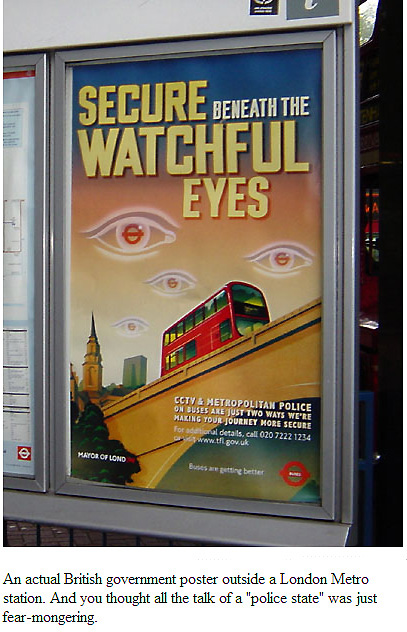

by a QFS member
Seen by over 1 BILLION people!
Books by Signs of the Times
Books by Red Pill Press