|
Jerome Taylor
UK Independent 17 Dec 06 For the authorities who run Tirumala, the enormous volume of hair produced each day has spawned a lucrative business courtesy of the Western world's newly discovered desire for human hair extensions - a fashion that has become hugely popular over the past couple of years thanks to the endorsement of celebrities. The temple has been able to cash in on an incredible growth in demand. Thomas Gold, whose Italian-based company Great Lengths International buys hair only from Tirumala, says the price of hair from the temple is now 10 times what it was five years ago.


Dressed in her best yellow sari Mahibha Basu laughs nervously and threads her long, dark hair through her fingers as she sits on a stool awaiting her turn to see the barber. All around her, nimble-fingered professionals with razor-sharp blades are cutting hair with the kind of speed and precision that is only honed by years of practice. Ms Basu is not waiting for just another haircut. She is in one of Hinduism's holiest temples and is taking part in a pilgrimage of enormous religious significance. Three minutes later she emerges into the crisp morning sunlight and makes her way to the main temple complex. With a bright red tikka mark adorning her forehead and coconut offerings in her hand, Ms Basu looks like any other Hindu pilgrim but with one startling difference. Her head has been completely shaved. Her hair, meanwhile, has been carefully tied together and placed in a giant steel tub for storage. Within a matter of months Ms Basu's black tresses could be half a world away, adorning the head of any of the A-list celebrities in the West, from Paris Hilton to Victoria Beckham to Donatella Versace, who have embraced the fashion for hair extensions. Ms Basu is just one of thousands of devotees who travel to Tirumala temple in the southern Indian state of Andhra Pradesh, one of Hinduism's most sacred religious sites and a place all Hindus are expected to visit at least once in their lifetime. Forty thousand pilgrims arrive every day to worship at the feet of Lord Venkateswara, a powerful avatar of the Hindu god Vishnu who, devotees believe, has the ability to grant the wish of any pilgrim who has made the journey to his temple. During major religious festivals the authorities prepare for up to 120,000 pilgrims to make the journey up the forest-clad mountain where the centuries-old Dravidian temple stands. So many people come to Tirumala, in fact, that many Indians claim the temple is the world's most popular pilgrimage site, even outstripping the Vatican and Mecca in the sheer numbers arriving on a daily basis. Tirumala's draw is largely down to the awesome power of Lord Venkateswara. But what makes this particular temple stand out is the incredible number of people who have their heads shaved as part of the worshipping ritual in a tradition known as "tonsuring". Practised by Hindus for thousands of years, it symbolises the devotee's desire to overcome their ego, a fundamental teaching of the Hindu faith. But nowhere is tonsuring more enthusiastically practised than at Tirumala. Ms Basu has travelled 1,500 miles from her native Bengal to ask the presiding deity to grant her most fervent wish. Four years ago she fell pregnant but miscarried shortly afterwards. "Now I am trying to get pregnant again," she says. "I have come here to ask the god to grant me and my husband a child." In one of the many buildings surrounding the main complex, pilgrims queue in long snaking lines as they wait to see one of the temple's 600 barbers. Working in shifts around the clock and using nothing but a sharp razor, water and immense skill they can cut off a pilgrim's hair in a matter of minutes. The effect is astonishing. All around the temple thousands of bald devotees stand in groups, their laughter echoing off the walls as they joke and point at each other's new, unfamiliar look. Bald-headed children run between the multitude of hat wallahs that line the surrounding streets selling a vast array of baseball caps to protect heads from the baking sun. For the authorities who run Tirumala, the enormous volume of hair produced each day has spawned a lucrative business courtesy of the Western world's newly discovered desire for human hair extensions - a fashion that has become hugely popular over the past couple of years thanks to the endorsement of celebrities. The temple has been able to cash in on an incredible growth in demand. Thomas Gold, whose Italian-based company Great Lengths International buys hair only from Tirumala, says the price of hair from the temple is now 10 times what it was five years ago. "It's really amazing how the price has just shot up every year," he says from his company headquarters in Rome. "The Indians started understanding that this was a booming business and that we would still purchase at whatever price." The industry has also benefited from a shift in the public's perception of hair extensions. "Up until five or six years ago," says Mr Gold, "it was unthinkable for a woman to say 'Look I'm wearing hair extensions'. Now women will positively show them off to their friends. The taboo has been abolished." The global hair industry is now worth an estimated £160m and is growing by 25 to 30 per cent each year. Indian hair is particularly sought after because it is cheaper than European varieties and will not have been chemically treated or dyed. Moreover Chinese hair, which globally still makes up the majority of hair exports, is considered too coarse to make good hair extensions. Over the course of a year, the temple auctions 90 tons of hair, providing revenue of around £3.7m which is then ploughed back into charitable causes, including a number of specialist hospitals. "The money from hair is significant but it isn't our main source of income," says the temple's executive officer, APVN Sarma. "Our primary source is donations but the income from hair is still very important." The temple has an annual budget of £90m, making it one of the richest religious institutions in India and also one of the country's largest charities. Part of the reason why Tirumala is so popular with devotees and donors is the temple's long tradition of welcoming all visitors regardless of caste and religion. It is one of the few major Hindu temples that allows non-Hindus to enter the inner sanctum that holds the deity. "There is no shrine in India where so many subdivisions of Hinduism recognise this as a holy place," says Mr Sarma. "We even have a number of Muslim and Christian devotees. It has always been a temple where other religions are recognised." But for the temple authorities, hair wholesalers and the thousands of low-income Indians employed in the country's hair trade, the popularity of hair extensions could not have come at a more opportune time. Two years ago the Indian hair market was on the verge of collapse thanks to a surprise religious ruling from an orthodox rabbi. Until then Tirumala's main clients were not the exclusive hair salons of Mayfair and Rodeo Drive but the Jewish wig makers of Brooklyn who provide many orthodox women with sheitels to cover their hair. The business, much of which is run from New York, is a lucrative one with some of the costlier wigs selling for anything up to $4,000. Indian hair was popular with sheitel makers for the same reasons it is now popular for hair extensions; it was cheaper than European hair but equally thick and glossy. But after travelling to Tirumala in 2004 a London-based Rabbi, Dayan Aharon Dovid Dunner, issued a decree arguing that sheitels made from Indian hair were not kosher because the hair came from an idolatrous ritual. Although Judaism follows no central religious authority and even though a majority of rabbis disagreed with Rabbi Dunner's ruling, the orthodox community obeyed the decree almost unanimously. From Brooklyn to Tel Aviv giant bonfires were erected as women burnt their Indian sheitels. "It was chaos," says one manufacturer who asked not to be named. "Overnight sales of Indian hair dried up as everyone frantically bought up European wigs. No one uses Indian hair now." Hair wholesalers in India saw their market disappear over-night. Yet salvation came in the most unlikely form: the hair extension-loving celebrity, and soon the industry was booming again. As the hair extension industry grows so do the question marks over where and how the hair in our salons came to be there. Stories have emerged of impoverished European women desperately selling hair that took them years to grow. Even worse, human rights groups have made accusations that much of China's hair comes from labour camps. But for those clients worried about the moral repercussions of buying human hair for their extensions, Indian temple hair has the added bonus of being one of the most ethical sources not only because the money goes to charity but also because the hair is given up wholly voluntarily. It is a fact that has not gone unnoticed by those wishing to market temple hair to its full capacity. "There is nothing to hide about this beautiful business. It's a win-win situation for everyone," says Mr Gold, who feels more clients are starting to insist on ethically-sourced hair. It is a wonderful irony that hair discarded by pilgrims in order to prove they can overcome their ego is then shipped and sold to Westerners looking to improve their physical appearance and self-confidence. The bizarre role reversal the hair goes through is not lost on the temple authorities. "People in this part of the world tonsure their hair to lose their pride," says Ramapulla Reddy, one of the temple's senior administrators. "On the other side of the world they do the opposite." Even though the vast majority of devotees at Tirumala have little idea what lies in store for their hair, they seem unconcerned by the idea. "I don't care where the hair goes afterwards," laughs D Vasudevarao, a pilgrim who has been coming to Tirumala for 20 years. "What is most important to me is that I have left my ego outside the temple. What happens to the hair afterwards is immaterial." For Ms Basu the idea that her hair might one day adorn someone else's head is a delightful surprise. "I think it's wonderful that my hair might be used in the West to make someone happy," she says. "Why not? I have no need for it."  |
|
By Robert Lanham
UK Independent 16 Dec 06 They hate gays and abortion, and love George W Bush. They worship in churches the size of shopping malls, and dominate the nation's - and the world's - political agenda. But is the Christian backlash finally starting against America's religious right?
When I met Ted Haggard in his New Life Church office last autumn, he was on his way to Denver, Colorado. He often caught flights out of the city, which was a short drive from his home in Colorado Springs, the mountainside town commonly referred to as the "evangelical Vatican", given its enormous born-again community and its abundance of "Welcome to Bush country" bumper stickers. While I drank a Starbucks cappuccino I'd purchased in the food court of his 14,000-member megachurch, we discussed his friendship with George Bush, his belief that pro-business capitalism was "scriptural", and his best-selling book, The Jerusalem Diet: The "One Day" Approach to Reach Your Ideal Weight - and Stay There. His ongoing methamphetamine-fuelled affair with a gay prostitute who lived in Denver wasn't mentioned that day, but Haggard did cite his belief that "the homosexual agenda" was a devastating "sin" that was dangerous to the future of America. Before his fall from grace, Haggard was the poster child of America's religious right, a nationalistic stepchild of Protestantism that is staunchly conservative, xenophobic, politically active, predominately Caucasian and, like Haggard, curiously preoccupied with gay culture. I found Haggard's obsession with abortion and same-sex marriage - and the religious right's for that matter - quite odd. Especially given the enormous, sword-toting, homoerotic angel statue I'd seen in Pastor Ted's church lobby. The day I met Haggard, he stated unequivocally that he was "a right-wing religious conservative" whose "only disagreement" with George Bush concerned "what type of truck to drive". The pastor spoke with the President weekly to discuss policy. Given that 79 per cent of the 26.5m evangelicals voted to re-elect Bush, much of the evangelical community apparently shares Haggard's sentiments. And like Haggard, most have also placed abortion and gay marriage at the top of their list as issues about which Christians should be most concerned. Despite a rapid-fire onslaught of scandals that has blown away the careers of several of the religious right's darlings - Tom Delay, Jack Abramoff, Ralph Reed and Mark Foley come to mind - the "values voters'" loyalty to the Republican, pro-business, pro-family platform to which Haggard subscribed has scarcely been shaken. Exit polls indicated 70 per cent of all white evangelicals voted for Republican Congressional candidates in America's recent midterm elections, a decline of a mere 2 per cent from 2004. The Congressional balance has tipped to the left, but most evangelicals appear to be as conservative as ever. To say the United States is a religious country is an understatement. According to polls, an estimated 47 per cent of American adults claim to be "born-again" or evangelical. Fifty-nine per cent believe that the Apocalypse prophesied in the book of Revelations (omega) will come true. There's a $25m (£12.7m) Christian museum being built in Kentucky, which will teach children that their ancestors played with dinosaurs in the days of Noah. An exhibit in this soon-to-open Creation Museum will feature a life-sized triceratops fitted with a riding saddle. But the reach of the religious right extends well beyond the Wal-Mart-sized megachurches speckling the heartland. Much of the political leadership on Capitol Hill claim to be evangelical as well. George W Bush, after all, reportedly became born-again after being meeting Arthur Blessitt, a travelling preacher who carried a 12ft cross across the United States. In 2004, 42 Senators received perfect scores from the Christian Coalition, meaning they voted the way the religious right wanted them to 100 per cent of the time. There's even an evangelical college on the outskirts of Washington - Patrick Henry College, the so-called "Harvard for Homeschoolers" - that has been securing high-level staff jobs in Congress and the White House for its graduates. Students at Patrick Henry are all obliged to sign a statement of faith that claims non-Christians will be "confined in conscious torment for eternity". Still, worry as secularists may, the US hasn't become more religious. According to most reports, church membership has actually remained constant for the last several decades. The change that has taken place among evangelicals is their dramatic shift to the right politically, with church attendance being the number-one indicator of party alliance in the US. According to a Gallup Poll, people who attend church at least once a week are nearly guaranteed to vote Republican. Clearly the Haggard scandal was the perfect opportunity for evangelicals to abandon partisanship and reposition their focus away from sexual issues. Their opportunity to embrace a broader social agenda that included moral issues such as poverty, Aids, and the environment. Some already have. Megachurch pastor Rick Warren has long been up to the challenge. A vocal advocate of broadening the religious right's social agenda and breaking out of the pro-family shell, Warren's been conducting HIV tests at his church to encourage evangelicals to get involved with the global Aids pandemic. Frustratingly, instead of following his lead, many conservative evangelicals criticised the pastor earlier this month for inviting Democratic Senator Barack Obama to address the pandemic at his church, since Obama is pro-choice. At the same time, North Carolina's Baptist State Convention has stayed the pro-family course by continuing to obsess over homosexuality. It has passed stringent new guidelines in regard to homosexuality that stop just shy of ousting pastors who've ever listened to an Elton John song. Most tellingly, a few days after the Haggard scandal broke it was announced that the disgraced pastor was to undergo an intensive anti-gay "restoration" programme, overseen in part by HB London, a representative from the pro-family ministry Focus on the Family. London's credentials include having written the book Love Wins Out, which teaches that homosexuality is a sickness that can be cured. (Incidentally, the founding director of Focus on the Family's own "ex-gay" programme, John Paulk, was the subject of another scandal several years ago when he was spotted in a gay nightclub.) Those who try to remedy the religious right's pro-family tunnel vision, like Warren, are often met with staunch resistance from its established leaders. The president-elect of the Christian Coalition of America, Joel Hunter, stepped down this month, citing his frustration at the group's refusal to adopt a broader social agenda. In his letter of resignation he wrote "I wanted to expand the issues from only moral ones - such as opposing abortion and redefining marriage - to include compassion issues, such as poverty, justice and creation care." Hunter told the New York Times that the leadership at the Christian Coalition told him that getting proactive about global warming, poverty, and Aids "just isn't for us" because "it won't speak to our base". Evidently, the Jesus who the religious right prays to is more concerned with boycotting Hollywood for releasing Brokeback Mountain than with feeding the hungry or global warming. This dramatic shift to the right among evangelicals in America formally began in the late 1970s when fundamentalist Baptist pastor Jerry Falwell founded the Christian political action committee The Moral Majority, to mobilise Christians away from Jimmy Carter, a self-proclaimed evangelical president who many Christians loathed given his comparatively liberal stance on "values" issues such as abortion and women's rights. With his iconic rally cry "get 'em saved, get 'em baptised, get 'em registered," Falwell's Moral Majority emerged on the political scene and began recruiting tens of millions of conservative voters from the nation's churches, a trend that continues today. At the time, Falwell's decision to politically mobilise the church was a bold one. Many evangelicals believed that politics should be the domain of politicians, not fire-and-brimstone pastors. However, Falwell found encouragement from key Republican insiders such as Paul Weyrich, the so-called father of the religious right. In addition to being a socially conservative Catholic, Weyrich was the founder of the Heritage Foundation, the think-tank that is credited for creating the blueprint for the pro-business, trickle-down tax ideology that has come to define the Republican Party. In 1980, Ronald Reagan became the first President to come to power with the help of what has come to be known as the religious right. And pro-business Republicans and the religious right have been dancing hand-in-hand ever since. Explaining this curious alliance, Mark Noll, the author of America's God: From Jonathan Edwards to Abraham Lincoln, claims that (omega) the politically conservative evangelical movement that began in the 1970s is an "American brand of Protestant Christianity". He's right. After all, Jesus didn't give too many sermons on trickle-down economics and, if he were to return today, he'd assuredly be more concerned with the war in Iraq than the "war on Christmas". "The best public contribution of religion," writes Jim Wallis in his best-selling book God's Politics, "is precisely not to be ideologically predictable or a loyal partisan." The unofficial spokesperson for the evangelical left in America and head of the social justice organisation Sojourners/Call to Renewal, Wallis's message is that equating your faith with the pro-family movement, Bush's pre-emptive war policy, and the divisive goals of the religious right is dangerous to Christianity. "How did the faith of Jesus come to be known as pro-rich, pro-war, and pro-American?" asks Wallis, noting that the Bible mentions helping the poor 3,000 times. Notably, there are precisely zero Bible passages about abortion, waterboarding, or a citizen's God-given right to own a semi-automatic weapon. Wallis's message has begun to resonate with some progressive Christians who feel that their faith has been hijacked by the religious right and conservative evangelicals who are more obsessed with banning "demonic" Harry Potter books than social activism. When George Bush, for instance, visited the Michigan-based Christian university Calvin College last year to deliver a speech, he expected to be met by a receptive crowd of the religious right. Instead, just prior to the speech, a professor at Calvin surprised many by publishing a letter in the local paper in protest at Bush's visit. Even more surprising, given the College's conservative evangelical credentials, the letter was signed by a third of Calvin's staff and over 100 members of its student body. "As Christians," the letter stated, "we believe [the Bush] administration has... launched an unjust and unjustified war... has taken actions that favour the wealthy... has fostered intolerance and divisiveness... [and] we believe your environmental policies have harmed creation." On the day of Bush's commencement, approximately a quarter of the student body wore badges attached to their gowns that cited Wallis's signature phrase: "God is not a Republican or a Democrat." Acknowledging the dissenting voice among evangelicals that Wallis has come to embody, John Green, senior fellow in religion and American politics at the Pew Forum on Religion and Public Life, says there is "an enormous amount of debate" among evangelicals about the narrow agenda of the religious right. "People like Wallis who want a broader agenda," says Green, "believe that evangelicals can be influential on a lot of different social issues. Those who believe the agenda should stay narrow are afraid that getting involved in protecting the environment or helping the poor will dilute their strength on what they regard as the important issues: abortion and same-sex marriage." Green says that it's too soon to know which side will prevail, but says: "The leaders who want a broader agenda have not yet moved a majority of the rank-and-file evangelicals to their side." When Ted Haggard was outed by his own John in November, the illicit details of his decades-long dance with "devastating sin" were forced out of the closet. He quickly resigned his post as president of the National Association of Evangelicals, a 30m-member coalition of evangelical churches. He was asked to step down as pastor of New Life Church. The tell-all confessions provided by his former lover - Haggard apparently fantasised about gay orgies and allegedly took methamphetamine before having sex with his wife - were undoubtedly devastating to Haggard's wife and five children. As icing on the cake, Haggard's muscle-bound lover, Mike Jones, even criticised Pastor Ted's skills in the bedroom on the Michelangelo Signorile radio show. "I can't say he was very good at it," said Jones. The day the scandal broke, I decided to contact a New Life congregant I'd met while visiting Colorado Springs, a 30-year-old evangelical I'll call Anthony. I was curious to see how Anthony and the New Life congregation were responding to the fall-out. Anthony, who shared Haggard's pro-family politics and had even equated gay sex with bestiality, had previously confessed to me that he considered Haggard to be his spiritual mentor. Could Haggard's betrayal open the door for more acceptance of homosexuality at New Life, I wondered? When I contacted Anthony, he told me Haggard's accuser was assuredly a phony. An opportunist who was simply playing politics. After all, many states were about to vote on whether to officially define marriage as being between a man and a woman. As the facts began to unfold and Haggard confessed to being "a deceiver and a liar", I contacted Anthony again and quickly found a reply in my inbox. Evidently, Haggard's confession and prompt resignation had forced Anthony to accept the hypocrisy of his spiritual guru. He opened his email to me by apologising for Haggard's actions. I felt this unnecessary; it was not Anthony who had lied. "The reason why there was so much shame associated in this," his email went on, "is because it was a homosexual encounter." What about Haggard's wife and children, I wanted to ask? What about the shamefulness of his hypocrisy? Still, I knew such questions were pointless. Like most evangelicals I'd met at New Life Church, Anthony's "pro-family" tunnel vision had caused him to lose perspective of the larger picture. The 2008 presidential elections are still a long two years away, but the front-running candidates are already beginning to position themselves. Given the power of the religious right in America, that includes trying to appeal to white evangelicals. Moderate Republican Senator John McCain has expressed interest in running. Even though McCain has traditionally been critical of the religious right (he referred to Jerry Falwell as an "agent of intolerance" in 2000), he's begun to embrace some of their more controversial players. This year, McCain delivered the commencement speech at Jerry Falwell's Liberty University and even hired the debating coach from this fundamentalist Christian university as an advisor. The presumed Democratic presidential frontrunner, Senator Hillary Clinton, has been working to appeal to the religious right too. Recently, Clinton has been voicing support for Bush's faith-based initiatives and softening her language on abortion, which she recently called a "sad, even tragic choice to many, many women". Hillary is apparently ignoring Falwell's claim the only thing that would better "motivate conservative evangelical Christians to vote Republican" would be "a run by the devil himself". The religious right's current candidate of choice is Republican Senator Sam Brownback, a Roman Catholic who is giving "prayerful consideration" to a bid in 2008. The loyally pro-family candidate for "foetal citizens", Brownback has called abortion the contemporary "holocaust". Brownback opposes gay marriage, assisted suicide, stem-cell research, and famously washed the feet of one of his aides, a symbolic reference to Christ. Most strikingly, Brownback is the co-sponsor of the proposed Constitution Restoration Act. This theocratic piece of legislation is an attempt to bar the federal courts from making rulings on cases that involve faith, such as prayer in school. The bill confirms "God as the sovereign source of law, liberty, or government." So when Brownback shared a stage with Democrat Senator Barack Obama (who, like Brownback, had just confirmed his interest in potentially running for president in 2008) at Pastor Rick Warren's Aids conference earlier this month, Obama's attendance stirred controversy, but no one protested Brownback's invitation to speak at the event. Brownback greeted Obama with a teasing, "Welcome to my house," acknowledging the Democratic party's perceived religion deficit. "There is one thing I've got to say, Sam," retorted Obama. "This is my house, too. This is God's house." Whether the evangelical community will come to agree with Obama, or any Democratic politician for that matter, is something only God can predict. Robert Lanham is the author of 'The Sinner's Guide to the Evangelical Right' and 'The Hipster Handbook', and is the founder of the blog www.evangelicalright.com God squad: the religious right's key players James Dobson, The Protestant Pope The founder of the Colorado Springs-based ministry Focus on the Family - which receives so much mail it has its own postal code - Dobson is the US's most powerful evangelical leader. The ministry's pro-family videos, newsletters, books, and radio show reach more than 200m people daily. Tellingly, Dobson was privy to inside information on Bush's Supreme Court nominees weeks before most members of Congress. Not to be outdone by the Rev Jerry Falwell, who accused the Teletubby Tinky Winky of being gay, Dobson has publicly questioned the sexuality of SpongeBob Squarepants. Tim LaHaye, The evangelical Stephen King The Religious Right's patron saint of Armageddon paranoia. His best-selling books have sold 62m-plus copies and have popularised the concept of the "Rapture" - the belief that Christians will soon be whisked away into heaven while the non-Christians are all left behind. After the Rapture, LaHaye instructs, the antichrist will rule the earth and reside in a temple Saddam Hussein supposedly built in Iraq using an endowment given to him by a "sun worshipper". This co-founder of the Moral Majority also authored a sex manual that argues that Christian women are "more orgasmic". Pat Robertson, The Tourettes-vangelist This former presidential candidate is the host of the world's most-watched Christian show, The 700 Club. When he's not founding influential evangelical groups, Robertson calls for the assassination of world leaders, as he recently did for Hugo Chavez, President of Venezuela. His Christian charity, Operation Blessing, receives $14.4m annually in federal funding, under Bush's faith-based initiatives plan. Recently, Robertson was scrutinised for claiming that his patented "age-defying protein shake" enabled him to leg-press 2,000 pounds. Robertson's latest project - the construction of a Christian theme park in Israel - was placed on hold when he infuriated Israeli leaders by claiming that Ariel Sharon's stroke was "God's punishment". Roy Moore, The Ten Commandments Judge Alabama's so-called "Ten Commandments Judge" (below) caused a stir when he defied a court order to have the 5,000lb Ten Commandments monument removed from his courthouse. Protestors camped outside for days to protest the removal of "Roy's Rock". When Moore's fanclub finally left in defeat, "the limestone steps had to be pressure-washed" reports Atlantic Monthly, "to remove the smell of urine." Moore has become the unofficial spokesperson for Christian "Dominionism" in America; the belief that government should be based on biblical law. John Hagee, The Zionist Goy In his best-selling book Jerusalem Countdown, the Rev John Hagee argues for the necessity of a pre-emptive military strike on Iran to fulfil the biblical prophecies needed to bring about the Second Coming of Christ. A televangelist with an audience of millions, Hagee says Christians have a "biblical mandate" to protect Israel, insisting that the increased violence in the Jewish state is a sign that the Rapture is imminent. In 2006, Hagee founded the political lobby, Christians United for Israel, and has since enlisted many of America's top evangelical leaders as members. Flocking in: the evangelical megachurches Radiant Church Surprise, Arizona; members: 6,000 Radiant spends $16,000 annually on Krispy Kreme donuts. Pastor McFarland told the New York Times: ''We want the church to look like a mall, so you come in and say, 'Dude, where's the cinema?' " Brentwood Baptist Church Houston, Texas; members: 12,000 Has its own McDonald's, complete with golden arches and a drive-thru. Saddleback Church Lake Forest, California; members: 22,000 (below) Pastor Rick Warren wrote the best-selling non-fiction book in the US's history: The Purpose Driven Life. Bar codes are assigned to babies in the nursery to avoid losing them. The Potter's House Dallas, Texas; members: 28,000 Led by the influential African-American pastor, TD Jakes, it has its own publishing house, daily talk show, a prison ministry that broadcasts to over 260 prisons, and a recording studio that has produced a Grammy-award-winning record. Lakewood Church Houston, Texas; members: 30,000 The largest megachurch in the US (top). Joel Osteen's church meets in the former home of the Houston Rockets and has already outgrown the arena. Plans have been discussed to "franchise" the church in other cities. |
|
Antony Barnett, investigations editor
Sunday December 17, 2006 The Observer Diocese is shaken as former altar boy takes legal action claiming that negligence exposed him to priest who was 'a danger to children'
The Catholic church faces fresh allegations of turning a blind eye to paedophilia after an Observer investigation revealed that one of its priests was allowed to continue working despite warnings he posed a danger to children. The priest, Father David Crowley, went on to rape a 10-year-old altar boy, whom he continued to abuse until 1995. Now the victim has spoken publicly for the first time about his ordeal in order to expose the 'scandalous' way he says the church has behaved. He has accused the Rt Rev David Konstant, former Bishop of Leeds, of failing to stop Crowley despite having evidence that the priest was a sex risk to children. In 1997 Crowley was jailed for nine years after pleading guilty to abusing boys for more than a decade. Article continues Konstant was Bishop of Leeds for 19 years, chairman of the Catholic Education Service and headed the church's international affairs committee under Cardinal Cormac Murphy-O'Connor, the Archbishop of Westminster. Documents show that in 1987 while Konstant was Bishop of Leeds, he was told of an incident where Crowley had 'facilitated' sexual activities between young boys in Huddersfield after allowing them to drink alcohol. A letter seen by The Observer shows that on 12 March that year, Konstant wrote to Crowley telling him that 'the grave scandal' means 'it will not be possible for you to work again as a priest in this diocese'. A church report that month stated: 'He [Crowley] does not fit into the usual psychological profile of a true paedophile. The behaviour would not be too alarming in an early adolescent boy. In an adult [33 years old] who has a sacred trust and is a member of the clergy it is of course enormously serious and utterly inappropriate and a bar to his practising his priesthood. He has already been told that there is no possibility of his ever functioning as a priest in the diocese of Leeds.' A later report concluded that although he behaved in a 'grossly unsuitable way, he is not a paedophile'. It said his behaviour was primarily caused by the misuse of alcohol and 'emotional immaturity'. Rather than report the incident to the police, Konstant, who had suspended Crowley, sent him for 'counselling'. Within a few months Konstant helped Crowley to find a new post in Devon. He was made to sign a contract to restrict his contact with young people, but went on to abuse in Torquay and Barnstaple. Even though concerns were raised about his continued contact with young boys in the south of England, he was allowed to return to Yorkshire - despite Konstant's earlier pledge that he would never again work as a priest in the diocese of Leeds - and entered into another period of sexual abuse. Paul (not his real name) was among Crowley's victims when the priest returned to Yorkshire. He was raped by Crowley as a 10-year-old altar boy. Over four years from 1991, Paul was subject to frequent sexual abuse by the priest who got other boys to perform sex acts on him. 'He wouldn't care what was happening,' Paul said. 'Even if there was a funeral taking place or a wedding, he would wait for his opportunity. Sometimes he would be very aggressive, pushing me down on the floor and assaulting me.' Paul only went to the police in 2004 after he had plucked up the courage to tell his family. By then, Crowley was in prison. He had been arrested while working as a hospital chaplain in Bradford and was jailed in 1998 for nine years after admitting a string of sex attacks on young boys over an 11-year period. He pleaded guilty to 12 offences of indecent assault on boys under 16 and three of indecency with a child. In prison Crowley admitted to the police that he had abused Paul, but the Crown Prosecution Service decided there was no public interest in staging another trial. Paul is now taking legal action against Konstant and the diocese for negligence, but they are refusing to admit liability. The church argues that at the time there were 'no allegations of paedophilic activity' made against Crowley and they took appropriate steps. Lawyers for the trustees of the diocese claim the events happened too long ago and they have been advised that Konstant is extremely ill and unable to assist. This is challenged by Paul and his lawyers who say Konstant has been involved in a number of public activities since retiring. Konstant, 76, suffered a minor stroke in 2001, but continued working as Bishop of Leeds until 2004. In July this year he received an honorary degree from the University of Bradford, where he made a speech and attended a dinner. An academic present at the dinner has said in a witness statement: 'He appeared to have no problems in speaking or walking around. There was no visible indication he was suffering from any form of illness or infirmity.' In October, Konstant presided at a celebratory Mass to mark the 20th anniversary of the opening of St Joseph's church in Wetherby and last month he spoke at the reopening of the cathedral church of St Anne in Leeds. However, illness recently prevented him attending a special Mass for his successor as Bishop of Leeds. Paul is furious at how the church has behaved as he has attempted to get justice and an apology. Two years ago he attempted suicide. 'The physical side of this was terrible,' he said, 'but the way the church has behaved since I decided to come forward has been even worse. It has been a kind of excruciating mental torture. Why don't they just say sorry and offer to help me and my family? They knew this priest was a danger to children but did nothing, and he went on to destroy the lives of dozens of boys, including my own.' Paul's lawyer, Richard Scorer of Pannone, a Manchester law firm, said: 'Considering all the public engagements Bishop Konstant has been involved in over the past few months, I was astonished when they told me he was too ill to assist the court.' The Observer tried to contact Konstant, but he refused to talk on the phone or be interviewed. He said: 'I have nothing to say about this. I am retired.' A spokesman for the diocese of Leeds said: 'Neither Bishop David Konstant, nor the diocese of Leeds, has been asked whether the bishop's state of health prevented him responding to questions about this litigation. The suggestion that his health had become an issue has come as a complete surprise both to the bishop and to his successor, Arthur Roche. 'The Crowley case dates back to the Eighties and Nineties. The diocese reported the matter to the police when it first became aware of the allegations.' This is not the first time the diocese has been involved in a sex abuse scandal. Earlier this year, The Observer reported how it had covered up the criminal past of paedophile priest, Neil Gallanagh, and gave him a job in a school for deaf children, where he went on to sexually assault vulnerable young boys. |
|
Alex Duval Smith in Paris
Sunday December 17, 2006 The Observer France's favourite saint was martyred by her English foes, who ordered her remains to be cast into the Seine. Now scientists believe they have established the facts surrounding her execution
Catholic saint, national icon and one of the world's most famous military leaders, Joan of Arc has been a subject of fascination for the French for almost six centuries. Now academics believe they are close to proving that controversial relics are actually those of the real-life Maid of Orleans. Much is unknown about the life of the warrior. Facts have often been mixed with myth and theory. But what is generally agreed is that Joan's body was burnt three times by the English and ashes from the foot of the pyre were supposedly discovered in 1867, lurking in the Paris loft of an apothecary . French scientists, who have been studying those ashes, confirmed yesterday that a piece of cloth found among the remains may have been a fragment of Joan of Arc's gown. A new series of DNA tests of bones and tissue found among the ashes is expected to confirm that they belong to a female. These initial discoveries suggest recent controversial claims surrounding the death of Joan of Arc are wrong. One theory, put forward by Ukrainian anthropologist Sergey Gorbenko, suggested Joan was not even burnt at the stake but lived to the age of 57. Another theory is that she was a man. But the initial discoveries by forensic anthropologist Philippe Charlier, the project's leader, indicate that the standard version of Joan of Arc's death - by being burnt as a witch by the English - appears to be right, although the research has added intriguing detail to the story of her execution. Further tests were needed, said Charlier. Tests on one bone found in the relics showed it was the femur of a cat. The discovery tallies with the medieval practice of throwing a black cat on a witch's pyre so as to appease the devil, according to Charlier. 'However, this femur is not burnt - it just looks it - so maybe we are just dealing with a passing cat,' he said. Charlier said the most exciting discovery by his 18-strong team at the Hôpital Raymond Poincare near Paris was in the carbon-dating of the piece of cloth. 'It is linen of high quality and we can confirm that it dates from the 15th century. It could have been a robe or a bag.' According to historians, Joan of Arc was 19 when she was burnt at the stake in Rouen by the English on 30 May, 1431. She died of smoke inhalation. The Cardinal of Winchester is recorded as having ordered her to be burnt a second time. Her organs still survived this fire, so a third burning was ordered to destroy the body completely. Her cinders and debris were to be thrown into the Seine. However, in 1867 ashes that were said to include remains of Joan of Arc were found in the Paris loft of an apothecary. These were transferred to a museum in Chinon where they are still kept. Charlier said his team's findings were preliminary and that work would continue at least until February next year. He added that he expected his team would be able to establish that the Chinon remains belonged to 'a female juvenile who was burnt several times at short intervals'. Charlier said pieces of wood among the relics, as well as the quality and age of the linen cloth should allow his team to date them within a 30-year range of accuracy and establish which region of France they are from. 'We are getting closer. Even though burning witches was a fairly common practice in those days, it is not as though 1,000 women were burnt three times in Rouen in 1431. It is also helpful for us - in terms of determining whether the relics are fakes or not - that the cult that has grown up around Joan of Arc is relatively recent. No one took much notice of her for the preceding 400 years. So there aren't dozens of boxes of relics kicking around, all claiming to be hers.' Charlier came to prominence last year when he ascertained that Agnes Sorel, the favourite of King Charles VII, died from mercury poisoning. He took an interest in Joan of Arc because her presumed remains were stored in the same Chinon museum as those of Sorel. An illiterate farm girl from Lorraine in eastern France, Joan of Arc disguised herself as a man in her campaigns. During her battles against the English and armies of the Duke of Burgundy, Joan was said to hear voices from a trio of saints telling her to deliver France from her enemies. She was finally captured and sold to the English, who had her tried for witchcraft in Rouen. Joan of Arc was declared a saint in 1920. During the Second World War, both Vichy France and the French resistance claimed Joan of Arc as a national symbol for their cause. Hits and myths The Shroud of Turin was believed to be Christ's burial garment from the time of its emergence in 1354. At its first exhibition in 1389, it was denounced as a fake by the Bishop of Troyes. Ever since its authenticity has been questioned. Carbon dating of the cloth in 1988 determined that it originated sometime between 1260 and 1390. The Catholic Church has accepted that the shroud may not be genuine, but says it should still be revered because it bears an inspiring image of Jesus. An exhibition in Russia in 2000 included a display of a fragment of Hitler's skull. Organisers of 'The Agony of the Third Reich: Retribution' said the skull was authentic, but this claim has been rejected by some experts. Hitler shot himself in his Berlin bunker in 1945, and his body was burnt and buried in a shallow grave. The facts about what happened to his remains have not been fully established. A coffin held in church in Padua since 1172 may contain the remains of St Luke. Tests carried out by scientists in 2001 confirmed it was of the same Syrian origin as the author of the third Gospel. Carbon-dating tests suggested the body belonged to someone who died in the period of Luke's death, believed to be around AD 84. Hair and fragments of the funeral cloth from the mummy of Ramses II were recently posted for sale on the internet. Police arrested the vendor, a postman from France, who said he had been given the pieces by his father, a researcher on a team that analysed the mummy in the 1970s. Ramses the Great's reign, between 1279 and 1213 BC, was the second longest in Egyptian history. Alan Power |
|
By Rony V. Diaz
Manila Times 17 Dec 06 Now is as good a time as any to revisit the question that has vexed historians and Biblical scholars for over 2,000 years: when was Jesus Christ born?
They agree that it was not in 1 AD. Whether it was in December is a matter of lively conjecture.
The calendar that we use today is based on the one that Julius Caesar decreed on January 1, 45 BC that starts from the founding of Rome in the 1st century BC. In the sixth century, Dionysius Exiguus, a monk, proposed that the Christian era be made to commence on a date of unquestioned religious significance, the supposed date of the birth of Jesus Christ. With this system, the BC and AD sequences began. Recently, however, BC or Before Christ, was changed to BCE, or Before the Christian Era, and AD (Anno Domini, in the year of the Lord) became CE, or Christian Era. I shall be using the new markers in this column. The exact date of Jesus's birth could have been established if we knew for certain how old he was when he was crucified because on that day there was a lunar eclipse that the British historian, Colin Humphreys, dated Friday, April 3, 33 CE. Sadly we don't know how old Jesus was when he was crucified. Some say that he was "about thirty" and another that he "was not yet fifty." The Bible remains the principal source of clues. Jesus was born during the reign of Augustus Caesar, 44 BCE to 14 CE. Matthew and Luke in their Gospels said that Jesus was born during the regency of Herod the Great who died in the spring of 4 BCE. But there are also records that show that Herod died in 5 BCE, 1 BCE and 1 CE. He was succeeded by Herod Antipas (21 BCE-39 CE). During this period Jesus was active as a preacher and miracle worker. We know from Matthew (2:16) that "Herod . . . killed all children in and around Bethlehem who were two years old or under. . . ." This implies that Jesus was born at least 2 years before Herod's death. Still another clue is a reference in Luke (2:1-7) to a census that drove Joseph and Mary (who was "great with child") to Bethlehem. The census was supposed to have been ordered by Augustus and carried out by Publius Sulpicius Quirinius, the governor of Syria. There's no official record of such a census. Furthermore, when Quirinius became governor in 6 CE Herod the Great was already dead. Finally, the census that Quirinius conducted in 6-7 CE was for Judaea and not for Galilee. The other official censuses were done in 28 BCE, 8 BCE, and 14 CE and were only for Roman citizens. The only census that coincides more or less to the presumed date of Jesus's birth was a "census of allegiance" to Augustus. The only reference to this is by Orosius, a fifth-century historian. From all this, it would seen that Jesus was born sometime between 4 and 7 BCE. Was it in December? Not likely. Luke said: "There were in the same country shepherds abiding in the field, keeping watch over their flocks by night." Shepherds watch over their flocks during the lambing season in the spring, in the summer when they are grazing, and in the fall when they are herded to new pastures. In the winter-and December is the dead of winter-they are brought indoors for safekeeping and to heat the homes of the shepherds. Michael Molnar, a scholar at Rutgers University, boldly asserted from historical, astronomical and astrological evidence that "Jesus would have been 2,000 years old on April 17, 1995." Christmas in April will be a tough sell. In my next column I shall deal with the main icon of the Christmas season, the Star of Bethlehem. |

Have a question or comment about the Signs page? Discuss it on the Signs of the Times news forum with the Signs Team.
Some icons appearing on this site were taken from the Crystal Package by Evarldo and other packages by: Yellowicon, Fernando Albuquerque, Tabtab, Mischa McLachlan, and Rhandros Dembicki.

Remember, we need your help to collect information on what is going on in your part of the world!
Send your article suggestions to: 
Contact Webmaster at signs-of-the-times.org
Cassiopaean materials Copyright ©1994-2014 Arkadiusz Jadczyk and Laura Knight-Jadczyk. All rights reserved. "Cassiopaea, Cassiopaean, Cassiopaeans," is a registered trademark of Arkadiusz Jadczyk and Laura Knight-Jadczyk.
Letters addressed to Cassiopaea, Quantum Future School, Ark or Laura, become the property of Arkadiusz Jadczyk and Laura Knight-Jadczyk
Republication and re-dissemination of our copyrighted material in any manner is expressly prohibited without prior written consent.

![[Valid Atom 1.0]](/signs/images/valid-atom.png "Validate my Atom 1.0 feed")

The Gladiator: John Fitzgerald Kennedy
John F. Kennedy and All Those "isms"
John F. Kennedy, J. Edgar Hoover, Organized Crime and the Global Village
John F. Kennedy and the Psychopathology of Politics
John F. Kennedy and the Pigs of War
John F. Kennedy and the Titans
John F. Kennedy, Oil, and the War on Terror
John F. Kennedy, The Secret Service and Rich, Fascist Texans
Recent Articles:
New in French! La fin du monde tel que nous le connaissons
New in French! Le "fascisme islamique"
New in Arabic! العدوّ الحقيقي
New! Spiritual Predator: Prem Rawat AKA Maharaji - Henry See
Top Secret! Clear Evidence that Flight 77 Hit The Pentagon on 9/11: a Parody - Simon Sackville
Latest Signs of the Times Editorials
Executing Saddam Hussein was an Act of Vandalism
Latest Topics on the Signs Forum |
Signs Monthly News Roundups!
June 2005
July 2005
August 2005
September 2005
October 2005
November
2005
February 2006
March 2006
April 2006
May 2006
June 2006
July 2006
August 2006
September 2006
This
site best viewed
with Mozilla Firefox

Picture of the Day
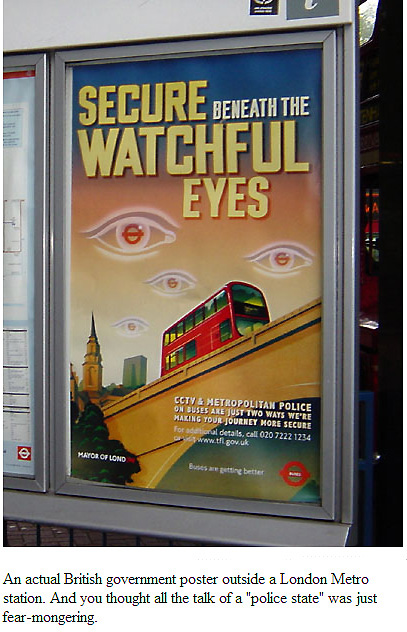


by a QFS member
Seen by over 1 BILLION people!
Books by Signs of the Times
Books by Red Pill Press