|
By Ray McGovern
ICH As a matter of conscience, I am returning the Intelligence Commendation Award medallion given me for "especially commendable service" during my 27-year career in CIA. The issue is torture, which inhabits the same category as rape and slavery - intrinsically evil. I do not wish to be associated, however remotely, with an agency engaged in torture.


Hon. Pete Hoekstra, Chair House Permanent Select Committee on Intelligence Washington, DC Dear Congressman Hoekstra: As a matter of conscience, I am returning the Intelligence Commendation Award medallion given me for "especially commendable service" during my 27-year career in CIA. The issue is torture, which inhabits the same category as rape and slavery - intrinsically evil. I do not wish to be associated, however remotely, with an agency engaged in torture. Reports in recent years that CIA personnel were torturing detainees were highly disturbing. Confirmation of a sort came last fall, when CIA Director Porter Goss and Dick Cheney - dubbed by the Washington Post "Vice President for Torture" - descended on Sen. John McCain to demand that the CIA be exempted from his amendment's ban on torture. Subsequent reports implicated agency personnel in several cases of prisoner abuse in Iraq, including a few in which detainees died during interrogation. The obeisance of CIA directors George Tenet and Porter Goss in heeding illegal White House directives has done irreparable harm to the CIA and the country - not to mention those tortured and killed. That you, as Chair of the House Permanent Select Committee on Intelligence, show more deference to the White House than dedication to your oversight responsibilities under the Constitution is another profound disappointment. How can you and your counterpart, Sen. Pat Roberts, turn a blind eye to torture - letting some people get away, literally, with murder - and square that with your conscience? If German officials who were ordered to do such things in the 1930s had spoken out early and loudly enough, the German people might have been alerted to the atrocities being perpetrated in their name and tried harder to stop them. When my grandchildren ask, "What did you do, Grandpa, to stop the torture," I want to be able to tell them that I tried to honor my oath, taken both as an Army officer and an intelligence officer, to defend the Constitution of the United States - and that I not only spoke out strongly against the torture, but also sought a symbolic way to dissociate myself from it. We Americans have become accustomed to letting our institutions do our sinning for us. I abhor the corruption of the CIA in the past several years, believe it to be beyond repair, and do not want my name on any medallion associated with it. Please destroy this one. Yours truly, Ray McGovern Ray McGovern works for Tell the Word, the publishing arm of the ecumenical Church of the Saviour in Washington, DC. He was an analyst at the CIA for 27 years, and is on the Steering Group of VIPS.  |
|
By Nolan K. Anderson
ICH The most dangerous man to any government is the man who is able to think things out...without regard to the prevailing superstitions and taboos. Almost inevitably he comes to the conclusion that the government he lives under is dishonest, insane, intolerable. --H. L. Mencken
Liberty has never come from the government. Liberty has always come from the subjects of government. The history of liberty is the history of resistance. The history of liberty is a history of the limitation of governmental power, not the increase of it. --Woodrow Wilson
A democracy cannot exist as a permanent form of government. It can only exist until the voters discover that they can vote themselves largess of the public treasury. From that time on the majority always votes for the candidates promising the most benefits from the public treasury, with the results that a democracy always collapses over loose fiscal policy, always followed by a dictatorship. The average age of the world's great civilizations has been 200 years. These nations have progressed through this sequence: from bondage to spiritual faith; from spiritual faith to great courage; from courage to liberty; from liberty to abundance; from abundance to selfishness; from selfishness to complacency; from complacency to apathy; from apathy to dependency; from dependency back again to bondage. --Sir Alex Fraser Tytler (1742-1813) Scottish jurist and historian "Once a government is committed to the principle of silencing the voice of opposition . . ." Does this ring a bell? How about the name Joe Wilson - does that name sound a bell? What about Valerie Plame - any bells yet? General Shenseki? Where do Americans find themselves in Sir Alex Tytler's cycle? The United States can boast a 230-year history so our actions and the time factor would bring us well into the "apathy-dependency" stage. If this is true, the return to the "bondage" stage is not far off - as witnessed by world events - especially those of the last 5 years. However, the "apathy" stage of our self-destruction cycle seems to be in "fast forward". One would have to search American history with an extremely fine-toothed comb to find a comparable period where apathy played such a major role in the individual's life and that of his government. Even if one were to successfully separate normal political corruption from apathy, he would still have a hard time finding a comparable era in our history where the theoretical "opposition party" in the Congress apparently watches the Executive Branch with "eyes wide open" and still refuses to acknowledge or act to restrict even the most blatant abuses of power by the Executive. Congress not only refuses to acknowledge malfeasance in the actions of the Executive, but also seems determined to abet whatever excesses the Executive wants to heap upon the country. One could argue forever about whether poor education breeds apathy or apathy breeds poor education. The same can be said of complacency and apathy. However, the "chicken and the egg" arguments are not pertinent to the discussion at this point. These points become a preface to a topic which is now crowding other subjects "off the radar screen" in all forms of mass media. American's attention is now being focused on the White House wire tapping of citizens without regard for the law. The topic becomes a bonanza for blaring headlines and sniping between the two political parties. However, the real threat to Americans lies buried under layers of apathy and total ignorance of the extent of our government's progress toward TOTAL surveillance of its citizens within the United States and through cooperation and coercion of other governments, the surveillance of Americans and foreigners on a global scale. This surveillance is not being designed to monitor only citizen movement on a global scale, but is also being designed to lay open to the various governments ALL personal and private matters of finance, health, political affiliation, and religious preferences, electronic communication and on, and on, and on. The following information is not something torn from the pages of Franz Kafka or Orson Well's 1984. The information presented here is taken from an April 2005 report made by The International Campaign Against Mass Surveillance (ICAMS) (Pdf). (Refer to References and Notes below). The programs described below were designed before 9/11; since 9/11 these programs have been put on steroids. The world in which these programs are being constructed is one in which "individuals are presumed guilty, detained and not told the charges against them, denied the right to face their accusers, denied the right to know the evidence against them and the criteria by which they are being judged and given no legal recourse and no one to advocate for them". [1] Please note, this does not refer to the present definition of terrorist or enemy combatant. These programs apply to AMERICAN CITIZENS as well as the citizens of the global network of countries being brought together to form an unparalleled net of surveillance, arrest, detention, torture and indefinite detention - either with or without formal charges - and finally death. (This could have served as an agenda for The New World Order). For one who sits idly in front of the television and watches the nightly news- reader tell about another Guantanamo prisoner (terrorist) being held for an indefinite period without any of our democratic safeguards, the "news" doesn't even register on the listener's Richter Scale. Little does the American know that the prisoner's plight being presented may be merely a prelude to his own plight under the plans presently being secretly refined and expanded by the global community under coercion and intimidation by the United States. To bring these programs into focus and allow the reader to glimpse a portion of their scope and the progress being made in their implementation, signposts of program characteristics will be shown as well as the myths being created to conceal the progress of this global cancer. (The following may bring more meaning to the fact that the KBR arm of Halliburton has recently been awarded a contract to build a 385 million dollar detention center to set up temporary detention, processing and deportation facilities in case of a sudden influx of immigrants!!). Signposts: First Signpost: The Registration of Populations. [2] 1. Mass Detentions of Muslim Immigrants and Registration through NSEERS. 2. US-VISIT and the E.U. Visa Information System a) Biometric visas. b) Linkage of biometric information to a global web of databases. c) U.S. acquisition of domestic and foreign databases. Second Signpost: The Creation of a Global Registration System. [3] Biometric passports. Third Signpost: The Creation of an Infrastructure for the Global Surveillance of Movements. [4] 1. U.S. demands for sharing passenger name records (PNR). 2. Surveillance expansion to other transportation systems. Fourth Signpost: The Creation of an Infrastructure for the Global Surveillance of Electronic Communications and Financial Transactions.[5] 1. Mandatory data detention. 2. Expansion of ECHELON. In 1948, the US, the UK, Canada, Australia and New Zealand created a program under which they trawled the world's telephone communications to spy on each others' countries and to share information on each others' citizens that could not be obtained by their own officials under domestic laws. Since the early 1980s, this program has been called ECHELON, and has been expanded to intercept e-mails, faxes, telexes, electronic transactions and international telephone calls carried via satellites. 3. Mandatory information-gathering and reporting for financial transactions. Fifth Signpost: The Convergence of National and International Databases.[6] The extent of the characteristics of this signpost is very extensive and a complete listing is past the scope of this paper. However, in countries known for their oppressive regimes, the extent to which an integration of functions and information sharing with the US has been occurring is probably the greatest. Countries like Georgia, Indonesia, Egypt, Malaysia and Uzbekistan are sharing information suspects, and in some cases intelligence and military operations, with the US. Sixth Signpost: Data Mining. The use of computer models to assess masses of data for selected criteria. The masses of data being scanning make human interface and interpretation impossible. This amounts to having one's actions and motives interpreted by a computer. Seventh Signpost: The Loss of Sovereignty Checks and Balances.[7] When all the signposts or initiatives described above are viewed together, what emerges are the "contours of a vast, increasingly integrated multinational registration and surveillance system, with information floating more or less freely between subsystems. As this system emerges, the police, security, intelligence and military operations of many nations are becoming deeply integrated with US operations. National governments are giving up sovereignty and throwing aside national checks and balances in favor of an integrated security system that is largely being designed and controlled by the US. Eighth Signpost: The Corporate Security Complex.[8] For the government security/intelligence community, the "war on error" offers an unprecedented opportunity to increase its investigative surveillance powers by tapping into the possibilities offered by new information technologies. Ninth Signpost: The Expropriation of the Democratic Principles.[9] Governments have been able to make these changes in democracy in democratic countries by declaring a state of crisis. But, the "war on terror" is a war without end, so the state of crisis is permanent, not temporary. As a result, democratic societies are in grave danger of being turned, over time, into surveillance societies -- or worse, into police states. Tenth Signpost: A loss of Moral Compass - Rendition, Torture, Death.[10] It is now clear that the U.S. and other countries participating in the global surveillance project are engaging in torture, inhumane treatment, and indefinite detention . . . in their own facilities, as well as sending suspects to third countries where they face torture, inhumane treatment, and indefinite detention. The worst that individuals have to fear from the global system of mass surveillance is something far darker than "mere" loss of privacy, civil liberties, freedom of movement, or loss of democratic patrimonies. (They face indefinite detention in a global gulag). At this point the reader may be convinced he is reading something from a science fiction book. But this is not science fiction. This is what is being planned and constructed in real time - our time. Of these 10 signposts, the one most identifiable in today's mass media coverage is Rendition and Torture. Even the most hardened cynic would be forced to admit there is at least a coincidental association between the Rendition and Torture being discussed in the media and that presented here as a glaring warning signpost to all Americans of a global trend being sponsored by the United States. For those who say that "all is well" and we merely need to trust our government, please take the time to read these ten signposts again - slowly and carefully. After a second reading, take the time to read and absorb the following myths about your safety as an American. Myth No. 1: We are merely being asked to sacrifice some of our privacy and conveniences for greater security. Myth No. 2: These initiatives facilitate travel. Myth No. 3: If one has nothing to hide, one has nothing to worry about. Myth No. 4: The technology being used is objective and reliable. Myth No. 5: Terrorist watch lists are a reliable product of international cooperation and consensus. Myth No. 6: If one is mistakenly caught up in the global surveillance net, one's government can protect one. Myth No. 7: Governments want to implement these systems to protect their citizens from terrorists. Myth No. 8: Western democracies are defending democracy and human rights around the world. Myth No. 9: These initiatives make us safer. Myth No. 10: Guaranteeing security is the paramount responsibility of governments. Myth No. 11: At least, these initiatives are better than doing nothing. For any American to have read this far and not have at least a twinge of unease about the direction and intentions of his government, is impossible. If any American has even the remotest contact with or interest in the true condition of today's world, there has to a twinge of unease by this point. If any one of these 11 myths is in any degree false, then any global citizen should be extremely worried and any American should be terrified because Americans have more to lose than the citizens of any other country in the world. In today's world we have been dumbed down through our government educational system, television and Hollywood's interpretation of history and current events to the point where no one seems to have the faintest inclination to study and examine, with a critical eye, what our political parties fob of on us for the truth. How many in the Republican Party view their party as dishonest, insane, and/or intolerable? When Clinton was in power, how many Democrats were able to see that selling our defense secrets to the Chinese for campaign contributions was dishonest, insane AND intolerable? We apparently assume that anything said by our government - especially the President - is true and needs no examination or comment. For the most part, even a cursory examination of anything a politician says can be found to be false and is presented for his/her own reason(s). The myths surrounding our dealings with the government's avowed purpose of "protecting" us needs more objective scrutiny than almost any other scam politicians have to inflict upon us. "Scam" is a harsh word, but as one examines the true nature of the programs for mass surveillance of global populations it will be seen that "scam" is a word far too benign to truly describe the programs presently underway. The programs, under the sponsorship and goading of the US intelligence community, are truly terrifying in scope and content. The insidious part of this "racket" is that it continues to grow irrespective of which party is in power. Each administration hands its "rogue baton" to its successor that in turn builds upon the foundation being handed it. After all, what politician has ever been guilty of reducing the size and scope of government? In essence, this succession is exemplified by Clinton's domestic and global surveillance system being handed to Bush who was "honor" (sic) bound to embellish whatever Clinton had in place. Bush's embellishments have been Orwellian in scope and stature - especially after 9/11. For each embellishment that has been unearthed, there has had to be a myth created to soothe the uneasy electorate. The following popular myths will be examined to see what is behind the facade of deceit for each mass surveillance program presently under development. Myth No. 1: We are merely being asked to sacrifice some of our privacy and convenience for greater security: Why is this a myth? Because like most myths, it doesn't examine any of the ramifications that would allow the citizen to analyze the pros and con's in order to arrive at a rational conclusion. Like most myths this one sounds so good that anyone wanting to argue the premise must be a "terrorist in drag". In the first place, we aren't being "asked" anything. The scheme toward global surveillance is being pursued with the utmost stealth by all the government entities participating in the programs. Secondly, "some" is not in the development lexicon. We are talking here of the sacrifice of TOTAL individual privacy. This is a program development necessity because the programs are being built with an objective of "risk assessment". Risk assessment for the most part is concerned with the analysis of huge blocks of data to determine trends or patterns. Most of the analysis is done without human interface so it is up to computers to determine the trends. Fourth, this data sharing is done without regard to which government or governmental agency sees it or uses it. This means that while a citizen may be living within the laws of a particular country, his shared data can put him in grave danger under the laws of some other country that may be examining his "dossier". Myth No. 2: These initiatives facilitate travel: Facilitating travel is the least of "Big Brother's" objectives. "Brother" is more interested in creating a record of passengers' private information. Passenger information is being stored for data mining purposes to identify risk patterns. "There are no legal avenues of redress to challenge one's risk "score". Those who are pulled over as moderate or "unknown" risks will miss flights. Those who are flagged as high risk may be "rendered" by the United States and other countries without any kind of due process, to third countries where they may face torture, arbitrary detention and even death". [1] Myth No.3: If one has nothing to hide, one has nothing to worry about. Again we have a "flag and apple pie" myth created by the bureaucracy to disguise the 800-pound gorilla watching television in the living room. The key inaccuracy here is in not asking "nothing to hide from WHOM"? The problem is that the data that is stored and data-mined is shared with any and all agencies with which the US cooperates in this burgeoning global surveillance network. Therefore, one can never be sure who will be looking at and analyzing one's particular personal data. As previously stated, if a computer decides your data "score" isn't correct, there is no appeal to the totally impersonal system under which your score was calculated because the data hasn't been touched by human hands. Thus, the only variable for a security score unsatisfactory to some computer will be: is the victim to be tortured and killed in the area where his "score" was found to be unsatisfactory, or will one be rendered to some other country for "special handling"? Myth No. 4: The technology being used is objective and reliable: "First, the factual base on which the technology rests in unreliable. The 'best information available' on which data mining or risk-scoring technology depend is often inaccurate, lacking context, dated or incomplete. It might even be 'dirty' information - extracted by torture, or offered by an informant who is vulnerable or is acting in bad faith. None of the data mining programs contains a mechanism by which individuals can correct . . . or object to the information that is being used against them, or even know what it is. Indeed, these systems are uninterested in this kind of precision. They would be bogged down if they were held to the ordinary standards of access, accuracy and accountability. Operating on a precautionary principle, they are not really concerned with the truth about individuals: they are meant to cut a broad swath". [2] Myth No. 5: Terrorist watch lists are a reliable product of international intelligence cooperation and consensus. Again, how can "mere" citizens quarrel with such a premise? Who would think their government is operating a flawed system that isn't designed for his/her protection? The reality is that there is no central, planned criteria for determining whose name goes on the list(s) or why. Various governments and intelligence entities establish their own criteria for establishing the lists. "Equally troubling is the fact that "there is no due process afforded individuals or groups to allow them to challenge the inclusion of their names on a list. And, once the "terrorist" label is fastened to them, actions are taken against them without normal legal protections being afforded (protections such as presumption of innocence the right to know the evidence and allegations against one and to respond, the right to remain silent, and habeas corpus). This is the essence of the risk assessment model: it treats as intolerable risks the very legal protections that are fundamental to free and democratic societies". [3] Myth No. 6: If one is mistakenly caught up in the global mass surveillance net, one's government can protect one: The fact is that once a citizen of any country is caught in this international surveillance web, there is little his government can do to protect him. Myth No. 7: Governments want to implement these systems in protect their citizens from terrorists. Who would be so foolish as to argue with such an obvious, lofty goal? Answer, anyone who is even remotely aware of the manner is which the mass surveillance systems operate. The agreements between governments are many times irresponsible and do not have adequate controls concerning the sharing of information. There is also the economic factor involved. Some countries, to gain information on foreign citizens, freely use various forms of economic coercion. For example, the United States has the lever of withholding landing rights to force airlines to hand over passenger information. Threatened withholding of foreign aid by the US and the EU is also used as a bludgeon to force countries to acquiesce on sharing personal information on their citizens. Myth No. 8: Western Democracies are defending democracy and human rights around the world. Do the following examples of "justice" sound as though Western Democracies are interested in defending human rights? 1. The UK allows the CIA to operate one of its extraterritorial detention centers on the British island of Diego Garcia. 2. Sweden has allowed US, UK and German agencies to question suspects held in Sweden and have cooperated in the rendition of asylum applicants from Sweden to Egypt for torture and imprisonment. 3. In Italy, US intelligence agents kidnapped an Islamic militant and sent him to Egypt where he was tortured. 4. A German is alleged to have been seized by Macedonian police, hel d for weeks incommunicado, striped and beaten, flown to a jail in Afghanistan controlled by US agents where he was held and tortured for five months before being dumped in Albania. 5. The governments of Austria, Canada, Germany, Sweden, Turkey, and the UK have themselves sought to deport terrorist suspects to countries where torture is used. Myth No. 9: These initiatives make us safer: Another illusion from the masters of "illusion". The oceans of data mined by the various governments using faulty logic and conceived biases, yields outrageous number of errors. For the statistically large number of people misidentified, the consequences can be dire. What is required is good information about specific threats, not crude racial profiling and useless information on the nearly 100 percent of the population that poses no threat whatsoever. [4] Myth No. 10: Guaranteeing security is the paramount responsibility of governments. If this myth is true, why did 9/11 happen? The point here is that the various US intelligence agencies DID receive generalized warnings from several sources that an attack on the US using civilian airplanes was being planned, but no increased security measures were taken to safeguard the country. "Three years after the attack, 120,000 hours of recorded telephone calls had yet to be translated by the FBI". So how then could the oceans of data that are now being made available for computer analysis have averted an attack? The United States security apparatus did not need, before 9/11, the ocean of general irrelevant information they are now collecting and would very likely have drowned in it altogether. Myth No. 11: At least, these initiatives are better than doing nothing. Nothing could be further from the truth. Besides the fact that these initiatives are robbing the American people of the rights and freedoms guaranteed by our Constitution and Bill of Rights, they are doing much more harm than good to the goal of increasing domestic security. Resources are being diverted from more useful projects and in their present form and application these initiatives are not effective deterrents to terrorists. Conclusions: The fallacies of these myths are apparent after even a cursory glance at what they conceal and evade. The "slope" they represent is not even a slippery one - it is a cliff over a disaster. Once these initiatives are in place and affecting the governments of many countries around the world having different laws, different values and different agendas, the genie is truly out of the bottle and free to run wild around the globe creating a myriad of unforeseen consequences. The genie can never be put back in the bottle. One of the more sinister aspects of what the United States in unleashing on the world is the fact that these programs are being done with utmost stealth and with no oversight and safeguards for the citizens of any country. For repressive regimes, the rulers can always point to acting in cooperation with their "friend", the United States. For countries having varying degrees of democracy, the despotic urgings of the US can be used to justify the persecution of their own citizens. For we totally unsuspecting Americans, the totalitarian aspect of these programs is truly alarming. We have worked 230 years to build a nation with a constitution that would safeguard us against the actions of a government doing exactly what this Administration is doing now. All this is being done under the cloak of hysteria created after we were attacked in September of 2001. These things are being done by a government that tries to keep its every action hidden from the people. In the eyes of our present government, it is we Americans who are the enemy. "Terrorists" are only a handy tool to be used against America and its founding principles. We Americans still have time to stop our headlong fall into totalitarianism, but at this late hour it is going to take a very concentrated effort to overcome the gravity of the lack of information and apathy acting to pull us into disaster. Americans must put their democracy to the test by contacting their elected representatives and demanding that they become conversant with these initiatives. For every program approved there must be an active oversight program. Congressional representatives must be called upon to investigate these programs and weigh them against our Constitution. Any program that jeopardizes the individual or collective "American Rights" under our Constitution must be stopped. There must be no blind acceptance of "Executive Privilege". Executive Orders must be examined and challenged when necessary for the preservation of our democracy - even as badly damaged and fragile as it is. Reference: The International Campaign Against Mass Surveillance (ICAMS) was founded by the American Civil Liberties Union, Focus on the Global South, the Friends' Committee on National Legislation, the International Civil Liberties Monitoring Group and Statewatch. ICAMS was launched on April 20 2005 in London, Manila, Ottawa and Washington. Notes: Full credit for the information in this article is given to the April 2005 ICAMS report. References from ICAMS April 2005 Report: [1] Page 39. [2] Page 5 [3] Page 8 [4] Page 12 [5] Page 14 [6] Page 18 [7] Page 33 [8] Page 35 [9] Page 38 [10] Page 39 The myths quoted are taken from the same report. Reference: The International Campaign Against Mass Surveillance (ICAMS) was founded by the American Civil Liberties Union, Focus on the Global South, the Friends' Committee on National Legislation, the International Civil Liberties Monitoring Group and Statewatch. [1] ICAMS April 2005 Report pdf file, Page 14; [2] Page 24; [3] Page 32; [4] Page 48. Nolan K. Anderson is a retired engineer and a veteran of Korea who was once a "conservative" until he found there was nothing left to conserve and as a veteran hates to see a tour in Korea go to waste. (He may be reached at nkanders@bellsouth.net ). Copyright Nolan K. Anderson |
|
By Mike Ferner
ICH 2 Mar 06 Note: Protest organizers said that four days prior to the demonstration they sent out approximately 1000 news releases, 100 to news media outlets in the D.C. area. Reuters was the only news media outlet seen covering any part of the actions yesterday.
Washington – - Fifteen people were arrested yesterday in front of the White House after winding their way for two hours through the streets of the nation's capital, demanding the U.S. stop torturing detainees in military prisons. Members of Witness Against Torture began their protest at the steps of the U.S. Supreme Court, continuing to the Capitol and the Department of Justice, and ending at the White House where U.S. Park Police carried out the arrests. Speakers called on officials in each of the buildings to cease planning and executing policies that have injured and killed people in prisons such as Guantanamo Bay, Bagram in Afghanistan, and Abu Ghraib in Iraq. Arrested were Art Laffin, of the Dorothy Day Catholic Worker House in Washington, Amanda and Matt Dalaisio, and Tania Theriault of theCatholic Worker's Mary House in New York, Susan Crane from Jonah House in Baltimore, Matt Vogel, Mark Colville, Brian Kavanaugh, Carmen Trotta, Jacqueline Allen-Doucot, Alice Gerard, Bill Streit, Tom Feagley, Edith Tetaz and Jordan Manuel. The march took place on Ash Wednesday, the first day of Lent, an annual period when Catholics pray and fast to repent for sins. Speakers included many Biblical references in their remarks. At the Department of Justice, Bill Streit used passages from the Book of Isaiah to condemn the DOJ's role in torturing prisoners. "Your hands are stained with blood, your fingers with guilt; Your lips speak falsehood, and your tongue utters deceit…Right is repelled and justice stands far off; for truth stumbles in the public square. Honesty is lacking, and the man who turns from evil is despoiled." Following Streit, Kristine Huskey, an attorney just back from Guantanamo where she represents a detainee, described torture methods prisoners have reported to her and other attorneys. The 38 year-old attorney from the firm of Shearman and Sterling explained that some 30 detainees had been on a hunger strike since late last summer to protest their treatment. Despite being roughly force-fed, several others joined the strike on Christmas Day. At that point, military officials at Guantanamo ordered even harsher methods. "Soldiers would strap a prisoner to one of several specially-purchased metal chairs with six-point restraints, insert an oversized tube through his nose and purposely overfeed him, causing him to vomit, defecate and urinate all over himself, and then leave him strapped in the chair for hours like that," Huskey stated. Describing what happened when the military "got serious about ending the hunger strike after Christmas, she said, "They stopped using lubricant to help the tubes go down, and began using tubes with metal tips." Despite the tortuous forced feedings, she reported, four prisoners remain on hunger strike at Guantanamo. Other speakers, citing reports from Amnesty International, corroborated Huskey's statements and added that prisoners reported many instances of injuries, bleeding, and unconsciousness from the torture-feeding methods, plus numerous physical and mental injuries from torture techniques such as sensory deprivation, beatings, and burning with lighted cigarettes. She told the protesters and a small knot of bystanders who stopped to listen, that "One of the most important things you can do is keep this issue alive and not let the world forget. I was just in Guantanamo and I can tell you that your actions provide a glimmer of hope to these prisoners – something they've not had before. They are aware of your actions and express their thanks." Escorting six fellow protesters dressed in bright orange jumpsuits, hands tied and hoods over their heads, the marchers proceeded along busy sidewalks to the White House, carrying signs that read, "You can deny it's torture, but the world knows," "Torture is killing a person without them dying," and "Ban all torture – no exception for Bush." Asked for an opinion of the procession that had just passed her, one woman replied tersely, "I'm not interested." A second, referring to a reporter's notebook, said, "I don't do that.." A block later, a third person claimed, "I didn't even notice it." Several blocks further, an employee of the National Association of Manufacturers, standing in front of its headquarters, answered, "At first I thought it was against the death penalty and then I saw what it was about. Torture? Sure, I disapprove. This war is a lie. It's a fake that's costing people's lives. It's terrible what's going on. I lost two brothers in Viet Nam. I know war is profitable, but it's wrong." Arriving at the White House, the march was greeted by two patrol cars and a paddy wagon, quickly augmented by another wagon and dozens of uniformed and plainclothes U.S. Park Police and Secret Service agents. Tourists stopped to watch and take pictures as the activists drew crosses made of ashes from the wood stove at Jonah House, on the White House sidewalk. Some of the tourists entered into conversation with the protesters, most stood quietly. A 17 year-old student from California, asked what he thought about the event, said, "Torture is still bad, but it's sometimes necessary to save other lives." A passing youth slowed to inquire, "Are the people being tortured American citizens?" When answered, "No," he replied, "then what've we got to do with it?" One young man was overheard telling a woman he was with, "stick around here, honey, and your face will wind up in a database." Francis Gabby, in Washington from Maryland's Eastern Shore for his job, began his comments carefully. "They have every right to be here. I happen to agree with the majority of what they say. I don't believe we should be torturing people." Asked to respond to the California student's assertion that torture is bad but sometimes necessary, the 57-year old building management worker replied, "It's like the death penalty where innocent people have been executed, and besides, it just doesn't serve any purpose – in fact, it's doing the opposite. It seems like we're getting bad information anyway. I don't have answers, but I don't think this is the way." Anne Montgomery, 79, a participant in the march, said she had been to Iraq many times with Voices in the Wilderness and Christian Peacemaker Teams. She said, "The U.S. is exporting a tremendous escalation of violence, feeding more violence in the world. Actions like this are important so that people will know that not all Americans are behind the war. Every action that says we disapprove of what our government is doing helps." Referring to the four CPT members still held hostage in Iraq, Montgomery said yesterday's demonstration and others like it may well be helping them stay alive and contribute to their release. Finished drawing the ashen crosses, 15 people stood with banners and signs in the "no protest" zone along one section of the White House fence and waited to be arrested. In the hour it took the Park Police to begin that process, several of the soon-to-be-arrested spoke. Her back to the fence, Theriault stated for all to hear, "Torture and indefinite detention do not represent us and do not make us secure." In a voice fit for a theatrical production, Trotta boomed, "I'm thinkin' about lunch counter sit-ins – deliberate, deliberate breaking of the law. I'm thinkin' about Martin Luther King, and the Catonsville 9. I'm even thinkin' about the Boston Tea Party – that was deliberate law-breaking." The police officers arrested each person, methodically tying their hands behind their back with plastic handcuffs. Three of the arrestees were sitting on the sidewalk in orange jumpsuits, hooded, with their hands tied in front of them. Officers removed the hoods and had to unwrap the electrical cord binding their hands before placing them in handcuffs. With the arrestees in the wagons, the police drove them to a federal booking facility in Anacostia, charged them with demonstrating without a permit, cited them into court at a later date, and released them. After the action was over, a safety officer wearing a haz-mat hood and gloves took samples of the wood ashes on the sidewalk. As people left the area, a motorized street sweeper cleaned the sidewalk of ash. ### Note: Protest organizers said that four days prior to the demonstration they sent out approximately 1000 news releases, 100 to news media outlets in the D.C. area. Reuters was the only news media outlet seen covering any part of the actions yesterday. Ferner is a freelance writer from Ohio |
|
By Josh White and Carol D. Leonnig
Washington Post March 3, 2006 Bush administration lawyers, fighting a claim of torture by a Guantanamo Bay detainee, yesterday argued that the new law that bans cruel, inhuman or degrading treatment of detainees in U.S. custody does not apply to people held at the military prison.
In federal court yesterday and in legal filings, Justice Department lawyers contended that a detainee at Guantanamo Bay, Cuba, cannot use legislation drafted by Sen. John McCain (R-Ariz.) to challenge treatment that the detainee's lawyers described as "systematic torture."
Government lawyers have argued that another portion of that same law, the Detainee Treatment Act of 2005, removes general access to U.S. courts for all Guantanamo Bay captives. Therefore, they said, Mohammed Bawazir, a Yemeni national held since May 2002, cannot claim protection under the anti-torture provisions. Bawazir's attorneys contend that "extremely painful" new tactics used by the government to force-feed him and end his hunger strike amount to torture. U.S. District Judge Gladys Kessler said in a hearing yesterday that she found allegations of aggressive U.S. military tactics used to break the detainee hunger strike "extremely disturbing" and possibly against U.S. and international law. But Justice Department lawyers argued that even if the tactics were considered in violation of McCain's language, detainees at Guantanamo would have no recourse to challenge them in court. In Bawazir's case, the government claims that it had to forcefully intervene in a hunger strike that was causing his weight to drop dangerously. In January, officials strapped Bawazir into a special chair, put a larger tube than they had previously used through his nose and kept him restrained for nearly two hours at a time to make sure he did not purge the food he was being given, the government and Bawazir's attorneys said. Richard Murphy Jr., Bawazir's attorney, said his client gave in to the new techniques and began eating solid food days after the first use of the restraint chair. Murphy said the military deliberately made the process painful and embarrassing, noting that Bawazir soiled himself because of the approach. Kessler said getting to the root of the allegations is an "urgent matter." "These allegations . . . describe disgusting treatment, that if proven, is treatment that is cruel, profoundly disturbing and violative of" U.S. and foreign treaties banning torture, Kessler told the government's lawyers. She said she needs more information, but made clear she is considering banning the use of larger nasal-gastric tubes and the restraint chair. In court filings, the Justice Department lawyers argued that language in the law written by Sens. Lindsey O. Graham (R-S.C.) and Carl M. Levin (D-Mich.) gives Guantanamo Bay detainees access to the courts only to appeal their enemy combatant status determinations and convictions by military commissions. "Unfortunately, I think the government's right; it's a correct reading of the law," said Tom Malinowski, Washington advocacy director for Human Rights Watch. "The law says you can't torture detainees at Guantanamo, but it also says you can't enforce that law in the courts." Thomas Wilner, a lawyer representing several detainees at Guantanamo, agreed that the law cannot be enforced. "This is what Guantanamo was about to begin with, a place to keep detainees out of the U.S. precisely so they can say they can't go to court," Wilner said. A spokeswoman for McCain's office did not respond to questions yesterday. Murphy told the judge the military's claims that it switched tactics to protect Bawazir should not be believed. He noted that on Jan. 11 -- days after the new law passed -- the Defense Department made the identical health determination for about 20 other detainees, all of whom had been engaged in the hunger strike. Guantanamo Bay officials deny that the tactics constitute torture. They wrote in sworn statements that they are necessary efforts to ensure detainee health. Maj. Gen. Jay W. Hood, the facility's commander, wrote that Bawazir's claims of abuse are "patently false." "In short, he is a trained al Qaida terrorist, who has been taught to claim torture, abuse, and medical mistreatment if captured," Hood wrote. He added that Bawazir allegedly went to Afghanistan to train for jihad and ultimately fought with the Taliban against U.S. troops. Navy Capt. Stephen G. Hooker, who runs the prison's detention hospital, noted that the hunger strike began on Aug. 8, reached a peak of 131 participants on Sept. 11, and dropped to 84 on Christmas Day. After use of the restraint chair began, only five captives continued not eating. Hooker wrote that he suspected Bawazir was purging his food after feedings. Bawazir weighed 130 pounds in late 2002, according to Hooker, but 97 pounds on the day he was first strapped to the chair. As of Sunday, his weight was back to 137 pounds, the government said. Kessler noted with irritation that Hood and Hooker made largely general claims about the group of detainees on the hunger strike in defending the switch to the new force-feeding procedures used on Bawazir. "I know it's a sad day when a federal judge has to ask a DOJ attorney this, but I'm asking you -- why should I believe them?" Kessler asked Justice Department attorney Terry Henry. Henry said he would attempt to gather more information from the officials but said there was no legal basis for the court to intervene. Bawazir's weight is back to normal, his health is "robust" and he is no longer on a hunger strike, Henry said. |
|
By SCOTT SHANE
NY Times March 3, 2006 WASHINGTON, March 2 - After complaints from historians, the National Archives directed intelligence agencies on Thursday to stop removing previously declassified historical documents from public access and urged them to return to the shelves as quickly as possible many of the records they had already pulled.
Allen Weinstein, the nation's chief archivist, announced what he called a "moratorium" on reclassification of documents until an audit can be completed to determine which records should be secret. A group of historians recently found that decades-old documents that they had photocopied years ago and that appeared to have little sensitivity had disappeared from the open files. They learned that in a program operated in secrecy since 1999, intelligence and security agencies had removed more than 55,000 pages that agency officials believed had been wrongly declassified. Mr. Weinstein, who became archivist of the United States a year ago, said he knew "precious little" about the seven-year-old reclassification program before it was disclosed in The New York Times on Feb. 21. He said he did not want to prejudge the results of the audit being conducted by the archives' Information Security Oversight Office, which oversees classification. But he said the archives' goal was to make sure that government records that could safely be released were available. The audit was ordered by J. William Leonard, head of the oversight office, after he met with historians on Jan. 27. "The idea is to let people get on with their research and not reclassify documents unless it's absolutely necessary," said Mr. Weinstein, who in the mid-1970's successfully sued the Federal Bureau of Investigation to obtain records he used for his book about Alger Hiss, the State Department official found to be a Soviet spy. The flap over reclassified records takes place at a time when record-setting numbers of documents are being classified, fewer historical records are being released and several criminal leak investigations are under way. Bush administration officials have cited the need to keep sensitive information from terrorist groups and executive privilege in justifying the need for secrecy, and some members of Congress have called for tougher laws against leaks. Mr. Weinstein met with historians on Thursday to announce the moratorium and plans for a meeting on Monday with representatives of the intelligence and military agencies, which have had teams of reviewers at the archives studying and withdrawing documents. In a statement, Mr. Weinstein called on those agencies to "commit the necessary resources to restore to the public shelves as quickly as possible the maximum amount of information consistent with the obligation to protect truly sensitive national security information." The secret agreement governing the reclassification program prohibits the National Archives from naming the agencies involved, but archivists have said they include the C.I.A., the Defense Intelligence Agency and the Air Force. Judith A. Emmel, a spokeswoman for the director of national intelligence, John D. Negroponte, said the intelligence agencies would "continue to work with the National Archives to strike a balance between protecting truly sensitive national security information from unauthorized disclosure and ensuring that the public receives maximum access to unclassified archival records." A C.I.A. spokesman, Paul Gimigliano, said the agency looked forward to discussing the issue. "The C.I.A. has worked hand in glove with the National Archives over the years on declassification and welcomes this initiative," Mr. Gimigliano said. Historians have found that among the documents removed from open files are intelligence estimates from the Korean War, reports on Communism in Mexico in the 1960's and Treasury Department records from the 60's. The historians argue that there is no justification for keeping such papers secret. Mr. Leonard has said he was shocked after reviewing a selection of documents presented by the historians, none of which he thought should be secret. Matthew M. Aid, an intelligence historian in Washington who first uncovered the reclassification program and who attended the meeting with Mr. Weinstein, said the archivist's actions were "a positive first step." But Mr. Aid said "the real deals are going to get made" only after next week's meeting with the intelligence agencies. Meredith Fuchs, general counsel of the National Security Archive at George Washington University, which has posted many of the reclassified documents on its Web site, said Mr. Weinstein "took our concerns very positively." She said he did not promise that the reclassifications would stop permanently, but assured the historians that "if it happens, it will be guided by better standards and it will be more transparent." |
Have a question or comment about the Signs page? Discuss it on the Signs of the Times news forum with the Signs Team.
Some icons appearing on this site were taken from the Crystal Package by Evarldo and other packages by: Yellowicon, Fernando Albuquerque, Tabtab, Mischa McLachlan, and Rhandros Dembicki.

Remember, we need your help to collect information on what is going on in your part of the world!
Send your article suggestions to: 
Contact Webmaster at signs-of-the-times.org
Cassiopaean materials Copyright ©1994-2014 Arkadiusz Jadczyk and Laura Knight-Jadczyk. All rights reserved. "Cassiopaea, Cassiopaean, Cassiopaeans," is a registered trademark of Arkadiusz Jadczyk and Laura Knight-Jadczyk.
Letters addressed to Cassiopaea, Quantum Future School, Ark or Laura, become the property of Arkadiusz Jadczyk and Laura Knight-Jadczyk
Republication and re-dissemination of our copyrighted material in any manner is expressly prohibited without prior written consent.

![[Valid Atom 1.0]](/signs/images/valid-atom.png "Validate my Atom 1.0 feed")

The Gladiator: John Fitzgerald Kennedy
John F. Kennedy and All Those "isms"
John F. Kennedy, J. Edgar Hoover, Organized Crime and the Global Village
John F. Kennedy and the Psychopathology of Politics
John F. Kennedy and the Pigs of War
John F. Kennedy and the Titans
John F. Kennedy, Oil, and the War on Terror
John F. Kennedy, The Secret Service and Rich, Fascist Texans
Recent Articles:
New in French! La fin du monde tel que nous le connaissons
New in French! Le "fascisme islamique"
New in Arabic! العدوّ الحقيقي
New! Spiritual Predator: Prem Rawat AKA Maharaji - Henry See
Top Secret! Clear Evidence that Flight 77 Hit The Pentagon on 9/11: a Parody - Simon Sackville
Latest Signs of the Times Editorials
Executing Saddam Hussein was an Act of Vandalism
Latest Topics on the Signs Forum |
Signs Monthly News Roundups!
June 2005
July 2005
August 2005
September 2005
October 2005
November
2005
February 2006
March 2006
April 2006
May 2006
June 2006
July 2006
August 2006
September 2006
This
site best viewed
with Mozilla Firefox

Picture of the Day
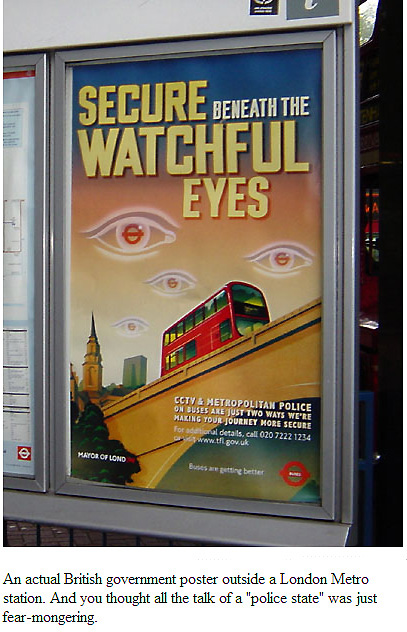


by a QFS member
Seen by over 1 BILLION people!
Books by Signs of the Times
Books by Red Pill Press