|
By Joshua Frank
Brickburner.org 28 Feb 06 It happens all the time. If the antiwar movement takes on the Democrats for their bitter shortcomings, a few liberals are bound to criticize us for not hounding Bush instead. It doesn't even have to be an election year to get the progressives fired up. They just don't seem to get it. "How can you attack the Democrats when we have such a bulletproof administration ruling the roost in Washington?" somebody recently e-mailed me. "Don't you have something better to do than write this trash?!"


Well, not really. It's too cold in upstate New York right now to do anything other than fume over the liberal villains in Washington. "Why do I write about the putrid Democratic Party?" I responded, "I'll tell you, there's a reason this Republican administration is so damn bulletproof – nobody from the opposition party is taking aim and pulling the trigger." And that's why the Dems are just as culpable in all that has transpired since Bush took office in 2000. They aren't just a part of the problem – the Democrats are the problem. I mean, who is really all that surprised Bush and his boys wanted to conquer the Middle East? Not me. That's just what unreasonable neocons do: they stomp out the little guy, kill off the weak, and suffocate the voiceless. They only care about the girth of their wallets and the number of scalps they can tack above their mantles. The Democrats aren't just letting the Republicans get away with murder, however: some of them are also reaping the benefits of the Bush wars. We constantly hear about Dick Cheney's ties to Halliburton and how his ex-company is making bundles off U.S. contracts in Iraq. But what we don't hear about is how Democratic Sen. Dianne Feinstein and her husband are also making tons of money off the "war on terror." The wishy-washy senator now claims Bush misled her prior to the invasion of Iraq. I don't think she's being honest with us, though. There may have been other reasons she helped sell Bush's lies. According to the Center for Public Integrity, Feinstein's husband Richard Blum has racked in millions of dollars from Perini, a civil infrastructure construction company, of which the billionaire investor wields a 75 percent voting share. In April 2003, the U.S. Army Corps of Engineers gave $500 million to Perini to provide services for Iraq's Central Command. A month earlier in March 2003, Perini was awarded $25 million to design and construct a facility to support the Afghan National Army near Kabul. And in March 2004, Perini was awarded a hefty contract worth up to $500 million for "electrical power distribution and transmission" in southern Iraq. Feinstein, who sits on the Senate Appropriations Committee as well as the Select Committee on Intelligence, is reaping the benefits of her husband's investments. The Democratic royal family recently purchased a $16.5 million mansion in the flush Pacific Heights neighborhood of San Francisco. It's a disgusting display of war profiteering, and just like Cheney, the leading Democrat should be called out for her offense. And that's exactly why the Bush administration is so darn bulletproof. The Democratic leadership in Washington is just as crooked and just as callous. More on Feinstein's War Dollars Senator Feinstein's husband has a nice profile at SFGate. Richard Blum has scored bundles from this war and the millions have been deposited in his accounts, which he undoubtedly shares with his wife (even if they aren't, she's certainly reaping the benefits as her salary could not possibly afford a $16.5 million mansion). Here are the basics: Blum holds over 111,000 shares of stock in URS Corporation, which is now a defense contractor. Blum is the acting Director of URS which bought EG&G from Carlyle awhile back. URS has banked on the Iraq war, scoring a phat $600 million contract. They have seen their stock price more than triple as a result. Blum cashed in over $2 million on that venture alone and another $100 million for his investment firm. If this was a Republican senator's spouse you'd bet the liberals would be up in arms. But since Feinstein is a Democrat -- mums the word. Partisanship trumps ethics. The House the War Bought This is Dianne "War-Profiteer" Feinstein's new pad in San Fran. Not bad on a senator's salary. Copyright - Joshua Frank  |
|
David Nason
February 27, 2006 But the most alarming news was in the growing number of people in Bush's fine economy who are hungry.
The Second Harvest report, using figures compiled before hurricanes Katrina and Rita, showed that 25 million Americans had been forced to get food from the organisation's network of food banks, soup kitchens and shelters in 2005, up 9 per cent from 2001. The hungry included 9 million children (aged under 18) and 3 million elderly people. The trend is reflected in data collected last year by the US Department of Agriculture, which found that more than 38 million Americans lived in hungry or "food insecure" households -- an increase of 5 million since 2000.
GEORGE W. Bush went to Milwaukee last week to talk more about America's addiction to oil. But before turning to his latest obsession, the President gave a precis of the US economy. Bush declared the economy "strong and gaining steam" and rattled off the positives -- a healthy 3.5 per cent growth rate; unemployment down to 4.7 per cent; more than 4 million new jobs created in the past 30 months; home ownership at record levels; and after-tax income up 8 per cent since 2001. "We're doing fine," Bush assured his audience before posing the rhetorical question: "How do we keep doing fine?" Three waves of the Bush magic wand provided the answers. First, the President praised the virtues of low taxation, saying it would remain a guiding economic principle of his administration. Next, he advocated careful government spending, although mention of the budget deficit was carefully avoided. Finally, Bush spoke of the wonders of modern technology, reminding the good folk of Milwaukee that Americans once used typewriters instead of computers; payphones instead of mobiles and carbon paper instead of laser printers. Now, Bush said, there was a technology explosion under way and just ahead were electric and ethanol-powered cars and power from the wind and the sun. "In the life of this nation we have seen incredible and rapid advances in technology," Bush said. "I believe the greatest advances are yet to come." But like his recent State of the Union address and like several speeches since, Bush spoke as though hybrid and electric cars and alternative energy sources had never been heard of before. In this bizarre fantasy land, the American people didn't need an economic vision. All they needed was faith in Bush and a few gadgets. Three days after Milwaukee, the US Federal Reserve published its triennial survey of consumer finances while Second Harvest, the nation's largest domestic hunger-relief organisation, released the latest figures on US poverty. The data give a different perspective of the "fine" US economy. The consumer report showed that median net worth in the US had grown just 1.5 per cent between 2001-04 -- the period of the Bush administration -- compared with 10.3 per cent between 1998-2001. The reduction was due mainly to a sharp rise in household debt -- particularly home mortgage debt -- and a decline in real wages. Adjusted for inflation, wages have actually fallen 6.2 per cent. Wages falling this much in a period of low unemployment certainly does not augur well for the next jobs crisis, but there was more worrying news in the figures on savings and share market investment. The number of families saying they had saved money in 2005 fell 3.1 points to 56.1 per cent while the percentage of families that bought shares directly or indirectly through mutual funds fell 3.3 points to 48.6 per cent. Significantly, the reduction in stock ownership was the first recorded by the Fed since the consumer finance survey began way back in 1989. But the most alarming news was in the growing number of people in Bush's fine economy who are hungry. The Second Harvest report, using figures compiled before hurricanes Katrina and Rita, showed that 25 million Americans had been forced to get food from the organisation's network of food banks, soup kitchens and shelters in 2005, up 9 per cent from 2001. The hungry included 9 million children (aged under 18) and 3 million elderly people. The trend is reflected in data collected last year by the US Department of Agriculture, which found that more than 38 million Americans lived in hungry or "food insecure" households -- an increase of 5 million since 2000. Second Harvest questioned about 30,000 food distribution agencies as part of its survey. More than 40 per cent of them said funding problems threatened their future work. But the statistic that stood out most was the one that said 36 per cent of people who came seeking food lived in households where at least one person worked. It means increasing numbers of working people in the US don't earn enough for their families to eat properly. In the fine economy of George W. Bush, that is serious food for thought. |
|
By Scott Ritter
27 Feb 06 Stung by growing criticism of his Iraq policy which has manifested itself in all-time low public opinion ratings, President Bush last month embarked on a tour in which he delivered five speeches outlining his "Plan for Victory" in Iraq, as well as offering a defense of his decision to invade Iraq. "It is true that much of the intelligence [used to justify the invasion] turned out to be wrong", Mr. Bush said in the fourth of these speeches. "As President, I'm responsible for the decision to go into Iraq."
While taking responsibility for his actions, Mr. Bush has not taken well to any criticism of his role in over-selling the case for war, and in his speech was quick to attack those who dared hold him to account. "Some of the most irresponsible comments about manipulating intelligence", he said, "have come from politicians who saw the same intelligence we saw, and then voted to authorize the use of force against Saddam Hussein. These charges are pure politics." But it is the President, through his speeches, who is engaged in politics of the most puerile sort. Mr. Bush failed to address his role in the Niger yellowcake forgery, the aluminum tube exaggeration, the rush to embrace "Curveball", or any of the myriad of politicized intelligence pushed by the White House in the lead up to war with Iraq. The President continued to exploit in the basest fashion the death of nearly 3,000 people on September 11, 2001. As has been his style since that horrible day, Mr. Bush hid behind the memory of so many fallen to mask his administration's shortcomings and disguise its true intent. "Given Saddam's history", the President said (conveniently omitting that the CIA today states that Iraq had destroyed all of its WMD by the summer of 1991), "and the lessons of September the 11th, my decision to remove Saddam Hussein was the right decision. Saddam was a threat -- and the American people and the world is better off because he is no longer in power." But even the CIA's National Intelligence Estimate of October 2002, used by the Bush administration to sell its Iraq war to the US Congress, failed to identify Saddam Hussein as a threat. The White House pushed hard to find intelligence information that backed the assertions made by President Bush in the fall of 2002 that Hussein's regime was an "ally of al-Qaeda" and posed a direct terrorist threat to America. "This is a man that we know has had connections with al-Qaeda," he said, referring to Saddam Hussein. "This is a man who would like to use al-Qaeda as a forward army. And this is a man that we must deal with for the sake of peace." But neither the FBI nor the CIA were able to produce any intelligence to back up the President's rhetoric. Indeed, both agencies provided assessments that directly contradicted the claims of Mr. Bush, noting that any alliance between Saddam Hussein and Osama Bin Laden was highly unlikely. These findings were included in the October 2002 National Intelligence Estimate, a classified document kept secret from the American public and most members of Congress. However, in a declassified version of the NIE made public, all mention of the de-linking of Saddam Hussein and Al Qaeda were excised, freeing up the President and his administration to sell the Iraqi war on the basis of not only the existence of WMD in Iraq, but also the probability that Saddam Hussein would transfer these weapons to his ally, Osama Bin Laden, who "on any given day" could unleash hell on American soil. "And when the history of these days is written", the President said, concluding the fourth and last of his Iraqi policy speeches, "it will tell how America once again defended its own freedom by using liberty to transform nations from bitter foes to strong allies. And history will say that this generation, like generations before, laid the foundation of peace for generations to come." History will tell another tale. Far from the revisionist and heavily redacted version of events offered up by President Bush, historians will write of an America which squandered the good will of the world in the aftermath of September 11, 2001, to instead push aggressively for a policy of pre-emption and hegemony. In a speech made before the graduating class of the United States Military Academy at West Point in 2002, the President told the future officers of the US Army (many of whom have gone on to fight and, tragically for some, die in Iraq) that, "Our security will require all Americans to be forward-looking and resolute, to be ready for preemptive action when necessary to defend our liberty and to defend our lives." He went on to say that "America has, and intends to keep, military strengths beyond challenge." These twin policies of hegemony and pre-emption went on to be codified in the National Security Strategy of the United States, published by the White House in September 2002. The 33-page document outlined a new and muscular American posture in the world -- a posture that relied on preemption to deal with rogue states and terrorists harboring weapons of mass destruction. It stated that the United States would never allow its military supremacy to be challenged as it was during the Cold War, noting that when America's vital interests are at stake, it will act alone, if necessary. President Bush has tried to justify his embrace of hegemony and pre-emption as a tragic necessity in the aftermath of the attacks of September 11, 2001. But the facts do not add up. The triple-threat outlined by the Bush administration as the justification for this new policy -- Saddam Hussein's WMD, the Hussein-Osama Bin Laden alliance, and the transfer of WMD technology from Iraq to Al Qaeda for the purpose of attacking America -- could not be backed up either in the form of intelligence data or intelligence analysis. The fact that the Bush administration pushed so aggressively for pre-emptive war in the face of no viable threat speaks volumes about the nature and intent of the President and those who advise him. In 1946, the Nuremburg Tribunal rejected the German defense of pre-emption when it came to the invasion of Denmark and Norway in 1940. The Germans had cited the imminent occupation of these two nations by the armed forces of France and Great Britain, which would have threatened the German northern front, as just cause. This defense was rebuked by the tribunal, led by US Supreme Court Justice Robert H. Jackson, who instead identified the German action as constituting a "war of aggression." Judge Jackson went on to say that "To initiate a war of aggression, therefore, is not only an international crime; it is the supreme international crime differing only from other war crimes in that it contains within itself the accumulated evil of the whole." Judge Jackson's words, and my steadfast allegiance to the Constitution of the United States of America, motivated me to give testimony [mp3] this past Saturday at the International Commission of Inquiry on Crimes Against Humanity Committed by the Bush Administration, in particular in support of the first count put forward by the commission: that the Bush administration authorized a war of aggression against Iraq. I'm not a big fan of un-mandated tribunals, but given the absolute lack of attention on the part of Congress regarding the decision to invade Iraq (a lethargy encouraged somewhat by Congress' own culpability in abrogating its responsibilities under the Constitution when it comes to war powers and holding the Executive Branch in check), I felt that my participation in the Commission's work would help create a record that might someday in the future motivate the representatives of the American people who occupy the Legislative Branch of government to carry work that not only serves the interests of their respective constituencies, but also defends both the letter and intent of the Constitution they are sworn to uphold and defend. America should not be looking to any international commission or tribunal to hold President Bush and his administration to account; that is the job of the American people. When historians look back on the policies enacted by the Bush administration in the aftermath of September 11, 2001, starting off with the decision to invade Iraq in March 2003, they will be passing judgment on a United States that has violated international law as egregiously as any power in modern history. The final chapters have yet to be written on the Presidency of George W. Bush, but even if time stopped still at the present, the crimes of America and its leader are many, and terrible. Iraq today is very much a nation under foreign occupation, which makes the very processes of democracy the United States seeks to impose on the Iraqi people questionable from a legal basis, as it is a violation of international law for occupying forces to impose their will on the processes of law and self-governance of an occupied people. It would be tragic comedy of the blackest sort for anyone to try and make a case that the Bush administration has not imposed itself in a significant and meaningful fashion regarding the drafting of the new Iraqi Constitution, the conduct of Iraqi elections, and the formulation and implementation of the Iraqi court system (especially as it concerns the ongoing trial of Saddam Hussein). The end result of all of this illegitimate intervention on the part of the United States in Iraq is the creation of a failed nation state in Iraq today. Legal niceties aside, the end result of the American invasion and occupation of Iraq are a human and social disaster of enormous scale, where unified central governmental authority is not only non-existent, but unachievable under current conditions. Civil war is ongoing, and threatens to explode to levels of violence several orders of magnitude greater than the horror already unfolding in Iraq on a daily basis. Those who postulate the "what ifs" of American policy ("What if democracy takes root, the Iraqi economy turns around, the insurgency fades away, and Iraq emerges as a symbol of freedom for the Middle East") have just had the nails hammered into the coffin of their false hopes. The Bush administration's refusal to continue funding of Iraqi reconstruction programs has thrown into the trash bin any hope of building an Iraq that could withstand the stresses of occupation and insurgency by winning over the hearts and minds of a deeply traumatized Iraqi populace. This action by the United States not only seals the ultimate defeat of America in Iraq by guaranteeing the increase in chaos and anarchy upon which the insurgency thrives, but also certifies yet again the status of the Bush administration as a violator of international law, in this case Hague Regulations and Geneva Conventions to ensure the well-being of the occupied population by respecting their rights to life, health, food, education, and employment. Having invaded and destroyed Iraq, the United States now adds insult to injury by walking away from its responsibilities to rebuild Iraq at least to the standard that existed under Saddam Hussein's rule before March 2003. While emotionally one can state that getting rid of Saddam Hussein bettered the lot of the average Iraqi citizen, intellectually this is a case that is unsustainable by fact. On every benchmark used to judge the effectiveness of a nation state, Iraq under American occupation fails to meet even the mediocre standards of Iraq as governed by Saddam Hussein, both before and during the time of sanctions. Iraq's education, health, transportation, security, infrastructure (especially water and electricity) and economy have all digressed since the US-led invasion. Finally, I would be remiss not to comment here on the Bush administration's record of suppressing freedom of speech and expression, especially when it comes to the issue of Iraq. Within the United States we have the ongoing saga surrounding the President's decision to authorize unwarranted wiretaps, enabling the secretive National Security Agency to monitor and record the conversations and communications of American citizens without first going through special courts established for this purpose. The President has justified his actions by noting that the courts in question imposed a dangerous time impediment, which impacts America's ability to rapidly respond to any emerging terrorist threat. He also emphasized that such intercepts only involved communications between US citizens and known Al Qaeda connections. The legality of the President's actions are questionable, and under current review by members of Congress. However, given the Bush administration's proclivity to use the Al Qaeda label freely and often without cause (witness the repeated efforts to link Saddam Hussein's regime to Al Qaeda, and the ongoing description of Arab media outlets critical of US policy in the Middle East, such as Al Jazeera, as being propaganda organs of Al Qaeda), the scope of justification of these wiretaps could go far beyond any real threat that might exist from Al Qaeda, and include any anti-war movement in America that has communicated with citizens inside Iraq, or any journalist or columnist who communicates with or writes for Al Jazeera, or anyone who questions or opposes the policies of the Bush administration when it comes to the war in Iraq or the Global War on Terror. Far from protecting America, the President Bush's frontal assault on the freedoms and protections afforded by the US Constitution have placed the United States, and indeed the world, in greater peril than any terrorist plot could ever aspire to. If, by writing a book exposing the lies about Iraqi WMD or submitting an essay to Al Jazeera (or for that matter, to AlterNet or any other outlet that publishes a dissenting view), the Bush administration construes my actions as representing a threat to the United States and as such worthy of covert monitoring, so be it, for it is their actions that are seditious to the ideals and values set forth by the Constitution, not mine. When faced with the scale of the criminal activity undertaken by the Bush administration in the name of bringing freedom to the Iraqi people or defending America, the only real sedition I could commit would be to remain silent. Scott Ritter served as a Chief UN Weapons Inspector in Iraq from 1991 until his resignation in 1998. He is the author of, most recently, Iraq Confidential: The Untold Story of the Intelligence Conspiracy to Undermine the UN and Overthrow Saddam Hussein (Nation Books, 2005). |
|
By Warren Richey
The Christian Science Monitor The role of money in elections is one of the most volatile fault lines in American politics. Liberals generally favor limits on how much gets raised for campaigns. Many conservatives want few if any restrictions.
Tuesday, the US Supreme Court is set to hear arguments about a Vermont law that goes a step further than limits on campaign contributions. It also restricts how much candidates can spend.
It's that limit on spending that makes the case, Randall v. Sorrell, so closely watched. The high court struck down such limits in a landmark case 30 years ago. But critics say that the explosive growth in campaign spending since that time has changed the political landscape. "The time has come for the court to take a second look," says Brenda Wright of the National Voting Rights Institute in Boston. "What we had in Vermont that prompted this law was that there was a moment when the legislature and the citizenry felt that they were on the brink of slipping into the kind of special interest money- dominated politics that they saw at the national level and they did not want to see this happening to their state." At issue in the Vermont case is the constitutionality of Act 64, a law passed by the state legislature in 1997 that seeks to break the connection between money and politics by establishing strict limitations on both campaign contributions and campaign expenditures. Act 64 reflects a policy judgment by Vermont lawmakers that the best way to ensure a level playing field in elections is to slow the flow of money at both ends of the campaign pipeline. Supporters of the law say such spending limits are justified by the government's interest in fostering citizen confidence in the democratic process by preventing corruption and the appearance of corruption. "Under a system of unlimited campaign spending, incumbents amass war chests that deter challengers and leave many elections effectively uncontested," writes Ms. Wright in her brief to the court. This reduces officeholders' accountability and diminishes robust public debate on the issues, she adds. Opponents of the law say that while some limitations on campaign contributions do not violate the First Amendment, restrictions on how much money a candidate can spend will muzzle candidates in violation of their free speech rights. "The forced reduction in overall candidate campaign spending is illegitimate under the First Amendment," says James Bopp in his brief on behalf of the Vermont Republican State Committee challenging the Vermont law. "In the free society ordained by our Constitution it is not the government but the people ... who must retain control over the quantity and range of debate on public issues in a political campaign." The Supreme Court has already limited the inflow of campaign funds. In 1976, it handed down a landmark decision recognizing that large cash contributions to candidates in the midst of political campaigns might give rise to corruption or the appearance of corruption. To counter it, the high court said in a case called Buckley v. Valeo that the government could place reasonable limits on the amount of money being contributed to a political campaign. But the justices struck down limitations on the outflow of campaign funds - the amount of money candidates could spend while trying to get elected. Legal analysts say it is unclear how the current court will approach the case. Some suggest Justice Anthony Kennedy may emerge as the swing vote with Chief Justice John Roberts and Justice Samuel Alito siding with conservatives Antonin Scalia and Clarence Thomas to strike down the Vermont law. But others say the court may take a different approach, allowing lawmakers to make the policy choices of how best to conduct and finance elections. There is little middle ground in the case. Opponents of the law say it amounts to an incumbent protection plan because challengers are barred from raising the amounts of money necessary to overcome the name recognition and other advantages of incumbency. "Any expenditure ceiling - especially one that uses past average expenditures as the relevant guide - will necessarily restrict the spending of some candidates to ensure that other candidates are not outspent," says Mitchell Pearl, a Middlebury, Vt., lawyer in a brief urging the court to strike down the law. "Act 64 will prevent many candidates from amassing the resources necessary for effective advocacy." In urging the high court to uphold Vermont's experiment in campaign finance reform, Vermont Assistant Attorney General Timothy Tomasi says spending limits help free candidates and officeholders from becoming beholden to campaign contributors. "Expenditure limits militate against the undue access and influence now afforded donors and allow officials to decide issues based on the merits, not the wishes of their financiers," Mr. Tomasi writes in his brief. "They permit officials to attend to their public duties instead of seeking private dollars, and assure that candidates and officials have the opportunity to hear the views of all citizens, regardless of whether they are donors." A decision in the case is expected by late June. |
|
Doug Thompson, Capitol Hill Blue
Secret Service agents guarding Vice President Dick Cheney when he shot Texas lawyer Harry Whittington on a hunting outing two weeks ago say Cheney was "clearly inebriated" at the time of the shooting.
Agents observed several members of the hunting party, including the Vice President, consuming alcohol before and during the hunting expedition, the report notes, and Cheney exhibited "visible signs" of impairment, including slurred speech and erratic actions. According to those who have talked with the agents and others present at the outing, Cheney was drunk when he gunned down his friend and the day-and-a-half delay in allowing Texas law enforcement officials on the ranch where the shooting occurred gave all members of the hunting party time to sober up. We talked with a number of administration officials who are privy to inside information on the Vice President's shooting "accident" and all admit Secret Service agents and others say they saw Cheney consume far more than the "one beer' he claimed he drank at lunch earlier that day. "This was a South Texas hunt," says one White House aide. "Of course there was drinking. There's always drinking. Lots of it." One agent at the scene has been placed on administrative leave and another requested reassignment this week. A memo reportedly written by one agent has been destroyed, sources said Wednesday afternoon. Cheney has a long history of alcohol abuse, including two convictions of driving under the influence when he was younger. Doctors tell me that someone like Cheney, who is taking blood thinners because of his history of heart attacks, could get legally drunk now after consuming just one drink. If Cheney was legally drunk at the time of the shooting, he could be guilty of a felony under Texas law and the shooting, ruled an accident by a compliant Kenedy County Sheriff, would be a prosecutable offense. But we will never know for sure because the owners of the Armstrong Ranch, where the shooting occurred, barred the sheriff's department from the property on the day of the shooting and Kenedy County Sheriff Ramon Salinas III agreed to wait until the next day to send deputies in to talk to those involved. Sheriff's Captain Charles Kirk says he went to the Armstrong Ranch immediately after the shooting was reported on Saturday, February 11 but both he and a game warden were not allowed on the 50,000-acre property. He called Salinas who told him to forget about it and return to the station. "I told him don't worry about it. I'll make a call," Salinas said. The sheriff claims he called another deputy who moonlights at the Armstrong ranch, said he was told it was "just an accident" and made the decision to wait until Sunday to investigate. "We've known these people for years. They are honest and wouldn't call us, telling us a lie," Salinas said. Like all elected officials in Kenedy County, Salinas owes his job to the backing and financial support of Katherine Armstrong, owner of the ranch and the county's largest employer. "The Armstrongs rule Kenedy County like a fiefdom," says a former employee. Secret Service officials also took possession of all tests on Whittington's blood at the hospitals where he was treated for his wounds. When asked if a blood alcohol test had been performed on Whittington, the doctors who treated him at Christus Spohn Hospital Memorial in Corpus Christi or the hospital in Kingsville refused to answer. One admits privately he was ordered by the Secret Service to "never discuss the case with the press." It's a sure bet that is a private doctor who treated the victim of Cheney's reckless and drunken actions can't talk to the public then any evidence that shows the Vice President drunk as a skunk will never see the light of day. |
|
George Monbiot
Tuesday February 28, 2006 The Guardian At last the battlelines have been drawn, and the first major fight over climate change is about to begin. All over the country, a coalition of homeowners and anarchists, of Nimbys and internationalists, is mustering to fight the greatest future cause of global warming: the growth of aviation.
Not all these people care about the biosphere. Some are concerned merely that their homes are due to be bulldozed, or that, living under the new flight paths, they will never get a good night's sleep again. But anyone who has joined a broad-based coalition understands the power of this compound of idealism and dogged self-interest.
The industry has seen it, and is getting its revenge in first. Last week the Guardian obtained a leaked copy of a draft treaty between the European Union and the US that would prevent us from taking any measure to reduce the environmental impact of airlines without the approval of the US government. This, though it might be the widest ranging, is not the first such agreement; the 1944 Chicago convention, now supported by 4,000 bilateral treaties, rules that no government may levy tax on aviation fuel. The airlines have been bottlefed throughout their lives. The British government admits that the only area in which it is "free to make policy in isolation from other countries" is airport development; it could contain or reverse the growth of flights by restricting airport capacity. Instead, it is softening us up for a third runway at Heathrow, and similar extensions at Stansted, Birmingham, Edinburgh and Glasgow. Twelve other airports have already announced expansion plans. According to the Commons environmental audit committee, the growth the government foresees will require "the equivalent of another Heathrow every five years". Orwell's most accurate prediction in 1984 was the mutation of Britain into Airstrip One. Already, one fifth of all international air passengers fly to or from an airport in the UK. The numbers have risen fivefold in the past 30 years, and the government envisages that they will more than double by 2030, to 476 million a year. Perhaps "envisages" is the wrong word. By providing the capacity, the government ensures that the growth takes place. As far as climate change is concerned, this is an utter, unparalleled disaster. It's not just that aviation represents the world's fastest growing source of carbon dioxide emissions. The burning of aircraft fuel has a "radiative forcing ratio" of around 2.7; what this means is that the total warming effect of aircraft emissions is 2.7 times as great as the effect of the carbon dioxide alone. The water vapour they produce forms ice crystals in the upper troposphere (vapour trails and cirrus clouds) that trap the earth's heat. According to calculations by the Tyndall Centre for Climate Change Research, if you added the two effects together (it urges some caution as they are not directly comparable), aviation emissions alone would exceed the government's target for the country's entire output of greenhouse gases in 2050 by around 134%. The government has an effective means of dealing with this. It excludes international aircraft emissions from the target. It won't engage in honest debate because there is no means of reconciling its plans with its claims about sustainability. In researching my book about how we might achieve a 90% cut in carbon emissions by 2030, I have been discovering, greatly to my surprise, that every other source of global warming can be reduced or replaced to that degree without a serious reduction in our freedoms. But there is no means of sustaining long-distance, high-speed travel. The industry claims it can reduce its emissions by means of technological developments. But, as the Royal Commission on Environmental Pollution points out, its targets "are clearly aspirations rather than projections". There are some basic technological constraints that make major improvements impossible to envisage. The first problem is that our planes have a remarkably long design life. The Boeing 747 is still in the air 36 years after it left the drawing board. The Tyndall Centre predicts that the new Airbus A380 will still be flying, "in gradually modified form", in 2070. Switching to more efficient models would mean scrapping the existing fleet. Some designers have been playing with the idea of "blended wing bodies": planes with hollow wings in which the passengers sit. In principle they could reduce the use of fuel by up to 30%. But the idea, and its safety and stability, is far from proven. Yet this is as good as it gets. As the Advisory Council for Aeronautics Research in Europe says: "The consensus view is that the rate of progress for conventional engines will slow down significantly in the next 10 years." And if the efficiency of engines does improve, this doesn't necessarily solve the problem. More efficient engines tend to be noisier (so even less acceptable to local people), and to produce more water vapour (which means that their total climate impact could in fact be higher). Even if the outermost promise of a 30% cut could be met, it would offset only a fraction of the extra fuel use caused by rising demand. The airline companies keep talking about hydrogen planes, but if ever the technological problems were overcome they would be an even bigger disaster than current models. "Switching from kerosene to hydrogen," the royal commission says, "would replace carbon dioxide from aircraft with a threefold increase in emissions of water vapour." Biofuels would need more arable land than the planet possesses. The British government admits that "there is no viable alternative currently visible to kerosene as an aviation fuel." New fuel consumption figures for both fast passenger ships and ultra-high-speed trains suggest that their carbon emissions are comparable to those of planes. What all this means is that if we want to stop the planet from cooking, we will simply have to stop travelling at the kind of speeds that planes permit. This is now broadly understood by almost everyone I meet. But it has had no impact whatever on their behaviour. When I challenge my friends about their planned weekend in Rome or their holiday in Florida, they respond with a strange, distant smile and avert their eyes. They just want to enjoy themselves. Who am I to spoil their fun? The moral dissonance is deafening. Despite the claims made for the democratising effects of cheap travel, 75% of those who use budget airlines are in social classes A, B and C. People with second homes abroad average six return flights a year, while people in classes D and E hardly fly; they can't afford the holidays, so are responsible for just 6% of flights. Most of the growth, the government envisages, will take place among the wealthiest 10%. But the people who are being hit first and will be hit hardest by climate change are among the poorest on earth. Already the droughts in Ethiopia, putting millions at risk of starvation, are being linked to the warming of the Indian Ocean. Some 92 million Bangladeshis could be driven out of their homes this century in order that we can still go shopping in New York. Flying kills. We all know it, and we all do it. And we won't stop doing it until the government reverses its policy and starts closing the runways. www.monbiot.com |
 Why Scooter Libby is Toast and Rove will provide the butter: And why no one connected with John Fund can get life insurance Why Scooter Libby is Toast and Rove will provide the butter: And why no one connected with John Fund can get life insuranceby Melinda Pillsbury-Foster
28 Feb 06 Scooter Libby made a mistake. He thought he was a NeoCon Insider. It was a natural mistake for him to have made, his business cards, the perks, the deference, the salary, and the access to power, all spell out Insider using the usual formula for such. But he was wrong and will now find himself tossed off the back of the Sleigh of State into the gaping maws of righteous indignation, there to serve his ultimate purpose, scapegoat and distraction. The NeoCons waste nothing, not even their hapless tools, that is their environmental policy.
Your standing and importance in the NeoCon world depend not on where you graduated college, in Scooter's case Columbia University, or on your overt title or what you do in the administration, that is mostly window dressing. What matters is how important you are to the inner workings of the NeoCon Cabal. No one who came on board after 1999 is really an insider. The insiders earned that status far earlier; Insiders do the work you can't afford to have known. Therefore no matter what they must be protected. Scooter's knowledge about the actions taken by this administration can all be parsed as missteps by those at his level. The very visibility he was allowed and his connection to so many events points not to his importance but to his expendibility. Those in this administration who know themselves to have been brought on board after 2000 who also participated in questionable activities should be contacting their attorneys and working on building up funds for their defense. The real NeoCon Insiders are political operatives placed in media, politics, and in prominent places in the larger cultural frame. What you do as a political operative in carrying out the covert machinations of the Plan, that is what matters; that is what determines your expendibility factor. Real insiders do not have to worry about being tossed off the back of the sleigh. For them, anything is possible in terms of defense. They know too much for it to be otherwise. This group is relatively small in number. What they did to earn that status goes to such questions as the shape and direction of policy for the last 10 years, the make up of the legion of pundits, the various 'sources' for leaks, and other points that, if considered, help the onlooker see the reality behind the political front presented by this Administration today. One of the best examples of this is John Fund. He is carrying his weight as a political operative; he is not expendable though occasionally he is forced to spend time on the side lines for bad behavior. The internal structure of the NeoCon world means the need to know is based on what the individual will be doing for the Plan. This correlates with their routine inclusion on insider information. Fund has been 'briefed' with confidential information since 2000 and before then with their internal plans, which he helped formulate. He is briefed because as a first level operative he handles what is most sensitive to them. When the NeoCons transferred their cabal into positions within government and the media they assigned duties to those operatives they knew they could trust. Newbeys were used but not trusted with the most sensitive activities. For NeoCons trust takes a long time. Fund, they knew they could trust. He had been one of them for nearly twenty years by then. He worked hard to make himself useful, suggesting many major appointments for this administration, providing names of individuals who would bring 'cover' for what the administration intended to do. He wrote the book they intended to use to stifle comment on the election fraud they had already planned, and providing presence useful to them ideologically, though that is now slipping. Instead of looking at the administration and thinking in terms of the normal chains of command superimpose on that the driving need of this administration to manipulate public opinion while bolting into position the means to ensure they cannot be displaced. The Alito confirmation demonstrated that Congress is iced; the Supreme Court is frozen; and at this point in time the electoral process is known to be owned by the NeoCons, thanks to Diebold and manipulation within various states. Examine Fund's role as a political operative. You start to see how this was accomplished. Fund was a nerd from Live Oak, California who dreamed of power. He was recruited by Robert Novak and placed at the Wall Street Journal in 1983. His qualifications are that there is nothing he will not do as well as his facility to use the rhetoric of the freedom movement to justify policies useful to NeoCons. His problematic personal history kept him from the position of speech writer for Bush in 2000. He is useful and protected but even then the Bush administration understood his potential liabilities. Many of those serving in positions similar to Scooter's in this administration were suggested by Fund. He had started his political career as a Libertarian and was familiar with most of the players from that movement. That movement provided the policy that allowed the adoption of law that decoupled costs from accountability. In this way government has increased its real income. Look at services provided by government; notice how these are being cut back while taxes continue to rise. This puts money into the pockets of the NeoCons and the friends they appoint. Their costs are lowered; their income increased. Those funds were then redirected into such adventures as the War in Iraq. From our National Parks to Social Services policy has been used to convert 'service' to profit centers that generated even more profits while the costs are borne increasingly by ordinary Americans through fees. What the Ports Deal tells you is that even this may not be enough; soon you may see a for sale sign in front of Yosemite and the Statue of Liberty. Check out the action in any of the vast array of agencies and bureaus we entrust to provide services; talk to the victims and activists who are struggling against the system that is eating them alive. Every day their numbers grow. The direction of American policy for privatization, outsourcing, and deregulation, all of which originated in libertarian think tanks such as Cato Institute in Washington D. C. and Reason Foundation in Los Angeles, were intended originally to allow the individual American more choices and so lower costs. Instead government keeps exacting taxes while the individual pays privately for services formerly funded through government. John Fund put these players together for their mutual profit. Notice the large donors to each of these two think tanks. Koch Industries is run by Charles and David Koch, two men who have profited along with Halliburton from such expensive fiascoes as Vietnam and now in Iraq. The story of how what we once called 'the freedom movement' was subverted has a long history. That conversion stole the hope in which thousands of activists invested their lives. The means by which it was accomplished were devious, revealing amazing foresight. These oil men connect neatly to the same people who took over the United Nations and the Environmental Movement. The motivation was always the burnishing of the bottom line and protecting profits. The Austrian economics that originally prevailed at Cato through the presence of the eminent economist, Murry Rothbard, was replaced by Utility Theory. Utility Theory allows for the manipulation of economic factors for the 'good of the many.' Rothbard's Austrian viewpoint rejected manipulation. Rothbard was a founder of Cato. He is no longer even mentioned in their history. He was purged by Ed Crane, Cato President, and Charles Koch, their only donor at that point, in 1981. (see contemporary newsletter on line at the von Mises Institute.) At the time it was a mystery to all of us in the movement. We assumed it was a personality conflict. But the logic of the action is clear given the present train of events John Fund is a dear friend of Cato. He occupies a seat of honor whenever he attends one of their events for which he is comped, as is appropriate for one who has done so much in their cause. Those who work for Cato have profited largely from their conversion of freedom. In 2000 Fund was given an even more important trust by the NeoCons inner circle; to write a book that would allow him to speak as an authority on the issue of electoral fraud. His comments on that subject are calculated to sow division among those who are working for reform. This kind of disinformation campaign has been duplicated many times, both by him and by other NeoCon political operatives. But John Fund has arguably carried more weight and done more than any other single operative to advance the NeoCon agenda. Do a google search on his name and note the specific subjects he takes up and writes about. He anticipates the action frequently, placing specious arguments then adopted by those who respect his authority and power. John Fund was the essential component in constructing the justifications for this and for building defenses against criticism in advance. To do that he needed to know what was going to come down. Hence, briefings. And despite the fact he was fired from the Wall Street Journal Editorial Staff in 2002 he continues to be billed as 'their man.' How many on line journalists get such briefings? How do I know he is being briefed? He said so. Yesterday he appeared on the Joe Scarborough Show at MSNBC and the transcript for that show contains the following: "FUND: Joe... CROWLEY: ... there are so many things in this war on terror that we cannot control. Look, if a terrorist is-is-is intent on committing an act of terror against the United States, they will do whatever they can to try to find a way to do that. FUND: Joe... CROWLEY: I am saying that, because there are so many things we can't control in this war, why give up an area that we can control? FUND: Joe, one of the saddest things... SCARBOROUGH: John Fund. FUND: One of the saddest things in this whole debate has been the things we can't talk about. It is certainly true, the United Arab Emirates had a spotty record regarding terrorism before 9/11. Since 9/11, when George Bush said, you're either for-with us or you are against us, the United Arab Emirates has decided, they are with us. There are things-and I got a security briefing on this today-there are things the United Arab Emirates has done to support the war on terrorism that are brave, that have put that government at risk, that we can't talk about, and our government can't talk about, because it would only mean more terrorist attacks on the United Arab Emirates. So, they are silent. They can't speak for themselves. I am not pro-Arab. I am not Muslim, but I am pro-common sense. Let's have the 45-day review, and let's have this debate after the 45 days, when we actually have all the information and all the facts. SCARBOROUGH: All right. Thank you so much, John Fund. I usually agree with you. Tonight, I don't." How many of you receive a briefing from the administration routinely? Fund is not a reporter assigned to the White House. He is not directly employed by the Wall Street Journal. Ask yourself why he has received these briefings for at least six years. The answers to questions are often unpalatable but important. My own involvement in this story is of long standing. I had doubts and questions about John Fund from the time I noted he was using me to place rumors in the early months of the Clinton Administration. Not that I liked Clinton but neither do I like being used for someone's dirty work. I was then well involved in the National Federation of Republican Women. I had known John since before he was hired as Executive Director for the Libertarian Party of California in 1981. I was then Southern California Vice Chairman. Unlike Fund, I was always a volunteer whose focus was not on personal profit but on changes I wanted to leave my children. My family has a long history as champions for freedom. It is always, perhaps, the personal, that forces us to accept the unpalatable. Events drove that message home for me. My daughter, Morgan Pillsbury, told me she had been battered by John Fund while they were living together. I believe her. I saw the physical evidence. I am a witness, the only witness. That should have been handled as is mandated by law in New York. The deviations from what is normal procedure began to awaken me to the reality of this administration. I was determined to see justice done. After a good many years the law suit Morgan filed is now wending its way through the system and a hearing is scheduled for this spring. Two days ago I discovered evidence I was being stalked. Both my counsel and I agreed the timing was more than a little coincidental. Earlier today I prepared and placed with my counsel a declaration of what I intend to say when called to testify. It is well to be prepared. The evidence I discovered is also in his hands. Why am I being stalked? What do I know that concerns the NeoCons except that John Fund lied about a simple case of domestic violence? Sometimes you don't see what is significant. But over the past years I have been privy to things that never appeared in the media. I am not sure which item is of the most concern to them. I think about the train of events sometimes and wonder. John is, I came to realize, a tangle of truths and falsehoods; any inquiry will doubtless produce something the NeoCons cannot risk becoming known. Having watched the NeoCons for years I have no illusions about just how ruthless they can be. Contributing to No Child Left Behind did not give me a get out of jail free card. I do not anticipate having tea at the White House with Laura again. Protecting John Fund appears to be more important than anyone, certainly I, had realized. John has acted as a spy for the NeoCons, pointing out the vulnerabilities of those who were committed to the freedom movement, working to widen the chasms of distrust between all Americans, placing disinformation, attacking under pretense of politics and ideology, and accepting all of the benefits he so earned. He has championed an undeclared war on our freedoms; a conversion of our lives and wealth to their profit. As a side note, many people will be surprised to learn that John Does not live in toney Georgetown digs. John lives in a pig sty of a bachelor pad in Jersey City. One might be lead to believe his Bible is the Bachelor's Home Companion by P. J. O'Roark, but seems to be able to conceal a large amount of his personal wealth. Morgan commented about the papers she had to clean up and sent many on to me. My counsel now has those, too. Most Americans do not yet realize that a war is being waged -- not against Iraq but against each of us. It is not the Republican Party that is charge in this administration but a small cadre who seized executive branch power and converted it to their own uses. Most Republicans are experiencing a deer-in-the-headlights moment right now. Their Party has been hijacked, their president has been hijacked, and they do not know what to do. I remain a registered Republican working for an effective coalition. The attack on us and on our rights has hardly begun. You don't go to the trouble of setting up this degree of control without having made plans to use it. That is where we are today. The NeoCons have garnered tremendous power and wealth, but we can still win. Solutions exist. Those include getting off all of the grids, energy, being only the first. The NeoCons want a system that provides them with an income and control in perpetuity. We need to turn off the faucets. Getting out of debt; paying off your mortgage, working to strengthen your local organizations and charities that provide the social services we all may well need, these are also essential. Prepare to become active in and for your own community. Finally affirm the rights of all Americans under the Constitution by ratifying the Equal Rights Amendment. It was that wrong step that allowed all later compromises that converted our inherent rights to privileges meted out by government. The means exist to fight back by moving outside the NeoCon game plan. We have choices as we move towards a different vision for America. Families, individuals, communities, and towns, that is medium for governance envisioned by our founders; people directly controlling their own lives and acting in charity and good will towards those around them. Some day we may look back and see this as a wake up call that returned us to that vision. Don't allow yourself to be distracted by the pseudo drama of Scooter Libby. He was never a player, just wolf bait. Now I am going to see if I can increase the level of my life insurance. http://howtheneoconsstolefreedom.blogspot.com Melinda Pillsbury-Foster is the author of GREED: The NeoConning of America and A Tour of Old Yosemite. The former is a novel about the lives of the NeoCons with a strong autobiographical component. The latter is a non-fiction book about her father and grandfather. Ms. Pillsbury-Foster has been active in politics since the Goldwater Campaign. She left the Republican Party to join and become active in the Libertarian Party in 1973, working as an activist and party officer until she left the Libertarian Party in 1988. She received 5% of the vote in a four way race in 1982 for California's 20th State Senate Race while also serving as Southern Vice-Chairman for the California Libertarian Party. She was elected to six terms as a state officer, eventually serving on National Committee. In 1988 she rejoined the Republican Party and became a member and country officer for the National Federation of Republican Women and also served as a Regent for several years. She is also the the founder of the Arthur C. Pillsbury Foundation (www.acpillsburyfoundation.com). She is the mother of four living children and one deceased. |
|
Associated Press
WASHINGTON - Minority-owned businesses say they're paying the price for the decision by Congress and the Bush administration to waive certain rules for Hurricane Katrina recovery contracts.
About 1.5 percent of the $1.6 billion awarded by the Federal Emergency Management Agency has gone to minority businesses, less than a third of the 5 percent normally required. On Tuesday, Sen. Olympia J. Snowe, R-Maine, and Rep. Donald A. Manzullo, R-Ill., asked the Government Accountability Office to investigate whether small and minority-owned businesses have been given a fair opportunity to compete for Katrina contracts. Andrew Jenkins doesn't think so. Once Katrina's destructive waters receded, he began making calls in hopes of a winning a government contract for his Mississippi construction company. Jenkins, who is black, says he watched in frustration as the contracts went to others, many of them larger, white-owned companies with political ties to Washington. "That just doesn't smell right," said Jenkins, president of AJA Management and Technical Services Inc. of Jackson, Miss., noting the region has a higher percentage of blacks and minority-owned businesses that other areas of the country. To speed aid, many requirements normally attached to government contracting were waived by Congress and the administration. The result has been far more no-bid contracts going to businesses that have an existing relationship with the government. Affirmative action rules eased There also was an easing of affirmative action rules for contractors and a suspension of a "prevailing wage" law that black lawmakers and business people believe will hurt the disproportionately large number of black hourly workers in the region. "It sends a bad message," said Harry Alford, president of the National Black Chamber of Commerce. "What they're basically saying to the minority in New Orleans is, 'We'll make it harder for you to find a job. And if you do, we'll make sure you get paid less.'" The Department of Homeland Security, whose FEMA division handles most of the contracts, said it is committed to hiring smaller, disadvantaged firms. But many of the no-bid awards were given out to known players who could quickly provide help in an emergency situation, spokesman Larry Orluskie said. "It was about saving lives, protecting property, and going to who you go to, to get what you need," he said. The Labor Department also has said its decision to temporarily suspend affirmative action rules for first-time government contractors doing Katrina work was motivated by a need to reduce paperwork to speed emergency aid. The Army Corps of Engineers has a better record on minority contracts, with roughly 16 percent of the $637 million in Katrina contracts going to minority-owned companies, according to agency records. Businesses with more than 50 employees typically must have a written affirmative action plan if they are awarded contracts of more than $50,000. But the Bush administration removed that requirement for three months, saying basic anti-discrimination laws would provide adequate protection. Minorities upset, but remain hopeful At a recent meeting in Mississippi for minority businesspeople with federal contracting officials, Rep. Bennie Thompson, D-Miss., said many of the 100 owners walked out in anger when told their best chance of getting work was to seek smaller subcontracts from the larger companies. "The president has talked about small businesses being the engine of our economy, but when the time for sound bites is over his administration still uses the same backroom deals to take care of their friends," said Thompson, a member of the Congressional Black Caucus. The situation has exacerbated racial sensitivities that already were heightened by the slow initial federal response to the New Orleans flood. Many poor black residents didn't get help for days. Bush huddles with NAACP head President Bush has met privately with NAACP President Bruce Gordon to discuss the racial component of the disaster. And Alford said he will get a meeting with Bush sometime soon to talk about improving opportunities for minority contractors. With billions of dollars of new contracts still yet to be awarded, minority leaders say they remain hopeful the Bush administration will begin to provide the same types of opportunities given to large-scale contractors. In the meantime, Willie Nelson of 33-year-old Nelson Plumbing Inc., continues to wait. He says white-owned firms scurry with work in Mississippi, while his Jackson business sits idle. "The majority firms are all over the place," Nelson said. "We just want an equal opportunity. But it's been very difficult. They seem to be more interested in taking care of their own while we try to just get a foot in the door." |
|
by John in DC
28 Feb 06 Bush tells ABC News, in an interview to be broadcast on World News Tonight, Nightline and Good Morning America, that the problem with Hurricane Katrina was that the White House didn't have enough "situational awareness" of what was happening on the ground in New Orleans:
BUSH: Listen, here's the problem that happened in Katrina. There was no situational awareness, and that means that we weren't getting good, solid information from people who were on the ground, and we need to do a better job. One reason we weren't is because communications systems got wiped out, and in many cases we were relying upon the media, who happened to have better situational awareness than the government. That's a lie. The White House knew the levies were breaking and did nothing about it. We now know that for a fact. In addition, Bush was on vacation and didn't get any substantial updates about the situation on the ground until Thursday and Friday of the week (the hurricane hit Monday morning). Bush CHOSE not to get updates about Katrina, he was ON VACATION and chose to STAY on vacation. And he wonders why he's at 34% in the polls. Because he's a liar who refuses to ever take responsibility for anything. Then we get this little tidbit about 9/11: I thought, for example, the reaction to the 9/11 attack was a remarkable reaction, positively. When the terrorists attacked and destroy two buildings, there were rescue teams rushing in to save lives. There was a response by the city that was a coordinated response. Yes, the response from the city of New York was incredible, especially since you were in hiding the entire day up until 6:15PM that evening when you finally returned to the White House. And New York City's brave and effective response is a reflection on you how? More about Katrina. The big problem, according to Bush, is that the government didn't "comfort people." Comfort people? What, you mean like give em a hug? VARGAS: When you look back on those days immediately following when Katrina struck, what moment do you think was the moment that you realized that the government was failing, especially the people of New Orleans? BUSH: When I saw TV reporters interviewing people who were screaming for help. It looked Â? the scenes looked chaotic and desperate. And I realized that our government was Â? could have done a better job of comforting people. The people of New Orleans didn't need comfort. They needed a helicopter to get them out of trapped buildings that had no food and water. Comfort them? Then Bush starts lying about Iraq: And as you know, we've reduced troop levels this year, and that's because our commanders on the ground have said that the security situation in Iraq is improving because the Iraqis are more capable of taking the fight. That's another outright lie. US troops levels just went down to the levels they were at right before the elections two months ago, when we sent in additional troops to help keep the peace. We didn't reduce troop levels because things are going better, we simply withdrew the troops associated with the election. |
 Homophobic, anti-Semitic "Christian" activists who promote hate literature are now trying to get "Desperate Housewives" thrown off the air Homophobic, anti-Semitic "Christian" activists who promote hate literature are now trying to get "Desperate Housewives" thrown off the air by John in DC
28 Feb 06 The radical religious right group, the American Family Association, has become the book burners of the new century. They don't simply have a gripe with a few things in our culture, a few companies, a few TV shows. They want America to be forced to live under their warped, minority view of an extremist Biblical lifestyle that doesn't even comport with the majority of mainstream American Christianity.
And now they're trying to kill the hit show "Desperate Housewives." You'll recall that this is the same group that "boycotted" Ford, then lost, after we exposed the organization as gay-hating, having a terrible record of anti-Jewish and anti-Muslim writings, AND the fact that the AFA actually promotes the "Nazi Germany era" science of known hate groups on their Web site. It's hard to believe that any American company, or politician, would want to be associated with such fringe haters. Let me share with you, and the folks who run Desperate Housewives, the exact message the American Family Association is promoting: Does a "Jewish upbringing" lead to a life of crime? In the March issue of American Family Association Journal, a publication of Donald E. Wildmon's right-wing evangelical activist group, the American Family Association (AFA), author Randall Murphree suggested that a Jewish upbringing leads to hatred of Christians, and by extension, a criminal lifestyle. Were gays the real evil behind the Holocaust? Scott Lively, California chapter director of the AFA, is co-author of a book titled, The Pink Swastika: Homosexuality and the Nazi Party, in which he claims that “homosexuals [are] the true inventors of Nazism and the guiding force behind many Nazi atrocities.” Lively makes explicit links between his claims about the Nazi party and the modern gay equal rights movement, claiming that “From the ashes of Nazi Germany, the homo-fascist phoenix has arisen again, this time in the United States.” Is Europe "infested" with Muslims who breed "faster than we do"? "The problem we have with Europe is that [it] is infested with the Muslim population. The reason why is because they multiply at a much faster rate than we do," she says. "When we Christians get married, we have two, three, maybe four children -- after they're born, we start thinking about what college we're going to send them to, what education we're going to give them. The Muslims, on the other hand, are allowed to marry up to four wives at a time," she says, noting that terrorist Osama bin Laden had 27 children. Is AIDS a "gay plague"? Some time ago, you see, Thacker called AIDS "the gay plague," which everyone knows but no one will admit, particularly homosexuals and their friends in the Bush Administration. Are gays responsible for the "end of times"? The president of one pro-family group feels the battle in Massachusetts over legalizing homosexual marriage is a clear example of the struggle between good and evil as the end times approach. Are Muslim-Americans trying to "take over our cities"? Muslim newcomers are engaging in what area realtors call "block busting." In other words, he says, "They came in, paid outrageously high prices for some of our homes that you wouldn't give $20,000 for, paying 60 and 70 thousand, which then entrenched a number of [Muslim families] on every block." Golen believes this is part of a "concerted effort" on the part of Muslims to use their financial power take over the city, and he says, "they're doing a heck of a job because nobody's standing up to them." Are gays "deviants"? "...an immoral, deviant lifestyle." Are gays a "public health" threat? As a family physician, I’ve seen first-hand the devastation that homosexuality brings into the lives of patients that have chosen to live this way.... To promote homosexuality and even consider the sanctioning of it through “marriage” is irresponsible and is a danger to the public health of the entire country, spiritually and physically. Do Jews control Hollywood? The AFA Journal has long served as a platform for anti-Semitic theories and innuendo. For instance, Wildmon warned of Jewish control over popular culture, an old anti-Semitic canard, in a January 1989 article, "What Hollywood Believes and Wants." "The television elite are highly secular," Wildmon wrote. "The majority (59 percent) in the Jewish faith." In a separate article in the same issue, titled "Anti-Semitism Called a Serious Problem," Wildmon, a longtime opponent of gay rights, pointedly remarked that "Jews favor homosexual rights more than other Americans." Are gays diseased perverts who die early? - I'm not even going to quote this crap from AFA, read it for yourself and then tell me how any American company or politician would ever want to listen to these people. I'm starting to think we may need a new word for these religious right groups: Christian supremacists. (PS You can find more American Family Association homophobia here.) |
|
by Joe in DC
28 Feb 06 Speaking of GOP corruption which we seem to do an awful lot of these days....we've finally learned what the GOP thinks is unethical: reporting on the GOP ethics violations. From The Hill:
The House Republicans’ campaign operation is charging that a recently released Democratic report on Republican corruption violated ethics rules. Congresswoman Slaughter did a post on the report over at DailyKos when she released the report last week. The full report is available in a pdf version here.
|
|
By SHERYL GAY STOLBERG
February 28, 2006 WASHINGTON - It might be said that Senator John Thune went through the revolving door - backward.
As a lobbyist in 2003 and 2004, Mr. Thune earned $220,000 from the Dakota, Minnesota & Eastern Railroad, a small but ambitious company in South Dakota. The railroad hopes to rebuild and rehabilitate 1,300 miles of track, the nation's largest proposed railroad expansion in more than a century. Now, as a junior senator from South Dakota, Mr. Thune is working to make that happen, raising questions about whether there should be curbs on lobbyists-turned-lawmakers in the same way that there are on those who take the more traditional route of leaving Capitol Hill for K Street. Last year, his first in the Senate, Mr. Thune wrote language into a transportation bill expanding the pot of federal loan money for small railroads, enabling his former client to apply for $2.5 billion in government financing for its project. The loan has yet to be approved; Mr. Thune said he was trying to promote economic development in his home state. "I don't apologize, and never will," said Mr. Thune, a Republican, "for working for South Dakota companies that are creating South Dakota jobs." There are no legal restrictions on the legislative activities of former lobbyists who get elected to Congress. But in the wake of the Jack Abramoff lobbying scandal and the subsequent focus on ethics, Mr. Thune's experience has put a spotlight on what some experts call "the reverse revolving door." The issue is among those likely to be debated on Tuesday, when the Senate Committee on Rules and Administration meets to draft changes to the lobbying law. Senator Mark Dayton, Democrat of Minnesota and a member of the rules committee, is furious with Mr. Thune over the rail project, and intends to propose language imposing a two-year ban on lawmakers' getting "personally and substantially" involved in matters affecting former clients. "This makes some of the Jack Abramoff deals look like penny ante," said Mr. Dayton, who has a prominent constituent, the Mayo Clinic in Rochester, Minn., that is fighting the rail expansion. "It's the most despicable special-interest deal I've ever seen in all my 30 years in government." Independent experts do not go that far, and Mr. Thune, a former House member and former South Dakota state railroad director, has a long history with railroad issues. Yet some outside experts agree with Mr. Dayton that a cooling-off period for former lobbyists is necessary. Currently, lawmakers and Congressional aides are barred from lobbying former colleagues on Capitol Hill for one year after leaving public office. On Tuesday, Senator Trent Lott, Republican of Mississippi and the chairman of the rules committee, is expected to propose legislation that would go further, rescinding House and Senate floor privileges for former lawmakers who become registered lobbyists. Mr. Lott's bill does not address the issue of lobbyists who get elected to Congress. But Keith Ashdown, vice president of Taxpayers for Common Sense, a government watchdog group, said lobbyists-turned-lawmakers should step aside from legislation involving former clients. And James Thurber, an expert in money and politics at American University in Washington who has testified before the rules panel, said candidates should not lobby for a year before Election Day. "If they're going to be running for the Senate or the House they should not be lobbying right up to the election," Professor Thurber said, adding: "The conflict of interest is too serious. In a representative democracy, you have to be very careful about cutting off the linkages to specialized interests while you're in office, as well as just before you get in office and after you leave." According to public records and a list compiled by Professor Thurber, at least eight current members of Congress worked as lobbyists before being elected. Some, like Mr. Thune and Representative Dan Lungren, Republican of California, became lobbyists during a hiatus in public service. Mr. Lungren, a former House member and California attorney general, worked as a lobbyist from the late 1990's until he returned to the House in 2005. Mr. Thune, who retired from the House in 2002, began lobbying after he lost his bid for a Senate seat that year. He continued through 2004, when he ran again and won. His one-man company, the Thune Group, which he operated out of his Sioux Falls home, had just four clients, all with South Dakota connections; they included a boneless-beef manufacturer, a company that builds ethanol plants and a major hospital in Sioux Falls. He was also affiliated with a Washington-based law firm, Arent Fox, representing a recycling facility and the National Milk Producers Federation. Others have had far more extensive client lists. Representative Doris Matsui, Democrat of California, represented dozens of clients - including agricultural associations, a pharmaceutical business and Verizon, the telephone company - while her late husband, Robert, was serving in Congress. She was elected to fill his seat when he died. Still others, like Senators Lamar Alexander, Republican of Tennessee, and Robert F. Bennett, Republican of Utah, have not lobbied for years. Mr. Bennett opened the Washington office of the J.C. Penney Company in the 1960's, he said, back in the days "when lobbyists didn't earn as much as members." Mr. Bennett said he saw nothing wrong with Mr. Thune's work; he said lobbyists often had expertise that could translate into good public policy. "I left Penney's in 1969 to join the Nixon administration and I didn't come to the Senate until 1992, but I brought with me a residual understanding of retailing and retailing issues," Mr. Bennett said. "That expertise was helpful, and I did some things, frankly, that were helpful to the J.C. Penney Company. If it's good public policy, the fact that I brought that experience and expertise with me probably contributed to it." That is precisely Mr. Thune's argument. As the railroad's lobbyist, he helped Dakota, Minnesota & Eastern obtain a $230 million loan from the Federal Railroad Administration. The company president, Kevin V. Schieffer - a former chief of staff to a previous South Dakota senator, Larry Pressler - said that Mr. Thune had "real bona fide rail industry experience," and that he did not see any conflict. "He got his last check from us a long time ago," Mr. Schieffer said. Mr. Thune said the work convinced him that the same loan program could finance the big rail expansion, intended to transport so-called "clean-burning coal" from the Powder River Basin in Wyoming to the East Coast. Mr. Thune said the project was in keeping with President Bush's energy policy and would also create thousands of jobs in South Dakota. The trouble was, the loan program was too small - just $3.5 billion all told, with $1 billion for smaller railroads like the Dakota, Minnesota & Eastern. So Mr. Thune, drawing on existing legislation that was stalled, proposed increasing it to $35 billion, with $7 billion for small railroads. Although the Senate initially passed a lesser amount, Mr. Thune persuaded colleagues to include the full $35 billion when the transportation bill went to conference with the House. Mr. Dayton, who once co-sponsored a similar bill but now says that doing so was a mistake, calls the loan provision a "totally irresponsible boondoggle." Mr. Thune says that everything was done in the open, and that his constituents elected him knowing exactly whom he had worked for, and how much he was paid. "If you start banning elected officials from using their working knowledge on behalf of constituents," he said, "I think it would greatly erode our representative form of government." Comment: From AmericaBlog
South Dakota's Senator John Thune, who was elected with the aid of male prostitute Jeff Gannon, has provided yet another example of just how ethically bankrupt the GOPers on the hill can be. It sures seems like he has a lot in common with his infamous campaign operative |
Have a question or comment about the Signs page? Discuss it on the Signs of the Times news forum with the Signs Team.
Some icons appearing on this site were taken from the Crystal Package by Evarldo and other packages by: Yellowicon, Fernando Albuquerque, Tabtab, Mischa McLachlan, and Rhandros Dembicki.

Remember, we need your help to collect information on what is going on in your part of the world!
Send your article suggestions to: 
Contact Webmaster at signs-of-the-times.org
Cassiopaean materials Copyright ©1994-2014 Arkadiusz Jadczyk and Laura Knight-Jadczyk. All rights reserved. "Cassiopaea, Cassiopaean, Cassiopaeans," is a registered trademark of Arkadiusz Jadczyk and Laura Knight-Jadczyk.
Letters addressed to Cassiopaea, Quantum Future School, Ark or Laura, become the property of Arkadiusz Jadczyk and Laura Knight-Jadczyk
Republication and re-dissemination of our copyrighted material in any manner is expressly prohibited without prior written consent.

![[Valid Atom 1.0]](/signs/images/valid-atom.png "Validate my Atom 1.0 feed")

The Gladiator: John Fitzgerald Kennedy
John F. Kennedy and All Those "isms"
John F. Kennedy, J. Edgar Hoover, Organized Crime and the Global Village
John F. Kennedy and the Psychopathology of Politics
John F. Kennedy and the Pigs of War
John F. Kennedy and the Titans
John F. Kennedy, Oil, and the War on Terror
John F. Kennedy, The Secret Service and Rich, Fascist Texans
Recent Articles:
New in French! La fin du monde tel que nous le connaissons
New in French! Le "fascisme islamique"
New in Arabic! العدوّ الحقيقي
New! Spiritual Predator: Prem Rawat AKA Maharaji - Henry See
Top Secret! Clear Evidence that Flight 77 Hit The Pentagon on 9/11: a Parody - Simon Sackville
Latest Signs of the Times Editorials
Executing Saddam Hussein was an Act of Vandalism
Latest Topics on the Signs Forum |
Signs Monthly News Roundups!
June 2005
July 2005
August 2005
September 2005
October 2005
November
2005
February 2006
March 2006
April 2006
May 2006
June 2006
July 2006
August 2006
September 2006
This
site best viewed
with Mozilla Firefox

Picture of the Day
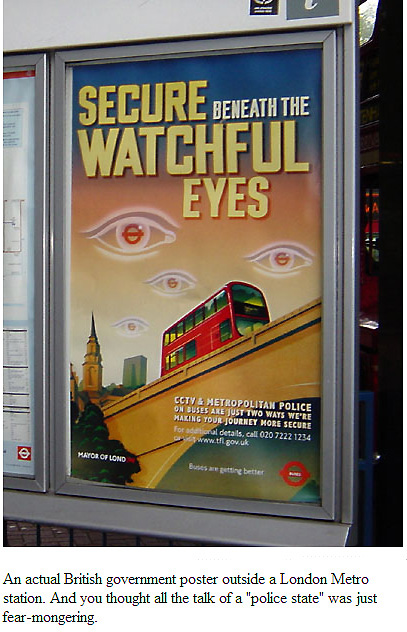


by a QFS member
Seen by over 1 BILLION people!
Books by Signs of the Times
Books by Red Pill Press