|
BBC
17 Feb 06 A Nigerian militant commander in the oil-rich southern Niger Delta has told the BBC his group is declaring "total war" on all foreign oil interests.
The Movement for the Emancipation of the Niger Delta has given oil companies and their employees until midnight on Friday night to leave the region. It recently blew up two oil pipelines, held four foreign oil workers hostage and sabotaged two major oilfields. The group wants greater control of the oil wealth produced on their land. 

|
|
By Jimtota Onoyume, Simon Ebegbulem, Paul Bebenimibo & Emma Arubi
Friday, February 17, 2006 PORT HARCOURT—AN oil well operated by Shell 30 kilometres south of Port Harcourt caught fire yesterday 24 hours after militant youths threatened revenge against it for making its facility available for an attack on an Ijaw community in Delta State.
Ijaw leaders said yesterday that the death toll in Wednesday’s helicopter gunship attack on Perezouweikore-gbene had risen to 30, and asked the Federal Government to call the Joint Task Force in the Niger Delta to order.
|
|
Agence France Presse
18 Feb 06 The CH-53 helicopters went down around 5:30 pm (1430 GMT) Friday in the waters of the Gulf of Aden near Ras Siyuan in northern Djibouti while on a two-hour training mission around the Godoria mountain range.
The military said the weather at the time of the crashes was partly cloudy with light to variable winds and "unlimited visibility."
|
Have a question or comment about the Signs page? Discuss it on the Signs of the Times news forum with the Signs Team.
Some icons appearing on this site were taken from the Crystal Package by Evarldo and other packages by: Yellowicon, Fernando Albuquerque, Tabtab, Mischa McLachlan, and Rhandros Dembicki.

Remember, we need your help to collect information on what is going on in your part of the world!
Send your article suggestions to: 
Contact Webmaster at signs-of-the-times.org
Cassiopaean materials Copyright ©1994-2014 Arkadiusz Jadczyk and Laura Knight-Jadczyk. All rights reserved. "Cassiopaea, Cassiopaean, Cassiopaeans," is a registered trademark of Arkadiusz Jadczyk and Laura Knight-Jadczyk.
Letters addressed to Cassiopaea, Quantum Future School, Ark or Laura, become the property of Arkadiusz Jadczyk and Laura Knight-Jadczyk
Republication and re-dissemination of our copyrighted material in any manner is expressly prohibited without prior written consent.

![[Valid Atom 1.0]](/signs/images/valid-atom.png "Validate my Atom 1.0 feed")

The Gladiator: John Fitzgerald Kennedy
John F. Kennedy and All Those "isms"
John F. Kennedy, J. Edgar Hoover, Organized Crime and the Global Village
John F. Kennedy and the Psychopathology of Politics
John F. Kennedy and the Pigs of War
John F. Kennedy and the Titans
John F. Kennedy, Oil, and the War on Terror
John F. Kennedy, The Secret Service and Rich, Fascist Texans
Recent Articles:
New in French! La fin du monde tel que nous le connaissons
New in French! Le "fascisme islamique"
New in Arabic! العدوّ الحقيقي
New! Spiritual Predator: Prem Rawat AKA Maharaji - Henry See
Top Secret! Clear Evidence that Flight 77 Hit The Pentagon on 9/11: a Parody - Simon Sackville
Latest Signs of the Times Editorials
Executing Saddam Hussein was an Act of Vandalism
Latest Topics on the Signs Forum |
Signs Monthly News Roundups!
June 2005
July 2005
August 2005
September 2005
October 2005
November
2005
February 2006
March 2006
April 2006
May 2006
June 2006
July 2006
August 2006
September 2006
This
site best viewed
with Mozilla Firefox

Picture of the Day
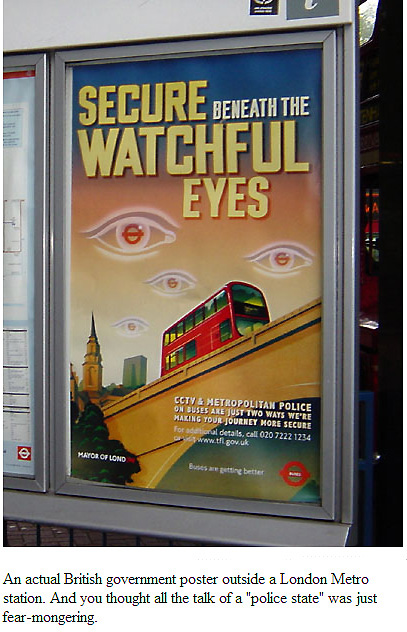


by a QFS member
Seen by over 1 BILLION people!
Books by Signs of the Times
Books by Red Pill Press