Storms
S


Windsock

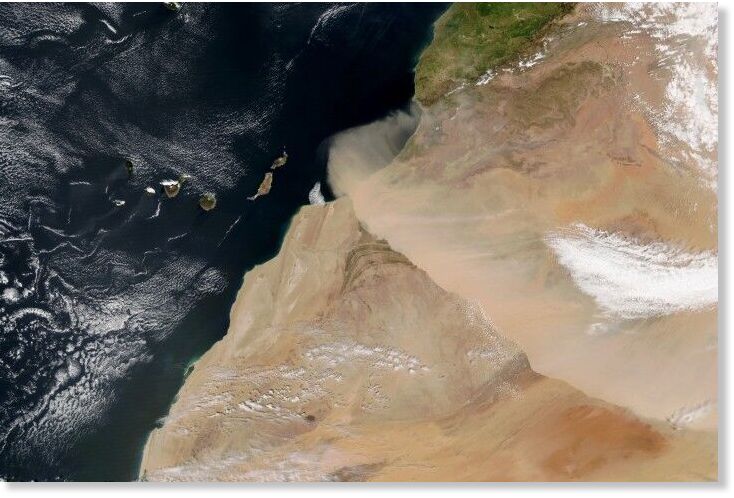
1,000-mile Saharan dust storm across northwestern Africa, from the sky and from the ground

mmmmm
A massive dust storm, or haboob, swept across the Sahara Desert from western Algeria into Mauritania, Morocco, Western Sahara and the Canary Islands on Monday. The dust stretched for more than 1,000 miles.

As meteorologists observed the dust storm from space via weather satellites, social media users captured the incoming dust storm on camera. One video shows a thick wall of dust and sand moving toward a resident of the town of Tindouf, near the Mauritanian, Western Saharan and Moroccan borders.

While this storm didn't make it too far off the coast, significant amounts of dust can drift westward from Africa across the Atlantic beginning in May. This can inhibit tropical storm formation, or the strengthening of an existing system, because the dusty air has about 50 less moisture than the typical tropical atmosphere.

Strong winds in the dust layer can also substantially increase the vertical wind shear in and around the storm environment, potentially disrupting any storm that forms.


Source: AccuWeather

Snowflake

Snow nearly 6 feet deep leaves tourists stranded in Poland's Tatra Mountains

mmmmm
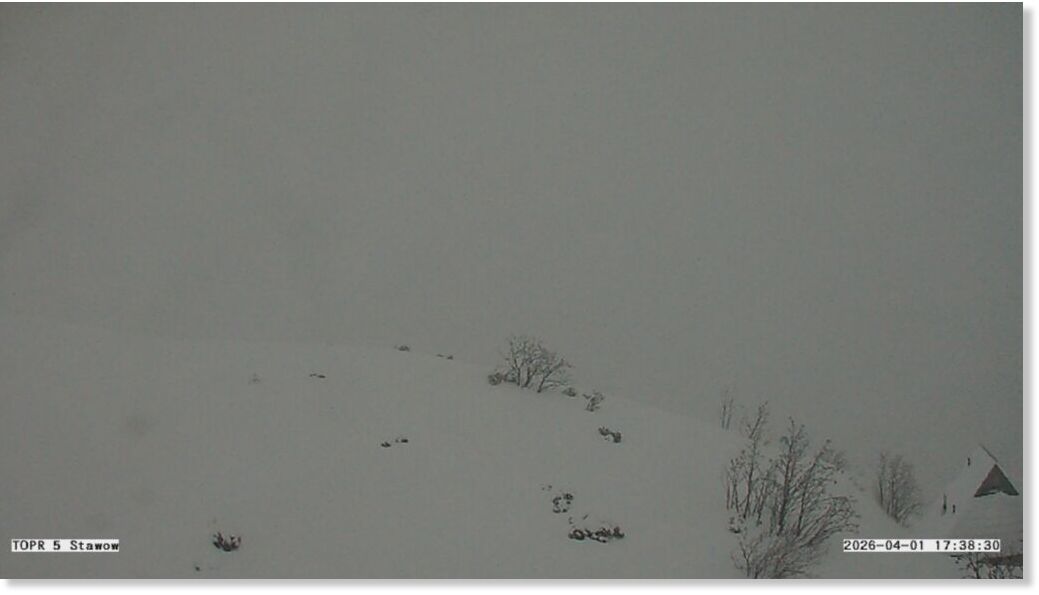
The live feed from the Vally of Five Lakes shows what visibility is like.
Heavy snowfall has trapped around a dozen people in a remote shelter high in Poland's Tatra Mountains.

Following a deterioration in weather and a heightened risk of avalanches, authorities at the Tatra National Park in southern Poland said on Tuesday that all 275 kilometers of trails would be shut until further notice.

The extreme winter weather has left around a dozen tourists and staff stranded at a mountain hut in the famous Valley of Five Lakes, the hut's owner, Marta Krzeptowska told the Polish state-owned news agency, PAP.

With snow cover in some places reaching up to 180 cm (71 inches) on Tuesday, Krzeptowska said guests would have to remain in the shelter until conditions improved and trails reopened. But she emphasized that the situation is under control.


Comment: A related report from 4 days prior: Snow blankets crocuses in Poland's Tatra Mountains, raising concerns for spring display


Tsunami

Flash floods in Nairobi, Kenya kill at least 110 (UPDATED)

mmmmm
Severe flooding in Nairobi
Aid workers ‌pulled bodies from floodwaters across Nairobi on Saturday after overnight flash floods killed at least 10 people, swept away dozens of cars and ​disrupted flights at East Africa's biggest airport, authorities said.

In ​the industrial neighbourhood of Grogan, security guard John Lomayan, ⁠34, looked at the body of an elderly man ​he recognised - a roadside egg seller - trapped beneath a car that ​had been washed away when the Nairobi River burst its banks.

"I saw him being carried by the water from up there," he said, gesturing ​up the road. "We didn't know where he had gone. ​It is only now that we see him under the car".

A Reuters reporter ‌saw ⁠three bodies pulled from underneath cars. Police said 10 people had been confirmed dead so far.


Comment: Update March 8

XINHUA reports:
The death toll from flooding triggered by heavy overnight rainfall in the Kenyan capital, Nairobi, has risen to 28, police said on Sunday, as rescue teams continue searching for survivors in several parts of the city.

Nairobi County Police Commander George Seda said five more bodies were recovered on Saturday evening from separate locations after floods submerged vehicles and forced motorists in some areas to flee to higher ground.

Seda said more bodies could still be found as search operations continue, with some parking areas and flooded locations remaining inaccessible.

The torrential rains caused widespread flooding, destruction of property, road closures and the displacement of residents in several neighborhoods across the capital.
Update March 10

AFP reports:
Flash flooding after torrential rains in Kenya has killed at least 45 people and forced hundreds to leave their homes, police said Monday.

Torrential rains lashed the Kenyan capital Nairobi late Friday, turning major streets into rivers and flooding thousands of homes and businesses.

Police said Saturday that at least 23 people had died in Nairobi but search and rescue operations were continuing amid widespread devastation.

Police spokesman Michael Muchiri told AFP on Monday that the toll was now 45 people drowned and 2,224 displaced but gave no further details.
Update March 30

ntvkenya.co.ke reports:
At least 110 people have died as floods triggered by heavy rains continue to devastate large parts of the country, with the crisis now affecting 30 counties, according to the latest update by the Ministry of Interior.

The disaster, government notes, has steadily expanded, with Kilifi, Bungoma, Nyeri, Kirinyaga, Nyandarua, Kiambu, Uasin Gishu and Mandera among the latest areas to report flooding as rivers burst their banks and drainage systems fail under sustained downpours.

Nairobi has recorded the highest number of fatalities at 37, underlining the dangers posed by poor drainage infrastructure and settlements in low-lying and riparian zones. The Eastern region follows with 26 deaths, while the Rift Valley has reported 14. Nyanza has recorded 11 fatalities, Central six, the Coast five and Western region two, reflecting the widespread nature of the crisis.

At least 6,953 households, equivalent to about 34,765 people, have been displaced, many forced to seek shelter in schools, churches and temporary camps after their homes were submerged or swept away. Three people remain missing as search and rescue operations continue.

The unfolding emergency reflects a broader pattern seen in recent years during the March to May long rains season, which has become increasingly erratic and intense.


Tsunami

15 dead, 9 missing after flash floods in Yemen

A flooded street following heavy rainfall in Sana'a, capital of Yemen, March 27, 2026.
© VCGA flooded street following heavy rainfall in Sana'a, capital of Yemen, March 27, 2026.
Flash floods caused by heavy rains have killed 15 people and left nine missing in Yemen's Taiz Governorate, with extensive damage reported, state-run Saba news agency said on Sunday.

The agency said the floods, triggered by torrential rains early Friday, struck host communities and camps for internally displaced persons in western and northwestern Taiz.

A preliminary government report confirmed the deaths included women and children, while nine others remain missing in Mocha, a port city of the governorate.

Initial estimates indicated nearly 5,900 families were affected, with homes partially or completely damaged. Yemen's meteorological authorities warned residents to avoid valleys and low-lying areas during and after rainfall.

Source(s): Xinhua News Agency


Snowflake

Best of the Web: Massive late-March snowstorm buries Europe's eastern Alps with up to 1.5 meter (nearly 5 feet) of snow

nnnnnn
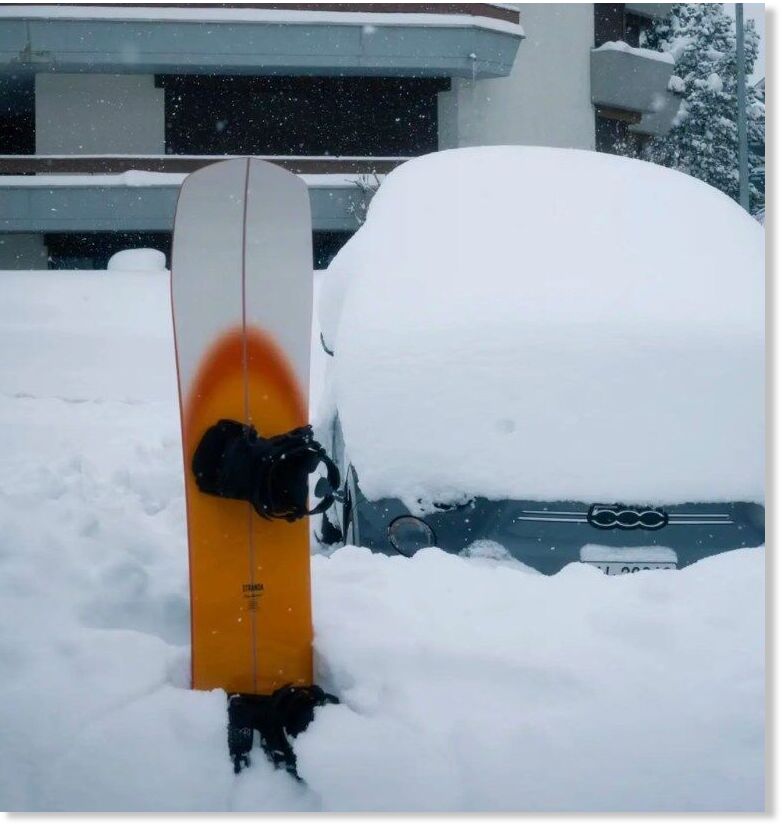
Emil Lonneberga shared these impressive powder shots from Engelberg.
A powerful late-season storm cycle has delivered a major refresh across the eastern Alps, with Switzerland leading the charge after several days of sustained snowfall. The standout has been Engelberg, where snowfall totals have been exceptional even by mid-winter standards. According to OpenSnow data, the resort received 84 cm (33 inches) in the past 24 hours and 132 cm (52 inches) over the past five days, catapulting conditions back into peak-season form.

The storm has been driven by a moist northwesterly flow, favoring northern Alpine regions and creating classic "Nordstau" conditions—where precipitation intensifies as air is forced over the mountains. The storm didn't stop at Switzerland. Zugspitze, Germany's highest peak, was also hammered, with around 1.5 meters (nearly 5 feet) of fresh snow reported in recent days. But that much snow comes with complications. In a post on social media, the resort cautioned: "A lot of snow does not automatically mean a lot of skiing. 1.5 meters of fresh snow must first be tamed... colleagues work around the clock to secure the ski area and prepare the slopes." Ongoing snowfall and poor visibility have delayed operations, with the resort indicating it expects to reopen over the weekend, pending improved weather conditions.


Tsunami

Malawi floods leave 34 dead, nearly 200 injured

mmmmm
At least 34 people have died, and nearly 200 others have been injured after heavy rains and flooding swept across Malawi last week, displacing thousands, the country's disaster management agency said on Thursday.

Flooding across 23 administrative areas has affected more than 69,000 households, or roughly 310,000 people, with over 6,000 households taking refuge in 84 emergency shelters, the Department of Disaster Management Affairs (DoDMA) said in a statement.

The southern district of Chikwawa is the hardest-hit, as nearly 25,000 households have been affected, more than 1,800 displaced into 24 emergency shelters, and nine people killed.

The DoDMA said the toll could rise as local authorities continue assessing areas that remain largely inaccessible.

The department is working with humanitarian partners to deliver relief to affected areas and has allocated a $10 million (17 billion Malawian Kwacha) to address urgent needs, restore basic services, prevent secondary impacts, and begin early recovery, the statement said.


Snowflake

Winter is back! Snow "invades" the mountainous areas of Elbasan, Albania

mmmmm
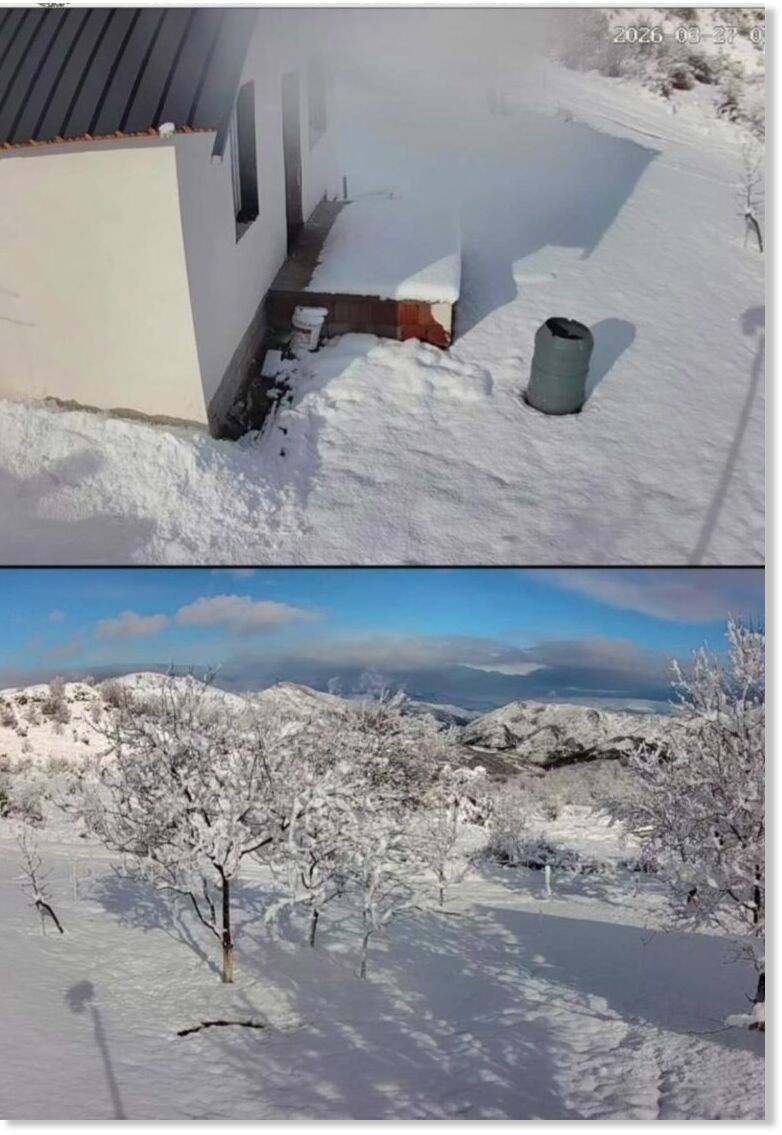
The heavy snowfall that hit the Elbasan Region last night has temporarily restored the winter atmosphere to the mountainous areas, covering dozens of villages in four municipalities of this region.

According to field data, the mountain villages of the municipalities of Elbasan, Librazhd, Gramsh and Prrenjas woke up this morning under a layer of snow ranging from 15 to 25 centimeters. The precipitation began around 20:30 pm yesterday evening and continued with intensity until after midnight, creating a typical winter panorama on the eve of spring.

The most affected areas are the Shebenik National Park, the tourist village of Fushë Studen, as well as a number of neighborhoods and villages over 800 meters above sea level in the Administrative Unit of Librazhd, including Orenjë, Qarrishtë, Dragostunjë, Polis, Babje, Dardhë and Xhyrë, where the snow thickness reaches at least 25 centimeters.

The same situation is present in all mountainous areas of the region, while this morning has brought cloudy weather, but without further precipitation. Despite the intensity of precipitation during the night, currently no traffic problems are reported. All rural roads are passable, while local authorities continue to monitor the situation to guarantee the safe movement of residents in these areas.


Cloud Lightning

World's tallest building hit by lightning as Dubai suffers flooding after heavy storms

The Burj Khalifa was hit by lightning
© Dubai Media Office/APThe Burj Khalifa was hit by lightning and flooding in Dubai.
Dubai has been hit by overnight flooding after "intense downpours" hit several cities in the United Arab Emirates (UAE), prompting officials to issue warnings.

Dramatic pictures were posted online by the Dubai Media Office and others of lightning striking the 829m/2,722ft Burj Khalifa, the world's tallest building.

Authorities in the UAE activated emergency measures and issued safety alerts across the country, Gulf News said.

"Heavy rain, thunderstorms and strong winds" swept across large parts of the UAE from Thursday into early Friday.

An unstable weather system caused "lightning, booming thunder and intense downpours in several cities", as well as "dust-raising winds and reduced visibility", the outlet said.


Snowflake

Snow in Greece: Winter returns in late March

mmmmm
The mountains of Epirus have been dressed in white
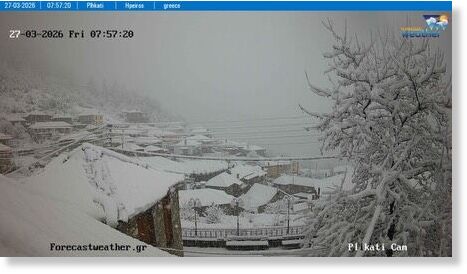
Snowfall sweeps across Epirus and Western Macedonia, covering Metsovo, Tzoumerka and Zagori as temperatures drop and authorities deploy snowplows.

Greece saw an unexpected return to winter overnight, as snowfall swept across several mountainous regions, turning villages into postcard-like scenes more typical of January than late March.

In the northern region of Epirus, snow began falling late in the evening and continued into the early morning, covering high-altitude areas above 3,300 feet (1,000 meters). The phenomenon affected parts of the Ioannina regional unit, including well-known mountain destinations such as Metsovo, Tzoumerka, Konitsa and Zagori.

By dawn, Metsovo — a traditional mountain town popular with visitors year-round — was blanketed in fresh snow. Rooftops, streets and surrounding hills were coated in white, while intermittent snowfall and low-hanging clouds added to the subdued, almost hushed atmosphere.


Snowflake

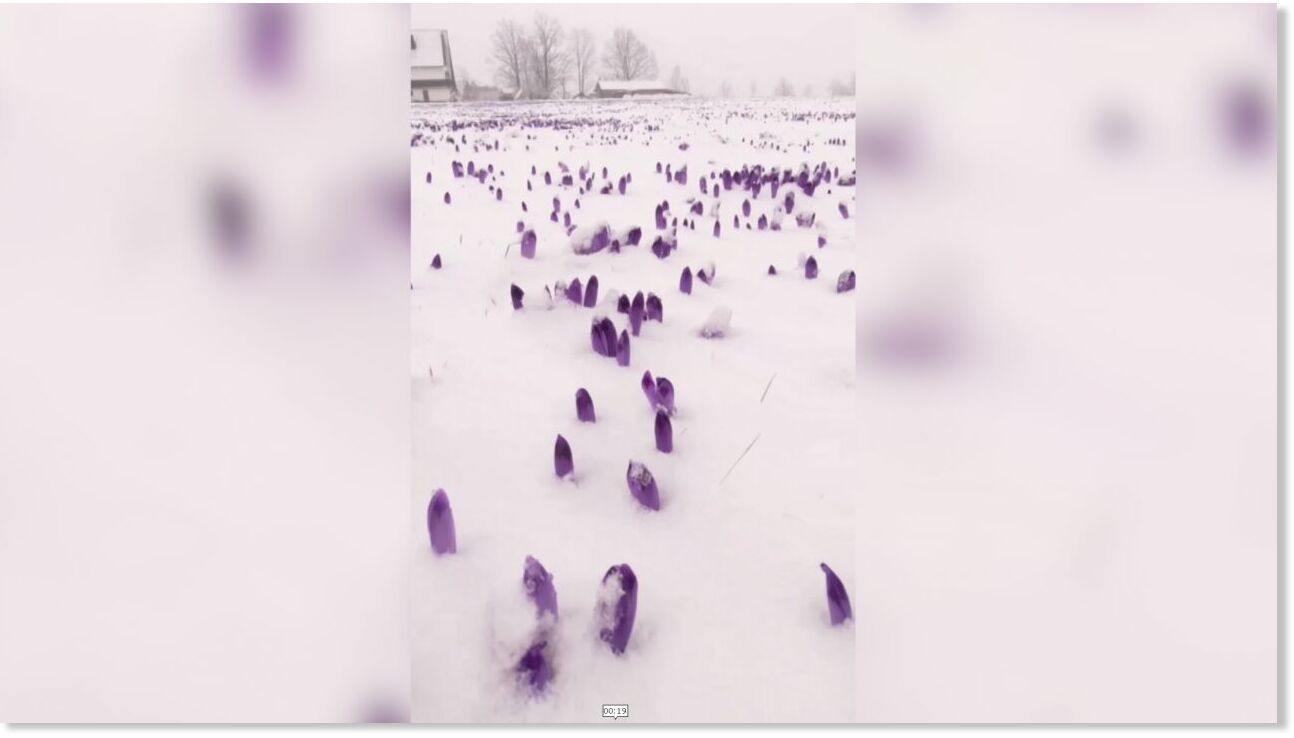
Snow blankets crocuses in Poland's Tatra Mountains, raising concerns for spring display

nnnnnn
Heavy snowfall in southern Poland has blanketed blooming crocuses in the Chochołowska Valley, a scenic valley in the Tatra Mountains near the Slovak border that is one of the country's best-known signs of spring.

After several warm, sunny days brought the flowers into bloom, fresh snowfall has now covered them, raising concerns that this year's display may be less vibrant than usual.

By Friday morning, around 15 centimeters of snow had fallen in Zakopane, a popular resort town at the foot of the Tatras, with more forecast later in the day.

The return of winter weather has also worsened conditions in the mountains, prompting the Tatra Volunteer Search and Rescue Service (TOPR) to issue a Level 2 avalanche warning.

The Chochołowska Valley is famous for its annual crocus bloom, which typically draws large numbers of tourists each spring.