
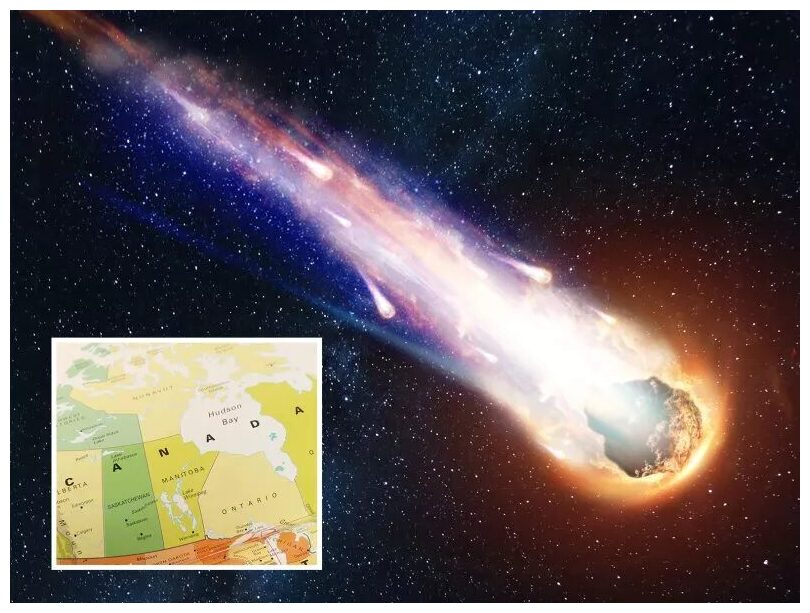
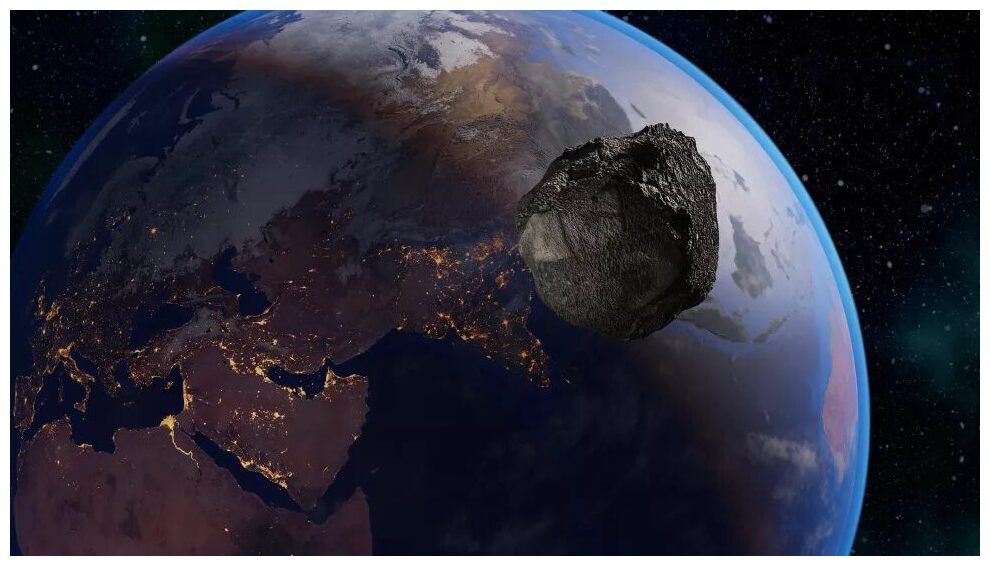
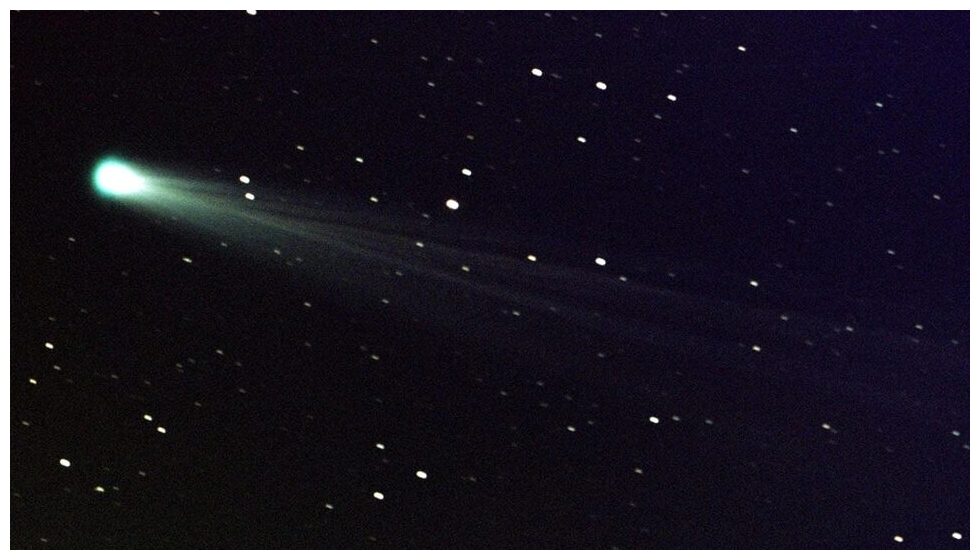
© ISTOCK / GETTY IMAGESThis stock image shows a comet hurtling through space, with an inset of a map of Canada. Scientists recently found that a space rock that lit up the skies over Canada in February 2021 wasn't actually a comet.
Independent observers of the new work say the find sheds light on the processes that formed our Solar System and challenges the conventional wisdom that the Oort Cloud only holds icy comets. "It's telling us that there was scattering and depositing of material from all over the Solar System into the Oort Cloud," says Karen Meech, a planetary scientist at the University of Hawaii's Institute for Astronomy.
The discovery could provide support for models that suggest objects from the asteroid belt were dispersed into the Oort Cloud soon after the Solar System's birth 4.6 billion years ago, says Bill Bottke, a Solar System dynamicist at the Southwest Research Institute. "This is very exciting," he says. "Now, we have to see what we can do to explain it."
First proposed by Dutch astronomer Jan Oort in 1950, the Oort Cloud is a spherical halo of comets that stretches out halfway to Proxima Centauri, the Sun's nearest neighbor, well beyond the view of even the largest telescopes. "Everything we know about it is indirect," says Denis Vida, a meteor astronomer at Western University who led the new study.
Scientists presume the Oort Cloud became populated with comets when the gravitational muscle of Jupiter and the other giant planets scattered far and wide the icy objects that were leftover from the formation of the outer Solar System. Occasionally, a passing star will gravitationally nudge an Oort Cloud object and send it plummeting into the inner Solar System. These objects are known as long-period comets, defined by their eccentric paths that take hundreds or even thousands of years to orbit the Sun.








Comment: See also: