Health & WellnessS


Bacon n Eggs

On the keto diet? Ditch the cheat day, says study

cheat day


Just one dose of carbohydrates can damage blood vessels


The often embraced 'cheat day' is a common theme in many diets and the popular ketogenic diet is no exception. But new research from UBC's Okanagan campus says that just one 75-gram dose of glucose - the equivalent a large bottle of soda or a plate of fries - while on a high fat, low carbohydrate diet can lead to damaged blood vessels.

"The ketogenic - or keto-diet - has become very common for weight loss or to manage diseases like Type 2 diabetes," says Jonathan Little, associate professor in the School of Health and Exercise Sciences at UBCO and study senior author. "It consists of eating foods rich in fats, moderate in protein, but very low in carbohydrates and it causes the body to go into a state called ketosis."


Comment: Like many studies on the ketogenic diet, this study fails to allow participants enough time to transition to a fat-burning state before the intervention. However, it seems likely that the findings would be similar given enough adaptation time. Sugar, after all, is quite toxic.

See also:


SOTT Logo Radio

SOTT Focus: Objective:Health: #9 - The Hidden Dangers of Oxalates in Your Food‌ - Interview With Sally K. Norton

Sally K Norton
This week our resident health experts Elliot Overton and Doug DiPasquale interview Sally K. Norton about the hidden dangers of a certain toxin hiding in our vegetables: oxalate. Otherwise known as oxalic acid, oxalate is made by plants and some fungi and serves their biological needs. Oxalate crystals have the potential to inflict a great deal of mechanical injury on the body. It is corrosive and toxic, yet many of the vegetables, nuts, grains and fruits that contain the most oxalates are promoted as health foods!

Sally K. Norton earned her Bachler of Science degree in Nutrition from Cornell University and a Master's degree in Public Health Leadership from UNC-Chapel Hill.

She's spent over three decades promoting health, wellness, and holistic healing both at the community level and also through academic research. She is now a self-employed health consultant, oxalate educator, and researcher. She regularly presents introductory seminars on the therapeutic value of low-oxalate eating. Since 2014, she has led a monthly educational study-group in Richmond, VA to support people using diet to heal and recover from difficult health issues.

Here's where you can find Sally:
Her website: https://sallyknorton.com/
Facebook: https://www.facebook.com/BeFreetoThrive/
Twitter: https://twitter.com/BetterLowOx
Instagram: https://www.instagram.com/sknorton/

And be sure to check out the Susan Owens' Facebook group 'Trying Low Oxalates (TLO)'


For other health-related news and more, you can find us on:
♥Twitter: https://twitter.com/objecthealth
♥Facebook: https://www.facebook.com/objecthealth/

Running Time: 01:57:11

Download: MP3 - 107 MB


Fish

GM salmon approved for commercial production in Prince Edward Island, US BioTech Corp announces

GMO salmon vs regular salmon
© AquaBountyThe salmon are engineered to grow much faster. Both these salmon are the same age.
Environment Canada has approved the commercial production of genetically-modified salmon produced in a facility in eastern P.E.I., says the company that owns the facility in a news release.

The AquAdvantage salmon, produced by AquaBounty, are modified to grow at a much faster rate than regular salmon.

AquaBounty has created a land-based, self-contained facility for the fish in Rollo Bay. Currently, the company has permission to export GM salmon eggs from P.E.I. to a facility in Indiana to be grown out. The USDA approved the import of the eggs to the Indiana plant last month.

Comment: From Is genetically engineered salmon safe?:
There are massively disturbing ethical, environmental, and health concerns that make the introduction of Frankenfish highly controversial. AquaBounty insists that their creation poses no threat to wild salmon populations. But research found that a release of just sixty GE salmon into a wild population of 60,000 would lead to the extinction of the wild population in less than 40 fish generations. Every year, millions of farmed fish escape from fish farms into the wild. As to sterile fish, at present, there is no guaranteed method to produce 100% sterility.
See also:


Briefcase

Roundup Cancer Trial: Ghostwriting & corporate malfeasance lead jury to award $80 million in damages to Edwin Hardeman

ghostwriting

A deeper look into the latest crushing defeat of Bayer/Monsanto in the tidal wave of upcoming Roundup Cancer trials...


$80 million in damages was the figure the jury arrived at in a unanimous verdict against Monsanto for failing to warn Edwin Hardeman of the cancer risks of the world's most widely used herbicide product, Roundup. Bayer AG, who acquired Monsanto in 2018, has faced increasing public backlash both legally and in the court of public opinion. Dewayne "Lee" Johnson was the first person to take Monsanto to court alleging that exposure to their Roundup herbicide caused him to develop non-Hodgkin lymphoma and that the company covered up the risks. Johnson's case made international headlines in 2018 after a unanimous verdict awarded him $289 million for damages from the company; which a judge later reduced to $78 million.

Attorneys for plaintiff Edwin Hardeman said in a statement, "It is clear from Monsanto's actions that it does not care whether Roundup causes cancer, focusing instead on manipulating public opinion and undermining anyone who raises genuine and legitimate concerns about Roundup."

Comment: Looks like more bad news for Monsanto! The hits keep coming
There are more than 9,000 claims pending against Monsanto in state courts, about 620 awaiting trial in federal court...
Bayer CEO Werner Baumann called the lawsuits "nuisances." But the company's stock took a big hit after the jury sided with Johnson, so shareholders probably aren't thrilled with Chhabria's ruling this week.

Meanwhile, in other bad news for Monsanto . . .

Here are a couple more developments that probably have Bayer wishing it never got tangled up with Monsanto:
  • Although we're still awaiting official confirmation, word on the street is that Costco will discontinue retail sales of Roundup and other glyphosate-based weedkillers. Moms Across America reports that the product will not be on Costco shelves this spring. If true, this is a big deal that could lead other retailers, such as Lowe's, Home Depot and Walmart to follow suit.
  • On January 15, a French court banned the sale of Roundup Pro 360 to professional gardeners and farmers in France. The ruling came less than a month after France banned all pesticides from public green spaces, and also banned over-the-counter sales of pesticides to home gardeners.
  • The court cited the failure of France's food and environmental safety agency ANSES to weigh the potential safety risks of Roundup Pro 360, when the agency reauthorized its use, in March 2017.
  • A new study published in Environmental Research and Public Health reveals a link between premature death from Parkinson's disease and exposure to glyphosate and paraquat. Glyphosate had previously been linked to Parkinson's disease and other neurological disorders.


Info

Toxic massage: The dark side of a highly therapeutic modality

massage

Massage is one of the best ways to pamper yourself, but did you know that a massage can be extremely toxic? Unless you know what questions to ask, your massage could include a significant dose of crude oil distillates and hormone-mimicking chemicals that are on the world watch-list of carcinogens, but are somehow still allowed into your personal care products.


What's not to love about getting a relaxing massage? On a primal level, being gently touched sends a signal of safety to our core. It harkens back to infancy, when being swaddled and cared for by others was essential to our survival. We are literally hardwired for touch! When deprived of it, especially in infancy, serious physical and psychological issues can result. Conversely, proper application of therapeutic touch can be used as an effective adjunct therapy to create better health outcomes across a spectrum of diseases. Simply put, touch makes us feel better. And when we feel better, we often get better.

Biohazard

'Urgent threat': Mysterious, deadly fungus Candida auris sweeps the globe

Candida auris
Candida auris is so tenacious, in part, because it is impervious to major antifungal medications, making it a new example of one of the world's most intractable health threats: the rise of drug-resistant infections.(stock image for illustration purposes)
In May, an elderly man was admitted to the Brooklyn, New York City branch of Mount Sinai Hospital for abdominal surgery. A blood test revealed that he was infected with a newly discovered germ as deadly as it was mysterious. Doctors swiftly isolated him in the intensive care unit.

The germ, a fungus called Candida auris, preys on people with weakened immune systems, and it is quietly spreading across the globe. Over the past five years, it has hit a neonatal unit in Venezuela, swept through a hospital in Spain, forced a prestigious British medical centre to shut down its intensive care unit, and taken root in India, Pakistan and South Africa.

Recently, C. auris reached New York, New Jersey and Illinois in the United States, leading the federal Centers for Disease Control and Prevention to add it to a list of germs deemed "urgent threats."

Comment: It may be that there are other factors contributing to the rise and the virulence of these outbreaks: Other recent outbreaks of note:


Laptop

Health questions? Doctors consult Dr. Google too

Dr. Goggle
I have lost track of the number of times I've had conversations with medical doctors about health-related issues (yes, including vaccines) and have been talked down to when I asked too many questions or gave the slightest hint that I was uncomfortable with the medical advice being given. When faced with someone who is acting more like an educated consumer than just another patient, many physicians have asked me, "So, where did you learn that... the Internet? Dr. Google?"

The underlying message was that I should not trust what I read on the Internet and, besides, I wasn't qualified to do my own health or medical research because I didn't go to medical school. Cardiologist Haider Warraich wrote in The New York Times last year:
Doctors and nurses frequently try to discourage their patients from turning to the internet for answers. And yet patients will continue to Google their symptoms and medications because the internet doesn't require an appointment or a long wait, it is not rushed, it doesn't judge, it doesn't require a hefty co-pay and it often provides information that seems simple to understand.1

Cheeseburger

GMO-derived Impossible Burger uses deceptive marketing to promote it's product at the world's largest 'natural food' trade show

impossible burger
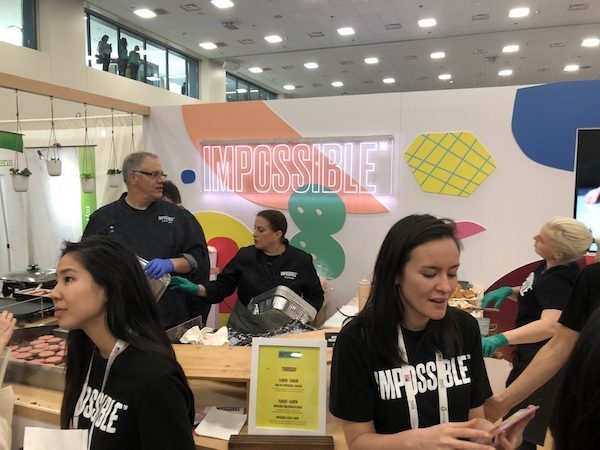
Natural food industry representatives and consumer advocates denounced Impossible Foods, maker of the GMO-derived Impossible Burger, for promoting their product at Natural Products Expo West, saying they were engaging in deceptive marketing.

Impossible Foods served patties of their burger to attendees at the world's largest natural food trade show - but there was no mention that the product was genetically engineered at the company's exhibit booth or in their marketing literature.

"We're disappointed that the company is using a 'natural products' show to promote its certainly not-natural product," said Frank Lampe, vice president of communications and industry relations, for the United Natural Products Alliance. "The halo effect of being perceived as natural by its presence at the show does not serve the natural products industry or its consumers and is a disingenuous move by Impossible Foods."

Comment: The Impossible Burger: Vegan GMO burger that 'bleeds' hits hundreds of fast food locations including 'Organic' ones


Biohazard

How industrial seed oils are making us sick

industrial seed oils
© iStockIndustrial seed oils have no place in a healthy diet.
Experts have presented several dietary culprits as possible explanations for the rapidly rising rates of chronic disease in industrialized nations, including sugar and saturated fat. However, one commonly consumed food found in the diets of millions has received surprisingly little attention-industrial seed oils.

Contrary to what we've been told, industrial seed oils such as soybean, canola, and corn oils are not "heart healthy" or otherwise beneficial for our bodies and brains; in fact, plenty of research indicates that these oils are making us sick. Read on to learn about the history of the industrial seed oil industry, the adverse health effects of consuming these oils, and what dietary fats you should eat instead.

Comment: See also:


Donut

Study finds one-third of 'gluten-free' foods had detectable levels of gluten

pizza
Even tiny amounts of gluten in foods are troublesome for people with celiac disease, and restaurants may be the hardest places to avoid the protein, finds a study by Benjamin Lebwohl, MD, MS, Celiac Disease Center at NY-Presbyterian Hospital and assistant professor of medicine and epidemiology at Columbia Mailman School. More than half of gluten-free pizza and pasta dishes in restaurants tested positive for the presence of gluten; about one-third of supposedly gluten-free foods had detectable gluten. Results are published in the American Journal of Gastroenterology.

"Patients have long suspected that gluten contamination in restaurant foods is a frequent occurrence, and these results support that," said Lebwohl. "Our findings suggest that pizza, pasta and foods served at dinner were more likely to have a problem."

Lebwohl used data uploaded by users of the portable device Nima Gluten Sensor which restaurant patrons use to test foods. The manufacturer supplied 5,624 food tests by 804 users over 18 months. The research showed 32 percent of tests revealed detectable gluten in dishes that were supposed to be gluten-free.

Comment: There are many more reasons to be wary of gluten free foods. Most of them are highly processed, contain GMO ingredients (which promote autism, gastrointestinal issues and inflammation) and are generally full of sugar which is toxic for your metabolism, gut and brain.