Health & WellnessS


Health

CDC scaremongering: US measles cases approaching record number for the decade

measles
© Shutterstock
The number of measles cases in the U.S. so far this year is approaching the record for the decade - and in just four months time, according to new data.

The Centers for Disease Control and Prevention reports that there have been 626 confirmed cases of measles so far this year, an increase of 71 new cases since last week. Two new states - Iowa and Tennessee - join the list, bringing the total to 22.

The only year when there were more cases reported in the United States since the disease was eliminated in the U.S. in 2000 was in 2014 - 667.

"In the coming weeks, 2019 confirmed case numbers will likely surpass 2014 levels," the CDC said in its update Monday.

Comment: With the ongoing hysteria fueled by the desire to insure 100% compliance with vaccine campaigns, what's rarely noted is the extensive evidence linking the vaccines themselves to the spread of such outbreaks.


Shoe

Ability to lift weights quickly can mean a longer life

deadlift weight lifting
Prolong your life by increasing your muscle power. That's the main message of a study presented today at EuroPrevent 2019, a scientific congress of the European Society of Cardiology.1

"Rising from a chair in old age and kicking a ball depend more on muscle power than muscle strength, yet most weight bearing exercise focuses on the latter," said study author Professor Claudio Gil Araújo, director of research and education, Exercise Medicine Clinic -- CLINIMEX, Rio de Janeiro, Brazil. "Our study shows for the first time that people with more muscle power tend to live longer."

Power depends on the ability to generate force and velocity, and to coordinate movement.2 In other words, it is the measure of the work performed per unit time (force times distance); more power is produced when the same amount of work is completed in a shorter period or when more work is performed during the same period.3 Climbing stairs requires power -- the faster you climb, the more power you need. Holding or pushing a heavy object (for example a car with a dead battery) needs strength.

Comment: While the arguments for the best type of training and the different benefits different techniques will confer is hotly debated, the fact that there is benefit, to multiple body systems, is relatively undisputed. Lift heavy things - it's good for you!


Health

Researchers find nearly 1 out of 5 people are misdiagnosed with MS and receive potentially dangerous treatment for years

MRI scan MS, misdiagnosis MS
The study revealed that 17 percent of patients at Cedars-Sinai and 19 percent of patients at UCLA had been misdiagnosed and were incorrectly treated for multiple sclerosis for an average of four years.
Researchers found that nearly 1 in 5 people who had received a diagnosis of multiple sclerosis had other unrelated conditions.

Multiple sclerosis (MS) is a widespread disabling neurological condition in which the immune system attacks and destroys the fatty tissue that surrounds the nerves. This leads to nerve damage, which affects communication between the nerves and the brain.

People with MS may experience symptoms, including numbness or weakness in the limbs, tremors, and lack of coordination. However, some of the symptoms have similarities to other debilitating conditions, including stroke and migraine.

MS and stroke are very different conditions, but they both harm the brain. Some of the symptoms they share include attention issues, dizziness, numbness in the limbs, slurring, visual impairment, and difficulty in walking.

MS and migraine attacks also have some symptoms in common, including dizziness and vision impairment. A recent study pooled data on people who had received a wrong diagnosis of MS and found that 72 of the 110 patients had other conditions, including migraine.

Comment: Whether through ignorance or greed, misdiagnoses by medical professionals are increasingly ruining people's health while bankrupting them - we've come a long way from 'First Do No Harm'.


Biohazard

New trial evidence suggests government colluded with Monsanto

EPA environmental protection agency
I once read an interview with legendary fiction writer Stephen King in which he told the interviewer that he simply reads the newspaper to get ideas for his novels, declaring that truth was far scarier than fiction. After reading about the latest development in the lawsuits against Monsanto, I'm inclined to agree with him.

As part of the 3rd cancer trial facing Monsanto (now owned by Bayer AG), new emails were released that showed Environmental Protection Agency (EPA) officials may have colluded with Monsanto to help slow the release of the dangers of the pesticide from the public. According to the documents and testimony, Monsanto apparently asked the government agency to slow down their safety review of the company's top-selling herbicide, RoundUp. According to the documents obtained through the Freedom of Information Act (FOIA) requests, not only did the government agree to slow the safety review, EPA officials also helped the company by giving them consistent updates.

Comment: This isn't the first time a cozy relationship has been shown to exist between the EPA and Monsanto. The idea that the EPA are acting as a 'regulatory agency' and not just a rubber-stamp approval factory for Big Chemical is, at this point, a complete joke. If the agency were ever to be held accountable for their actions they'd be run out of town with pitchforks.

See also:


Cow

Do vegetarians and vegans live longer than meat eaters?

vegetarian meal dinner
Many proponents of a meat-free diet give up animal products because they believe vegetarians and vegans live longer than omnivores. But what does the research really show?
One of the most common claims made by advocates of vegetarian and vegan diets is that people who abstain from eating meat (vegetarians) or all animal products (vegans) live longer than meat eaters. This has been repeated so often that it's accepted as gospel-both within plant-based diet communities and amongst the general public. But is it really true? Read on to find out.

In this post, I'm going to do a deep dive into the research into whether vegetarians and vegans live longer than omnivores - people who consume a mixed diet including meat. It's a long article, because I wanted to cover all of the available studies on the topic and be as thorough as possible.

For the time-challenged among you, I'll spill the beans right up front: while early studies did suggest a survival advantage for vegetarians and vegans, more recent and much higher-quality evidence has found no difference in lifespan between omnivores and vegetarians and vegans.

That's the TL;DR. Let's take a closer look at how researchers arrived at this conclusion.

Comment: It's nice of Kresser to put this myth to bed. The idea that eating a substandard diet that eschews meat, a vital component for the health of the human organism, has never made a lick of sense. If you want to maintain or improve your health, and increase your chances of living longer, include animals in your diet. Your body will thank you.

See also:


Magnify

Nearly half of honey tested contains mostly rice syrup, wheat syrup or sugar beet syrup

Honey
Honey makers are secretly "watering" down their honey with cheap syrups that have been impossible to detect until now.

A new testing method has revealed nearly half of the honey sold in Australia, one of the world's largest exporters of honey, is diluted with cheap sweeteners like rice syrup, wheat syrup and sugar beet syrup.

12 out of 28 honey samples taken from grocery stores around the country and tested in a reputable lab in Germany turned out to be mostly some form of cheap sugar syrup, not honey.

The scary thing is, all of these honey brands had passed the official government purity tests.

That's because honey manufacturers have become more skilled at flying under the testing radar, researchers explain.

Comment: See also: Fighting deadly C. Difficile infections? Exotic honey comes to the rescue


Bulb

Let there be light: Low-level laser therapy

laser light
Science fiction medicine doesn't get much better than what's offered onboard Star Trek's USS Enterprise. Beamed up to the ship with a gaping phaser wound, the patient is sent to sickbay, where "Bones" McCoy directs a handheld device emitting a ray of light onto the injury. It shrinks and vanishes in seconds, leaving not even the trace of a scar.

It may not work so fast or so perfectly, but the technology of light medicine is already with us. Called low-level laser therapy (LLLT), it has been used by some cutting-edge practitioners for decades, and the field is advancing at lightning speed.

Comment: Learn more about Photobiomodulation:


Health

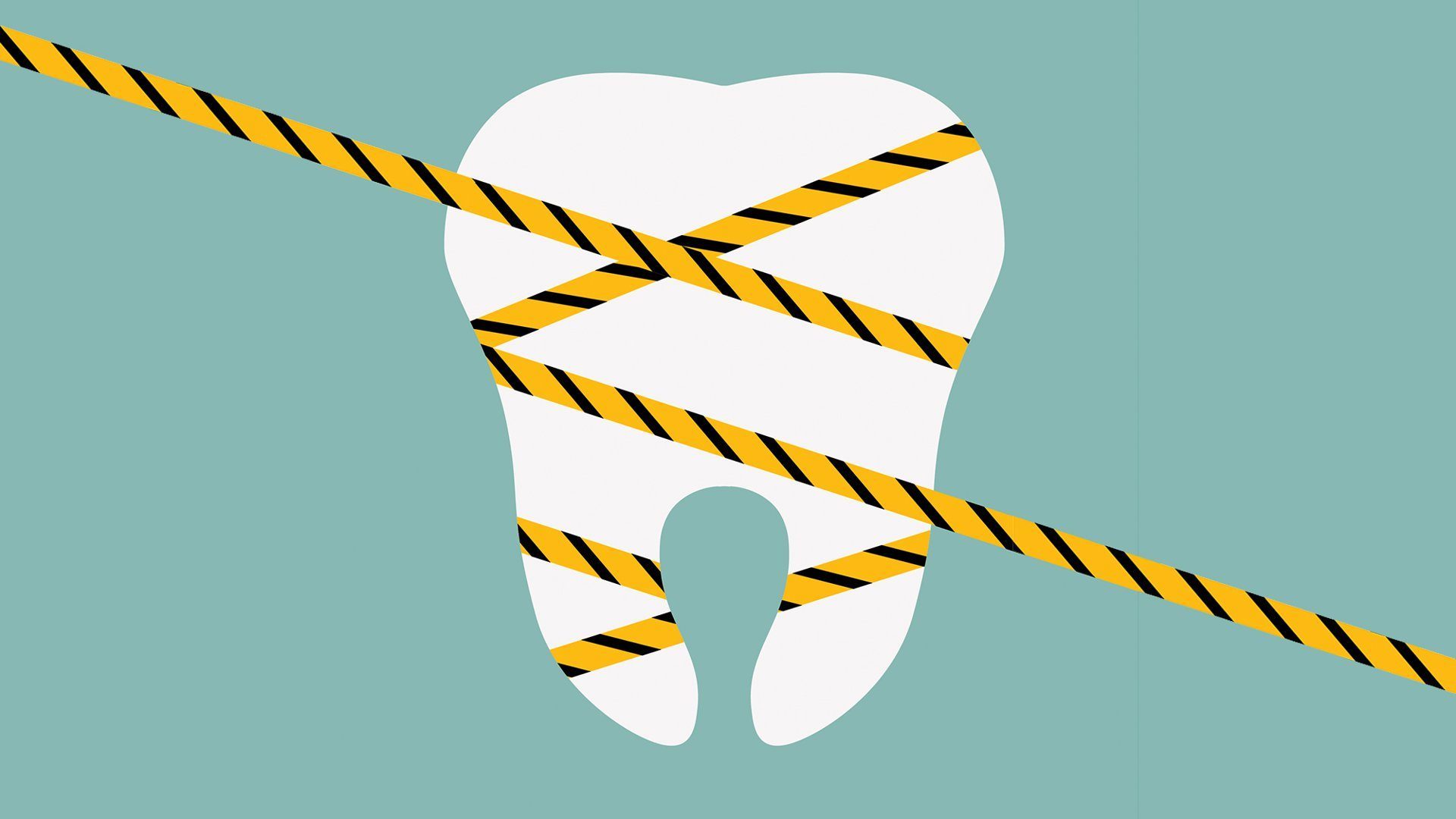
The truth about dentistry

tooth caution tape dentistry
© Arsh Raziuddin


It's much less scientific - and more prone to gratuitous procedures - than you may think.


In the early 2000s Terry Mitchell's dentist retired. For a while, Mitchell, an electrician in his 50s, stopped seeking dental care altogether. But when one of his wisdom teeth began to ache, he started looking for someone new. An acquaintance recommended John Roger Lund, whose practice was a convenient 10-minute walk from Mitchell's home, in San Jose, California. Lund's practice was situated in a one-story building with clay roof tiles that housed several dental offices. The interior was a little dated, but not dingy. The waiting room was small and the decor minimal: some plants and photos, no fish. Lund was a good-looking middle-aged guy with arched eyebrows, round glasses, and graying hair that framed a youthful face. He was charming, chatty, and upbeat. At the time, Mitchell and Lund both owned Chevrolet Chevelles, and they bonded over their mutual love of classic cars.

Lund extracted the wisdom tooth with no complications, and Mitchell began seeing him regularly. He never had any pain or new complaints, but Lund encouraged many additional treatments nonetheless. A typical person might get one or two root canals in a lifetime. In the space of seven years, Lund gave Mitchell nine root canals and just as many crowns. Mitchell's insurance covered only a small portion of each procedure, so he paid a total of about $50,000 out of pocket. The number and cost of the treatments did not trouble him. He had no idea that it was unusual to undergo so many root canals - he thought they were just as common as fillings. The payments were spread out over a relatively long period of time. And he trusted Lund completely. He figured that if he needed the treatments, then he might as well get them before things grew worse.

Comment: The truth about dentistry is quite sordid, even beyond the fraudulent cases detailed above. Things that are considered 'good dental practice' can often be quite harmful.

See also:


Beaker

The coming obsolescence of animal meat - Silicon Valley start-ups push more 'schmeat'

schmeat
© Dan Kitwood
Companies are racing to develop real chicken, fish, and beef that don't require killing animals. Here's what's standing in their way.

The thought I had when the $100 chicken nugget hit my expectant tongue was the one cartoon villains have when they entrap a foreign critter and roast him over a spit: It tastes like chicken.

That's because it was chicken-albeit chicken that had never laid an egg, sprouted a feather, or been swept through an electrified-water bath for slaughter. This chicken began life as a primordial mush in a bioreactor whose dimensions and brand I'm not allowed to describe to you, for intellectual-property reasons. Before that, it was a collection of cells swirling calmly in a red-hued, nutrient-rich "media," with a glass flask for an eggshell. The chicken is definitely real, and technically animal flesh, but it left the world as it entered it-a mass of meat, ready for human consumption, with no brain or wings or feet.

Comment: The continuous push for schmeat frakenfoods by Silicon Valley start-ups and 'philanthropists' like Bill Gates is an excellent example of 'green washing'. Deceptive marketing campaigns to sell questionable products, organizations like Just vilifying meat and meat eaters, and the obvious Vegan Putsch compromising health all in the name of a 'green solution'. The question is Can you really call lab-grown meat 'clean'?
For the record, perhaps it's not surprising that certain investors like Bill Gates have taken to investing in lab-grown meats instead of regenerative agriculture. The Bill and Melinda Gates Foundation not only funds The Cornell Alliance for Science, which is essentially a front group for the agrichemical industry, but is also pro-GMO, which makes sense, since Gates has also bought millions of dollars' worth of shares in Monsanto stock, according to AlterNet (and, remember, also invested in the soy- and GE-yeast-based "burger").10

It seems he has a penchant for GMOs and lab-grown meat, both forms of patented staple foods that, while looking good on the surface, pose many new, and likely unforeseen, hazards to the global food supply. On the other hand, sourcing your foods from a local grass fed farmer is one of your best bets to ensure you're getting something wholesome. And, you'll be supporting the small farms - not the mega-farming corporations - in your area.
"Unfortunately, there are an increasing number of synbio ingredients and products already in the marketplace in foods and dietary supplements, and trying to determine show acceptance in light of the rapidly changing marketplace, with no mandated federal labeling for the new classes of GMO products and no testing protocols in place, is not an enviable task for the New Hope standards folks," Lampe said.


2 + 2 = 4

An uncertain future for children: The growing number of special education students in America

special education
Public school teachers in Los Angeles, California went on strike last month to demand better conditions for students in their schools. Not only were teachers in the Los Angeles Unified School District asking for a pay increase but also demanded smaller class sizes, more counselors, more librarians and a full-time nurse in every school.1

Such stories are becoming all too common in the media, particularly with respect to the impact on public school systems of the need for special education teachers and classes to serve the growing numbers of children in the U.S. with learning disabilities, developmental delays, and other special needs. News headlines such as "Special education enrollment in California is up. No one can say exactly why" and "Minnesota schools facing crisis level in special education funding" and "Special education funding should be Legislature's top priority" are reflective of the crisis that public schools are facing in America.2,3,4

Comment: Robert F. Kennedy, Jr.: Time to pay real attention to children's health
An abysmal children's health report card

Nationally representative studies show that the chronic disease burden shouldered by children in the U.S. is not only heavy but has increased steadily over the past three decades. One of these studies, published in 2010 in JAMA, used national longitudinal survey data to examine the prevalence of four types of chronic conditions (obesity, asthma, behavior/learning problems and "other" physical conditions) in American children and youth from 1988 to 2006. The researchers found that prevalence of these conditions doubled-from 12.8% to 26.6%-over the 18-year-period.

The results of a second national study were even worse. Over two-fifths (43%) of children participating in the 2007 National Survey of Children's Health had at least one of 20 chronic health conditions, and when the researchers added overweight/obesity and moderate or high risk for developmental/behavioral problems to their analysis, over half of all children (54%) suffered from at least one chronic condition.