Health & WellnessS


Microscope 1

Babies' temperament linked to their gut bacteria

microbiome
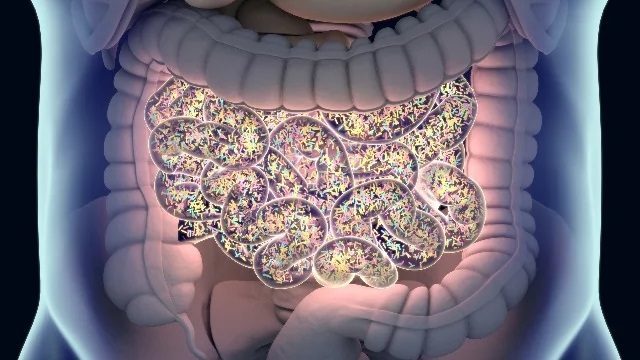
Scientists in the FinnBrain research project of the University of Turku, Finland, discovered that the gut microbes of a 2.5-month-old infant are associated with the temperament traits manifested at six months of age. Temperament describes individual differences in expressing and regulating emotions in infants, and the study provides new information on the association between behaviour and microbes. A corresponding study has never been conducted on infants so young or in the same scale.

Rodent studies have revealed that the composition of gut microbiota and its remodelling is connected to behaviour. In humans, gut microbes can be associated with different diseases, such as Parkinson's disease, depression and autism spectrum disorders, but little research has been conducted on infants.

Doctoral Candidate, Doctor Anna Aatsinki from the FinnBrain research project at the University of Turku, Finland, discovered in her study on 303 infants that different temperament traits are connected with individual microbe genera, microbial diversity and different microbe clusters.

Comment: While the study of the microbiome and its associated effects on the entire organism are still in the early days, the connections made are continually surprising. As the science continues to progress, the picture becomes more clear. At this point, one things seems certain - the status of our gut is of extreme importance to the regulation of our mood.

See also:


Health

'Living drug' offers hope to terminal blood cancer patients

Yuvanv CAR-T therapy
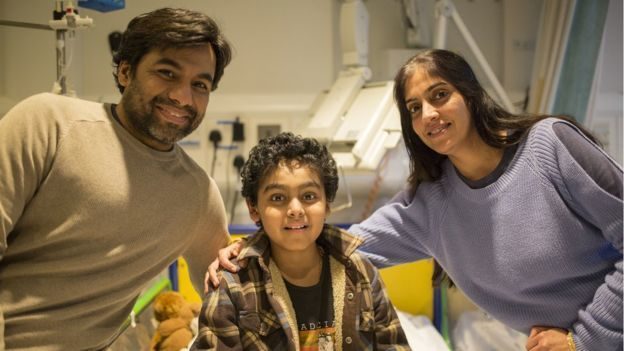
© GOSHYuvan, 11, had CAR-T therapy for acute lymphoblastic leukaemia.
NHS patients with lymphoma have for the first time been given a pioneering treatment that genetically reprogrammes their immune system to fight cancer.

Mike Simpson, 62, from Durham, says his cancer is now "on the run".

The therapy, called CAR-T, is a "living drug" that is tailor-made for each patient using their body's own cells

Doctors at King's College Hospital, London, said some patients were being completely cured in a way that had "never been seen before".

Comment: Sounds like an encouraging therapy. Truly personalized care is, no doubt, the future of medicine as new therapies find ways to use the body's innate wisdom for healing.

See also:


Info

Powerful agents for healing blood disorders

Beetroot and Hibiscus
© Fourfold Healing
When Goethe, the true founder of Anthroposphy and considered by many to be the greatest European philosopher, urged us to learn to "read the book of nature." He was not just giving impractical, philosophical advice. Rather, he was admonishing us to learn to think in a new way, a way he saw as crucial to our survival as an evolving species. But what does this new way of thinking entail, and how are we to learn it?

One aspect of this new thinking is to simply observe and experience the world with the consciousness of a young child rather than the hardened thinking patterns of overly schooled adults. When traditional sages, shamans, alchemists and philosophers described the world, they were not relying on chemical analysis or double-blind studies. Rather, they engaged with the world as a felt experience, one that evoked in them images, visions and dreams. From this awareness, they understood how nature's bounty could be used to heal the suffering or illness of the human being.

Microscope 1

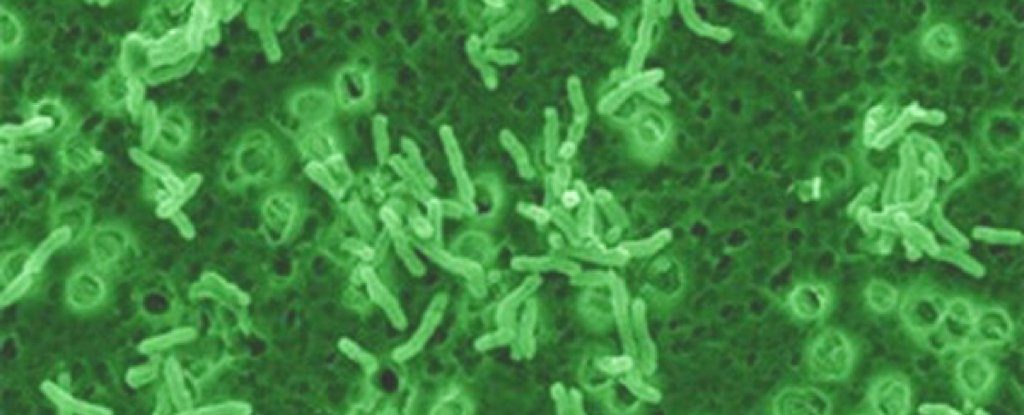
This odd bacterium appears to protect its host from the damaging effects of stress

Mycobacterium vaccae
© Christopher LowryMycobacterium vaccae.
Scientists have isolated a unique molecular pattern that might one day enable a 'stress vaccine' to exist for real - and they found it hidden inside a bacterium that thrives in dirt.

Mycobacterium vaccae is a non-pathogenic bacterium that lives in soil, and has shown considerable promise in health research; now, a new study may have finally figured out why.

The findings suggest that a specific kind of fat inside M. vaccae could be why exposure to this seemingly beneficial bacterium in ground soil may be good for us.

This work ties in with the idea of "old friends", a hypothesis that claims humans co-evolved with a bunch of useful microorganisms, and losing those ties in the modern environment has led to an increase in allergic and autoimmune diseases.

Comment: As the connection between the gut microbiome and mood and brain function continues to be studied, the findings become more and more surprising. Who would think a bacterium in the dirt would help us deal with stress?

See also:


Attention

Cosmetics related products injure thousands of children every year

Girl using make-up
© Rulo
In the US, almost 65,000 children under five years old were admitted to hospital over a 15-year period as a result of injuries caused by cosmetic-related products.

The startling figures are revealed in a study conducted by researchers from the Abigail Wexner Research Institute at Nationwide Children's Hospital in Ohio, and published in the journal Clinical Pediatrics.

Rebecca McAdams and colleagues found that there was no significant reduction over the years in the number of children rushed to emergency departments following harmful encounters with cosmetics and personal care products, with the rate remaining steady at 1.1 per 10,000.

The most common injury was poisoning, with nail-care items responsible for 28.3% of cases, followed by hair-care chemicals at 27%, and skincare at 25%. Fragrances accounted for most of the remainder.

X

Nanoparticle additives in your food

nanoparticles
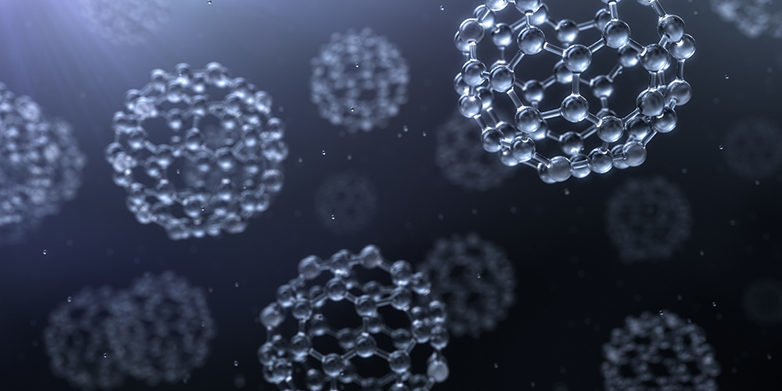
Processed food is the antithesis of a healthy diet for a number of different reasons, the addition of unregulated and often undisclosed chemicals being a significant one. Besides preservatives, emulsifiers, colors and flavors, which are generally listed, there are any number of others that do not have to be disclosed, as they're considered "processing aids."

Additives are used in food processing to slow spoilage, prevent fats and oils from going rancid, prevent browning, and fortify or enrich the food with synthetic vitamins and minerals to replace the natural ones that were lost during processing.

They're also added to improve taste, texture and appearance, as many processed foods would be as dull and bland as cardboard without some artificial help. But despite widespread use, many food additives have questionable safety profiles, or none at all, since only a small percentage have ever been properly tested.

Comment: See also:


Dollar

The corruption of evidence based medicine : Killing for profit

angioplasty
The idea of Evidence Based Medicine (EBM) is great. The reality, though, not so much. Human perception is often flawed, so the premise of EBM is to formally study medical treatments and there have certainly been some successes.

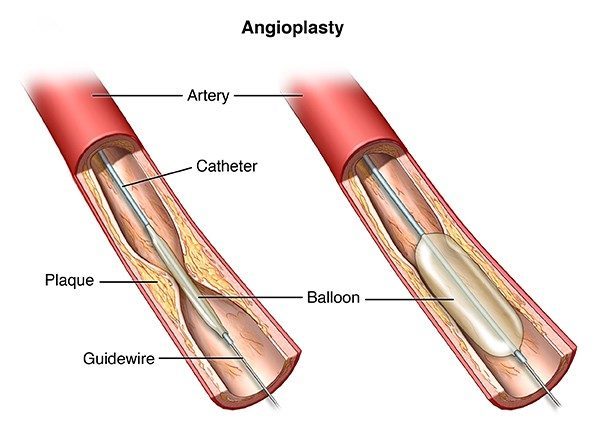
Consider the procedure of angioplasty. Doctors insert a catheter into the blood vessels of the heart and use a balloon like device to open up the artery and restore blood flow. In acute heart attacks studies confirm that this is an effective procedure. In chronic heart disease the COURAGE study and more recently the ORBITA study showed that angioplasty is largely useless. EBM helped distinguish the best use of an invasive procedure.

So, why do prominent physicians call EBM mostly useless? The 2 most prestigious journals of medicine in the world are The Lancet and The New England Journal of Medicine. Richard Horton, editor in chief of The Lancet said this in 2015
"The case against science is straightforward: much of the scientific literature, perhaps half, may simply be untrue"

Comment: See also:


Evil Rays

Why isn't mainstream media looking into health concerns of 5G?

5G planet
If you don't live under a rock, you've probably heard Verizon or AT&T commercials where they talk about the future with 5G with amazing download speed and all the other "benefits." Yet we don't hear them mention anything about health issues concerning 5G since it's frequency is much higher than previous generation cell services. I had heard things before about the dangers of 5G, but I recently delve down the rabbit hole and it irks me that very large corporations will simply push harmful tech on to people in the name of profit.

I read a phenomenal article that was backed up by peer reviewed sources the other day that really opened my eyes to the dangers of 5G. 5G or Fifth Generation like previous generations emit Radio Frequency (RF) Radiation, which is what makes them dangerous. One of the most concerning things about 5G is that since it has shorter wave length it has less capability to penetrate objects, thus mini cell towers will have to be placed much closer, estimating a tower every 2-8 houses. Where 1G, 2G, 3G, & 4G operate between 1-5 gigahertz (GHz), 5G operates between 24-90 GHz. Here is the difference between 4G & 5G shown below in the diagram.

Comment: The dangers of 5G wireless technology are massively downplayed in the mainstream media, yet the science is very concerning. By the time people wake up to the health concerns, every corner of the earth will already be bathed in this damaging radiation and there will be nowhere to hide.

See also:


Syringe

Jessica Biel joins anti-vaccine activist RFK Jr. to lobby against California pro-vaccination bill

rfk jr jessica biel
© Instagram
On Wednesday, actress Jessica Biel came out as an "anti-vaxx activist," as The Daily Beast put it, joining anti-vaccination crusader Robert Kennedy Jr. at the California legislature to lobby against a bill that would make it harder to opt out of vaccinating children for medical reasons. This wasn't an activity Biel's publicist highlighted.


Comment: Funny that in the next paragraph RFK describes Biel as "for safe vaccines and for medical freedom," yet the first line of the piece calls her "an anti-vaxx activist". Talk about hyperbole.


Comment: Yep, just another Hollywood crazy like Jenny McCarthy. There couldn't possibly be a legitimate reason to want safer vaccinations and to prevent the erosion of medical exemptions from vaccination.

See also:


Cow

Hollywood dystopia? Sir Peter Jackson and James Cameron team up to promote meatless future

peter jackson james cameron
© Hagen Hopkins/Getty ImagesSir Peter Jackson and James Cameron have collaborated on several initiatives over the years.
The bromance between two Hollywood heavyweights has led to a project that could change the future of Kiwi farming.

Avatar director James Cameron and Hobbit director Sir Peter Jackson have joined forces to create a "plant-based" food business.

Rumours about the secret venture have swirled for two years, but the pair has remained tight-lipped until now.

Comment: What a load of rubbish. It reads like a dystopian future envisioned in a Hollywood script. Either the two directors have drunk the kool aid of the environmentalist nut-jobs (likely), they're capitalizing on current trends to try to make a buck (also likely) or they're actually 'part of the team' and playing an active role in social engineering for the future. None of these are mutually exclusive, of course.

See also: