Health & WellnessS


Attention

"Throwing up blood": Georgia man, 31, becomes 13th US citizen to die on vacation in the Dominican Republic

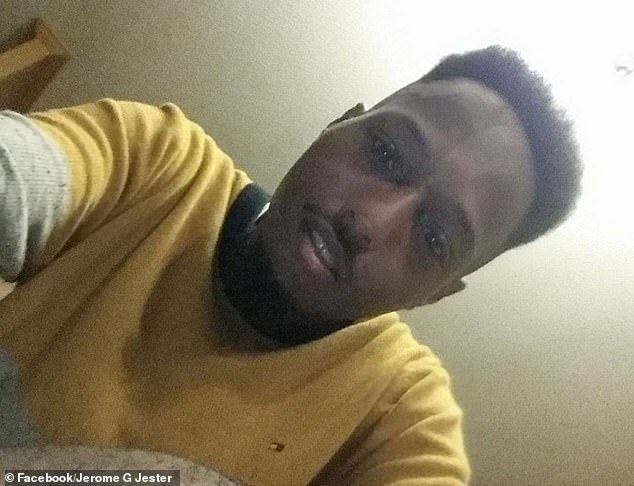
Jerome Jester
Jerome Jester Jr., 31, died on March 17 this year on a short vacation to the Dominican Republic with his sister
A Georgia man has died of a 'respiratory illness' while on holiday in the Dominican Republic - becoming the 13th American to die there in under a year.

Jerome Jester Jr. of Forsyth, Georgia, died on March 17 this year just a day after going sightseeing in the Caribbean nation, according to his family.

The 31-year-old had been on vacation with his sister, who called for an ambulance after he started having difficulty breathing.

Jester's sister told ABC News: 'He just dropped to his knees and started throwing up blood, and was calling for Mama.'

Jester's sister said he was vomiting blood before she called an ambulance and he later died

His mother Melody Moore told WSB-TV-2 she spoke to him the day before he died.

Comment: See: What in the world is going on in the Dominican Republic? (Updates)


Attention

A bacterial invasion? People all over the US East Coast are suddenly being attacked by flesh-eating disease in 2019

flesh eating bacteria
Why are we suddenly seeing so many cases of flesh-eating disease all along the east coast of the United States? For years, flesh-eating bacterial infections were so rare in the U.S. that even a single case would make national headlines. But here in 2019 the news is telling us that we are seeing flesh-eating infections "at a rate much higher than in previous years", and this outbreak really seems to have escalated dramatically over the last couple of months.

In fact, I found so many cases as I was doing research for this article that I had to simply stop reading at one point or I would have never gotten this article done in time. So in this article I will be sharing quite a few examples with you, but it is far from an exhaustive list.

Let's start with a Tennessee man that was just killed by flesh-eating bacteria after a trip to the Florida panhandle. This is what his daughter had to say about his death...
"About 4:00 a.m. Saturday morning, 12 hours after we were in the water, he woke up with a fever, chills and some cramping. ... They got to the hospital in Memphis around 8 p.m.," Wiygul said in the post. "They took him back immediately. As they were helping him get changed into his hospital gown they saw this terribly swollen black spot on his back that was not there before."

The man's condition worsened over the next several hours. His immune system had been weakened by a bout with cancer, the daughter said, and he died Sunday afternoon.
That is how fast flesh-eating disease can kill you. If it is not treated immediately, there is a good chance you will die.

Comment: Outbreaks like this appear to be increasing all over the planet:


Question

Are Statin makers eyeing the 'Anti-Vaxxer' censorship model?

statins
Imagine for a moment if drug manufacturers can act unethically when record profits are on the line - perhaps not a stretch. What if those unethical practices and manipulative methods were no longer working on the general public? What if an easier option presented itself? What if unethical pharmaceutical companies could magically push their products, reap record sales, be hailed as global saviors and were able to shut down any criticism of their products no matter how accurate? Would they try it?

The Journal of the American Medical Association (JAMA) Cardiology published the article titled Fear-Based Medical Misinformation and Disease Prevention From Vaccines to Statins. The author, who receives research support to her institution from several drug companies, writes "While headlines shine the spotlight on vaccine refusal, the same fake medical news and fearmongering also plague the cardiovascular world through relentless attacks on statins."

Biohazard

Man dies from flesh-eating bacteria after swimming in Florida

swamp
© FILE PHOTO Pixabay
A man from Tennessee has died from being infected by flesh-eating bacteria after taking a few swims in Florida. His daughter blames the hospital for ignoring her warnings that her dad could have necrotizing fasciitis.

William Bennett died after visiting his daughter Cheryl Bennett Wiygul in Florida last week. They swam in a number of different bodies of water, including a beach in Destin, then at Turkey Creek and at a swamp in Boggy Bayou.

Cheryl had heard reports of people becoming infected by the flesh-eating bacteria in the state and ensured her father took extra precautions, as he had previously suffered from cancer and could have a compromised immune system.

Comment: Whilst this man appears to have been vulnerable, outbreaks of all kinds appear to be on the rise all over the planet:


Bacon n Eggs

A cancer researcher who's been keto for 6 years thinks our modern diets are an 'axis of illness'

Harper and Dale Drewery
Harper and his "Biodiet" coauthor and wife, Dale Drewery.

Start the day off with a piece of toast, a bit of margarine and jam, and a glass of fresh orange juice? Definitely not, says the cancer researcher David Harper.

The kinesiology professor hasn't eaten toast in more than six years: He started following a high-fat, low-carb ketogenic diet strategy in 2013, and he says he's never looked back.

Harper says both he and his wife, Dale Drewery, rely on fat to power them through the day.

"I eat full-fat cream in everything," Harper told Business Insider, adding that he consumed lots of nuts and seeds, green beans, "organ meats" like liver, and up to a dozen eggs each week.

Water

The truth behind what intermittent fasting does to your body

forks
Ever feel hangry when you miss a meal? Imagine waiting 16 or 18 hours before eating again. Or an entire day without breakfast, lunch, or dinner. That's what proponents of intermittent fasting do on a regular basis.

At its simplest, intermittent fasting (IF) means cycling through periods of voluntary abstinence of food (or significant calorie reduction), interspersed with intervals of normal food intake.

Whenever we eat, the body releases insulin to help cells convert sugars (in particular glucose) from food into energy. If the glucose isn't used immediately, insulin helps makes sure the excess is stored in fat cells. But when we go without food for extended periods, as people do in IF, insulin is not released. The body then turns to breaking down fat cells for energy, leading to weight loss.

Comment: See also:


Life Preserver

Once starved, children often don't recover, even when fed enough. Restoring gut bacteria may help

child Bangladesh malnutrition
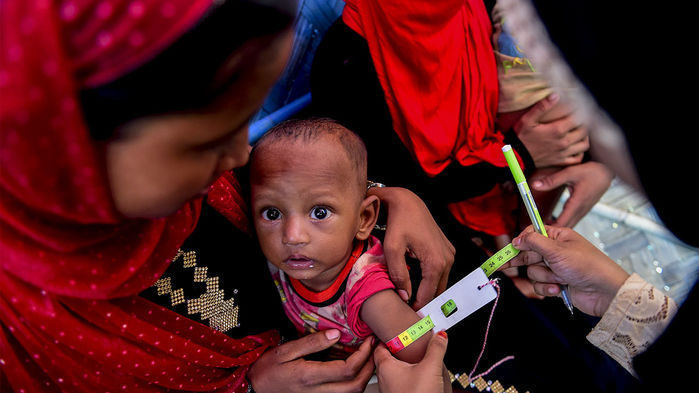
© MUNIR UZ ZAMAN/AFP/Getty ImagesA child in Bangladesh gets measured to assess malnutrition.
Even after starving children get enough to eat again, they often fail to grow. Their brains don't develop properly, and they remain susceptible to diseases, even many years later. Two studies in Science this week now suggest fostering the right gut microbes may help these children recover. The work also pinpoints combinations of foods that nurture the beneficial microbes.

Most of the experiments were in animals, but a small group of malnourished children given those foods also showed signs of improvement. "This is an outstanding and extremely comprehensive study," says Honorine Ward, a microbiologist and global health expert at Tufts University School of Medicine in Boston. Tailoring food aid to foster the microbiome "could be a key to new strategies for improving global public health and human potential," adds David Relman, a microbiologist at Stanford University in Palo Alto, California.

Tahmeed Ahmed, director of nutrition research at the International Centre for Diarrhoeal Disease Research, Bangladesh, in Dhaka, has tried for 30 years to help malnourished children recover better. About a decade ago, he was intrigued by work by Jeffrey Gordon at Washington University in St. Louis, Missouri, linking certain gut microbes to obesity. The two scientists wondered whether the microbiome — the set of microbes living in and on the human body — might also play a role in obesity's opposite number, malnutrition.

Comment: How your microbiome controls your health:
Your body is a complex ecosystem made up of more than 100 trillion microbes that must be properly balanced and cared for if you are to be healthy.

This system of bacteria, fungi, viruses, and protozoa living on your skin and in your mouth, nose, throat, lungs, gut, and urogenital tract, is referred to as the "human microbiome." It varies from person to person based on factors such as diet, health history, geographic location, and even ancestry.

When your microbiome falls out of balance, you can become ill. Those organisms perform a multitude of functions in key biological systems, from supplying critical vitamins to fighting pathogens, modulating weight and metabolism.
See also:


Cardboard Box

Inside the pharmaceutical echo chamber: Vitamins Against Viruses

vitamins

Implausible Pro-Vaccine Publications Contrasted Against Ignored Public Health Campaigns and Double-Blind Placebo-Controlled Clinical Trials


Introduction

As an author, presenter, editor, and careful reader of research and public policy, I have been concerned for several years about potentially false attribution of efficacy to vaccines during public health campaigns and major infrastructure investments that concurrently provided access to education, improved sanitation, improved diet (alongside immune-enhancing nutritional supplementation, most commonly with vitamins A and D, zinc, and iron), relocations of millions of people along with changes in their living and working circumstances (which would be expected to change infectious disease patterns, e.g., relocating people away from farms obviously reduces their exposure to Clostridium tetani [the anaerobic bacillus of tetanus] which is found primarily in soil contaminated by fecal material from [especially ruminant] animals such as cattle, sheep, and goats). With the April 2019 publication of several very unusual articles stemming from the British Medical Journal (BMJ), the time arrived to explore some of these concerns in a structured and public format. A legitimate concern is that science and public opinion are being inappropriately manipulated to favor a pharmaceutical/vaccination paradigm while lower cost, more widely available, safer and more efficacious nutritional interventions are being sidelined or intentionally ignored. In the current instance, overzealous endorsement and praise was given to a pharmaceutical intervention while a nationwide nutritional supplementation program supported by double-blind placebo-controlled trials was completely--and perhaps intentionally and strategically--ignored, then blocked by the journal from further discussion.

Syringe

Faux fear drives unconscionable legislation: NY Bill removes vaccine exemptions without public hearing

Health Impact News
© Health Impact NewsDetailed vector skyline of New York City
On June 13, 2019, the New York legislature quickly pushed a bill (A2371) to repeal the religious exemption to vaccination through both the Assembly and Senate in one day with no public hearings.

The unprecedented legislative coup, which cut the citizens of New York out of participating in the law making process, culminated in the Governor of New York Andrew Cuomo immediately signing the bill into law. The Assembly narrowly voted 77 to 53 to approve the bill, after passing with a margin of only one vote out of the Assembly Health Committee, and then the Senate approved the bill 36 to 26.

Comment: At least 8 states now pushing to outlaw non-medical vaccine exemptions


Apple Red

It's the Insulin Resistance, Stupid: Part 1

insulin resistance
When medical scientists propagate a false hypothesis, two things happen, and both of them are bad.

First, the wrong idea causes direct harm to those who adopt practices based on that incorrect hypothesis. Second, the wrong idea suppresses any attempts to discover the correct hypothesis. Such suppression occurs as a result of (enforced) scientific consensus.

Anyone who dares to question the false but agreed-upon hypothesis is labeled a "hypothesis skeptic" or "hypothesis denier." Very soon, that individual finds herself a scientific pariah, shunned and publicly humiliated by her colleagues, no longer able to secure research funding. In this way skeptics are conveniently and very effectively removed from the scientific mainstream. This technique is now recognized as academic mobbing (2) and ritual degradation (3). The consequences for the victim of academic mobbing and ritual degradation are usually calamitous.

Having personally traversed this academic minefield for the past nine years, I understand it rather too well (4).

But the reality is that science is never settled, and skeptics will always play a crucial role in driving scientific progress.

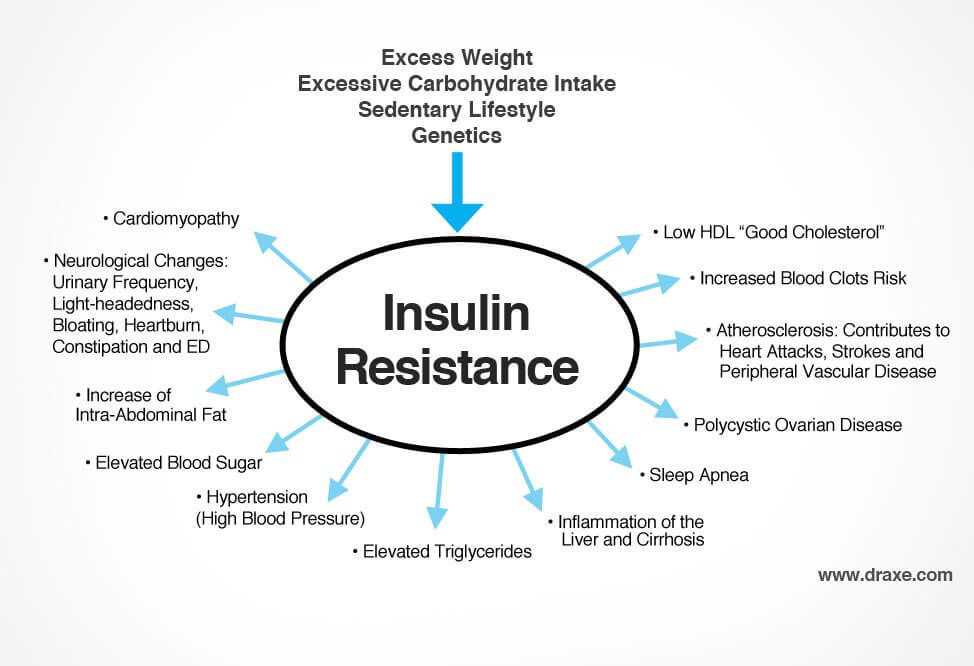
Ancel Keys' incorrect diet-heart hypothesis that saturated fat is the direct cause of heart attacks and death from coronary heart disease (CHD) led directly to its offspring, the lipid hypothesis, which holds that an elevated blood cholesterol concentration is the singular cause of CHD. This in turn led to a multibillion-dollar industry focused on reducing blood cholesterol concentrations, principally through the prescription of cholesterol-lowering statins and "aided" by a low-fat, high-carbohydrate (LFHC) diet. This diet recommendation was enshrined in the 1977 U.S. Dietary Guidelines for Americans (USDGA) (5).

The 1977 USDGA and other forms of continued support for the diet-heart and lipid hypotheses have led to at least three dire consequences (4).

Comment: For part 2 in the series, see: It's the Insulin Resistance, Stupid: Part 2

See also: The Age of Metabolic Syndrome - Inflammatory Fat Is Worse Than Obesity