Health & WellnessS


Biohazard

UK experts point out 'serious flaws' in European Food Authority review of aspartame as safe for consumers

aspartame
© Underground Health
Experts now have reason to doubt the safety of an artificial sweetener. They are claimed to be calorie-free sugar alternative but in fact, maybe 200 times sweeter.

The artificial sweetener is used in thousands of products including big brands. The experts have cast serious doubts and have safety questions. They have enough evidence that this alternative causes neurological harm.

The aspartame, an artificial sweetener is used in everything these days with a label "Calorie Free" and "Sugar-Free" for health-conscious people. This may be causing more harm than giving any health benefits.

Comment: Experts have long doubted the safety of aspartame. It is the non-experts who accept phony studies about aspartame safety that have allowed this poison to pass as consumable.


Health

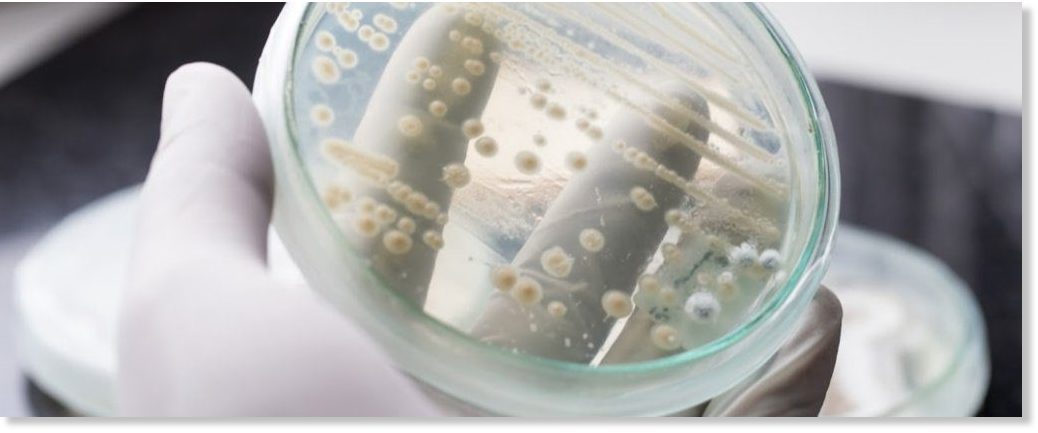
A deadly, drug-resistant fungus could be the first infection spread by climate change

fungus
© Sinhyu/iStock
Three years ago, US health officials warned hundreds of thousands of clinicians in hospitals around the country to be on the lookout for a new, quickly spreading and highly drug-resistant type of yeast that was causing potentially fatal infections in hospitalized patients around the world.

Candida auris has become a serious global health threat since it was identified a decade ago, especially for patients with compromised immune systems.

It has been reported in more than 30 countries and is probably more widespread than that because the organism is hard to identify without specialized laboratory methods.

It is resistant to multiple antifungal drugs, and can spread between patients in hospitals and other health-care facilities and cause outbreaks. The fungus can lead to infections of the bloodstream, heart or brain, and early studies estimate that it is fatal in 30 to 60 percent of patients.

Biohazard

Glyphosate is being inserted into your proteins — by mistake

glyphosate spraying
Nothing incites anger and fear in us quite like the thought that we are being slowly poisoned by toxins in our food and water. From endocrine disrupting chemicals in everyday household products to lead in drinking water, it seems that we are increasingly at risk of developing diseases by things that we often have no control over.

And glyphosate is no exception.

The reports of harmful effects of glyphosate are exploding — within the medical and scientific community as well as the general public. At a time when bee populations are already declining, a recent study reported that glyphosate perturbs gut bacteria of bees, making them susceptible to infection.1

But how exactly does this highly controversial chemical affect humans? Glyphosate toxicity is a topic I've written about numerous times. This time we'll talk specifically about the various ways glyphosate exposure could lead to devastating health consequences, one of which includes pretending to be glycine, an amino acid that is crucial for protein synthesis.

Comment: See also:


Red Flag

Feces & flesh-eating bacteria: Study reveals shocking levels of contamination at America's beaches

beach
© Reuters / Mike Blake
Americans may want to think twice before that next summer swim. Many of the country's idyllic beaches conceal a filthy secret below the sand and waves: dangerous levels of bacteria that put thousands of bathers at risk every year.

In a recently published study conducted by the Environment America Research and Policy Center, researchers found that the water at beaches in 29 coastal and Great Lakes states contained concentrations of bacteria well in excess of Environmental Protection Agency (EPA) standards - including the harmful organisms that inhabit human feces - which they said could sicken millions of beachgoers annually.

"It's hard to believe that 47 years after we passed the Clean Water Act that we are still concerned with poop in the water when people want to go swimming," John Rumpler, clean water program director for the center, told USA Today.

Health

Panic attacks and anxiety episodes may be linked to vitamin deficiencies

anxiety
© healthindusrty.ca
With approximately 40 million adults across the United States experiencing anxiety each year, scientists and researchers have dedicated their careers to trying to better understand this condition. Despite this work, we are still somewhat unclear on what actually causes this condition to occur.

Characterized by feelings of nervousness and restlessness, increased heart rate, hyperventilation, sweating, trembling, difficulty concentrating and uncontrolled worry, it has the ability to impact every area of one's life. There are many theories regarding the root cause of the condition, including genetics, brain chemistry, environmental factors or other medical factors and/or disease, however, nothing has been proven definitively. Instead, the scientific community continues to explore these leads further in the hope of an answer.

One small study out of Japan may provide an important insight into the connection between nutritional deficiencies and mental health, revealing that low levels of vitamin B6 and iron may actually trigger the chemical changes in the brain responsible for panic attacks, hyperventilation and other forms of anxiety.

Comment: Nutritional deficiencies could be fueling your anxiety


Info

From vaccines to statins: Dr. David Brownstein replies to fake news in JAMA Cardiology

fake news
© Men's health
An article (jamacardiology_navar_2019_vp_190009) in the June, 2019 edition of JAMA Cardiology was titled, "Fear-Based Medical Misinformation and Disease Prevention: From Vaccines to Statins. In this article,[i] the author states "fake medical news" as the reason that patients are exhibiting hesitancy about utilizing statins and vaccines.

The author correctly points out that in 1963, before the measles, mumps and rubella vaccine was licensed, there were 3-4 million people who contracted measles each year. The immunization campaign which utilizes the MMR vaccine has decreased the incidence of measles. The author blames vaccine refusers for fueling outbreaks of measles. Yes, the recent outbreak in measles has been primarily in the unvaccinated population. However, mandating that every child receive the MMR does not guarantee a measles-free population. China continues to have measles outbreaks even though Chinese children are the most vaccinated in the world--over 99% of Chinese children are fully vaccinated for measles.[ii] Furthermore, there has been a rash of mumps outbreaks across the US since 2006-all in fully vaccinated populations.[iii] In 2015-2016, 453 cases of mumps were recorded with 98% being fully vaccinated. In fact, from 2016-2017, there have been over 9,200 cases of mumps in the US, mostly from fully vaccinated people.

Comment: Cardiology experts: Statins MUST be avoided at all costs!


Brain

Motor neurone disease researchers find link to microbes in gut

Neuron Cell
© Als News Today
Scientists have found tantalising clues that the devastating condition motor neurone disease may be linked to changes in microbes that live in the gut.

Studies in mice revealed that animals bred to develop amyotrophic lateral sclerosis (ALS), a form of the disease that affected the cosmologist Stephen Hawking, improved and lived longer when they were given an organism called Akkermansia muciniphila.

Among other substances, the microbe secretes a molecule called nicotinamide which may slow the course of motor neurone disease by improving the function of muscle-controlling neurons in the brain.

Health

Kids with ADHD are being denied help by 'radical postmodernists'

Children with ADHD
Children with ADHD are far more likely to be excluded from school than those without ADHD
'Radical Postmodernists' reject the concept of there being facts or truth, they tell us science is about a "power discourse", each person's "lived experience" is more relevant than scientific knowledge. writes Dr John J Marshall.

Tom, aged 13, has barely made it to the end of the school term. He has been hyperactive all his life, impulsive, poorly organised, forgetful, easily distracted, and struggling to pay attention to his work in school.

He fidgets continuously, wanders out of the classroom and teachers have to follow him to make sure he is safe. His problems wear down his teachers and peers who increasingly reject him. He's seen as having "behaviour difficulties", but Tom has ADHD: a neurodevelopmental condition. School exclusion is a significant risk for Tom and in turn is associated with devastating lifelong impacts affecting learning, mental health, risk for imprisonment and shorter life expectancy. There is an exclusion-to-prison pipeline.

The Scottish Government gathers figures on school exclusion. Autism Spectrum Disorder (ASD) is over-represented in exclusions, but there is no data collected for ADHD. Children with ADHD are far more likely to be excluded from school than those without ADHD. But there is a more profound difficulty. Unknown to Tom's family, they are victims of an ideological struggle that questions the very existence of his underlying problems.

Comment: And yet, for all of the insight into the societal problems of treating children with ADHD, the author seems to be missing several crucial facts that could go a long way towards helping those afflicted:


Cheeseburger

Move over Beyond & Impossible, the "Smart" burger is 100% beef

authentic cheeseburger
© Beef Checkoff


Want to boost your IQ and promote health and wellness? Eat beef made from cattle — it's as simple as that!


In recent weeks, the latest in plant-based and petri-dish protein headlines have dominated the news. And despite consumers not exactly going wild over choices like the Beyond and Impossible Burgers — because really, these are just processed junk parading themselves as alternatives to beef burgers — there appears to be a new contender in town. It's called the Awesome Burger, and it's made by Nestle.

According to Fast Company, "Three years ago, the plant-based but meat-like Beyond Burger hit shelves at a Whole Foods in Colorado. The next month, the Impossible Burger went on the menu at Momufuku Nishi in New York City. Now - as the Impossible Burger starts to roll out at Burger King nationwide, and Beyond recently had the best-performing IPO of the year - Nestlé, the largest food company in the world, is preparing for the U.S. launch of a similarly realistic plant-based burger of its own. Called the Awesome Burger, the new product was developed by Sweet Earth, a California-based brand that Nestlé acquired in 2017."

Comment: Anyone who has even the slightest clue about human nutrition knows that meat is good for you and that the plant-based meat substitutes are non-food chemical nightmares. If it weren't for the constant stream of lies and propaganda, no one would touch these things, opting for real, nutrient dense meat.

See also:


Biohazard

Dr. Drew: Los Angeles facing an 'imminent outbreak' of bubonic plague

Los Angeles homeless tent city
© Frederic J. Brown / AFP / Getty
Dr. Drew Pinsky said Friday that Los Angeles faces an imminent outbreak of bubonic plague because of the growth of the homeless population and the failure of state and local authorities to deal with rodent problems.

Dr. Drew made his comments during a Periscope broadcast by Dilbert cartoonist Scott Adams, who has become a popular political pundit with a daily live audience of thousands of people.

Dr. Drew told Adams that he had predicted the recent typhus outbreak in Los Angeles, which was carried by rats, transferred by fleas to pets, and from pets to humans.

Bubonic plague, Dr. Drew said, like typhus, is endemic to the region, and can spread to humans from rodents in a similar fashion.