Health & WellnessS


Arrow Down

The food industry's self-regulation is a spectacular failure

Image
© grist.com"Hm. Which of these has the least listeria?”
If you are a person who eats food, you'll want to read Bloomberg's look at the system of self-regulation by food producers. Actually, no. You won't want to read it, unless you like stories of convulsive bloody deaths and details about the amount of human feces on your food.

In short:
During the past two decades, the food industry has taken over much of the FDA's role in ensuring that what Americans eat is safe. The agency can't come close to vetting its jurisdiction of $1.2 trillion in annual food sales.

In 2011, the FDA inspected 6 percent of domestic food producers and just 0.4 percent of importers. The FDA has had no rules for how often food producers must be inspected.

The food industry hires for-profit inspection companies - known as third-party auditors - who aren't required by law to meet any federal standards and have no government supervision. Some of these monitors choose to follow guidelines from trade groups that include ConAgra Foods Inc., Kraft Foods Inc. and Wal-Mart.

The private inspectors that companies select often check only those areas their clients ask them to review. That means they can miss deadly pathogens lurking in places they never examined.


Cow

Study links living near livestock with drug-resistant infection

Image
© oklahomafarmreport.com
Data from Netherlands suggest risks could be similar in US, Hopkins researchers say

Living near a livestock farm may increase your risk of acquiring an antibiotic-resistant infection, according to a new study led by researchers from Johns Hopkins' Bloomberg School of Public Health.

In reviewing data from the Netherlands, a team of Hopkins and Dutch scientists found that the odds of being exposed to methicillin-resistant Staphylococcus aureus, or MRSA, are greatest in the southeast region of that European country, an area with many livestock farms. The risks were not limited to the farmers themselves, but were also elevated for people living near herds of cattle, pigs or veal calves, the researchers said. Their findings, in the November issue of the journal Emerging Infectious Diseases, can be read here.

Health

Reason discovered for the toxicity of indoor mould

A team of researchers at the University of Helsinki has discovered how indoor mould makes people sick.The only remedy is to heal the living environment.

For more than a decade, it has been known that the fungus Trichoderma longibrachiatum is the most common finding wherever people are suffering from health hazards related to damp building damage. However, it has not been known how this mould -- which is typical of most buildings with indoor air problems -- harms people's health. Published in September, a study by a team of researchers at the Department of Food and Environmental Sciences of the University of Helsinki explains how microbial metabolites in the living environment cause health problems.

With their colleagues, Raimo Mikkola, Maria Andersson and Mirja Salkinoja-Salonen have studied indoor mould for a long time. They discovered that the toxic substance produced by the mould fungus Trichoderma longibrachiatum consists of small peptides that contain alpha-aminoisobutyric acid and other amino acids not found in proteins. The discovery and purification of the toxin to determine its molecular structure was made possible by a sperm test developed earlier by the same team. This test served as a detector in tracing the toxin molecules produced by the fungus.

Bulb

Yet another cancer cure to put Big Pharma out of business? Korean scientists kill cancer with magnet field

In South Korea, scientists used a magnetic field to get cancer cells to actually self-destruct.

The body removes old, defective, and infected cells through the process of programmed cell death (PCD), or apoptosis.

In apoptosis, the rejected cell responds to certain signals sent by the body by fragmenting. Immune cells then consume these fragments.

The magnets help trigger apoptosis. When apoptosis fails, however, rejected cells divide uncontrollably, developing tumors.

Stop

ADHD drugs prescribed to 'all academically struggling' children

ADHD
© NaturalSociety
There is a frightening new trend in the medical community: prescribing psychoactive stimulant medication to children from low-income families to boost their academic performance. To be more clear, doctors are actually prescribing ADHD drugs to students who are academically struggling. Here's the kicker: the kids don't have attention deficit hyperactivity disorder (ADHD).

Evening the Scales

One proponent of the trend, Dr. Michael Anderson, says that ADHD is a "made up...excuse" for the real illness, which is a social and educational environment unwilling to spend money on changing the environment and instead opting to change the child. A self-professed "social justice thinker," Anderson knows that many families cannot afford behavior-based therapy for their children. He sees the practice of issuing Adderall to children without ADHD as "evening the scales a little bit."

Dr. William Graf, a pediatrician who also sees many children from poor families, has his concerns with the practice. "These children are still in the developmental phase, and we still don't know how these drugs biologically affect the developing brain."

When the New York Times tried to contact educators to speak on the topic of ADHD, many resisted interviews and some - like a superintendent of a major school district in California - only spoke anonymously.

"It's scary to think...how not funding public education to meet the needs of all kids has led to this."

Health

Wheat contains not one, but 23K potentially harmful proteins

Wheat
© GreenMedInfo
Most folks don't realize that when we are talking about health problems associated with wheat, or gluten, we are not talking about a monolithic entity, a singular "bad guy," solely responsible for the havoc commonly experienced as a consequence of consuming this grain. After all, how could just one villain cause the 200+ different clinically observed adverse health effects now linked in the biomedical literature to wheat consumption?

No, the problem is that "gluten" is an abstraction, and in its perceived singularity profoundly misrepresents the true extent of the problem, much in the way that the tip of an iceberg does not convey the massive threat submerged below ...

Gluten is the Latin name for "glue," and signifies the doughy complex of proteins within the wheat plant, further classified as either gliadins (alcohol soluble), glutelins (dilute acid or alkalis soluble), or other. Because wheat is a hexaploid species (doesn't that sound creepy?), the byproduct of three ancestor plants becoming one, with no less than 6 sets of chromosomes and 6.5 times more genes than found in the human genome, it is capable of producing no less than 23,788 different proteins - a fact as amazing as it is disturbing.[i]

Magic Wand

Recovering 'bodyguard' cells in pancreas may restore insulin production in diabetics

T regulatory cells in the pancreatic lymph nodes play important role in diabetes onset and recovery of the insulin production in diabetic patients, say Thomas Jefferson University researchers.

The key to restoring production of insulin in type I diabetic patients, previously known as juvenile diabetes, may be in recovering the population of protective cells known T regulatory cells in the lymph nodes at the "gates" of the pancreas, a new preclinical study published online October 8 in Cellular & Molecular Immunology by researchers in the Department of Bioscience Technologies at Thomas Jefferson University suggests.

Tatiana D. Zorina, M.D., Ph.D., an Assistant Professor in the Department of Bioscience Technologies, Jefferson School of Health Professions, and colleagues addressed a question of whether type I diabetic patients' own beta cells, which produce insulin, could recover/regenerate if protected from autoimmune cells. If successful, such an approach would promote the patient's own insulin production without need for its supplementation by insulin injections or beta cell transplantation from the cadaver organ donors.

Type 1 diabetes is usually diagnosed in children and young adults. As many as 3 million Americans have type 1 diabetes, and each year, more than 15,000 children and 15,000 adults are diagnosed in the United States. Type 1 diabetes is a disease that occurs as a result of destruction of beta cells producing insulin by autoimmune cells. The resulting lack of insulin, which is needed to metabolize/process the sugar, leads to increased levels of sugar in the blood and all clinical symptoms of type 1 diabetes. The only currently available therapies for type 1 diabetes patients are based on insulin provision (by different means).

Newspaper

Pesticides blamed by report for illnesses

Image
© sustainablestudent13.blogspot.com
Pesticides pervade the environment, from the air we breathe to the food we eat, and they are making children sicker than they were a generation ago, a new report warns.

More than 1 billion pounds of pesticides used annually nationwide have contributed to an array of health problems in youth, including autism, cancer, birth defects, early puberty, obesity, diabetes and asthma, the Pesticide Action Network North America, an environmental group in Oakland, said in a report released Tuesday.

The authors' conclusions were based on dozens of recent scientific studies that have tied chemicals to children's health, and their report sought to bring collective meaning to those findings.

"One of the things that is also really clear from science is that children are just much more vulnerable to pesticide exposure," said co-author Kristin Schafer, senior policy strategist at Pesticide Action Network North America.

Magnify

Majority of 'gluten-free' foods found to contain GMOs

Image
© unhealthyearth.com
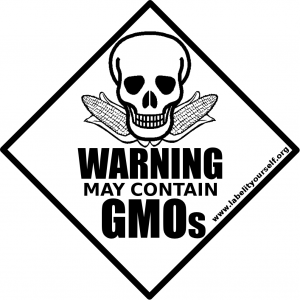
In the wake of all the recent revelations about the dangers of GMOs, a special warning needs to go out to all those health-conscious consumers buying "gluten-free" foods. As it turns out, most "gluten-free" foods sold in the USA contain genetically modified organisms.

Why is this so? Because the primary ingredient in most gluten-free foods is corn. And most corn-based foods are made with genetically modified corn. Around 85% of the conventional corn grown in the USA is genetically modified corn, and that corn is engineered to produce its own deadly insecticide right inside every grain.

When GM corn is harvested and made into gluten-free foods, the insecticide stays with it and resides in the gluten-free food. As a result, people who are buying gluten-free are often exposing themselves to the risk of toxicity from GM corn.

Question

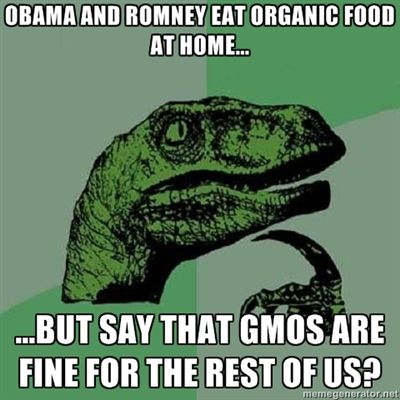
Why do supporters of genetically engineered foods insist on organics for their own families?

Image
© memegenerator.net
Over the past few years, an interesting pattern has emerged, where political supporters of genetically engineered (GE) foods are feasting on organics, while promoting unlabeled GE foods for everyone else.

Most recently, Mother Jones1 discussed how Presidential hopeful Mitt Romney - whose ties to Monsanto go back to the late 1970's when GE crops were still in the R&D phase - reportedly makes sure his own meals are nothing but organic...

According to Peter Alexander of MSN Today:[2]
"On Romney Air, or Hair Force One - as Reuters' Steve Holland like to call it - Mitt Romney has his own galley in 'forward cabin.' And, while I've never been invited up front, sources close to the campaign tell me the shelves are stocked with a wide variety of healthy fare. Kashi cereals, hummus, pita, as well as organic applesauce.

Everything's organic, I'm told, including the ingredients to Romney's favorite, peanut butter and honey sandwiches."